How to Master Plane Skin Care: Protecting and Hydrating Your Complexion at 35,000 Feet
Managing plane skin care requires countering the exceptionally dry, pressurized air of commercial aircraft cabins, which strips moisture and leaves the complexion vulnerable, tight, and prone to irritation. By adopting a targeted pre-f...
Managing plane skin care requires countering the exceptionally dry, pressurized air of commercial aircraft cabins, which strips moisture and leaves the complexion vulnerable, tight, and prone to irritation. By adopting a targeted pre-flight prep, in-flight maintenance, and post-flight recovery routine centered on hydration barriers and gentle protection, travelers can maintain balanced, healthy skin from takeoff to destination landing.
Contents
Understanding the Aviation Environment: Why Cabin Air Sucks the Life Out of Your Skin
Commercial aircraft cabins present a uniquely harsh microclimate that contrasts sharply with terrestrial environments. When flying at cruising altitudes, typically between 30,000 and 40,000 feet, the air supplied to the cabin is drawn directly from the outside atmosphere. At these elevations, the outside air is virtually devoid of moisture, possessing a relative humidity level that frequently hovers below 10 or 15 percent. For comparison, a comfortable indoor environment on the ground typically maintains a relative humidity of 40 to 60 percent.
To make this dry air tolerable for passengers, aircraft environmental control systems blend the outside air with filtered recirculated air, yet the resulting cabin humidity rarely rises above 20 percent. This arid environment accelerates transepidermal water loss (TEWL), a biological process where water evaporates from the skin's deeper layers through the epidermis and into the surrounding air. As moisture escapes, the skin’s natural lipid barrier becomes compromised. This disruption manifests as tightness, flaking, localized irritation, and an overproduction of compensatory oil as the sebaceous glands attempt to combat the sudden dryness.
Compounding the humidity crisis is cabin pressurization. Commercial cabins are typically pressurized to an altitude equivalent of 6,000 to 8,000 feet above sea level. This lower atmospheric pressure can cause mild, temporary micro-swelling or fluid retention in the face, while the stagnant air circulation concentrates particulate matter. Furthermore, passengers seated near windows are exposed to significantly higher levels of ultraviolet (UV) radiation. Window glass on commercial aircraft blocks most UVB rays—the burning rays responsible for sunburns—but permits a substantial portion of UVA rays, which penetrate deep into the dermis, driving photoaging, collagen degradation, and hyperpigmentation. Understanding these physical stressors is the foundational first step toward building an effective defensive strategy.
Pre-Flight Preparation: Laying the Groundwork Before Boarding
Effective plane skin care begins hours before stepping onto the jet bridge. The primary objective of the pre-flight phase is to fortify the skin barrier, locking in hydration and minimizing the vulnerability of the stratum corneum to the dry cabin air ahead. Neglecting this preparatory step often means playing catch-up mid-flight, a difficult task when confined to a cramped airplane seat with limited access to clean water and sanitation tools.
Begin your pre-flight routine with a gentle, non-stripping cleanser. Avoid harsh foaming washes containing high concentrations of sulfates or physical scrubs that can micro-abrade the skin barrier right before it faces environmental stress. Instead, opt for a hydrating cream or milk cleanser that preserves the skin's natural microbiome and lipid mantle. Following cleansing, apply a hydrating toner or essence rich in humectants such as glycerin, hyaluronic acid, or polyglutamic acid. Humectants function like moisture magnets, drawing water molecules into the upper layers of the skin.
Once your humectant layer is applied to slightly damp skin, seal it immediately with a ceramide-rich moisturizer or a lightweight facial oil. Ceramides are lipid molecules that make up over 50 percent of the skin’s composition; replenishing them creates an impenetrable shield that drastically slows down transepidermal water loss during the flight.
If you are taking an early morning flight or a daytime journey, applying a broad-spectrum sunscreen with an SPF of 30 or higher is non-negotiable. Even if you are seated in an aisle seat, walking through sunlit terminals and sitting near windows makes daily UV defense essential. For evening or overnight red-eye flights, skip the sunscreen during your pre-flight prep, but ensure your moisturizing layer is slightly richer to sustain your skin through hours of continuous exposure to dry air.
In-Flight Maintenance: Strategies for Cruising Altitude
Maintaining skin health mid-flight requires balancing simplicity with efficacy. Confined lavatories and cramped seats make elaborate multi-step Korean beauty routines impractical and unshygienic. The golden rule of in-flight skin care is to keep your hands clean, your routine streamlined, and your focus squarely on hydration retention and barrier defense.
Essential In-Flight Care Steps
- Sanitize First: Always wash your hands thoroughly with soap and water or use an alcohol-based hand sanitizer before touching your face inside the aircraft cabin, which harbors myriad shared touchpoints.
- Refresh and Mist (Judiciously): If your skin feels tight mid-flight, a hydrating facial mist can provide immediate relief. However, select sprays formulated with glycerin or hyaluronic acid rather than pure mineral water, as pure water sitting on the skin surface will evaporate and draw out native moisture as it dries.
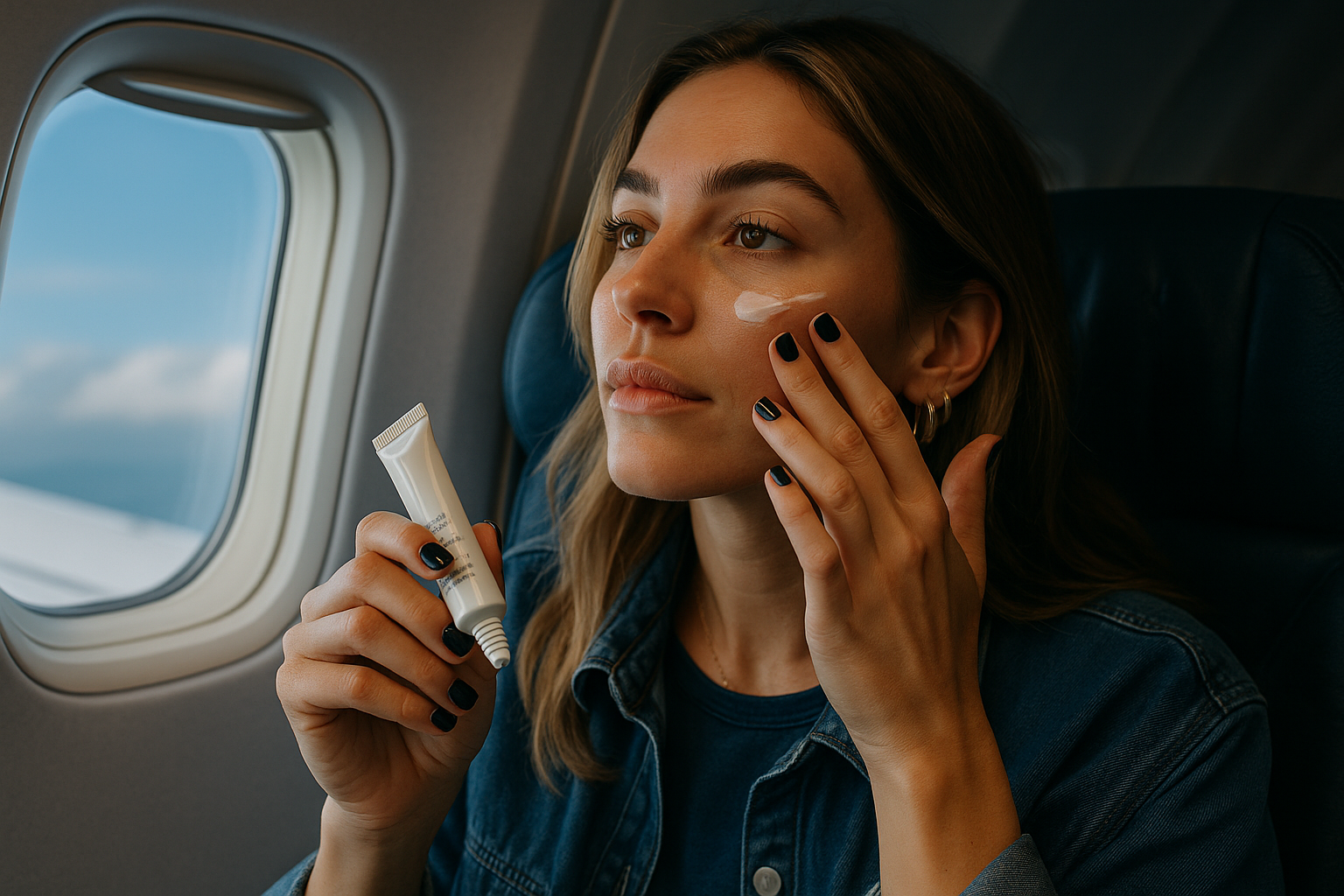
- Reapply Moisturizer: For long-haul flights exceeding four hours, use a clean tissue or cotton pad to gently wipe away any accumulated cabin dust, then press a travel-sized portion of rich cream or a sleeping mask directly onto the skin.
- Protect the Lips: The lips possess a very thin stratum corneum and lack oil glands entirely, making them exceptionally susceptible to cracking at high altitudes. Apply a thick layer of petrolatum-based balm or lanolin frequently.
A common pitfall during long flights is the overuse of sheet masks. While popular on social media, wearing a standard sheet mask for 20 minutes inside a dry airplane cabin can backfire. As the mask dries out in the arid air, it begins to draw moisture out of your skin via osmosis, leaving your complexion drier than before. If you prefer a mask format, choose a wash-off sleeping pack or an occlusive balm that you can massage into the skin and leave on without the risk of reverse evaporation.
Post-Flight Recovery: Rebalancing and Rehydrating Upon Arrival
Landing at your destination does not mean the skin care challenge is over. The sudden transition from the ultra-dry cabin environment back to terrestrial humidity, combined with travel fatigue, jet lag, and changes in local climate, can leave skin looking dull, congested, or hypersensitive. The post-flight recovery phase is designed to reset the skin’s equilibrium and clear away any buildup accumulated during transit.
Upon reaching your hotel room or home, prioritize a thorough yet gentle cleansing ritual. Aircraft cabins expose the skin to recirculated air laden with dust, fabric fibers, and microscopic particles from hundreds of previous passengers. Perform a double cleanse if you wore makeup or heavy sunscreens during the flight: start with an oil-based cleanser or micellar water to dissolve surface oils and particulate matter, followed by your regular gentle water-based cleanser.
Once the skin is pristine, focus entirely on soothing hydration and repair. Avoid active treatments such as high-strength retinoids, glycolic acid peels, or physical exfoliants for the first 24 hours post-flight. Because your skin barrier was compromised by low cabin humidity, introducing potent actives can trigger stinging, redness, and inflammation. Instead, layer soothing ingredients such as centella asiatica, niacinamide, panthenol (provitamin B5), and squalane. These compounds accelerate cellular recovery, reduce redness caused by pressure changes, and restore the skin’s natural protective mantle.
Comparing Travel Skin Care Formulations
Selecting the right product textures and formulations for travel can mean the difference between a radiant arrival and clogged, irritated pores. The table below outlines how different product categories perform under the unique environmental pressures of commercial flight.
| Product Category | Terrestrial Performance | In-Flight Performance | Recommended Travel Selection |
|---|---|---|---|
| Cleansers | Removes daily sebum and SPF effectively. | Can feel overly stripping due to cabin dryness. | Hydrating cream or milk cleansers with ceramides. |
| Toners / Mists | Refreshes and preps skin for subsequent steps. | Pure water mists evaporate quickly and dehydrate skin. | Viscous essences or humectant-rich mists containing glycerin. |
| Serums | Delivers targeted active ingredients deeply. | Can destabilize if formulated with unbuffered acids. | Barrier-repair serums featuring hyaluronic acid or niacinamide. |
| Moizers | Seals hydration based on climate needs. | Essential barrier defense against severe moisture loss. | Rich, occlusive creams or overnight sleeping masks. |
| Lip Care | Maintains soft and supple lip tissue. | Crucial defense against rapid cracking and chapping. | Thick petrolatum, shea butter, or lanolin balms. |
Frequently Asked Questions About Plane Skin Care
Can I wear makeup during a flight?
Yes, you can wear makeup, but heavy foundations and powders combined with dry cabin air often result in cakey texture, clogged pores, and accelerated flaking. If you prefer to wear makeup, opt for a lightweight tinted moisturizer or a hydrating BB cream infused with hyaluronic acid, and skip heavy setting powders that absorb remaining surface moisture.
Are TSA liquid restrictions an issue for flight skin care products?
Standard security regulations in many jurisdictions limit carry-on liquids, gels, and aerosols to containers of 3.4 ounces (100 milliliters) or less, all fitting into a single quart-sized clear plastic bag. To comply, decant your favorite full-sized cleansers and moisturizers into TSA-approved travel-size containers or purchase travel-sized minis of your core hydration products.
How much water should I drink during a flight to protect my skin?
While staying hydrated by drinking water is vital for overall health and systemic function, drinking water alone cannot directly hydrate the stratum corneum of your skin. Hydration reaches the skin from the inside out, but topical humectants and occlusives are necessary to trap ambient and cellular moisture against dry cabin air. Aim to drink a glass of water every hour or two while flying, while relying on topical moisturizers to prevent surface evaporation.
Is it necessary to wear sunscreen on a night flight?
If your flight takes place entirely during nighttime hours and window shades remain closed, you do not need to apply sunscreen. However, if your flight crosses daytime zones, or if you are seated by an unshaded window during daylight hours, applying a broad-spectrum mineral or chemical sunscreen is necessary to protect against deep-penetrating UVA rays.
Why does my skin break out after taking a long flight?
Post-flight breakouts are typically caused by a combination of factors: the skin overproducing excess sebum to compensate for severe dehydration, the accumulation of cabin dust and bacteria on the skin surface, and stress-induced cortisol spikes associated with air travel. Maintaining clean hands, using gentle sanitizing wipes on your tray table and seat belt, and cleansing promptly after landing help mitigate this risk.
Final Recommendations for Your Next Flight
Mastering plane skin care is not about executing a complicated 10-step routine at 35,000 feet; rather, it is a disciplined exercise in barrier protection, strategic hydration, and gentle recovery. Prioritize a rich, ceramide-based moisturizer before boarding, keep your hands away from your face, protect your lips with heavy-duty balms, and focus on soothing, active-free hydration once you land. By treating air travel as a distinct environmental challenge, you ensure that your skin arrives at your destination looking as refreshed as you feel.
Image Gallery