Understanding Near Miss HSE Reporting: A Complete Guide to Proactive Workplace Safety
A near miss Health, Safety, and Environment (HSE) report records an unplanned event that did not result in injury, illness, or property damage, but had the clear potential to do so under slightly different circumstances. Understanding...
A near miss Health, Safety, and Environment (HSE) report records an unplanned event that did not result in injury, illness, or property damage, but had the clear potential to do so under slightly different circumstances. Understanding near miss HSE reporting enables organizations to identify systemic vulnerabilities, implement corrective controls, and prevent severe workplace accidents before they occur.
Contents
What Is a Near Miss in HSE Management?
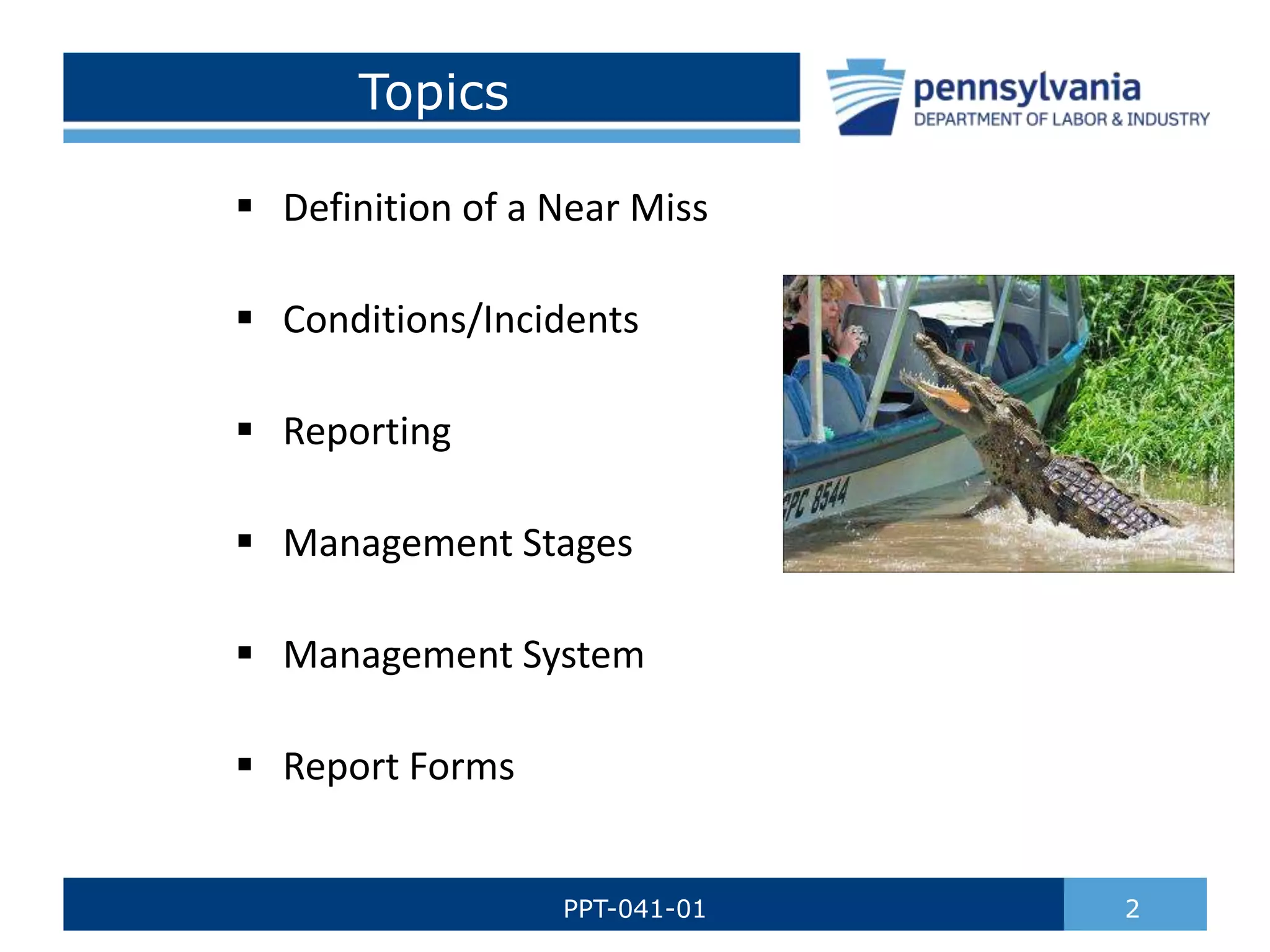
In occupational health, safety, and environmental (HSE) practice, a near miss—sometimes referred to as a "near hit," "close call," or "narrow escape"—is an incident where a chain of events or conditions was set in motion that could have caused harm, but was interrupted by chance, immediate action, or lucky timing.
To manage health and safety effectively, enterprise risk managers and safety personnel distinguish between four related concepts:
- Hazard: Any source, situation, or act with potential to cause harm, such as an ungrounded electrical wire, an icy walkway, or an improperly stored chemical container.
- At-Risk Behavior: An action taken by a worker that increases their exposure to a hazard, such as bypassing a safety guard or failing to wear required Personal Protective Equipment (PPE).
- Near Miss: An actual event that occurred where exposure to a hazard took place, but no harm or damage resulted. For example, a heavy wrench drops off a scaffold platform and hits the floor two feet away from a worker who is not wearing a hard hat.
- Incident / Accident: An event that results in actual personal injury, occupational illness, environmental spill, or physical equipment damage.
Under international standards such as ISO 45001, near misses are explicitly classified as a subset of incidents. The standard emphasizes that identifying and acting upon near misses forms the foundation of continuous improvement in occupational health and safety management systems (OHSMS).
- Hazard / At-Risk Condition
- Unplanned Event
- NO Harm Occurred = NEAR MISS
- Harm / Damage Occurred = INCIDENT / ACCIDENT
- Unplanned Event
Real-World Examples Across Industries
Near misses occur across all operational sectors. Recognizing them requires training workers to look beyond physical harm:
- Manufacturing: A heavy crane load slips out of its rigging while being moved across a shop floor. The load crashes into an empty aisle where employees were standing 30 seconds prior.
- Construction: A utility contractor excavating a trench uncovers a high-voltage electrical conduit that was omitted from the site utility map. The excavator bucket scrapes the insulation without breaching the live conductor.
- Chemical & Process Industries: A valve on a pressurized acid transfer line leaks a small mist into a containment berm during pump startup. The operator was standing upwind, avoiding vapor inhalation or skin contact.
- Healthcare & Laboratories: A nurse reaches into a disposal box and discovers an uncapped syringe protruding through the wall of an overfilled sharps container, narrowly avoiding a needle-stick exposure.
- Corporate & Office Environments: A heavy framed whiteboard detaches from a conference room wall overnight and shatters across a row of desks that are normally occupied during standard business hours.
The Safety Triangle: Why Near Misses Are Leading Indicators
To understand why near miss reporting is a cornerstone of operational risk management, safety leaders rely on accident distribution models, originally developed by H.W. Heinrich in 1931 and expanded by Frank Bird in 1969.
Bird’s Safety Triangle demonstrates a statistical relationship between events of varying severity within an organization:
1 Major Injury or Fatality
10 Minor Injuries / First Aid Cases
30 Property Damage Incidents
600 Near Misses / At-Risk Conditions
1 Major Injury / Fatality
10 Minor Injuries / First Aid
30 Property Damage Events
600 Near Misses & Hazardous Conditions
The fundamental thesis of the safety pyramid is simple: the root causes behind a fatal accident are identical to the root causes behind a near miss. The only difference between a non-injurious close call and a catastrophic event is often a fraction of a second, an inch of distance, or simple luck.
Leading vs. Lagging Safety Metrics
Traditional safety programs depended heavily on lagging indicators—metrics that measure outcomes after an event has occurred. Common lagging indicators include:
- Total Recordable Incident Rate (TRIR)
- Lost Time Injury Frequency Rate (LTIFR)
- Workers' compensation claim payouts
- Regulatory fines and penalties
While lagging indicators are essential for benchmarking, they are backward-looking. They inform safety teams that a control failure already occurred.
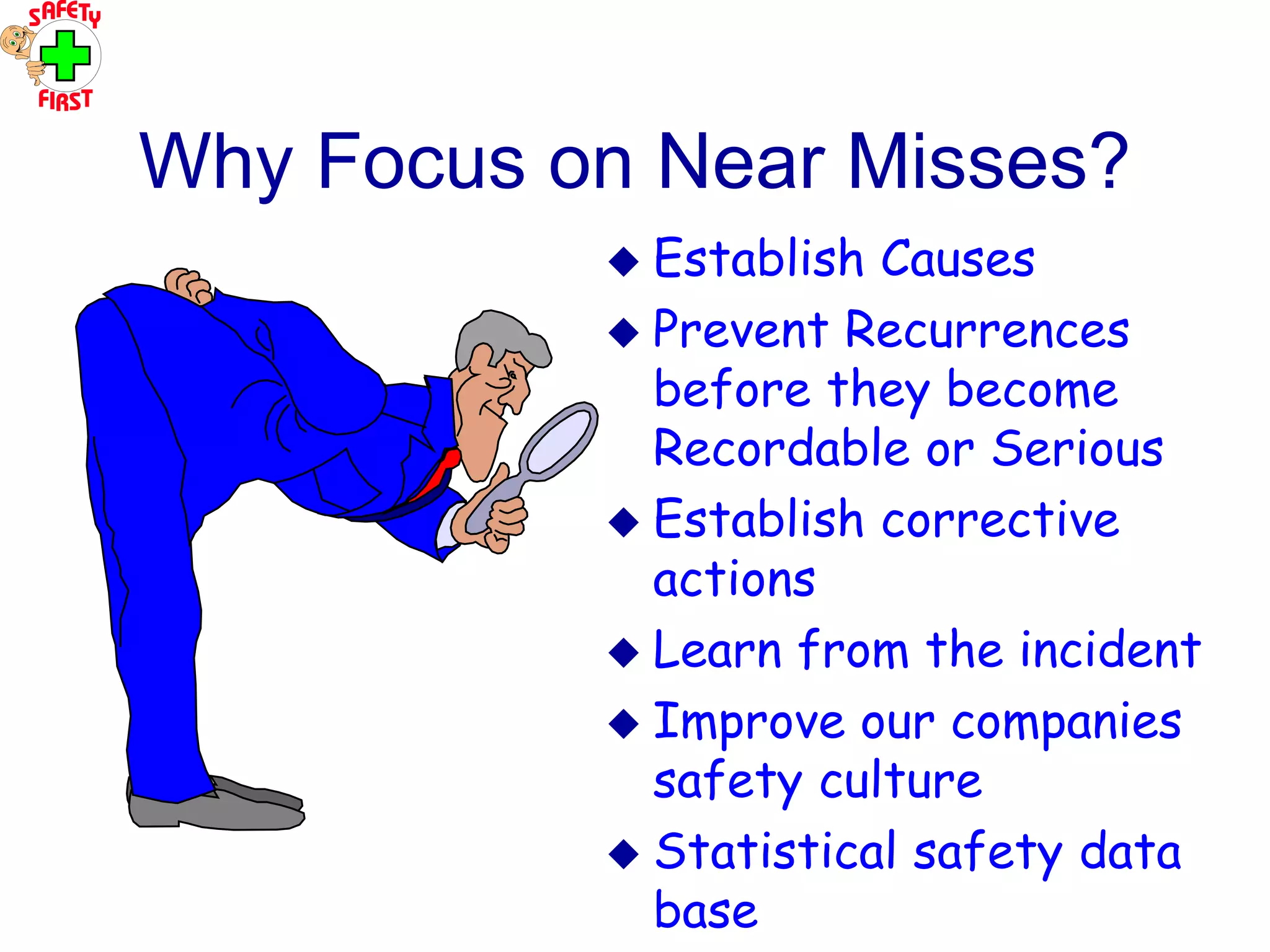
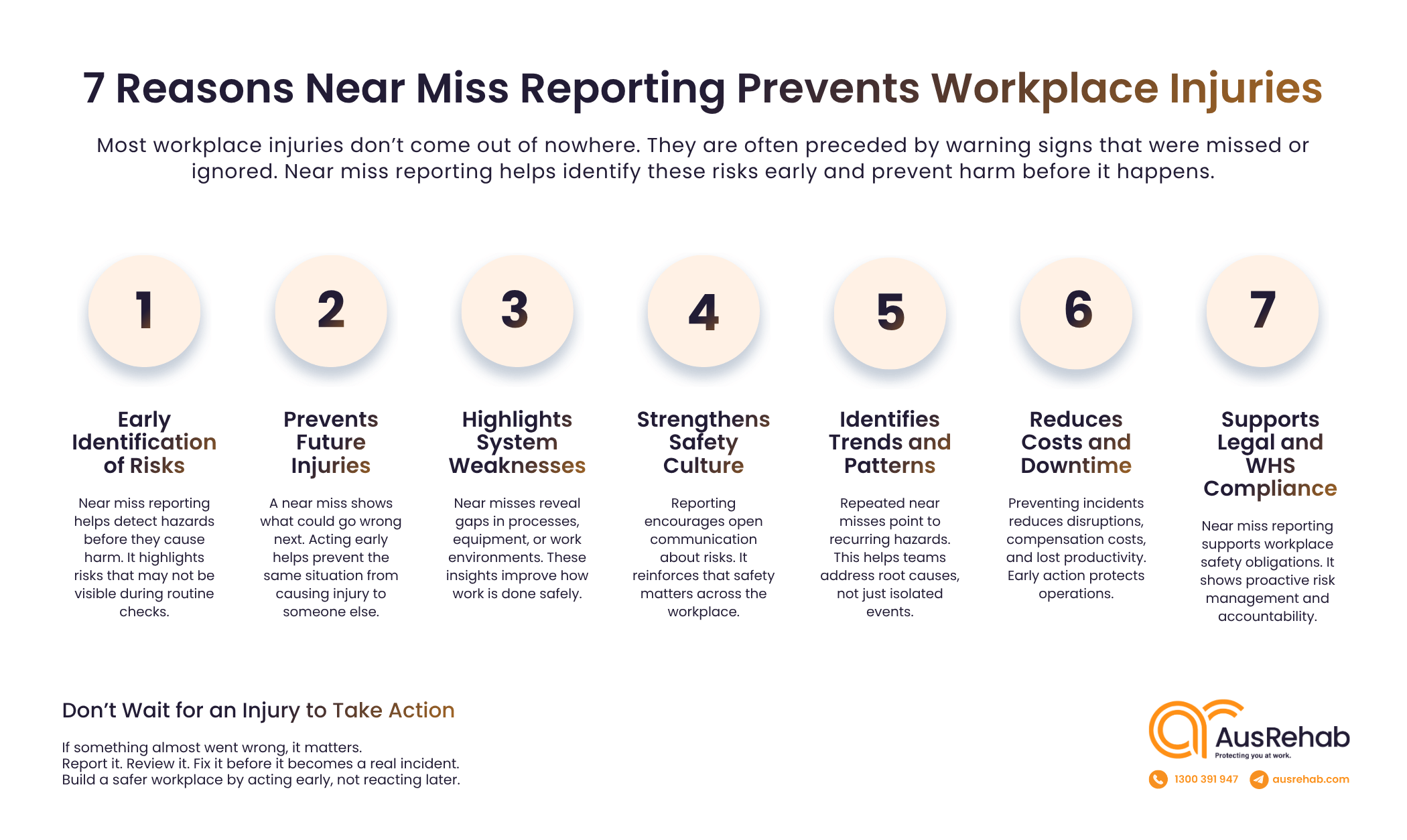
In contrast, near miss reporting serves as a leading indicator. Leading indicators measure proactive safety efforts and latent workplace hazards before a victim is harmed. By capturing high volumes of near miss data, HSE managers can identify trends, fix failing engineering controls, adjust administrative procedures, and eliminate root hazards high up the safety pyramid.
Near Miss vs. Hazard vs. Incident Classifications
To ensure standardized internal reporting, organizations must establish clear definitions across their safety management workflows.
| Classification | Definition | Physical Harm / Property Damage | Example Scenario | Immediate System Action |
|---|---|---|---|---|
| Hazard | A potential source of harm or dangerous condition. | None (No event has occurred yet). | Oil spilled on a warehouse floor near a walkway. | Contain and clean spill; place warning sign. |
| At-Risk Behavior | Human action that violates safe operating procedures. | None (No event has occurred yet). | An operator bypasses a safety interlock to clear a jam faster. | Pause job; coach employee; inspect machine guard. |
| Near Miss | An unplanned event that had potential to cause harm but did not. | None (Narrow escape due to timing/distance). | A forklift turns a blind corner at speed; a pedestrian leaps aside to avoid being hit. | Log report; conduct root-cause review; install convex mirror. |
| First Aid Incident | A minor event resulting in surface injuries requiring basic treatment. | Very Low (Minor cuts, minor burns, splinters). | A technician cuts their finger while opening a box with a utility knife. | Administer basic first aid; log in safety ledger; provide safety cutters. |
| Recordable Incident | An event causing injury requiring medical treatment beyond first aid, restricted work, or days away. | Moderate to High (Fractures, severe lacerations, heat illness). | A worker falls off a six-foot ladder, breaking a wrist and missing three weeks of work. | Secure scene; initiate formal investigation; report to regulator if required. |
Core Steps in the Near Miss Reporting Lifecycle
A successful near miss program requires a structured lifecycle that moves seamlessly from the initial event to permanent risk reduction. A process that stops at report collection without taking visible action demoralizes workers and degrades safety culture.
- Identification & Immediate Containment
- Formal Submission & Triage
- Investigation & Root Cause Analysis (RCA)
- Corrective & Preventive Action (CAPA) Assignment
- Closed-Loop Communication & Lessons Learned
1. Identification and Immediate Containment
When a near miss occurs, the worker or supervisor must immediately ensure the scene is safe. If a dangerous condition remains (e.g., an exposed live wire or a hazardous chemical pool), immediate interim controls must be deployed, such as barricading the area, shutting down equipment, or placing warning tags.
2. Formal Submission and Triage
The event should be documented as close to real-time as possible. Modern enterprise systems utilize mobile applications, QR code scans on the shop floor, or simple paper forms. The site safety team evaluates the submission during initial triage to assign a Potential Severity Rating. A near miss with a high potential severity (e.g., a dropped object that could have been fatal) triggers a more rigorous investigation than a minor trip hazard with low energy potential.
3. Root Cause Analysis (RCA)
For moderate-to-high potential near misses, safety teams conduct a structured Root Cause Analysis rather than stopping at immediate human error. Popular techniques include:
- The 5 Whys: Iteratively asking "Why?" to drill past surface-level mistakes down to organizational weaknesses (e.g., lack of preventative maintenance budgets or inadequate training schedules).
- Fishbone (Ishikawa) Diagram: Categorizing potential contributing causes across People, Processes, Equipment, Materials, Environment, and Management.
4. Corrective and Preventive Action (CAPA) Assignment
Investigative findings must generate specific, measurable action items assigned to accountable personnel with strict target completion dates. Actions follow the Hierarchy of Controls:
- Elimination: Removing the hazard completely.
- Substitution: Replacing a dangerous chemical or tool with a safer alternative.
- Engineering Controls: Installing physical guards, ventilation, or interlocks.
- Administrative Controls: Updating Standard Operating Procedures (SOPs), rotating shifts, or adding warning signs.
- Personal Protective Equipment (PPE): Supplying specialized protective gear (the least reliable control line).
5. Closed-Loop Communication and Safety Feedback
The final step is informing the reporting employee and wider workforce about the resolution. Displaying "You Reported, We Resolved" boards in breakrooms or reviewing monthly near miss case studies during daily toolbox talks proves to workers that their input drives tangible operational improvements.
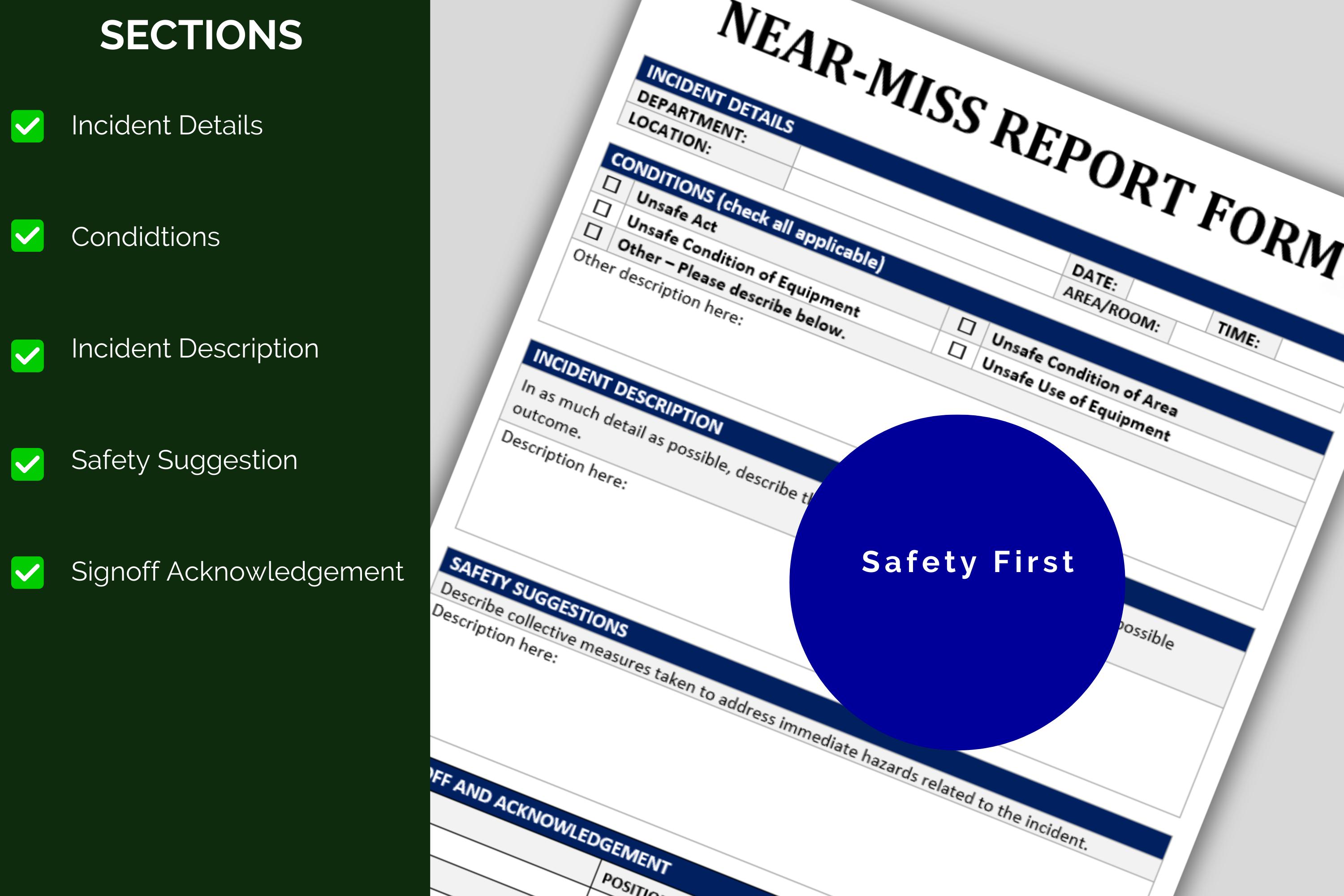
Anatomy of an Effective Near Miss Report Form
To maximize reporting volume, the capture form must be concise, straightforward, and accessible. Complex, multi-page forms discourage frontline workers from filing reports during busy shifts.
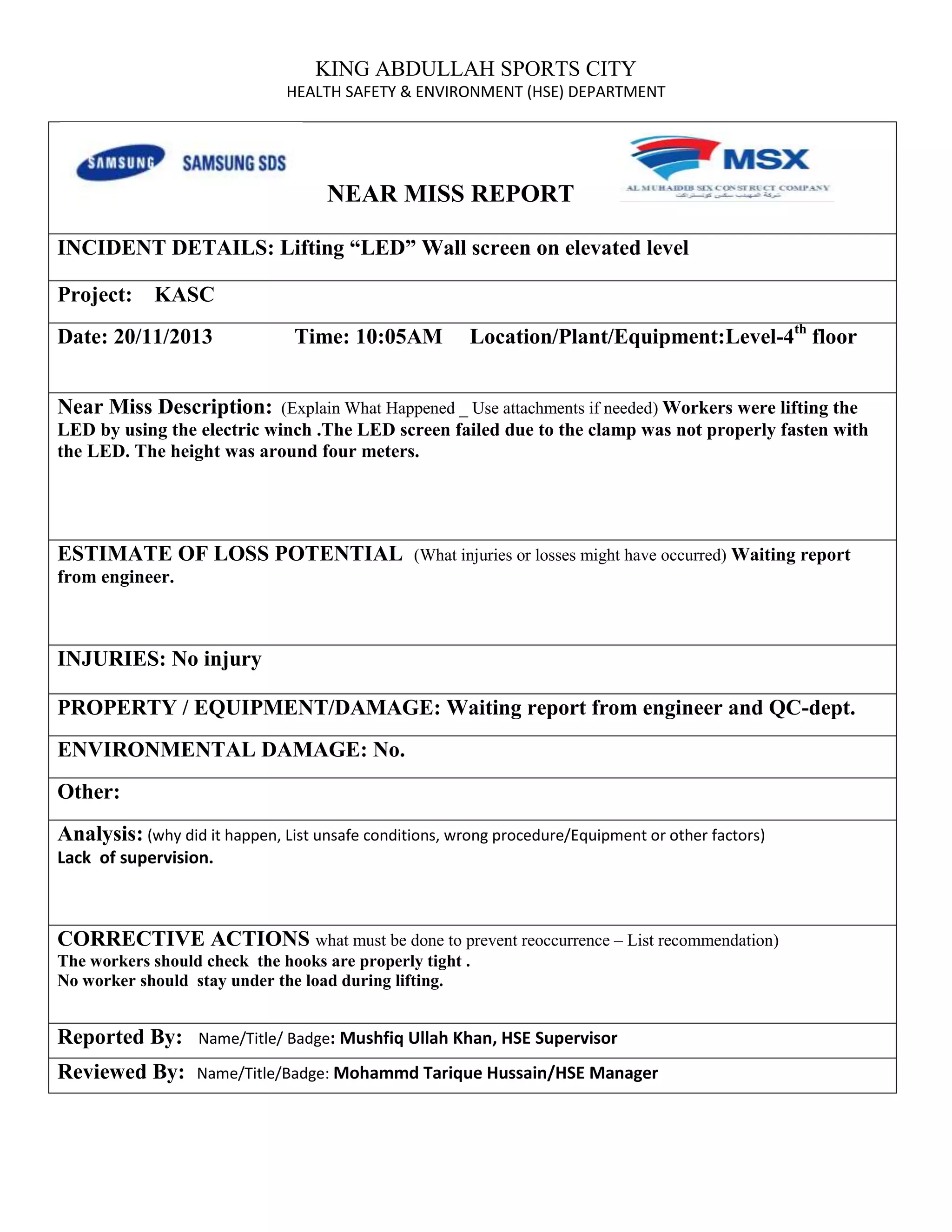
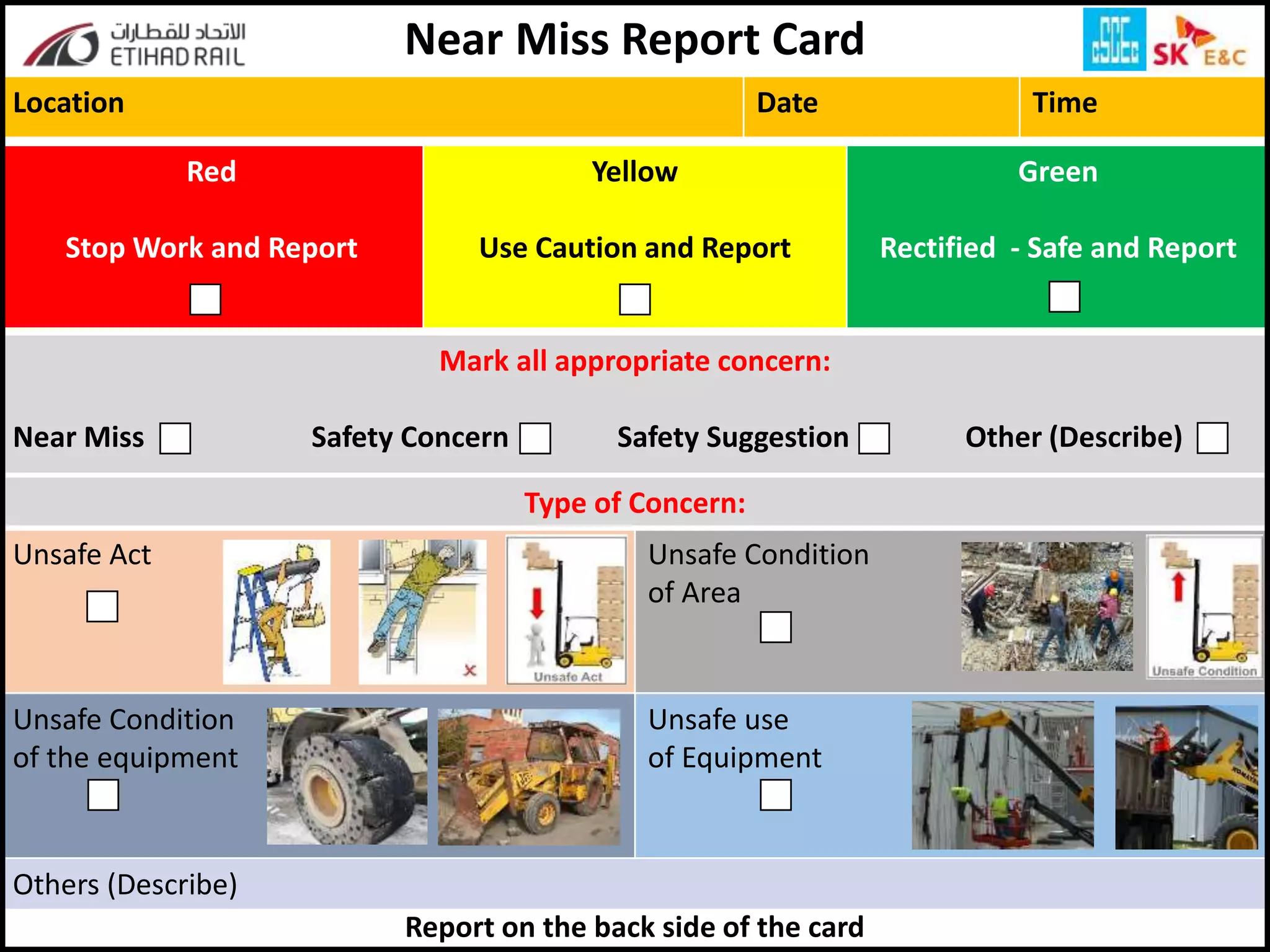
Key fields that every near miss reporting form should contain include:
- General Context: Date, time, shift, and precise physical location (e.g., Facility B, Processing Line 3).
- Event Description: A plain-language narrative detailing what happened, what the employee was doing, and what potential harm could have occurred.
- Category Tagging: High-level checkboxes to assist in trend tracking (e.g., Ergonomics, Electrical, Chemical, Working at Height, Mobile Equipment, Fire/Explosion).
- Immediate Action Taken: What interim steps were implemented on the spot to make the area safe.
- Reporter Details (Optional/Anonymous): Name and department. Allowing anonymous submissions helps overcome fear of reprisal, though optional self-identification allows safety teams to follow up for clarifications.
- Visual Evidence: Photos, videos, or sketches attached via mobile device software.
Overcoming Reporting Barriers: Building a "Just Culture"
The primary reason near miss programs fail is not technical; it is organizational. In many companies, management only learns about safety hazards after a severe incident occurs because workers hide close calls out of fear.
- Blame Culture
- Focus: Who made the error?
- Response: Disciplinary
- Result: Hiding near misses
- Just Culture
- Focus: Why did system fail
- Response: Root cause analysis
- Result: High reporting volume
Common Barriers to Reporting
- Fear of Disciplinary Action: Employees worry that reporting a near miss will result in write-ups, lost bonuses, or termination for breaking safety rules.
- Fear of Peer Stigma: Workers may worry about being seen as "whistleblowers," overly cautious, or slow workers by colleagues.
- Excessive Bureaucracy: Long, complicated forms that take 30 minutes to fill out discourage participation.
- The "Black Hole" Effect: When workers submit reports and never hear back, they assume management does not care, causing submission volumes to plummet.
Moving from Blame Culture to Just Culture
A Just Culture distinguishes between three types of human behavior:
- Human Error: Inadvertent slips, lapses, or honest mistakes (e.g., pressing the wrong button due to unclear control labels). Response: Console the worker; modify system or equipment design.
- At-Risk Behavior: Taking a shortcut because the safe route is difficult, under the mistaken belief that risk is low (e.g., stepping over a conveyor belt to save a two-minute walk). Response: Coach the worker; address operational friction that incentivized the shortcut.
- Reckless Behavior: Intentional, conscious disregard of substantial, unjustifiable risk (e.g., operating machinery while under the influence). Response: Apply consistent disciplinary measures.
When employees trust that honest errors and systemic hazards will not result in punishment, near miss reporting rates surge, providing safety teams with vital early warnings.
Regulatory Frameworks and Standards Alignment
Understanding near miss reporting requires evaluating international legal requirements and management frameworks.
United States: OSHA
The U.S. Occupational Safety and Health Administration (OSHA) encourages near miss reporting as a fundamental element of effective safety and health programs. While OSHA's injury log requirements (such as Form 300) focus on recordable injuries and illnesses, OSHA guidelines explicitly state that investigating near misses is critical for complying with the General Duty Clause (Section 5(a)(1) of the OSH Act), which requires employers to furnish a workplace free from recognized hazards.
United Kingdom: HSE and RIDDOR
In the UK, the Health and Safety Executive (HSE) oversees workplace safety. Under the Reporting of Injuries, Diseases and Dangerous Occurrences Regulations (RIDDOR), certain near miss events are classified as "Dangerous Occurrences" and must be reported directly to the regulator by law. Examples include scaffold collapses, crane overturns, or unintended release of dangerous industrial fluids, regardless of whether anyone was hurt.
International Standard: ISO 45001
ISO 45001:2018 (Clause 10.2) requires certified organizations to establish, implement, and maintain processes to report, investigate, and take action on incidents and non-conformities. Demonstrating an active, functioning near miss system is a standard benchmark used by third-party auditors during certification checks.
Disclaimer: Safety regulations vary by jurisdiction, industry, and site jurisdiction. Organizations should consult qualified legal counsel and regional safety authorities to ensure local compliance.
Measuring Near Miss Program Health: Key Metrics
To ensure a near miss reporting system delivers real business value, safety committees monitor key performance indicators (KPIs).
1. Near Miss Reporting Rate
Calculated as the number of near miss reports submitted per worker over a set timeframe:
$$\text{Near Miss Rate} = \left( \frac{\text{Total Near Miss Reports Filed}}{\text{Total Hours Worked}} \right) \times 200,000$$
(Note: 200,000 hours represents the benchmark equivalent of 100 full-time employees working for one year).
A rising near miss reporting rate combined with a falling injury frequency rate is a clear sign of a mature, proactive safety culture.
2. Closure Rate of Corrective Actions
Measuring the percentage of CAPAs resulting from near miss reports that are implemented within the target timeframe (e.g., 30 days). A target of >90% on-time closure prevents safety backlogs and demonstrates operational management commitment.
3. Potential Severity Ratio
Tracking the proportion of reported near misses categorized as High-Potential Events (HIPOs)—near misses that had plausible potential to result in a fatality or life-altering disability. Prioritizing resources toward HIPOs ensures engineering teams address critical industrial risks first.
Frequently Asked Questions
Is reporting a near miss required by federal or local safety laws?
Standard near misses generally do not need to be reported directly to regulatory bodies like OSHA unless they meet specific criteria, such as a "Dangerous Occurrence" under UK RIDDOR rules or catastrophic chemical release thresholds under EPA/OSHA PSM guidelines. However, internal company procedures almost always make near miss reporting mandatory to uphold safe workplace policies.
What is the primary difference between a hazard and a near miss?
A hazard is a passive condition or unsafe scenario that could potentially cause harm (for example, a frayed electrical cord lying on the floor). A near miss is an actual event that took place involving that hazard, but by luck or timing, resulted in no injury (for example, a worker stepping directly on the frayed wire and sparking a flame, but walking away unshocked).
Should companies offer monetary incentives for reporting near misses?
Safety experts recommend avoiding cash rewards tied directly to high numbers of reports, as this can lead to low-quality or fabricated submissions. Similarly, offering rewards for "zero accidents" suppresses near miss reporting because workers avoid speaking up to preserve team bonuses. Instead, reward constructive contributions, such as praising insightful root-cause solutions or honoring employees who fixed complex physical hazards.
Can near miss reports be submitted anonymously?
Yes. Allowing anonymous submissions lowers the entry barrier for workers who fear retribution or peer pressure. However, HSE software platforms should encourage optional self-identification so safety investigators can follow up with the submitter for additional context or photos during investigation.
How often should near miss trend data be reviewed?
Initial triage must happen within 24 to 48 hours of submission to resolve immediate hazards. Aggregate trend analysis—such as identifying repeated slip/trip locations or identifying machine models with consistent guard failures—should be reviewed monthly by executive safety committees and shared during weekly shift briefings.
Recommended Next Steps for HSE Leaders
To build or modernize an effective near miss HSE reporting workflow, safety managers should follow these tactical next steps:
- Audit the Current Reporting Workflow: Evaluate your existing reporting process. If submitting a report requires paper forms, long narrative essays, or desktop-only login portals, simplify it. Transition to mobile-friendly, digital intake systems accessible on shop floors via mobile devices or site kiosks.
- Define Clear Incident Boundaries: Train supervisors and frontline employees on clear distinctions between hazards, near misses, and reportable incidents. Provide visual workplace posters with real site-specific examples.
- Establish a Just Culture Policy: Draft and publish a formal corporate safety declaration explicitly protecting workers from disciplinary action when reporting honest near misses and systemic errors.
- Implement Closed-Loop Communication: Establish a systematic process to notify reporters when their near miss issue is resolved. Display physical or digital "Before/After" safety improvements across work sites to build trust and sustain high participation rates.
EDITORIAL CATEGORY METADATA:
TOPIC METADATA:
Image Gallery