How Ladder Life Insurance Uses AI to Provide Instant Coverage in 2026
Ladder Life Insurance provides term life insurance through a proprietary, AI-driven underwriting platform that offers near-instant decisions. By replacing traditional medical exams and manual paperwork with real-time data analysis, Lad...
Ladder Life Insurance provides term life insurance through a proprietary, AI-driven underwriting platform that offers near-instant decisions. By replacing traditional medical exams and manual paperwork with real-time data analysis, Ladder allows eligible applicants to secure up to $8 million in coverage in minutes rather than weeks, significantly streamlining the life insurance acquisition process.
Contents
The Shift to Algorithmic Underwriting: How Ladder Differs from Traditional Carriers
For decades, the life insurance industry operated on a timeline measured in months. A standard application involved a paper or digital form, followed by a tele-interview, a physical medical exam (paramedical exam) involving blood and urine samples, and a weeks-long wait while a human underwriter reviewed physician statements. Ladder was built to disrupt this specific friction point.
By 2026, the technology behind Ladder—frequently referred to as algorithmic underwriting—has matured into a sophisticated engine. Unlike traditional carriers that use AI as a secondary tool for data sorting, Ladder’s entire business model is built around a digital-first infrastructure. This "full-stack" approach means that from the moment a user enters their information on the website or mobile app, the AI is processing that data against vast actuarial tables and risk models in real time.
The primary difference lies in the feedback loop. Traditional underwriting is linear and slow. Ladder’s AI-powered system is dynamic; it can identify if a user is eligible for an "instant decision" based on the first few data points and adjust the remaining questions to finalize the risk profile. This efficiency reduces the "drop-off" rate where healthy individuals abandon their applications due to administrative fatigue.
The Mechanics of AI-Powered Life Insurance: How the Speed is Achieved
The "speed" in Ladder’s marketing is not just a cosmetic feature; it is the result of deep integration with third-party data providers and complex machine learning models. When an applicant submits their details, the AI doesn't just look at their age and height; it queries several secure databases simultaneously to build a comprehensive risk profile.
Real-Time Data Integration
Ladder’s AI utilizes several key data streams to bypass the need for a physical medical exam for many applicants:
- Medical Information Bureau (MIB): The system checks for previous insurance applications and reported medical conditions to ensure consistency.
- Prescription History (Rx) Databases: AI models analyze medication history to infer underlying health conditions that might not have been disclosed or fully understood by the applicant.
- Motor Vehicle Records (MVR): Driving history is a significant indicator of lifestyle risk. The AI processes these records instantly to factor in accidents or citations.
- Credit Attributes: While not a "credit check" in the traditional sense of a hard pull, certain financial data points help the AI assess the stability and "insurable interest" of the applicant.
The Underwriting Engine
The core of Ladder’s innovation is its proprietary underwriting engine. In 2026, these models are trained on billions of data points. When a person applies, the engine evaluates the "probability of mortality" based on the intersections of their specific data. For example, instead of just seeing "High Blood Pressure" as a binary risk, the AI looks at the age of onset, the efficacy of the current medication (verified by Rx history), and the presence of other lifestyle factors to offer a precise premium rate immediately.
Key Features and Benefits of Ladder Life Insurance
While speed is the primary draw, the AI-driven nature of Ladder allows for several unique product features that are difficult for legacy insurers to replicate.
The Power to "Ladder" Coverage
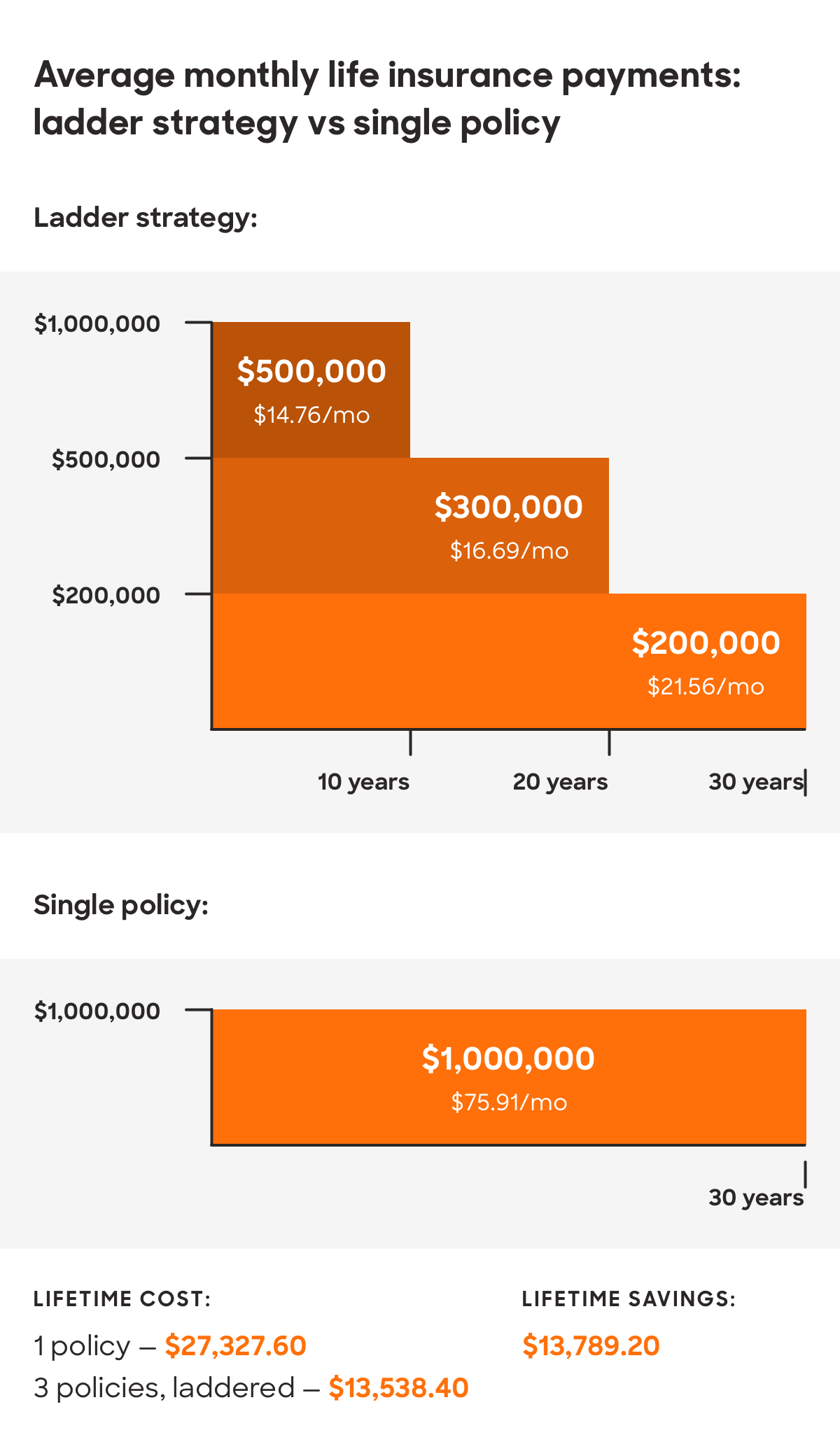
The most distinct feature of the company is the ability for policyholders to adjust their coverage online. Because the AI manages the risk pool dynamically, users can "Ladder Up" (apply to increase coverage) or "Ladder Down" (decrease coverage) at any time.
- Laddering Down: If a policyholder pays off their mortgage or their children finish college, they can instantly decrease their death benefit through the portal. This reduces their monthly premium proportionally, providing immediate cost savings without the need to cancel the policy or speak to an agent.
- Laddering Up: If a policyholder has a new child or takes on more debt, they can apply for more coverage. The AI reviews their current standing and updated data to approve the increase, often without a new medical exam, provided they still fall within the underwriting guidelines.
No-Medical-Exam Thresholds
In 2026, Ladder’s AI is sufficiently confident to offer up to $3 million in coverage (and sometimes more depending on specific risk brackets) without requiring a paramedical exam. For applicants who are young and healthy, this means the "instant decision" is truly the final decision. If the AI detects a complexity it cannot resolve—such as a significant history of heart disease—it may still offer a path to coverage that requires a medical exam, but the majority of healthy applicants avoid the needle entirely.
Eligibility and Technical Prerequisites in 2026
To leverage Ladder’s AI-powered speed, applicants must generally meet specific criteria. While the system is designed for broad accessibility, the "instant" component is most effective for those within the primary target demographic.
| Feature | Requirement / Detail |
|---|---|
| Age Range | Typically 20 to 60 years old. |
| Coverage Amounts | $100,000 to $8 million (AI decisioning varies by amount). |
| Term Lengths | 10, 15, 20, 25, or 30 years. |
| Citizenship | Must be a U.S. citizen or permanent resident (Green Card holder for at least 2 years). |
| Medical Exam | Not required for many policies up to $3M; required for higher amounts or complex cases. |
| Decision Time | Often under 5 minutes for eligible candidates. |
| Cancellation | 30-day "Free Look" period with a full refund of premiums. |
Comparative Analysis: AI vs. Traditional Agents
For many consumers, the choice is between the "Ladder approach" and the "Broker approach."
Traditional brokers provide a high level of personalization and can "shop around" for applicants with severe pre-existing conditions. However, this comes at the cost of time and often higher administrative fees built into the premiums. Ladder’s AI-driven model removes the commission-based agent from the initial transaction. This overhead reduction is often passed back to the consumer in the form of competitive premiums for term life insurance.
However, the AI model has limitations. It is highly optimized for term life insurance—insurance that covers a specific period. It is not designed for permanent life insurance, whole life, or complex estate planning involving universal life products. Those seeking an investment vehicle rather than just a death benefit may find the automated system's simplicity a disadvantage.
Potential Limitations and Technical Constraints
Despite the efficiency of AI, there are scenarios where the "fast" coverage might hit a speed bump. It is important for applicants to understand these constraints before starting the process.
- Data Discrepancies: If the AI finds a mismatch between what you report (e.g., "I don't smoke") and what your medical records indicate (e.g., a prescription for smoking cessation or a nicotine test from a previous insurance application), the application will be flagged for manual review. This negates the "instant" benefit.
- Edge Case Health Conditions: While the AI is excellent at common issues like managed hypertension or high cholesterol, rare autoimmune disorders or complex multi-system diseases may still require a human underwriter to review physical medical records.
- Strict Age/Coverage Caps: The AI’s risk appetite is mathematically bounded. An 18-year-old or a 70-year-old will generally not be able to use the platform, as the actuarial data for these age groups often requires more nuanced human judgment.
Privacy and Data Security in the AI Age
A common concern in 2026 regarding AI-driven insurance is how personal data is handled. Ladder utilizes encryption and follows strict HIPAA-compliant protocols for handling medical data. The AI does not "keep" your data in a way that allows it to be sold to third-party marketers; it uses the data specifically for the purpose of risk assessment. The authorization you sign during the application allows Ladder to query those specific databases (MIB, DMV, etc.) for that single transaction.
Frequently Asked Questions
Does "instant coverage" mean my policy is active the second I click submit? Yes, if you receive an "Instant Approval" and make your first premium payment, your coverage is active immediately. Unlike traditional policies that may have a "conditional receipt" period, Ladder's digital system issues the policy documents and starts the coverage window the moment the transaction is finalized.
Can I still get coverage through Ladder if I have a pre-existing condition? It depends on the condition. The AI is programmed to handle many common pre-existing conditions like well-managed diabetes or treated depression. However, if the condition is considered "uninsurable" by their specific risk model, you may receive an instant denial. In some cases, the AI will refer the application to a human underwriter for a more detailed look.
Why would someone choose a medical exam if they can avoid it? Sometimes, a medical exam can actually lower your premium. If you are exceptionally healthy but have a data point in your history that makes the AI slightly cautious, a physical exam (showing perfect blood work) can prove to the insurer that you deserve a "Preferred Plus" rating, which carries the lowest possible cost.
What happens if I lie on the digital application and the AI doesn't catch it? Life insurance policies have a two-year "contestability period." If the insured person dies within the first two years and the insurer discovers material misrepresentation (a lie that would have changed the decision to issue the policy), they can deny the claim. AI makes it much harder to hide facts, as it checks third-party records that are difficult for an individual to alter.
Is Ladder’s AI decision-making biased? In the insurance industry, AI must comply with strict fair-lending and anti-discrimination laws. The algorithms are audited to ensure they are making decisions based on actuarial risk (health, age, lifestyle) rather than protected characteristics like race or religion.
Practical Recommendation
If you are between the ages of 20 and 60 and in generally good health, your first step should be to use the Ladder calculator to determine your needs. Because the application has no impact on your credit score and provides an instant quote, it is an efficient way to establish a baseline for your life insurance costs. For those who already have a policy, consider using the "Laddering" tool to see if you can reduce your current premiums by adjusting your coverage to match your actual current liabilities.
Disclaimer: This article provides general information about life insurance and technology trends. Insurance products and eligibility requirements can vary by state and individual circumstances. Consult with a financial advisor for specific advice regarding your insurance needs.
Image Gallery