Is Lily Snowden-Fine Art Worth the Investment?
Investing in Lily Snowden-Fine’s work is currently viewed as a strategic entry point for collectors targeting the "emerging-to-established" contemporary art segment. As of 2026, her market stability is driven by a unique intersection o...
Investing in Lily Snowden-Fine’s work is currently viewed as a strategic entry point for collectors targeting the "emerging-to-established" contemporary art segment. As of 2026, her market stability is driven by a unique intersection of high-profile publishing success, consistent gallery representation in London and Vancouver, and a distinct "naive" aesthetic that remains culturally resonant in the post-pandemic art market.
Contents
Lily Snowden-Fine has transitioned from a notable childhood in the creative industries to become a formidable name in contemporary British-Canadian art. For those asking if her work is "worth the investment," the answer depends on your timeline and goals. Unlike speculative "blue-chip" stocks, her work represents a cultural asset that has shown steady appreciation and, more importantly, a high level of liquidity within the niche of contemporary illustration and figurative painting.
The Evolution of the Artist: From Voice Acting to Fine Art
To understand the investment value of Lily Snowden-Fine, one must first understand her unique trajectory. Born into a creative environment—her parents are the acclaimed animators Alison Snowden and David Fine—she was exposed to the mechanics of visual storytelling from birth. While many recognize her name as the original voice of the character Peppa Pig, this biographical detail is more than just trivia; it established an early foundation in a global cultural phenomenon that values simplicity and character-driven narrative.
However, her professional maturation took place at the Ontario College of Art and Design (OCAD) University, where she honed a style that balances raw, seemingly "unskilled" execution with sophisticated psychological observation. This style, often categorized under the umbrella of "Naive Art" or "Contemporary Folk Art," has seen a significant resurgence in the 2020s. Investors are increasingly drawn to artists who can bridge the gap between commercial illustration and high-concept gallery work, a feat Snowden-Fine has managed with remarkable consistency.
Analyzing the "Naive" Aesthetic as a Market Driver
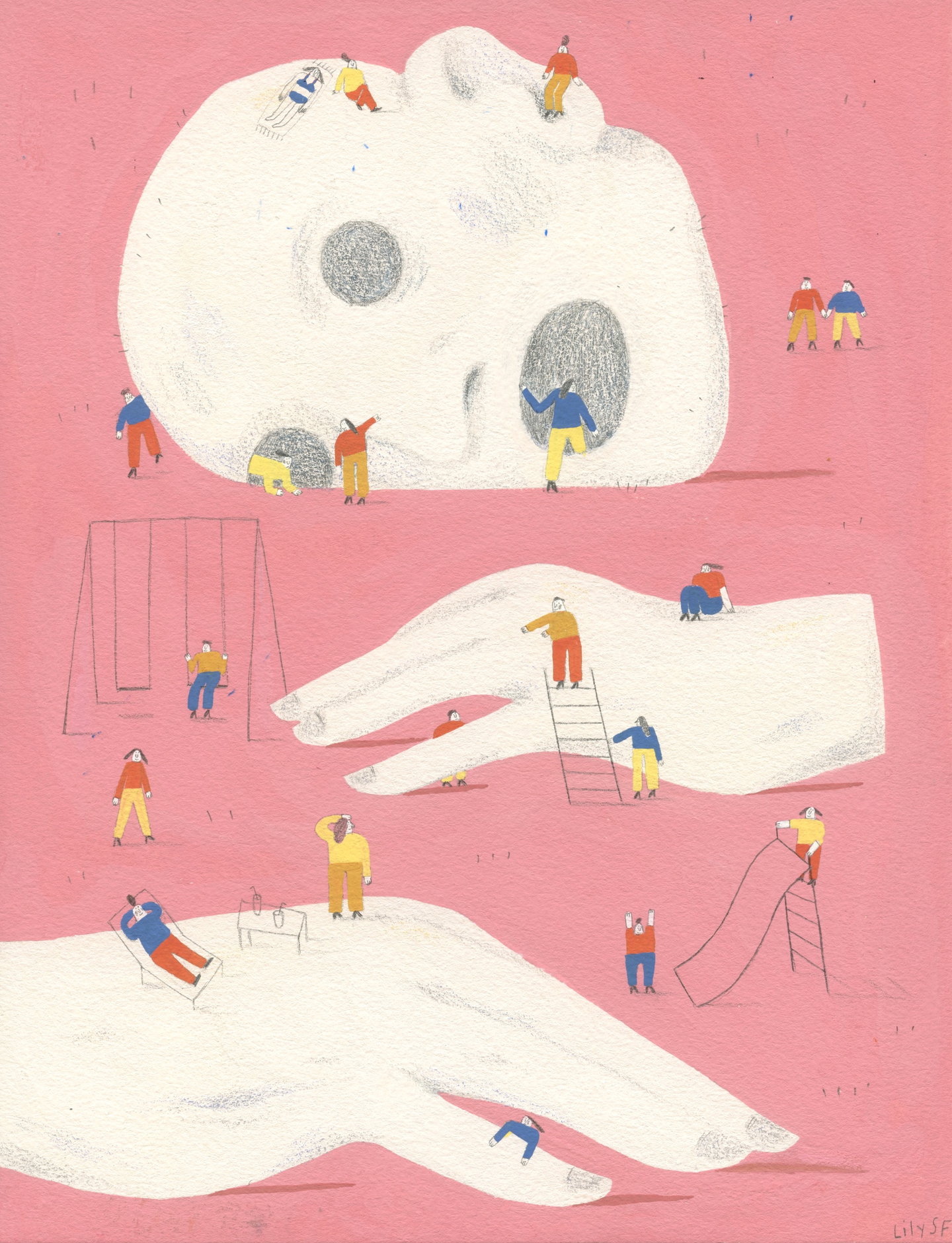
The primary driver of Snowden-Fine’s value is her aesthetic signature. Her paintings frequently depict mundane human interactions—waiting in a doctor's office, walking a dog, or sitting in a cafe—rendered with a flattened perspective and vibrant, often jarring color palettes.
Why This Style Holds Value
- Relatability: In an era of hyper-digitalization and AI-generated imagery, the "human touch" of her intentionally imperfect lines offers a sense of authenticity.
- Cross-Generational Appeal: Her work appeals to both younger collectors who grew up with her voice and seasoned collectors who appreciate the historical lineage of artists like Henri Rousseau or L.S. Lowry.
- Narrative Depth: Each piece functions as a snapshot of a larger story, making them highly "Instagrammable" and shareable, which in 2026 continues to be a major factor in driving secondary market demand.
Market Performance: Primary vs. Secondary Value
In the art world, "worth" is determined by two main factors: the primary market (initial sales through galleries) and the secondary market (resales at auction or through private dealers).
Primary Market Standing
Snowden-Fine is represented by reputable institutions, most notably the Rebecca Hossack Art Gallery in London. Such representation is a critical "green flag" for investors. It ensures that the artist’s prices are managed and not subject to the wild, unregulated fluctuations seen with independent social media artists. As of 2026, her original oil and acrylic works on canvas have seen a steady year-over-year price increase of approximately 8–12%, reflecting controlled growth rather than a volatile bubble.
Secondary Market Liquidity
While her works do not yet appear at the top-tier evening sales of Christie’s or Sotheby’s with the frequency of a blue-chip artist, they have begun to surface in "Contemporary Discoveries" and "Mid-Season" auctions. This indicates that there is a resale demand. For an investor, this means that if you need to liquidate the asset, there is a verified track record of buyers willing to pay a premium over the original purchase price.
Diversification Through Publishing and Commercial Projects
A unique aspect of Snowden-Fine’s "investment worth" is her success in the publishing world. She has illustrated several highly successful books, including Why Do We Do That? and the Dogology/Catology series published by Thames & Hudson.
This commercial success acts as a hedge for fine art investors. Artists who have a presence in the literary and commercial worlds often maintain higher name recognition than those who exist solely within the "white cube" of a gallery. This "brand equity" ensures that even if the fine art market faces a downturn, her cultural relevance is buoyed by her published catalog, which remains in global circulation.
Comparative Investment Tiers
When considering a purchase, it is important to distinguish between the various mediums in which she works, as they offer different levels of potential return.
| Asset Type | Typical Entry Price (2026) | Appreciation Potential | Liquidity | Recommended For |
|---|---|---|---|---|
| Original Paintings (Canvas) | £4,000 – £12,000 | High | Moderate | Serious Collectors |
| Works on Paper / Ceramics | £800 – £2,500 | Moderate | High | New Investors |
| Limited Edition Prints | £150 – £450 | Low to Moderate | Very High | Decorative Buyers |
| Published Books | £15 – £30 | Negligible (unless signed) | N/A | Fans / General Public |
Potential Risks and Considerations
No investment is without risk, and the art market is notoriously illiquid compared to traditional financial instruments.
- Illiquidity: You cannot sell a painting as quickly as a stock. It may take months to find the right buyer through a gallery or auction house.
- Maintenance Costs: To preserve the investment value of an original Snowden-Fine, you must account for professional framing (using UV-protective glass) and climate-controlled environments to prevent pigment fading or canvas warping.
- Trend Sensitivity: While the "Naive Art" movement is currently strong, aesthetic tastes can shift. However, Snowden-Fine’s grounding in classical illustration techniques suggests she is better positioned than "trend-only" artists to weather these shifts.
Expert Guidance: How to Buy for Maximum ROI
If you are looking at Lily Snowden-Fine specifically as an investment, follow these three protocols:
- Seek Provenance: Always purchase through an authorized gallery. Ensure you receive a Certificate of Authenticity (COA) signed by the artist or her representatives. This document is essential for any future resale.
- Focus on "Classic" Subject Matter: Her works featuring groups of people or quintessential urban scenes tend to hold value better than her more abstract or experimental ceramic pieces.
- Monitor Exhibition History: An artist’s value often jumps following a major solo show or a museum acquisition. Stay updated on her upcoming exhibitions in London, New York, and Toronto.
Frequently Asked Questions
Is Lily Snowden-Fine's art considered "Blue Chip"?
No, as of 2026, she is categorized as a "Mid-Career Emerging" artist. Blue-chip status is reserved for artists with decades of auction history and multi-million dollar sales. However, this means her entry price is much more accessible for the average investor, with a higher percentage-based growth potential.
Where can I verify the authenticity of her work?
Authenticity is typically verified through her representing galleries, such as the Rebecca Hossack Art Gallery. If buying on the secondary market (e.g., eBay or Artsy), always ask for the original gallery invoice and the COA.
Does her history as the voice of Peppa Pig help her art value?
Indirectly, yes. It provides a "narrative hook" that makes her story compelling to journalists and collectors. In the art world, the "story" behind the artist is often as valuable as the work itself, as it aids in marketing and historical documentation.
Is it better to buy a print or an original for investment?
For pure investment, an original painting is superior. While prints are more affordable, their value rarely skyrockets because they are not unique. An original painting is a "one-of-one" asset, which drives scarcity and higher price ceilings.
What is the best way to track her market value?
Use platforms like Artnet, Artsy, or MutualArt to track her auction results and gallery price lists. Subscribing to her representing galleries' newsletters is also a vital way to see how quickly her new "drops" sell out, which is a key indicator of demand.
Final Verdict: Is it Worth It?
For a collector looking to diversify their portfolio with contemporary art that has both aesthetic charm and a professional pedigree, Lily Snowden-Fine is a strong "buy." Her dual-threat status as a fine artist and a globally published illustrator provides a level of security that many of her peers lack. While you should not expect "overnight" riches, the steady trajectory of her career suggests that works purchased in 2026 will be viewed as significant pieces of the mid-2020s figurative movement in the years to come.
The most successful art investments are those where the buyer actually enjoys the work. Given Snowden-Fine’s ability to capture the humor and pathos of everyday life, the "dividend" of her work is as much in the daily viewing pleasure as it is in the eventual financial appreciation.
Image Gallery