Forex Trading for Beginners: A Complete 2026 Strategic Guide
Forex, or the foreign exchange market, is the global decentralized arena for trading national currencies against one another. Beginners can enter this market by opening a brokerage account to speculate on currency value fluctuations. S...
Forex, or the foreign exchange market, is the global decentralized arena for trading national currencies against one another. Beginners can enter this market by opening a brokerage account to speculate on currency value fluctuations. Success involves mastering technical analysis, understanding macroeconomic indicators, and implementing strict risk management protocols to protect capital.
Contents
Understanding the Foundation of Foreign Exchange
The foreign exchange market is the largest and most liquid financial market in the world. As of 2026, the daily trading volume continues to exceed $7.5 trillion, dwarfing the combined volume of all the world's stock markets. Unlike centralized exchanges like the New York Stock Exchange, the Forex market is an over-the-counter (OTC) market. This means transactions occur directly between parties through computer networks rather than on a single physical exchange.
The market operates 24 hours a day, five days a week, across four major trading sessions: Sydney, Tokyo, London, and New York. This continuous operation is possible because as one major market closes, another opens in a different time zone. For beginners, this flexibility allows for trading around existing professional or personal schedules, but it also means the market can be influenced by global events at any hour.
In Forex, you are always trading a currency pair. You are simultaneously buying one currency and selling another. The first currency listed in the pair is the base currency, and the second is the quote currency. For example, in the EUR/USD pair, the Euro is the base and the U.S. Dollar is the quote. The exchange rate tells you how much of the quote currency is needed to purchase one unit of the base currency.
Essential Forex Terminology for New Traders
Before placing a single trade, a beginner must be fluent in the specific language of the Forex market. These terms are not merely jargon; they represent the mathematical and operational mechanics of your trades.
Pips and Pipettes
A Pip (Percentage in Point) is the smallest price move that a given exchange rate can make. For most currency pairs, this is the fourth decimal place (0.0001). However, Japanese Yen pairs are an exception, where a pip is the second decimal place (0.01). Many modern brokers also use fractional pips, or pipettes, which represent the fifth decimal place (or third for JPY) to provide even tighter pricing.
The Spread
The spread is the difference between the bid price (what the broker will pay for the currency) and the ask price (what you must pay to buy the currency). This difference represents the primary cost of the trade. Beginners should look for brokers with "tight" or narrow spreads, especially when trading highly liquid pairs like EUR/USD, to minimize entry costs.
Lots and Position Sizing
Forex is traded in "lots," which are batches of currency used to standardize trade sizes.
- Standard Lot: 100,000 units of the base currency.
- Mini Lot: 10,000 units.
- Micro Lot: 1,000 units.
- Nano Lot: 100 units.
Most beginners start with micro lots. This allows for precise risk management, as a one-pip movement in a micro lot typically equates to approximately $0.10, depending on the currency pair.
Leverage and Margin
Leverage is a double-edged sword that allows traders to control large positions with a small amount of capital. For instance, with 30:1 leverage, you can control $30,000 with just $1,000 of your own money. The $1,000 is referred to as the margin. While leverage can significantly amplify profits, it can also accelerate losses, potentially exceeding your initial investment if not managed correctly. Regulatory bodies like the Financial Conduct Authority (FCA) and the Commodity Futures Trading Commission (CFTC) often limit leverage for retail traders to protect them from excessive risk.
Categorizing Currency Pairs
Currency pairs are generally divided into three categories based on their liquidity and the size of the economies they represent.
| Category | Description | Common Examples | Characteristics |
|---|---|---|---|
| Majors | Pairs involving the USD and other top global currencies. | EUR/USD, USD/JPY, GBP/USD | High liquidity, lowest spreads, most stable trends. |
| Minors | Pairs between major currencies that do not include the USD. | EUR/GBP, GBP/JPY, EUR/CHF | Also known as "Crosses"; slightly higher spreads than majors. |
| Exotics | One major currency paired with a currency from a developing economy. | USD/TRY, EUR/TRY, USD/MXN | High volatility, very wide spreads, lower liquidity. |
How to Start Trading: A Step-by-Step Process
Entering the Forex market in 2026 requires a structured approach to ensure both legal compliance and financial safety.
1. Education and Research
Never invest capital until you understand the "Why" behind market movements. Study the difference between Fundamental Analysis (how economic news and interest rates affect currency value) and Technical Analysis (using historical price charts and indicators to predict future movements). Organizations like Investopedia offer extensive free resources for foundational learning.
2. Choose a Regulated Broker
Your broker is your gateway to the market. It is vital to select a broker regulated by a top-tier authority in your jurisdiction, such as the NFA in the United States or ASIC in Australia. Verification of a broker's license can usually be done on the regulator's official website. Consider factors such as platform stability, customer support, and the variety of currency pairs offered.
3. Open a Demo Account
Almost all reputable brokers offer demo accounts funded with "paper money." This allows beginners to practice navigating the trading platform, executing orders, and testing strategies in real-time market conditions without financial risk. It is recommended to spend at least two to three months on a demo account before moving to live trading.
4. Develop a Trading Strategy
A strategy is a set of rules that determines when you enter and exit a trade. This might be based on "Support and Resistance" levels, "Moving Average" crossovers, or reactions to economic news releases like the Non-Farm Payroll (NFP) report.
5. Transition to a Live Account
When moving to live funds, start small. Use micro-lots and only deposit money you can afford to lose. The psychological pressure of trading real money is significantly higher than in a demo environment; starting small helps you manage the emotional aspects of trading.
Critical Risk Management Strategies
Risk management is the most important aspect of Forex trading. Without it, even the best strategy will eventually lead to a "margin call" or account liquidation.
- The 1% Rule: Never risk more than 1% of your total account balance on a single trade. If you have a $5,000 account, you should not lose more than $50 on any individual trade.
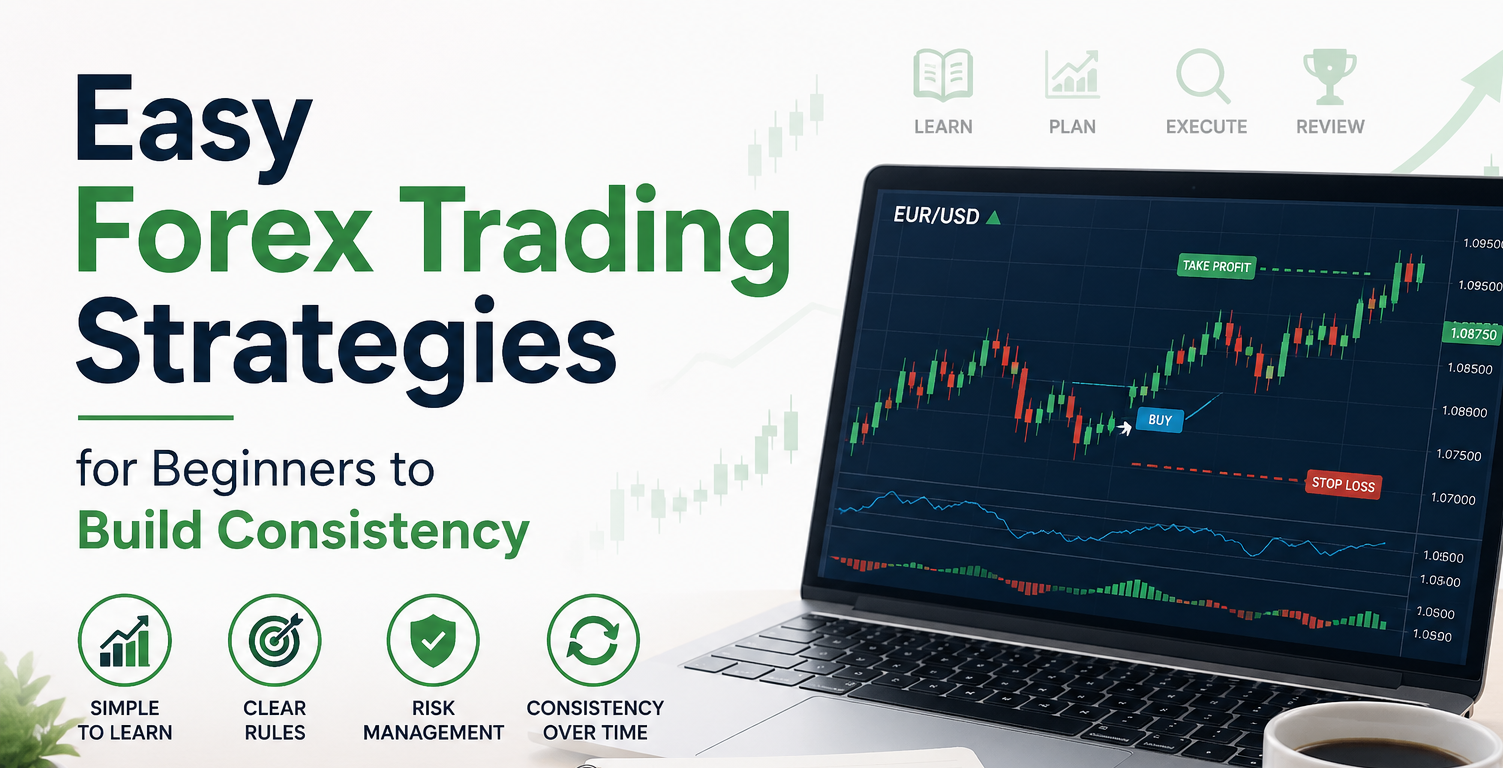
- Stop-Loss Orders: This is an automated instruction to close a trade at a specific price level if the market moves against you. It is your primary defense against catastrophic losses.
- Take-Profit Orders: Similar to a stop-loss, this closes your trade once it reaches a predetermined profit level. It ensures you lock in gains before the market reverses.
- Risk-to-Reward Ratio: Aim for a ratio where your potential profit is at least twice your potential loss (e.g., 1:2). This means that even if you only win 40% of your trades, you can still remain profitable over time.
Analyzing the Market: Fundamentals and Technicals
Successful traders typically use a combination of two analytical styles to make informed decisions.
Fundamental Analysis
This involves looking at the economic "health" of a country. Central banks, like the Federal Reserve or the European Central Bank, play a massive role. When a country raises interest rates, its currency usually strengthens because it offers a higher return for investors. Major economic indicators include:
- Gross Domestic Product (GDP): Measures the total value of goods and services produced.
- Consumer Price Index (CPI): Measures inflation; high inflation often leads to interest rate hikes.
- Employment Data: High unemployment suggests a weak economy and potential currency depreciation.
Technical Analysis
Technical traders believe that all available information is already reflected in the price. They use charts to identify patterns. Common tools include:
- Japanese Candlesticks: These show the open, high, low, and close prices for a specific period.
- Moving Averages: These smooth out price data to identify the direction of the trend.
- Relative Strength Index (RSI): This helps identify if a currency pair is "overbought" or "oversold."
Common Mistakes to Avoid
Many beginners fail because they treat Forex like a casino rather than a business.
- Over-leveraging: Using too much leverage can wipe out an account in minutes. High leverage is not a shortcut to wealth; it is a shortcut to ruin.
- Revenge Trading: Trying to "win back" money after a loss often leads to emotional, irrational decisions that result in even larger losses.
- Ignoring the News: Trading during major economic announcements without understanding the volatility can lead to "slippage," where your stop-loss is triggered at a much worse price than intended.
- Lack of a Trading Journal: Failing to record your trades makes it impossible to analyze what went wrong and how to improve.
Frequently Asked Questions
How much money do I need to start Forex trading?
While some brokers allow you to open an account with as little as $100, it is generally recommended to start with at least $500 to $1,000. This provides enough of a buffer to use proper risk management (the 1% rule) while trading micro lots without being immediately wiped out by a few losing trades.
Is Forex trading a form of gambling?
Forex trading can be gambling if done without a strategy or risk management. However, when approached with statistical analysis, economic research, and disciplined execution, it is a legitimate form of financial speculation similar to stock or commodity trading.
Can I trade Forex on my smartphone?
Yes, most modern brokers provide mobile versions of popular platforms like MetaTrader 4 (MT4) or MetaTrader 5 (MT5). While mobile apps are excellent for monitoring existing positions, many professional traders prefer using desktop setups with multiple monitors for their initial technical analysis and chart study.
Which is the best currency pair for beginners?
The EUR/USD is widely considered the best pair for beginners. It is the most liquid pair in the world, meaning it has the lowest spreads and is less prone to the erratic price "gaps" found in more exotic pairs. Its movements are also heavily documented and analyzed by experts, providing plenty of educational context.
What is a Margin Call?
A margin call occurs when your account equity falls below the broker's required minimum to keep your positions open. At this point, the broker may automatically close your trades to prevent your account from falling into a negative balance. This usually happens due to excessive leverage or holding losing trades too long.
Final Recommendations for New Traders
To succeed in Forex trading in 2026, you must prioritize preservation of capital over the pursuit of profits. Your first six months should be dedicated to education and developing a consistent routine rather than trying to achieve high returns. Start by choosing a highly regulated broker, mastering a single major currency pair, and maintaining a detailed trading journal to track your progress and emotional state.
Image Gallery