Why the Oracle Cloud Security Rules Matter for Your Data
Oracle Cloud Infrastructure (OCI) security rules act as the foundational firewall controlling traffic flow to and from your cloud resources. Understanding and properly configuring these rules matters because they directly prevent unaut...
Oracle Cloud Infrastructure (OCI) security rules act as the foundational firewall controlling traffic flow to and from your cloud resources. Understanding and properly configuring these rules matters because they directly prevent unauthorized access, stop data exfiltration, and ensure compliance with modern regulatory standards. Without robust security rule design, even properly encrypted databases and storage buckets remain exposed to misconfigurations and public internet vectors.
Contents
As cloud environments grow more complex, enterprise organizations shift massive amounts of sensitive financial records, proprietary source code, and customer PII (Personally Identifiable Information) into public cloud providers. Operating within this shared responsibility model means that while Oracle secures the underlying hardware and physical facilities, configuring the virtual firewalls remains entirely your responsibility. Analyzing why security rules matter requires a technical look at stateful packet inspection, least-privilege architecture, network guardrails, and compliance alignment.
Understanding OCI Network Architecture and Security Rules
To understand why security rules matter, you must first understand how OCI structures its network topology. OCI uses Virtual Cloud Networks (VCNs) to isolate your cloud infrastructure from other tenants. Inside a VCN, resources reside in subnets. To control traffic crossing these subnet boundaries, OCI provides two primary firewall mechanisms: Security Lists and Network Security Groups (NSGs).
Security Lists act as virtual firewall rulesets applied at the subnet level. Any resource launched within a subnet automatically inherits the security list rules assigned to that subnet. Conversely, Network Security Groups offer a more granular, resource-level approach. An NSG consists of a set of cloud resources (such as Compute instances) and a set of security rules that apply only to those specific resources, independent of which subnet they occupy.
Both mechanisms rely on stateful traffic processing. When a client initiates a connection to an OCI resource, the inbound security rule permits the request, and OCI automatically tracks the connection state. The corresponding outbound response traffic is allowed back through, regardless of explicit outbound rules. Conversely, stateless rules require manual configuration for both inbound and outbound traffic flows, making stateful rules the default best practice for minimizing human error and misconfiguration.
The Core Risk of Misconfigured Cloud Security Rules
The primary danger of weak or overly permissive security rules is accidental exposure of backend databases and internal microservices to the public internet. A common administrative error involves opening SSH (port 22), RDP (port 3389), or database ports (such as Oracle Database port 1521 or PostgreSQL port 5432) to the entire internet by specifying the source CIDR block as 0.0.0.0/0.
When malicious actors scan public IP ranges, these open ports become immediate targets for brute-force attacks, credential stuffing, and vulnerability exploitation. Once an attacker breaches a misconfigured compute instance, they can pivot laterally through the VCN, accessing internal storage buckets, vault secrets, and backend databases.
Furthermore, data exfiltration does not always look like a dramatic Hollywood cyberattack. Often, it involves an internal compromised container or script quietly siphoning data out through non-standard ports to an external command-and-control server. Outbound security rules are vital for choking off unauthorized egress traffic, ensuring that workloads can only communicate with pre-approved endpoints such as specific API gateways or patch repositories.
Comparing OCI Security Lists and Network Security Groups
Choosing the right traffic control mechanism directly impacts your operational security posture and administrative overhead. The table below outlines the core differences between OCI Security Lists and Network Security Groups.
| Feature | Security Lists | Network Security Groups (NSGs) |
|---|---|---|
| Application Level | Subnet level | VNIC (Virtual Network Interface Card) level |
| Granularity | Applies to all resources in a subnet | Applies to specific grouped VNICs |
| Best Used For | Broad architectural boundaries (e.g., Public vs. Private subnets) | Application-tier isolation (e.g., separating Web, App, and DB tiers) |
| Rule Limit per VCN | Subject to regional service limits | Scalable across multi-tier applications |
| Maintenance Effort | Higher when managing diverse resource types | Lower, as rules attach directly to logical resource groups |
Using Security Lists for broad perimeter defense combined with NSGs for workload-specific isolation creates a defense-in-depth architecture. This layered approach ensures that even if a perimeter rule is accidentally relaxed, internal resource isolation prevents lateral movement.
Enforcing the Principle of Least Privilege
Security rules enforce the principle of least privilege at the network layer. Every rule you write should answer a strict operational requirement: Which specific source IP or security group needs to talk to which destination port, and why?
Broad rules like allowing all TCP traffic from 0.0.0.0/0 violate this principle entirely. To enforce least privilege effectively in OCI:
- Restrict Source IPs: Never use
0.0.0.0/0for administrative ports. Instead, route administrative access through a secure bastion host, a VPN gateway, or OCI Bastion service with specific enterprise CIDR blocks whitelisted. - Specify Ports and Protocols: Avoid blanket protocol allowances. If a web server only needs HTTPS traffic, open port 443 and leave port 80 closed or configured to redirect securely.
- Utilize Service Gateways: When connecting VCNs to Oracle Cloud Services like Object Storage, route traffic through Service Gateways rather than public internet paths, keeping data traffic within Oracle's secure backbone network.
Regulatory Compliance and Audit Requirements
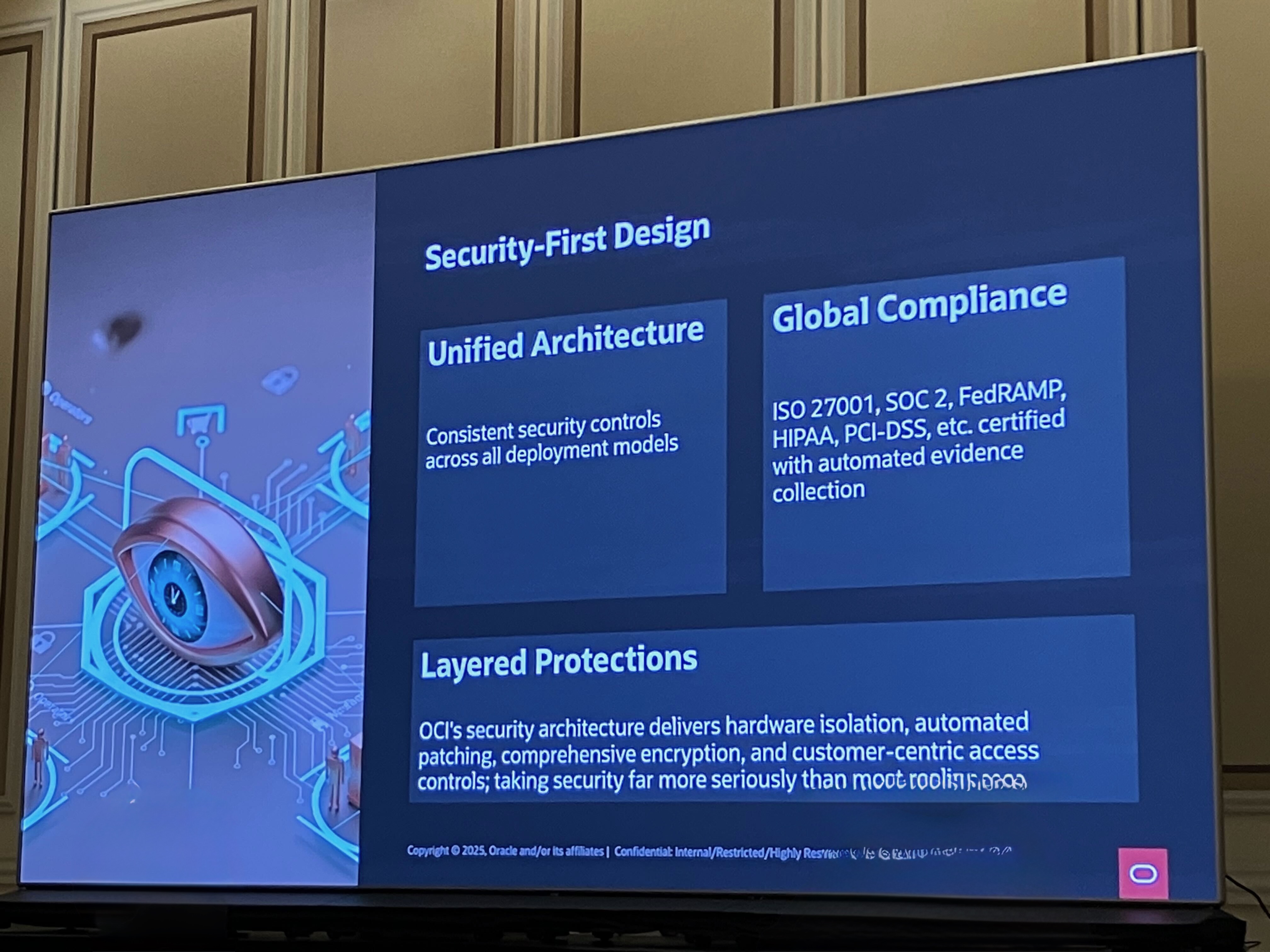
Beyond immediate threat mitigation, security rules play an indispensable role in meeting regulatory compliance frameworks such as SOC 2, HIPAA, PCI-DSS, and ISO 27001. Auditors routinely inspect cloud network architectures to verify that cardholder data, health records, and personally identifiable information are logically segregated from public networks.
Failing to properly document and restrict security rules leads directly to compliance failures, potential financial penalties, and loss of customer trust. Automated compliance tools within OCI, such as Oracle Cloud Guard and OCI Vulnerability Scanning, continuously evaluate your security rules against industry best practices. These tools flag high-risk configurations—such as SSH open to the world—allowing security teams to remediate issues before an audit or breach occurs.
Common Mistakes in OCI Security Rule Management
Even experienced cloud architects occasionally fall into operational traps when managing OCI security rules. Recognizing these pitfalls helps maintain a resilient cloud environment:
- Over-reliance on Default Security Lists: Deploying resources into default subnets without modifying the associated security lists often leaves ports open that were intended to be private.
- Failing to Document Rule Purpose: Adding rules without descriptive display names or tags leads to "rule bloat," where administrators hesitate to delete unknown rules out of fear of breaking production applications.
- Ignoring Outbound Restrictions: Focusing exclusively on inbound traffic while leaving outbound traffic completely unrestricted allows compromised instances to exfiltrate data freely.
- Neglecting Rule Ordering and State: Misunderstanding how stateful inspection handles return traffic can lead to frustrating troubleshooting cycles and unnecessary rule duplication.
Frequently Asked Questions
What happens if I delete an active OCI security rule?
Deleting an active security rule immediately terminates any existing stateful connections dependent on that rule and blocks new traffic matching those parameters. This can instantly break production applications, database connections, or user access. Always verify dependencies using Cloud Guard or VCN flow logs before modifying rules.
Are OCI security rules stateful by default?
Yes. OCI security rules are stateful by default, meaning that when inbound traffic is permitted, the corresponding outbound response traffic is automatically allowed back through. You can configure stateless rules if you require explicit, manual control over both directions of the packet flow, though this increases management complexity.
How do Network Security Groups differ from Security Lists?
Security Lists apply to entire subnets, meaning every resource in that subnet shares the exact same rules. Network Security Groups apply to specific VNICs, allowing you to group distinct instances together regardless of their subnet placement and apply targeted security rules to that group alone.
Can OCI security rules prevent internal lateral movement?
Yes, but only if you use Network Security Groups to isolate individual tiers (such as separating database instances from application servers). If all resources sit in the same subnet protected only by a broad Security List, traffic between those resources is unrestricted by default.
How often should I audit my OCI security rules?
You should audit your security rules continuously using automated tools like Oracle Cloud Guard, alongside formal quarterly manual reviews by your security team. Regular audits ensure that temporary troubleshooting rules are removed and that rule sets align with current business operations.
Practical Next Actions
To secure your Oracle Cloud environment effectively, begin by auditing your current VCNs using Oracle Cloud Guard to identify overly permissive rules, particularly any inbound access from 0.0.0.0/0 on administrative ports. Next, refactor your architecture by migrating resource-level controls to Network Security Groups, separating public, application, and database tiers. Finally, establish a continuous review process to ensure that every security rule modification requires documentation and peer review, protecting your organization's data from evolving cloud threats.
Image Gallery