How Does Net Worth Analysis Work? A Deep Dive into Financial Assessment
Net worth analysis works by systematically identifying, valuing, and aggregating all assets owned by an individual or entity and then subtracting every outstanding liability. This process creates a definitive financial snapshot that re...
Net worth analysis works by systematically identifying, valuing, and aggregating all assets owned by an individual or entity and then subtracting every outstanding liability. This process creates a definitive financial snapshot that reveals true economic standing, enabling informed decisions regarding investment strategies, credit applications, estate planning, and long-term retirement sustainability.
Contents
Calculating net worth is more than a simple subtraction exercise; it is a comprehensive diagnostic tool used by financial advisors, lending institutions, and savvy investors to measure progress and risk. In 2026, the process has become increasingly sophisticated, integrating real-time data feeds and automated valuation models to provide a dynamic view of wealth. Understanding the mechanics of this analysis is essential for anyone looking to optimize their financial trajectory or secure institutional financing.
The Mathematical Foundation: The Net Worth Equation
At its core, net worth analysis relies on the fundamental accounting equation, adapted for personal or corporate finance. The formula is deceptively simple: Total Assets - Total Liabilities = Net Worth.
However, the "work" in net worth analysis lies in the precision of the inputs. An asset is anything of exchangeable value that you own, while a liability is any financial obligation or debt you owe to another party. The resulting figure—your net worth—represents what would be left in cash if you sold everything you owned and paid off every debt today.
In a professional analysis, this figure is often broken down into "Total Net Worth" and "Liquid Net Worth." The latter excludes illiquid assets like real estate or retirement accounts with early-withdrawal penalties, providing a clearer picture of immediate financial flexibility.
Phase 1: Asset Identification and Valuation
The first operational step in a net worth analysis is the exhaustive listing of assets. For the analysis to be valid, these assets must be categorized by their liquidity and valued based on current market conditions rather than purchase price.
Liquid Assets and Cash Equivalents
These are the most straightforward to analyze. They include checking and savings accounts, money market funds, and physical cash. In 2026, most analysts use Open Banking APIs to pull real-time balances directly from financial institutions, ensuring the analysis is accurate to the minute.
Marketable Securities
This category includes stocks, bonds, mutual funds, and exchange-traded funds (ETFs). The analysis must account for the "Fair Market Value" (FMV) of these holdings. For volatile assets, including cryptocurrencies and digital tokens, analysts often use a 30-day moving average to prevent daily price swings from distorting the long-term net worth trend.
Non-Liquid and Tangible Assets
Valuing non-liquid assets is where the analysis requires the most technical depth.
- Real Estate: This often involves looking at recent comparable sales (comps) or professional appraisals. In 2026, AI-driven Automated Valuation Models (AVMs) provide highly accurate estimates for residential property by factoring in local market trends and property-specific upgrades.
- Personal Property: This includes vehicles, jewelry, art, and collectibles. Unlike investments, most personal property depreciates. A rigorous analysis uses "blue book" values or secondary market data rather than original cost.
- Business Interests: For entrepreneurs, the value of their private company is often the largest component of their net worth. This requires a sub-analysis using discounted cash flow (DCF) models or EBITDA multiples to determine a realistic valuation.
Phase 2: Liability Verification and Debt Profiling
The second phase involves a granular look at everything you owe. Neglecting even a small liability can significantly skew the results of the analysis.
Secured Debt
These are loans backed by collateral. The most common is a mortgage, followed by auto loans and home equity lines of credit (HELOCs). The analysis records the current principal balance, not the total of all future payments (which would include interest).
Unsecured Debt
This includes credit card balances, student loans, personal loans, and medical bills. Because these debts typically carry higher interest rates, they are "heavier" liabilities that impact the net worth trajectory more severely than low-interest secured debt.
Contingent Liabilities
Advanced net worth analysis also considers contingent liabilities—obligations that may arise depending on the outcome of a future event, such as potential legal settlements or co-signed loans for others. While often excluded from basic spreadsheets, institutional-grade analyses include these to assess "worst-case" financial health.
Phase 3: Classification and Ratio Analysis
Once the raw numbers are gathered, the analysis moves into the interpretative stage. This is where the data becomes actionable intelligence. A table is often used to visualize the distribution of wealth and debt.
Asset vs. Liability Categorization Matrix
| Category | Item Examples | Valuation Basis | Impact on Liquidity |
|---|---|---|---|
| Current Assets | Cash, Savings, Money Markets | Face Value | High |
| Investment Assets | Stocks, Bonds, Crypto, IRA/401k | Fair Market Value | Moderate to High |
| Use Assets | Primary Residence, Vehicles | Market Appraisal | Low |
| Short-Term Debt | Credit Cards, Monthly Bills | Current Statement Balance | High (Negative) |
| Long-Term Debt | Mortgages, Student Loans | Principal Balance | Low (Negative) |
Key Financial Ratios
A professional analysis calculates specific ratios to provide context to the net worth figure:
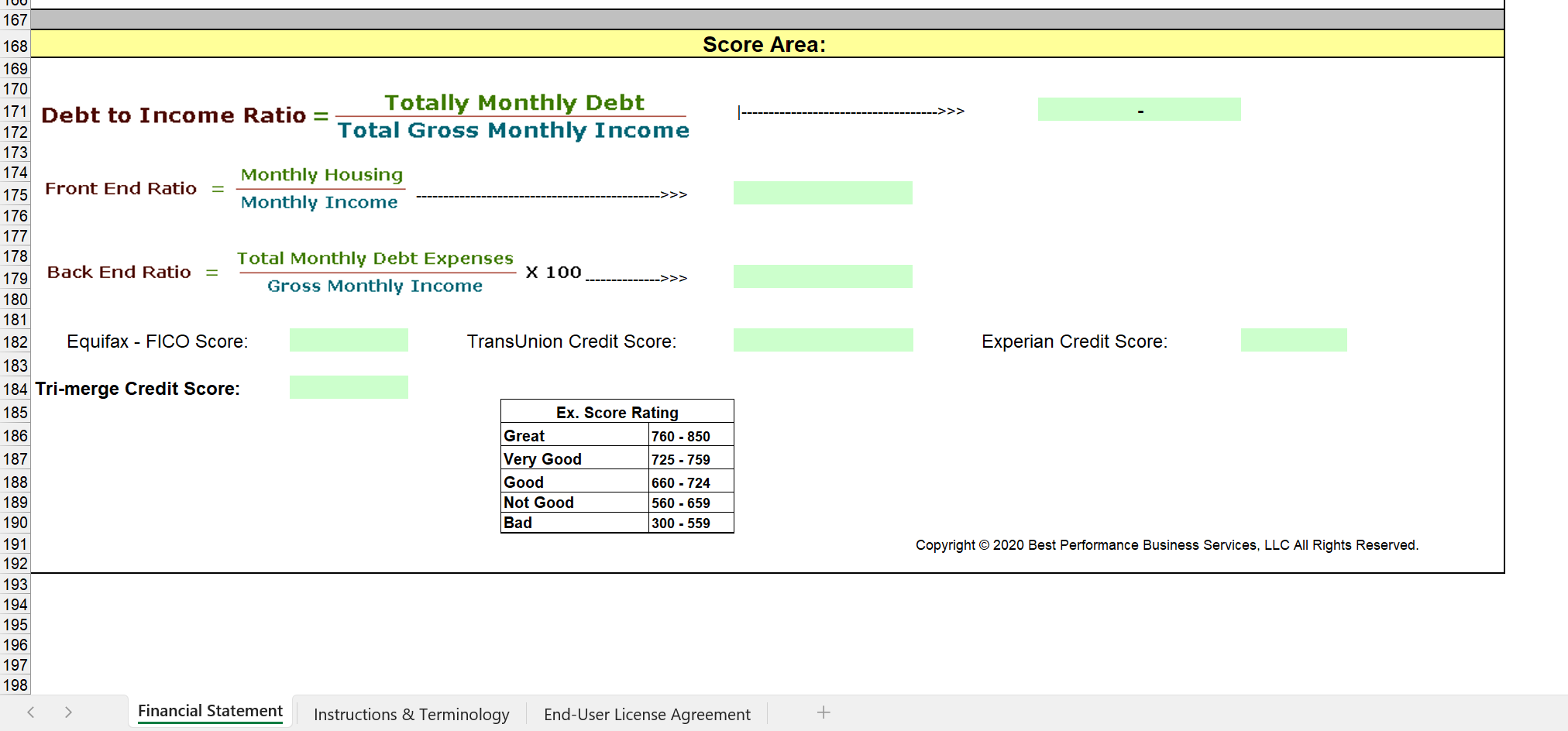
- Debt-to-Asset Ratio: Total Liabilities divided by Total Assets. A ratio of 0.5 means you owe 50 cents for every dollar you own.
- Liquidity Ratio: Liquid Assets divided by Monthly Expenses. This determines how many months you can survive without new income.
- Investment Asset Ratio: Investment Assets divided by Net Worth. This shows how much of your wealth is actually "working" for you through compounding or dividends.
Why Institutions Perform Net Worth Analysis
While individuals use net worth to track personal goals, institutions use it as a primary risk-assessment tool.
Mortgage and Commercial Lending
When applying for a significant loan in 2026, lenders look beyond your income. A high net worth suggests that even if your income stops, you have the assets to satisfy the debt. This is why "Asset-Based Lending" has become a standard for high-net-worth individuals whose wealth is tied up in stocks or real estate rather than a traditional salary.
Estate and Tax Planning
Tax authorities and estate planners use net worth analysis to determine potential estate tax liabilities. By identifying the growth rate of specific assets, they can implement strategies like trusts or gifting to minimize the tax burden on heirs. For information on current federal tax thresholds, refer to the Internal Revenue Service (IRS) guidelines.
Business Acquisitions
In a corporate context, net worth (often called Shareholders' Equity) is the primary metric for determining a company's book value. An analysis of a company's net worth tells a potential buyer how much of the business is owned outright versus how much is financed by creditors.
Common Mistakes in Net Worth Analysis
To ensure the analysis works correctly, one must avoid several common pitfalls that lead to "paper wealth" inflation.
- Including Future Income: Net worth is a snapshot of the present. Future salary, expected bonuses, or projected inheritance should never be included until the cash is actually received and sits in an account.
- Overestimating Real Estate Value: Many people use their "Zestimate" or a neighbor's asking price as their home's value. A professional analysis uses conservative, verified sales data to avoid over-leveraging based on imaginary equity.
- Ignoring Tax Liabilities: If you have $1,000,000 in a traditional 401(k), your net worth isn't truly $1,000,000. You owe deferred taxes on those funds. A sophisticated analysis applies a "Tax-Adjusted" value to retirement accounts to show the actual spendable wealth.
- Neglecting "Hidden" Liabilities: This includes accrued interest on loans or upcoming tax payments that haven't been billed yet but are legally owed.
FAQs About Net Worth Analysis
Does net worth include my salary?
No, net worth does not include your salary. Salary is a flow of income, whereas net worth is a stock of accumulated wealth. While your salary helps increase your net worth (by allowing you to purchase assets or pay down debt), the income itself is not an asset until it is saved or invested.
How often should I perform a net worth analysis?
For most individuals, a quarterly analysis is sufficient. This frequency allows you to see the impact of market fluctuations and debt repayment without becoming overwhelmed by daily volatility. However, if you are preparing for a major financial event—like buying a home or retiring—a monthly update may be necessary.
Is a negative net worth common?
Yes, especially among young professionals and recent graduates. High student loan balances combined with minimal early-career savings often result in a negative net worth. The goal of the analysis in this scenario is not to achieve a high number immediately, but to track the trend as the gap between debt and assets closes over time.
How do I value my personal business for a net worth statement?
Valuing a private business is complex. Generally, you should use the "Book Value" (assets minus liabilities of the business) or a conservative multiple of annual net profit. For more formal requirements, such as securing a business loan, an independent appraisal by a Certified Valuation Analyst (CVA) is often required.
Are lease agreements considered liabilities?
Generally, no. A standard apartment lease or a car lease is considered an expense rather than a liability because you do not own the underlying asset. However, in corporate accounting (under standards like ASC 842), certain long-term leases must be recognized on the balance sheet as "Right-of-Use" assets and corresponding lease liabilities.
Next Steps for a Successful Analysis
To begin your own net worth analysis, start by gathering your most recent statements for all bank, brokerage, and retirement accounts. Use a dedicated financial aggregator or a secure spreadsheet to categorize these as assets. Next, list all outstanding loan balances.
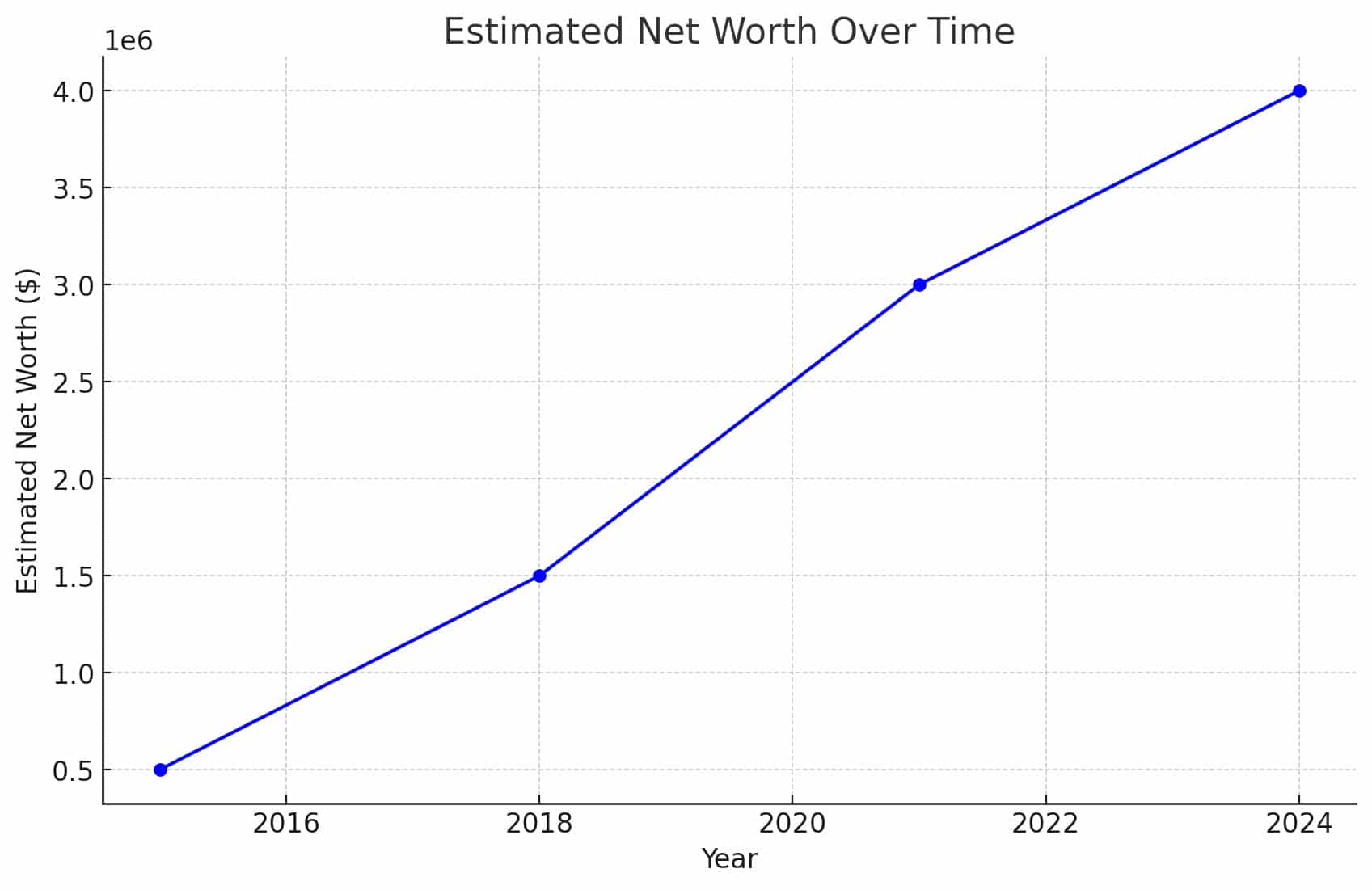
Once you have your baseline, focus on the Net Worth Trend. A single snapshot is useful, but the true value of the analysis lies in seeing that number grow month-over-month. If your net worth is stagnant despite a high income, your analysis is signaling that your "lifestyle creep" or high-interest debt is neutralizing your earnings. Use these insights to reallocate capital toward appreciating assets and high-priority debt elimination.
Image Gallery