Managing the Handling of Security Incidents in Cloud Computing
Managing security incidents in cloud computing requires a specialized framework combining automated threat detection, shared responsibility model awareness, rapid containment strategies, and rigorous post-incident forensic analysis. Be...
Managing security incidents in cloud computing requires a specialized framework combining automated threat detection, shared responsibility model awareness, rapid containment strategies, and rigorous post-incident forensic analysis. Because cloud environments are dynamic, distributed, and ephemeral, traditional on-premises incident response workflows must be adapted to leverage API telemetry, identity and access management logs, and cloud-native orchestration tools.
Contents
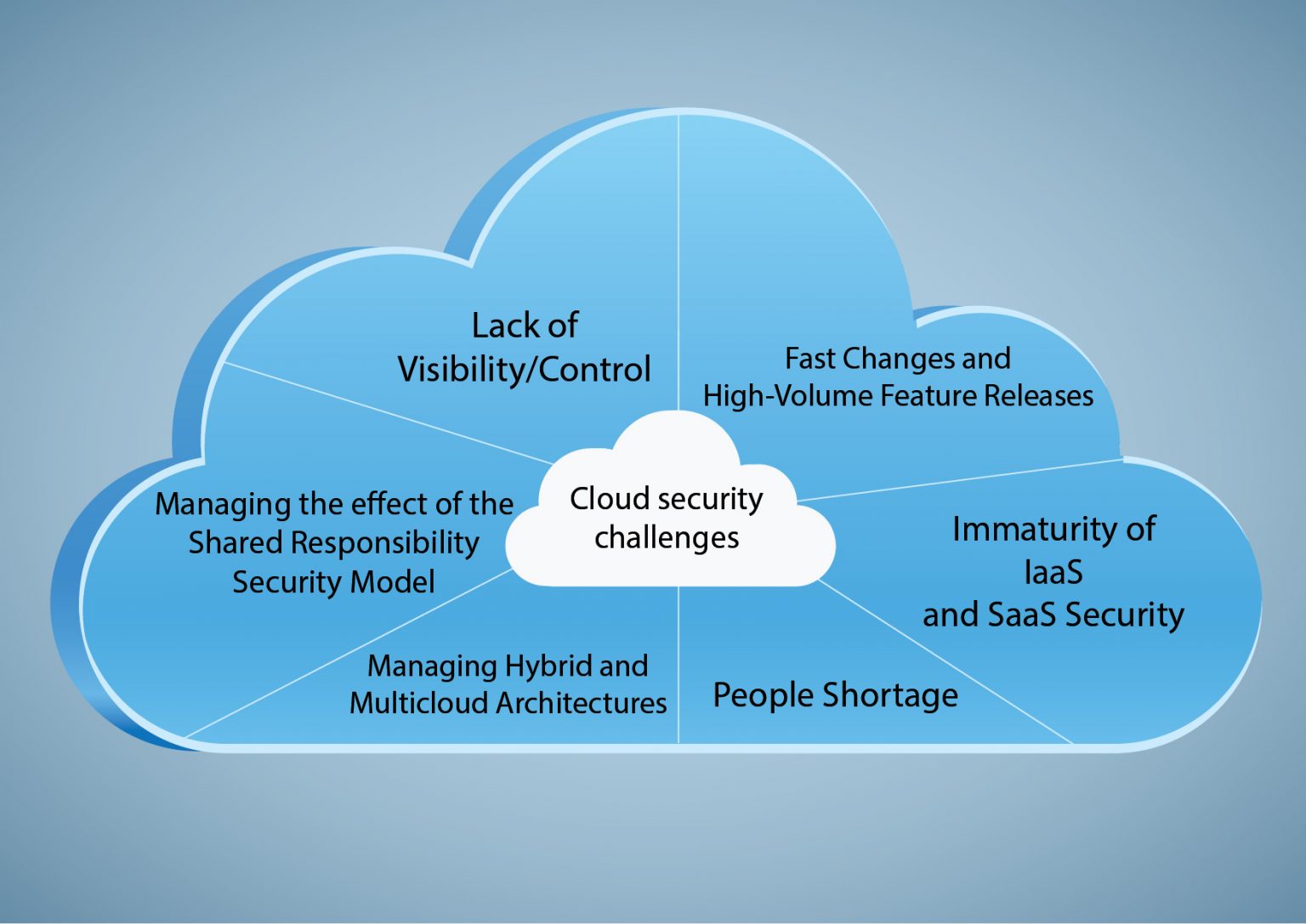
Cloud computing introduces unique architectural complexities that alter how security teams detect, analyze, and resolve compromises. Unlike traditional corporate networks where physical access or static perimeter controls define boundaries, cloud environments rely on virtualized infrastructure, software-defined networking, and multi-tenant hosting. Consequently, managing the handling of security incidents in cloud computing demands a fundamental shift from hardware-centric monitoring to continuous API logging, automated containment, and strict adherence to the shared responsibility model dictated by cloud service providers (CSPs).
Understanding the Cloud Shared Responsibility Model in Incident Response
Before executing any incident response playbook, organizations must understand the boundaries defined by the cloud shared responsibility model. CSPs like Amazon Web Services (AWS), Microsoft Azure, and Google Cloud Platform (GCP) secure the underlying infrastructure—including physical data centers, host operating systems, and network virtualization. Conversely, customers retain responsibility for security in the cloud, which encompasses guest operating systems, application code, data classification, firewall configurations, and identity and access management (IAM) policies.
During a security incident, this division of labor dictates containment capabilities. If an attacker compromises a cloud-hosted virtual machine via an unpatched application vulnerability, the customer must isolate the instance, capture memory forensics, and remediate the code. However, if the incident stems from a hypervisor-level vulnerability or physical hardware compromise, the customer must immediately coordinate with the CSP support and security operations teams. Understanding these operational boundaries prevents wasted effort and ensures that remediation actions comply with the terms of service established by the cloud provider.
Establishing a Cloud-Centric Incident Response Lifecycle
A robust cloud incident response lifecycle follows standard phases—preparation, detection and analysis, containment, eradication, recovery, and lessons learned—while tailoring each step to cloud-native architectures.
- Preparation
- Detection & Analysis
- Containment
- Eradication
- Recovery
- Lessons Learned
Preparation and Tooling
Preparation involves deploying centralized logging, establishing automated alerting rules, and granting incident response teams cross-account access. Organizations should pre-configure security information and event management (SIEM) platforms or cloud-native security tools such as AWS GuardDuty, Microsoft Defender for Cloud, or Google Cloud Security Command Center. Furthermore, forensic readiness requires ensuring that audit logs—such as AWS CloudTrail, Azure Activity Logs, and GCP Cloud Audit Logs—are securely exported to read-only, encrypted storage buckets to prevent tampering by malicious actors.
Detection and Analysis
Detection relies on continuous telemetry ingestion. Security analysts monitor abnormal API calls, unexpected data exfiltration patterns, brute-force login attempts, and privilege escalation events. Because cloud resources spin up and down dynamically, static IP addresses are rarely reliable indicators of compromise. Instead, analysts track user agent strings, API request frequencies, and geographical anomalies within IAM logs.
Containment Strategies
Containment in the cloud differs sharply from physical data centers. Rather than physically unplugging a network cable, cloud administrators utilize programmatic containment measures:
- Security Group Isolation: Modifying security groups or network access control lists (NACLs) to strip all inbound and outbound traffic from a compromised instance, save for a restricted forensic access port.
- IAM Revocation: Instantly invalidating active sessions by revoking IAM user credentials, rotating access keys, or attaching an explicit "Deny All" policy to compromised service accounts or roles.
- Snapshotting: Creating immediate disk and memory snapshots of affected virtual instances for forensic analysis before terminating or quarantining the resource.
Comparative Overview of Cloud Incident Detection Tools
Selecting the appropriate native security tooling streamlines the detection and containment phases across major cloud service providers.
| Cloud Platform | Native Threat Detection Service | Primary Telemetry Source | Recommended Containment Action |
|---|---|---|---|
| Amazon Web Services | Amazon GuardDuty | VPC Flow Logs, DNS Logs, CloudTrail | Revoke IAM sessions, isolate via Security Groups, snapshot EBS |
| Microsoft Azure | Microsoft Defender for Cloud | Azure Activity Logs, Virtual Network Traffic | Isolate Network Security Groups, disable user accounts, trigger automation runbooks |
| Google Cloud Platform | Security Command Center | Cloud Audit Logs, VPC Flow Logs, Packet Mirroring | Revoke IAM service account keys, isolate VPC firewall rules, export disk images |
Eradication, Recovery, and Post-Incident Forensic Analysis
Once an incident is contained, the focus shifts to removing the root cause, restoring services securely, and conducting post-incident reviews.
Eradication of Threat Vectors
Eradication requires eliminating persistence mechanisms established by the attacker. In cloud environments, attackers frequently create rogue IAM users, generate unauthorized SSH keys, modify Lambda functions, or establish backdoors in container images stored in container registries (e.g., Amazon ECR, Azure Container Registry, or Google Artifact Registry). Security teams must scan all container images, review infrastructure-as-code (IaC) templates (such as Terraform or AWS CloudFormation) for unauthorized drift, and patch underlying application vulnerabilities before redeploying workloads.
Cloud Forensics and Evidence Preservation
Preserving forensic evidence in distributed cloud systems presents unique hurdles. Ephemeral resources like serverless functions (AWS Lambda) or auto-scaling container groups vanish upon termination. Consequently, incident responders must automate the capture of ephemeral state data. Key forensic steps include:
- Isolating storage volumes without powering down instances when volatile memory analysis is required.
- Preserving centralized log buckets with Object Lock features enabled to guarantee immutability.
- Exporting cloud API execution histories to reconstruct the precise sequence of administrative commands executed during the breach.
Common Mistakes in Cloud Incident Management
Organizations frequently encounter operational pitfalls when transitioning incident response processes from traditional data centers to cloud platforms. Recognizing these missteps prevents prolonged outages and compounding security failures.
- Failing to Pre-Authorize Security Tools: Deploying forensic agents or SIEM connectors after an incident occurs wastes critical time. All monitoring infrastructure must be integrated into automated deployment pipelines.
- Overlooking Multi-Account Governance: In sprawling multi-account architectures (such as AWS Organizations or Azure Management Groups), security teams often fail to aggregate logs centrally, leaving blind spots in subsidiary or sandbox environments.
- Neglecting Third-Party SaaS and PaaS Integrations: Focusing exclusively on virtual machines while ignoring misconfigured object storage buckets (e.g., public AWS S3 buckets) or exposed API gateways.
- Relying Solely on Manual Interventions: Failing to utilize automated remediation scripts and cloud orchestration tools means response times lag behind automated, bot-driven cloud attacks.
Frequently Asked Questions
How does the shared responsibility model impact cloud incident response?
The shared responsibility model dictates that while cloud providers secure the underlying infrastructure, customers remain entirely responsible for securing their operating systems, data, applications, and configurations. During an incident, customers must execute containment and remediation within their designated scope while coordinating with the CSP if the underlying infrastructure is compromised.
What are the primary logs required for cloud security investigations?
Essential logs include management plane audit trails (such as AWS CloudTrail or Azure Activity Logs), network traffic metadata (VPC Flow Logs), resource configuration histories, and application-level access logs. These logs must be streamed continuously to secure, immutable storage repositories.
How can organizations contain a compromised cloud instance without destroying evidence?
Instead of terminating a compromised virtual machine, administrators should apply restricted network security groups to isolate network traffic, attach an explicit deny-all IAM policy, and create immediate disk and memory snapshots for offline forensic analysis.
What role does automation play in cloud incident management?
Automation accelerates detection and containment through event-driven architectures. Services like AWS EventBridge or Azure Logic Apps can automatically trigger remediation scripts—such as revoking stolen credentials or isolating compromised instances—within seconds of a high-severity alert.
Who should be included in a cloud incident response team?
A comprehensive cloud incident response team includes cloud security engineers, DevOps specialists familiar with infrastructure-as-code, compliance officers, legal counsel, and public relations representatives depending on the severity and regulatory impact of the data exposure.
Next Actions for Security Teams
To operationalize an effective cloud incident response program, organizations should immediately audit their current log retention policies to ensure audit trails are immutable and centrally aggregated. Next, engineering and security teams must conduct tabletop exercises simulating common cloud failure scenarios, such as credential theft or public bucket exposure, to test automated containment workflows and validate cross-team communication channels.
Image Gallery