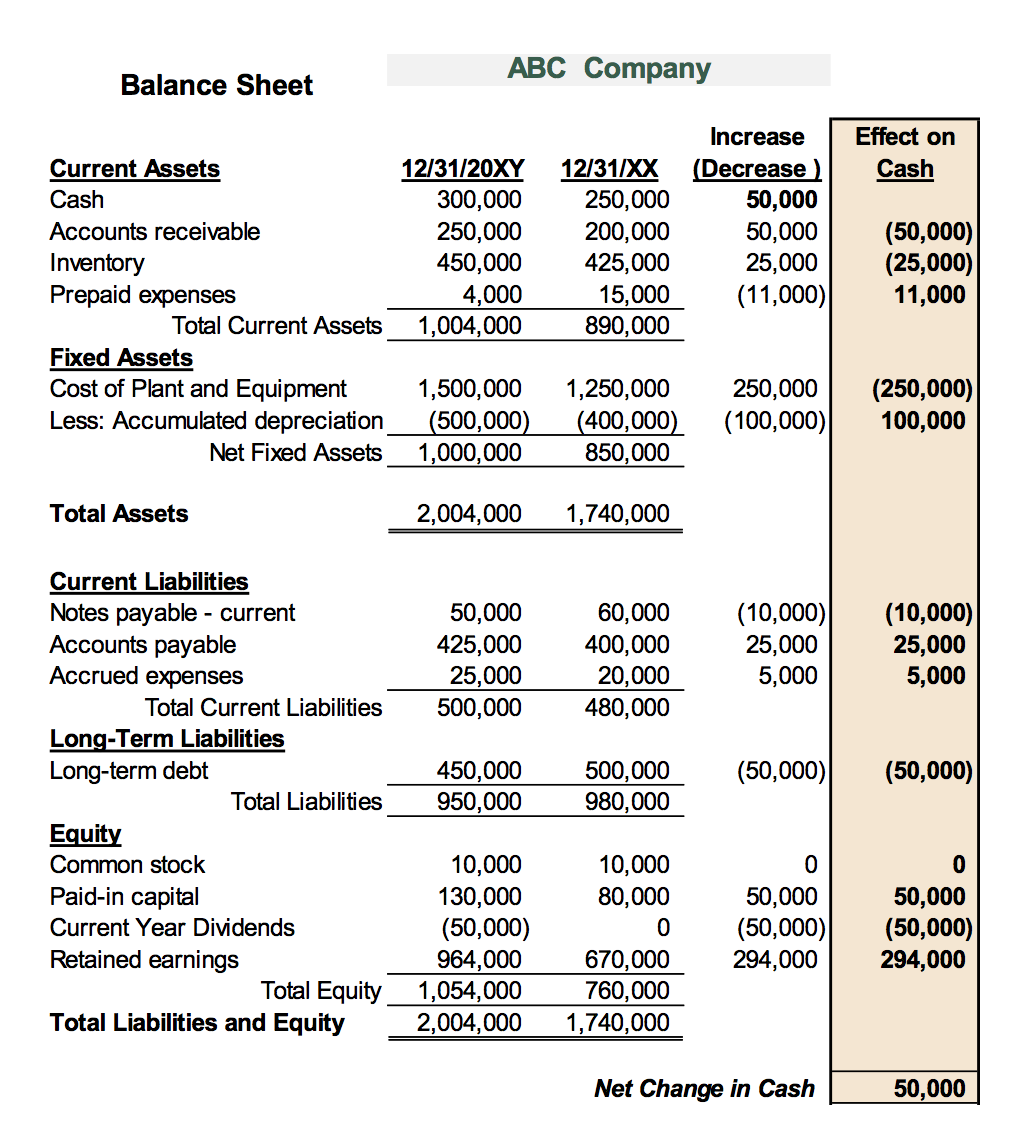
Why Dividends Become a Liability: Cash Payouts on the Balance Sheet Explained
Cash dividends appear as a liability on a balance sheet because once a company's board of directors formally declares a dividend, the business incurs a legally binding obligation to pay its shareholders. This declaration shifts funds o...
Cash dividends appear as a liability on a balance sheet because once a company's board of directors formally declares a dividend, the business incurs a legally binding obligation to pay its shareholders. This declaration shifts funds out of equity (retained earnings) into a current liability account called dividends payable until the cash is distributed on the payment date.
Contents
Disclaimer: The following content is intended strictly for educational and informational purposes and does not constitute formal legal, accounting, tax, or financial advice. Accounting standards and regulatory frameworks vary by jurisdiction. Consult a qualified Certified Public Accountant (CPA) or corporate legal counsel for guidance on specific accounting treatments.
The Accounting Foundation: How Cash Payouts Become Liabilities
In financial accounting, a liability represents a present obligation of an enterprise arising from past events, the settlement of which is expected to result in an outflow of resources embodying economic benefits. Before a dividend is declared, a corporation has no obligation to distribute its profits to common shareholders. Shareholders hold an equity interest—a residual claim on assets after all debts are paid—rather than a creditor relationship with the company.
The legal and accounting status of a dividend changes the moment the board of directors votes to approve a cash payout. Under accounting frameworks established by the Financial Accounting Standards Board (FASB) and International Financial Reporting Standards (IFRS) issued by the IFRS Foundation, a formal dividend declaration creates a legal debt. At that precise moment:
- Shareholders transition from equity holders waiting for optional distributions to unsecured creditors owed a specific dollar amount.
- The company loses the legal right to unilaterally withhold those funds, barring rare corporate restructuring or court intervention.
- The obligation must be classified under current liabilities on the balance sheet because dividends are almost universally scheduled for payment within one fiscal year (typically within weeks or months).
Dividends do not appear on the income statement as an operating expense. Expenses reflect costs incurred to generate revenue during a business period. Dividends, by contrast, represent a distribution of net profits that have already been earned. Consequently, cash dividends bypass the income statement entirely and directly reduce equity while establishing a balance sheet liability.
The Three Critical Dates in the Dividend Lifecycle
Understanding why and when cash payouts appear on the balance sheet requires walking through the three primary milestones of corporate dividend processing: the declaration date, the date of record, and the payment date.
- Declaration Date (Liability Created)
- Date of Record (Roster Finalized)
- Payment Date (Obligation Settled)
1. The Declaration Date
The declaration date is the specific calendar day on which the board of directors publicly announces its decision to issue a cash dividend. The announcement outlines the cash amount per share, the record date, and the payout date.
- Balance Sheet Impact: A current liability ("Dividends Payable") is established on the balance sheet, and equity ("Retained Earnings") is reduced by the total dollar value of the payout.
- Legal Obligation: Once published, the board cannot simply cancel the dividend declaration without severe legal ramifications or explicit shareholder consent in rare corporate distress situations.
2. The Date of Record
The date of record (and the associated ex-dividend date designated by stock exchanges under financial market rules regulated by entities like the U.S. Securities and Exchange Commission) determines which specific investors are entitled to receive the declared payout. Anyone purchasing stock on or after the ex-dividend date will not receive the upcoming dividend; instead, the seller retains the rights to the distribution.
- Balance Sheet Impact: None. The date of record is an administrative benchmark used to finalize the list of eligible account holders. No financial assets, liabilities, or equity values are altered on this date.
3. The Payment Date
The payment date is when the corporation transfers cash funds to the transfer agent or directly to brokerage accounts and shareholders of record.
- Balance Sheet Impact: The current liability ("Dividends Payable") is removed from the balance sheet, and the asset account ("Cash") decreases by an identical amount.
- Net Result: Total liabilities drop back down, cash assets decrease, and equity remains at its newly reduced level established on the declaration date.
Journal Entries: Tracking Dividends Across the Financial Statements
To illustrate how accounting systems handle cash dividend declarations and payments, consider a corporation with 1,000,000 common shares outstanding. On March 1, the board declares a cash dividend of $1.50 per share, payable on April 15 to shareholders of record on March 20. The total cash distribution totals $1,500,000.
Step 1: Journal Entry on the Declaration Date (March 1)
On the declaration date, the business recognizes the debt owed to shareholders and records the reduction in accumulated retained profits.
- Debit: Retained Earnings (or Dividends Declared) — $1,500,000
- Credit: Dividends Payable — $1,500,000
Effect: Total Retained Earnings (Equity) decreases by $1,500,000, while Dividends Payable (Current Liabilities) increases by $1,500,000. Total balance sheet assets remain unchanged, but the claim on those assets shifts from shareholders' equity to short-term creditors.
Step 2: Journal Entry on the Date of Record (March 20)
No financial transaction occurs on the record date. The accounting system logs an administrative memo updating investor registries, but no journal entry is posted.
- Entry: No entry required.
Step 3: Journal Entry on the Payment Date (April 15)
When cash is disbursed to settle the obligation, the liability account is closed out against the cash outflow.
- Debit: Dividends Payable — $1,500,000
- Credit: Cash — $1,500,000
Effect: Current Liabilities decrease by $1,500,000, and Current Assets (Cash) decrease by $1,500,000. The legal liability is completely extinguished.
How Dividend Liabilities Alter Key Financial Ratios
Because dividend declarations instantly create a current liability while leaving cash untouched until the payment date, the period between declaration and payment temporarily distorts several corporate liquidity and solvency metrics. Financial analysts and corporate treasurers monitor these shifts closely.
Working Capital
Working capital measures short-term operational liquidity ($Working\ Capital = Current\ Assets - Current\ Liabilities$).
- On Declaration Date: Current liabilities increase immediately while current assets remain flat. As a result, corporate working capital drops instantly by the exact amount of the declared dividend.
- On Payment Date: Cash (a current asset) and Dividends Payable (a current liability) decrease by the same dollar figure. Working capital remains unchanged on the payment date relative to the declaration period.
Current Ratio
The current ratio evaluates a firm's ability to cover short-term debts with short-term assets ($Current\ Ratio = Current\ Assets / Current\ Liabilities$).
- Impact: Adding a temporary liability to the denominator without increasing the numerator lowers the current ratio. For companies operating with narrow liquidity buffers, a large dividend declaration can push the current ratio below key loan covenants or target operational bands until cash is disbursed or new revenues clear.
Debt-to-Equity Ratio
The debt-to-equity ratio monitors total financial leverage ($Debt-to-Equity = Total\ Liabilities / Total\ Stockholders'\ Equity$).
- Impact: The declaration of a dividend simultaneously increases the numerator (Total Liabilities) and decreases the denominator (Total Equity). This creates a temporary double-acting surge in reported corporate leverage.
Cash Dividends vs. Stock Dividends: Accounting Distinctions
Not all dividends result in a balance sheet liability. The accounting treatment varies dramatically depending on whether a company distributes liquid assets, its own stock, or property.
Stock Dividends Do Not Create Liabilities
When a corporation issues a stock dividend, it distributes additional shares of common stock to existing shareholders on a pro-rata basis rather than paying cash.
Because a company cannot owe itself shares as an asset-backed financial obligation, a stock dividend never creates a financial liability. Instead, it represents a capitalization of equity: funds are transferred internally within the stockholders' equity section from Retained Earnings into Common Stock and Additional Paid-in Capital (APIC). Total stockholders' equity and total corporate assets remain entirely unchanged.
Property Dividends and Scrip Dividends
- Property Dividends: If a business distributes non-cash assets (such as physical inventory, real estate, or stock held in a subsidiary), it must revalue the asset to fair market value on the declaration date, recognize any resulting gain or loss on the income statement, and record a liability for the fair value of the property owed.
- Scrip Dividends: When cash is temporarily constrained, a board may issue a scrip dividend—essentially a promissory note committing to pay shareholders at a future date with interest. Scrip dividends are recorded as a formal short-term or long-term Notes Payable liability on the balance sheet.
Comprehensive Accounting Comparison of Shareholder Distributions
The following table summarizes how different corporate distribution actions affect the balance sheet across key financial dimensions:
| Distribution Type | Liability Recognized? | Retained Earnings Impact | Cash Asset Impact | Total Equity Impact | Net Balance Sheet Size |
|---|---|---|---|---|---|
| Cash Dividend (Declared) | Yes (Dividends Payable) | Decreases immediately | No immediate change | Decreases immediately | Unchanged on declaration |
| Cash Dividend (Paid) | No (Settles existing liability) | No further change | Decreases | No further change | Decreases |
| Small Stock Dividend (<20-25%) | No liability created | Decreases (at fair market value) | No impact | No overall change (reclassified internally) | Unchanged |
| Large Stock Dividend (>20-25%) | No liability created | Decreases (at par value) | No impact | No overall change (reclassified internally) | Unchanged |
| Stock Split (e.g., 2-for-1) | No liability created | No impact | No impact | No impact | Unchanged |
| Property Dividend | Yes (Property Payable at fair value) | Decreases | Indirect (Asset revalued/removed) | Decreases | Decreases |
| Scrip Dividend | Yes (Notes Payable) | Decreases | No immediate impact (Interest incurs later) | Decreases | Unchanged on declaration |
Accounting Standard Frameworks: US GAAP vs. IFRS
While the fundamental concept of dividend liabilities is shared globally, minor regulatory differences exist between U.S. GAAP and IFRS rules regarding declaration timing and reporting periods.
U.S. GAAP (FASB ASC 505)
Under U.S. GAAP, the key criterion for recognizing a liability is the existence of a legally enforceable obligation created by appropriate corporate authority (typically the board of directors). If a dividend is declared before the balance sheet date, it must be recognized as a liability on that balance sheet. If declared after the balance sheet date but before financial statements are issued, it is treated as a non-adjusting post-balance-sheet event and disclosed in the notes.
IFRS (IAS 10 & IAS 32)
Under International Accounting Standard (IAS) 10 (Events After the Reporting Period), if an entity declares dividends to holders of equity instruments after the reporting period, the entity shall not recognize those dividends as a liability at the end of the reporting period. They are disclosed strictly in the financial statement footnotes. A liability is recognized under IAS 32 only when the dividend is appropriately authorized and no longer at the discretion of the entity on or before the balance sheet date. In jurisdictions where shareholder approval is required at an Annual General Meeting (AGM) to finalize a dividend proposed by the board, the liability is not recognized until shareholder approval is formally granted.
Practical Analysis: What Dividend Liabilities Signal to Investors
When examining a balance sheet, financial analysts inspect the "Dividends Payable" line item to assess corporate capital allocation and cash flow hygiene.
Balance Sheet Snapshot (Current Liabilities Section):
| Account | Amount |
|---|---|
| Accounts Payable | $4,200,000 |
| Accrued Expenses | $1,100,000 |
| Short-Term Debt | $2,500,000 |
| Dividends Payable | $1,500,000 (Short-term debt owed to shareholders) |
| Total Current Liabilities | $9,300,000 |
- Cash Flow Timing Gaps: A high balance in Dividends Payable indicates that a major cash drain will occur in the immediate future. Analysts cross-reference this line item against available unrestricted Cash and Cash Equivalents on the balance sheet to verify that the payout will not trigger a short-term liquidity crunch.
- Dividend Safety Coverage: If a company lists a large Dividend Payable while operating cash flows (found on the Statement of Cash Flows) are negative or declining, it may be relying on short-term credit facilities to fund shareholder payouts—a potential red flag for financial distress.
- Dividend Mandate Compliance: Regulatory agencies and credit rating institutions audit dividend payable balance timing to ensure companies do not distribute cash when capital adequacy ratios or legal solvency thresholds fall below mandatory minimums.
Frequently Asked Questions
Are cash dividends listed as expenses on the income statement?
No. Dividends are not operating expenses and do not appear on the income statement. They do not reduce taxable income or net income. Cash dividends represent a direct distribution of accumulated net profits to owners, reducing Retained Earnings on the balance sheet and cash flow from financing activities on the cash flow statement.
Can a board of directors revoke a cash dividend after declaring it?
In standard corporate law, a declared cash dividend creates an enforceable contract between the corporation and its shareholders. The board cannot unilaterally rescind or cancel a declared dividend unless shareholders consent, or the company enters bankruptcy or legal restructuring where corporate solvency laws prohibit illegal distributions.
Why aren't future expected dividends recorded as liabilities?
Liabilities require a past transaction or event that creates a present legal obligation. Although a company may have a 50-year history of paying uninterrupted quarterly dividends, it has no legal obligation to pay future dividends until the board officially meets and declares each specific payout. Consequently, prospective dividends remain unrecorded.
How do cash dividends affect the cash flow statement?
On the declaration date, cash flow is unaffected because no money has changed hands. On the payment date, the cash disbursement is recorded under Cash Flows from Financing Activities (CFF) as a cash outflow.
What happens if a company does not have enough retained earnings to declare a dividend?
In most legal jurisdictions, corporations are prohibited from declaring dividends that exceed their Retained Earnings (often called an illegal dividend or liquidating dividend). If a company distributes capital in excess of accumulated profits, the excess portion is accounted for as a return of capital, reducing Additional Paid-in Capital rather than Retained Earnings.
Strategic Action Checklist for Financial Management
To ensure proper corporate management and financial reporting of cash dividends:
- Verify Board Authorization: Confirm that formal board minutes document the exact dividend rate per share, record date, and payment date prior to booking declaration entries.
- Review Solvency Tests: Ensure the business passes state or jurisdictional statutory liquidity tests (confirming post-distribution assets exceed total liabilities) before publishing a declaration.
- Audit Accounting Entries: Book a debit to Retained Earnings and a credit to Dividends Payable on the declaration date; execute the debit to Dividends Payable and credit to Cash strictly on the payment date.
- Assess Liquidity Ratios: Calculate the post-declaration Current Ratio and Working Capital to verify compliance with existing bank loan covenants before finalizing the payout timeline.
Image Gallery