Best Advertising Campaigns of All Time: A Definitive Analysis of Marketing Mastery
The best advertising campaigns of all time are defined by their ability to reshape consumer psychology, disrupt industry norms, and provide enduring brand value. From Volkswagen’s "Think Small" to Nike’s "Just Do It," these initiatives...
The best advertising campaigns of all time are defined by their ability to reshape consumer psychology, disrupt industry norms, and provide enduring brand value. From Volkswagen’s "Think Small" to Nike’s "Just Do It," these initiatives transcend mere product promotion to become cultural touchstones that influence behavior decades after their initial release.
Contents
Successful advertising is rarely about the product itself; it is about the story the product allows the consumer to tell about themselves. As we evaluate these campaigns from the perspective of 2026, it is clear that while media formats have shifted from newsprint to immersive digital ecosystems, the fundamental principles of emotional resonance, simplicity, and psychological positioning remain the bedrock of marketing excellence.
The Pillars of Iconic Advertising
Before examining specific campaigns, it is essential to understand the criteria that elevate a marketing effort from a "successful quarterly promotion" to one of the "best of all time." Historically, the industry measures impact through three primary lenses:
- Cultural Resonance: Did the campaign change the way people speak or think? Did it enter the zeitgeist?
- Market Transformation: Did it fundamentally alter the brand’s market share or create a new category altogether?
- Longevity and Adaptability: Has the core message remained relevant through changing social and technological eras?
By 2026 standards, we also look at integrated sustainability—how these campaigns evolved to meet the demands of a more socially conscious and digitally fragmented global audience.
1. Volkswagen: "Think Small" (1959)
The "Think Small" campaign, created by the agency Doyle Dane Bernbach (DDB), is widely considered the spark that ignited the "Creative Revolution" in advertising. At a time when American consumers were obsessed with large, muscle-bound vehicles and "planned obsolescence," the Volkswagen Beetle was an anomaly: small, slow, and aesthetically unconventional.
The Strategy of Radical Honesty
DDB’s brilliance lay in embracing the product’s perceived weaknesses and turning them into virtues. The advertisements featured a tiny image of the Beetle surrounded by vast amounts of whitespace. This was a technical departure from the crowded, colorful, and high-pressure sales copy of the 1950s.
The copy was minimalist and self-deprecating. It focused on the benefits of a small car: lower insurance rates, easier parking, and better fuel economy. By treating the consumer as intelligent and capable of seeing through traditional "puffery," Volkswagen built a level of brand trust that remains a case study in psychological positioning. This campaign didn't just sell a car; it sold a counter-cultural identity.
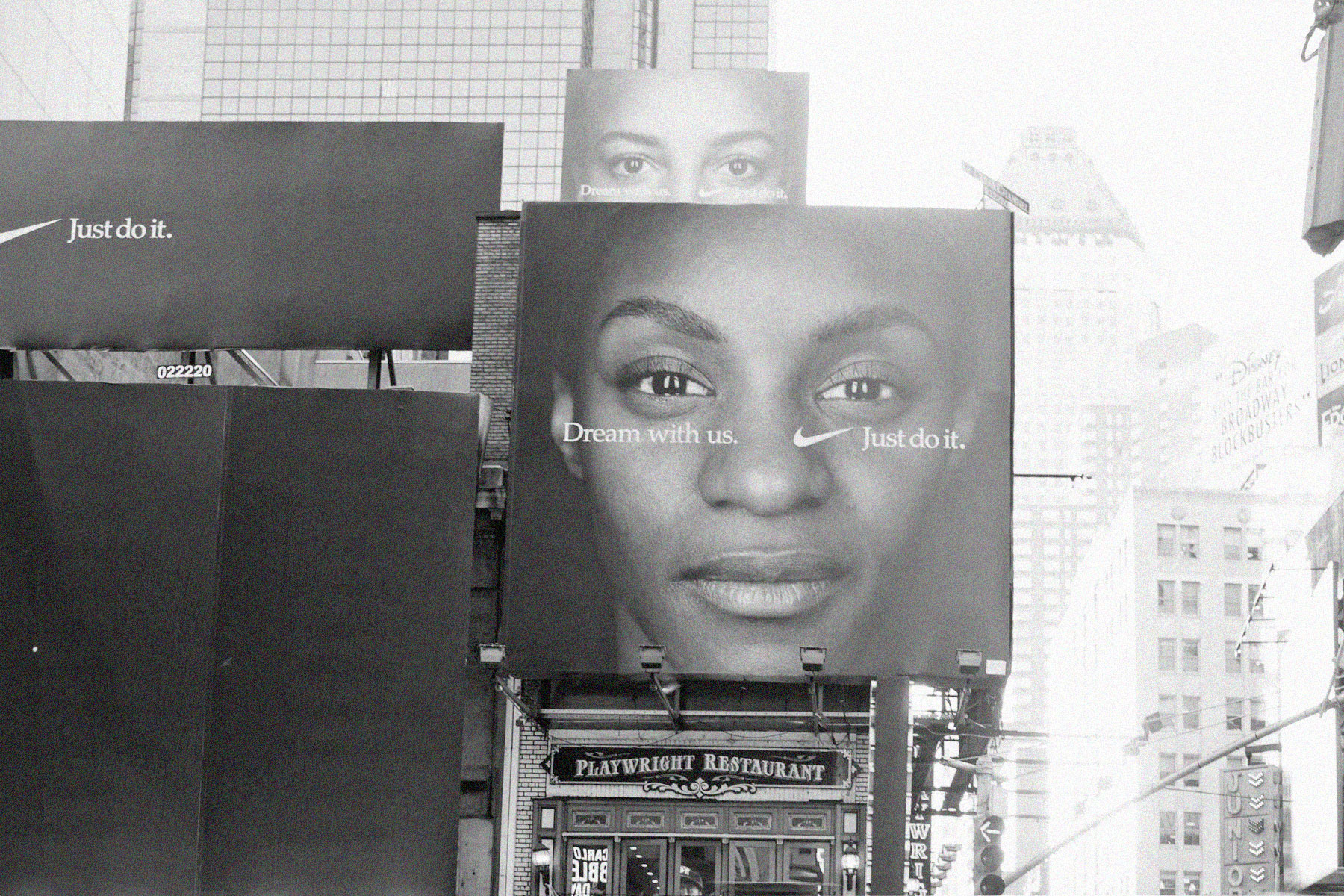
2. Nike: "Just Do It" (1988)
In the late 1980s, Nike was losing ground to Reebok, which had successfully capitalized on the aerobics craze. Nike needed to move beyond its niche as a brand for elite marathon runners and appeal to the masses without losing its "pro-athlete" edge.
The Universal Call to Action
The "Just Do It" slogan, coined by Dan Wieden of Wieden+Kennedy, was famously inspired by the last words of a death row inmate. Despite its dark origins, the phrase became a universal anthem for personal empowerment.
The campaign succeeded because it focused on the emotional payoff of exercise rather than the technical specifications of the shoes. By featuring a diverse array of athletes—from 80-year-old marathoner Walt Stack to professional icons like Michael Jordan—Nike positioned itself as the facilitator of human potential. By 2026, "Just Do It" has transformed Nike into a global powerhouse with a brand valuation exceeding $30 billion, demonstrating the power of a "brand-first, product-second" approach.
3. Apple: "Think Different" (1997)
When Steve Jobs returned to Apple in 1997, the company was weeks away from bankruptcy. The "Think Different" campaign, developed by TBWA\Chiat\Day, was not designed to sell the iMac or the PowerBook; it was designed to remind the world (and Apple employees) what the brand stood for.
Selling a Worldview
The campaign featured black-and-white portraits of "the crazy ones"—visionaries like Albert Einstein, Martin Luther King Jr., and Mahatma Gandhi. The technical brilliance of this campaign was its use of associative branding. By aligning Apple with the world's most innovative minds, the campaign suggested that using an Apple computer was a badge of creative rebellion.
This campaign shifted the conversation away from "megahertz and RAM" to "vision and impact." It laid the groundwork for the lifestyle-ecosystem model that Apple continues to dominate in 2026. It proved that a brand could recover from near-extinction by reclaiming its narrative soul.
4. De Beers: "A Diamond is Forever" (1947)
This is perhaps the most effective example of market fabrication in history. In the early 20th century, diamonds were not a standard requirement for engagement. The N.W. Ayer agency was tasked by De Beers to create a link between diamonds and eternal love.
The Psychology of Rarity and Permanence
The slogan "A Diamond is Forever," written by Mary Frances Gerety, accomplished two things:
- It discouraged the resale of diamonds (keeping the second-hand market from lowering prices).
- It established a societal norm that equated the size and quality of a diamond with the strength of a man’s commitment.
The campaign effectively controlled the supply and demand curve by attaching deep sentimental value to a mineral. Even as lab-grown diamonds gain market share in 2026, the emotional architecture built by De Beers over 80 years ago continues to dictate the traditions of the multi-billion-dollar bridal industry.
5. Dove: "Real Beauty" (2004)
Before 2004, most personal care advertising relied on the "aspiration" model—showing idealized, airbrushed versions of beauty that were unattainable for most consumers. Dove, working with Ogilvy & Mather, inverted this model with the "Campaign for Real Beauty."
Purpose-Driven Marketing
By featuring women of all ages, sizes, and ethnicities, Dove tapped into a latent dissatisfaction with industry standards. The campaign was more than just a series of billboards; it was a social mission. This is a prime example of values-based positioning.
The technical success of "Real Beauty" is measured by its longevity. It evolved from print ads into viral videos like "Evolution" (2006) and "Real Beauty Sketches" (2013), which were among the first pieces of branded content to achieve massive organic reach on digital platforms. In 2026, this remains the gold standard for how a legacy brand can lead a social conversation to drive commercial growth.
6. Coca-Cola: "Share a Coke" (2011)
While many "best" campaigns are decades old, "Share a Coke" is a modern masterclass in personalization at scale. Originally launched in Australia, the campaign replaced the iconic Coca-Cola logo on bottles with the most popular first names in various regions.
The Power of User-Generated Content (UGC)
The genius of this campaign was that it turned every consumer into a brand ambassador. People didn't just buy a Coke; they searched for their name, took a photo, and shared it on social media. It transformed a mass-produced commodity into a personal gift.
| Campaign Element | Coca-Cola "Share a Coke" Strategy |
|---|---|
| Core Mechanism | Replacing the brand logo with consumer names. |
| Primary Goal | Re-engaging younger demographics and driving social sharing. |
| Key Metric | 2% increase in US sales after a decade of decline. |
| Technical Innovation | Mass customization of packaging labels across global markets. |
| Long-term Impact | Established the "personalization" trend in FMCG marketing. |
Comparative Analysis of Historic Impact
To understand why these campaigns succeeded while thousands of others failed, we must look at their strategic foundations. The following table compares these giants based on their primary psychological triggers.
| Brand | Campaign Year | Primary Psychological Trigger | Key Legacy |
|---|---|---|---|
| Volkswagen | 1959 | Transparency / Anti-Establishment | Invented the "Smart Consumer" ad style. |
| De Beers | 1947 | Eternal Love / Social Status | Created a new cultural tradition. |
| Nike | 1988 | Self-Actualization / Empowerment | Shifted sports gear to lifestyle identity. |
| Apple | 1997 | Creativity / Identity | Recovered a brand from near-bankruptcy. |
| Dove | 2004 | Inclusivity / Self-Worth | Pioneered social-purpose marketing. |
| Old Spice | 2010 | Humor / Virality | Proved that legacy brands can be "cool." |
The Role of Technology in Modern Campaigns
As we look at the landscape in 2026, the definition of a "great campaign" has expanded to include technical sophistication in delivery. While the message of Volkswagen was revolutionary, the delivery was limited to print. Today, campaigns like the Old Spice "The Man Your Man Could Smell Like" (2010) are celebrated not just for the creative concept, but for the real-time interaction.
The Old Spice campaign involved a social media response team that filmed hundreds of personalized video replies to fans in near-real-time. This level of interactivity is now a requirement for any campaign aspiring to the "all-time" list. It demonstrates that a great message must be matched by a distribution strategy that respects the medium.
Frequently Asked Questions
What is the most successful ad campaign of all time?
While subjective, many industry experts cite Volkswagen's "Think Small" as the most successful due to its role in revolutionizing the entire advertising industry. However, in terms of financial impact and category creation, De Beers' "A Diamond is Forever" is often considered the most "successful" in terms of creating a permanent global market.
Why do some campaigns fail despite having a large budget?
Failure often occurs when there is a disconnect between the brand's core identity and the message. If a campaign feels "manufactured" or disingenuous—a phenomenon often called "purpose washing"—consumers in 2026 are quick to reject it. Great campaigns require a deep understanding of the audience's emotional needs, not just a high production budget.
Can a local campaign be considered one of the "best of all time"?
Yes. Many global campaigns, such as Coca-Cola’s "Share a Coke," began as local experiments. A campaign is judged by its ability to solve a specific problem with a creative solution that can be scaled or replicated.
How has social media changed the criteria for great advertising?
Social media has shifted the focus from "reach" to "resonance." In the past, success was measured by how many people saw a TV ad. Today, success is measured by how many people engage with, share, and recreate the content. The "best" campaigns now facilitate a two-way conversation rather than a one-way broadcast.
Is the "Just Do It" slogan still effective in 2026?
Absolutely. Its effectiveness lies in its ambiguity and universality. Because it doesn't define what "it" is, every individual consumer can apply the slogan to their own personal challenges—whether that is running a marathon or simply starting a difficult task.
Future Outlook: The Next Evolution
By 2026, the "best" campaigns are increasingly leveraging AI to provide hyper-personalized experiences that still maintain a consistent brand soul. However, the lesson from history is clear: technology is merely a tool. The campaigns that endure are those that touch on universal human truths—our desire for love (De Beers), our need for achievement (Nike), our creative spirit (Apple), and our craving for honesty (Volkswagen).
For brands looking to build the next "campaign of the century," the starting point should not be "What can we sell?" but "What do we believe in that our customers also believe in?" When those two things align, the result is more than an advertisement; it is a legacy.
Image Gallery