Short Term SMART Goals Examples for Students: A Comprehensive Guide for 2026
Short-term SMART goals for students are specific, time-bound objectives designed to be achieved within a timeframe ranging from one day to a single academic semester. These goals—Specific, Measurable, Achievable, Relevant, and Time-bou...
Short-term SMART goals for students are specific, time-bound objectives designed to be achieved within a timeframe ranging from one day to a single academic semester. These goals—Specific, Measurable, Achievable, Relevant, and Time-bound—provide a structured roadmap for improving academic performance, developing essential life skills, and maintaining personal well-being during the 2026 school year.
Contents
Understanding the SMART Framework in a Student Context
Before diving into specific examples, it is essential to understand why the SMART framework remains the gold standard for student productivity. In the current educational landscape of 2026, students face an unprecedented volume of digital distractions and hybrid learning requirements. Without a structured approach to goal setting, the transition between synchronous online lectures and in-person seminars often leads to procrastination and fragmented focus.
Specific: Defining the Target
A goal must be clear and specific; otherwise, you cannot focus your efforts or feel truly motivated to achieve it. Instead of saying, "I want to do better in math," a specific goal would be, "I want to master quadratic equations by the end of this week." This clarity allows you to identify exactly what resources (textbooks, tutoring, or AI-assisted learning platforms) you need to utilize.
Measurable: Tracking Progress
Evidence of progress is vital for maintaining momentum. Measurable goals answer questions such as "How much?" or "How many?" For a student, this might involve tracking the number of pages read, the percentage score on practice quizzes, or the hours spent practicing a musical instrument. If you cannot measure it, you cannot manage the improvement.
Achievable: Reality-Based Planning
While ambition is commendable, a short-term goal must be realistic. If a student is currently failing a course, setting a goal to achieve an A+ by next Tuesday is likely impossible and will lead to discouragement. An achievable goal focuses on the next logical step, such as "Improve my quiz average by 10 points over the next three weeks."
Relevant: The "Why" Behind the Work
Relevance ensures that the goal matters to you and aligns with other relevant goals. In 2026, students must often balance specialized vocational training with general education. A relevant goal for a pre-med student might focus on biology lab skills, whereas a graphic design student might prioritize building a digital portfolio.
Time-bound: The Power of Deadlines
Every goal needs a target date. This prevents everyday tasks from taking priority over your longer-term objectives. For students, time-bound goals are often dictated by the academic calendar—semesters, midterms, and finals—but should also include self-imposed deadlines to manage the workload incrementally.
Academic Performance SMART Goal Examples
Academic success is the most common area where students apply the SMART framework. These goals are designed to break down overwhelming syllabi into manageable tasks.
1. Improving Subject-Specific Grades
- Vague Goal: I want to get better at Chemistry.
- SMART Goal: I will improve my Chemistry lab report scores from an average of 75% to 85% by the end of the current quarter. I will achieve this by attending the weekly teaching assistant (TA) review sessions and submitting a rough draft to the writing center three days before each final submission.
2. Mastering New Research Technologies
As of 2026, the use of ethical AI research assistants and advanced database navigation is standard.
- Vague Goal: I need to learn how to use research tools better.
- SMART Goal: By the end of next month, I will complete the university library’s certified workshop on "Advanced Database Queries and Ethical AI Citation." I will demonstrate this by successfully finding and citing five peer-reviewed sources for my upcoming history thesis using these new methods.
3. Preparation for Final Examinations
- Vague Goal: I need to study for finals.
- SMART Goal: For the next three weeks leading up to my Biology final on December 15, 2026, I will spend 90 minutes each evening (Monday through Friday) using active recall and spaced repetition techniques. My progress will be measured by achieving a score of at least 90% on three different practice exams provided by the instructor.
Personal Development and Soft Skill Examples
In the modern workforce, "soft skills" like communication and time management are as valuable as technical knowledge. Students should use short-term goals to cultivate these attributes.
4. Enhancing Public Speaking Confidence
- Vague Goal: I want to be less nervous when speaking in class.
- SMART Goal: During the Fall 2026 semester, I will volunteer to lead at least two group project presentations. To prepare, I will record myself practicing the presentation three times and solicit feedback from a peer to reduce filler words (like "um" and "uh") by at least 50% between the first and second presentation.
5. Mastering Time Management
- Vague Goal: I want to stop procrastinating.
- SMART Goal: Starting Monday, I will use a digital time-blocking calendar to schedule every hour of my day for the next 14 days. I will include specific blocks for deep work, meals, and exercise. My success will be measured by completing all "priority" tasks by 6:00 PM each day, allowing for a work-free evening.
Health, Well-being, and Balance Examples
A student’s cognitive performance is directly linked to their physical and mental health. Setting SMART goals in this area prevents burnout, especially during high-stress periods like midterms.
6. Establishing a Sleep Routine
- Vague Goal: I need more sleep.
- SMART Goal: For the next 30 days, I will be in bed with all electronic devices turned off by 10:30 PM to ensure I get 8 hours of sleep before my 7:00 AM alarm. I will track this using a sleep diary or wearable device, aiming for a 90% consistency rate.
7. Physical Activity Integration
- Vague Goal: I should exercise more.
- SMART Goal: I will attend a 45-minute yoga or HIIT class at the campus recreation center three times per week (Tuesdays, Thursdays, and Saturdays) for the duration of the spring semester. This will help maintain my energy levels and reduce stress during my internship application window.
SMART Goals vs. Vague Intentions: Comparison Table
The following table illustrates the difference between common student intentions and high-impact SMART goals.
| Area of Focus | Vague Intention | SMART Goal (Short-Term) |
|---|---|---|
| Reading | "I need to read more for class." | "Read 30 pages of the assigned Sociology textbook every Tuesday and Thursday evening to finish the module by Friday." |
| Networking | "I should meet people in my field." | "Attend two industry-specific webinars and connect with at least three speakers on LinkedIn with a personalized message by the end of the month." |
| Organization | "I want to be more organized." | "Spend 15 minutes every Sunday evening at 8:00 PM cleaning my digital desktop and sorting all downloads into the correct course folders." |
| Writing | "I need to finish my essay." | "Write 500 words per day for my English literature essay starting tomorrow, so the first draft is finished five days before the deadline." |
| Language | "I want to learn Spanish." | "Complete one lesson on a language app every morning during my commute for 21 consecutive days to build a basic vocabulary of 200 words." |
Strategies for Achieving Student SMART Goals
Setting the goal is only the first step; implementation requires a tactical approach. For students in 2026, the following strategies are highly effective:
- Use Digital Tracking Tools: Leverage apps like Notion, Trello, or dedicated student planners to visualize your progress. Seeing a "streak" of completed tasks can provide a dopamine hit that encourages continued effort.
- The "If-Then" Planning Method: Anticipate obstacles. For example, "If I am too tired to study after my late-night lab, then I will wake up 30 minutes earlier the next morning to complete the reading."
- Accountability Partners: Share your SMART goals with a roommate or classmate. According to the American Society of Training and Development (ASTD), you have a 65% chance of completing a goal if you commit to someone, and up to a 95% chance if you have a specific accountability appointment with them.
- The Weekly Review: Every Sunday, look back at your goals. If you missed a target, analyze why. Was it too ambitious? Did an unexpected event occur? Use this data to refine your goals for the following week.
Common Pitfalls to Avoid
When students first start using the SMART method, they often make mistakes that can lead to frustration.
- Setting Too Many Goals: Focus on 2–3 short-term goals at a time. Trying to overhaul your grades, fitness, social life, and sleep all in one week usually leads to total collapse of the plan.
- Lack of Specificity in "Measurable": Avoid subjective measures like "feeling smarter." Instead, use "completed 20 practice problems."
- Ignoring the "Achievable" Aspect: Don't forget to account for fixed commitments like work hours or commute times when setting your time-bound deadlines.
Frequently Asked Questions
How many short-term SMART goals should a student have?
It is recommended to have no more than three to five active short-term SMART goals at any given time. This allows you to maintain focus without feeling overwhelmed. You might have one for academics, one for personal health, and one for career development.
What is the difference between a short-term and long-term SMART goal?
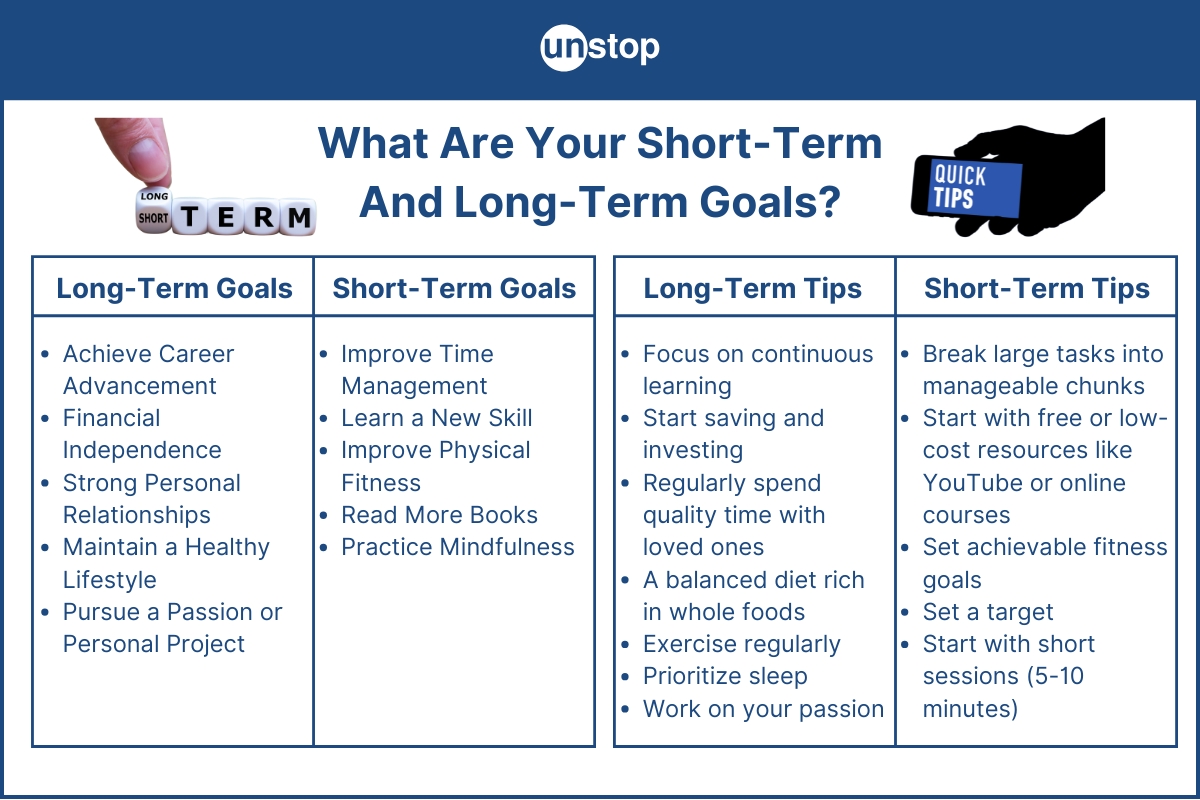
A short-term goal is a "stepping stone" achieved in days, weeks, or a few months. A long-term goal is your "North Star," such as graduating with honors or securing a job at a specific company. Short-term goals should directly support your long-term objectives.
Can SMART goals be adjusted once they are set?
Yes. If you realize a goal is no longer relevant or was set with an unrealistic timeframe, you should adjust it. The purpose of the framework is to facilitate progress, not to act as a source of unnecessary punishment. However, ensure you are adjusting for clarity and realism, not just to avoid hard work.
Why is the "Relevant" part of SMART so important for students?
Students often feel "busy" without being "productive." The "Relevant" criteria forces you to ask if a goal actually helps you reach your larger academic or life targets. If a goal doesn't align with your values or requirements, it may be a distraction masquerading as progress.
What should I do if I fail to meet a SMART goal?
View failure as data. Analyze which part of the SMART criteria failed. Was it not specific enough? Was the deadline too aggressive? Use these insights to set a more refined goal for the next period. Consistent effort is more valuable than occasional perfection.
Final Recommendation for Students
To begin your journey with SMART goals, start small. Select one area of your life—perhaps a difficult course or your morning routine—and write down a single SMART goal for the next seven days. Once you experience the satisfaction of meeting a specific, time-bound target, the momentum will make it easier to tackle larger, more complex objectives. Success in 2026 is not about working the hardest; it is about working the smartest by aligning your daily actions with your clearly defined goals.
Image Gallery