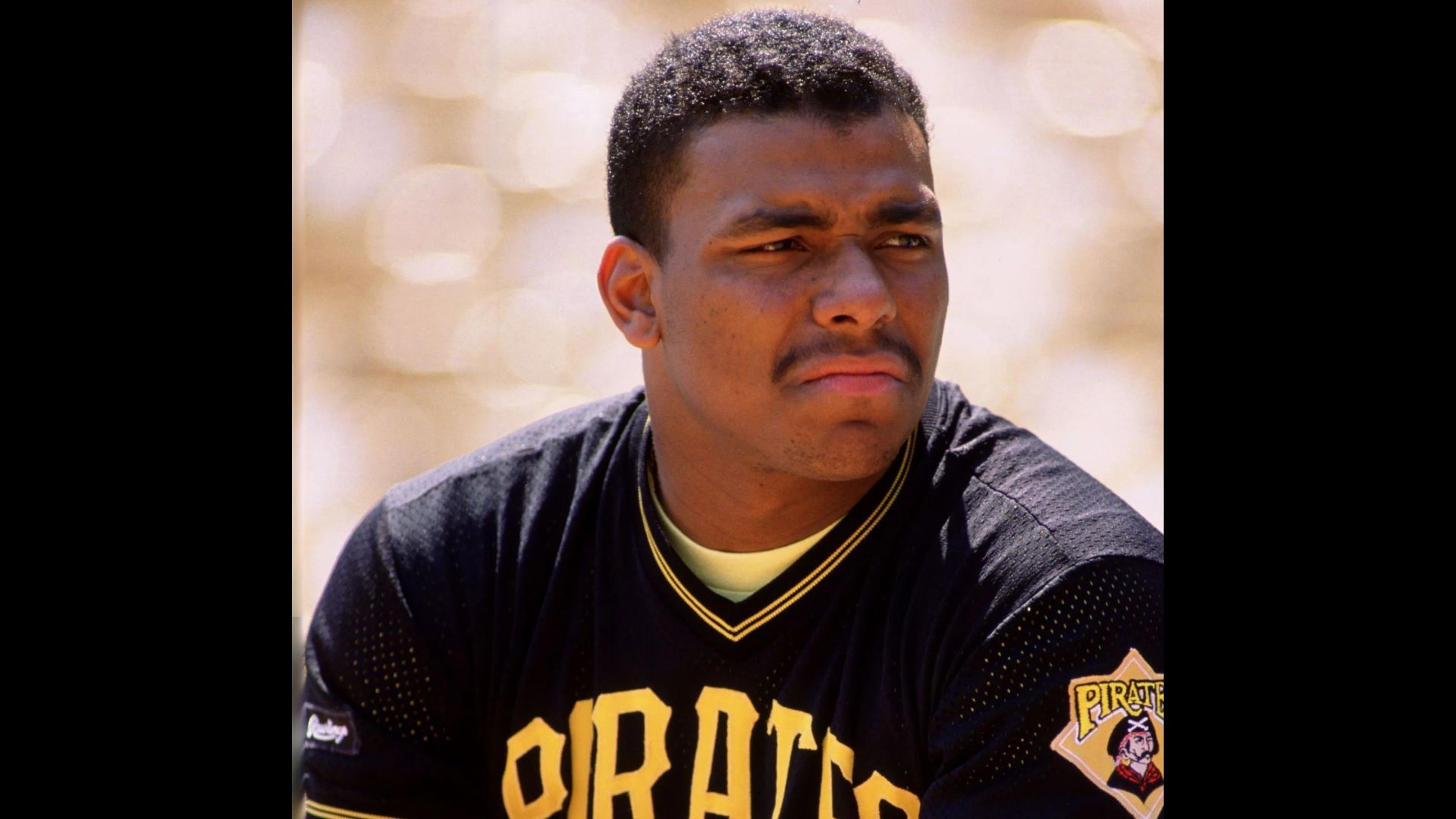
How Much Is Bobby Bonilla Still Getting Paid? The Economics of MLB’s Most Famous Contract
Bobby Bonilla receives an annual payment of $1,193,248.20 from the New York Mets every July 1st. This famous arrangement, known colloquially as "Bobby Bonilla Day," began in 2011 and is scheduled to continue through 2035. Additionally,...
Bobby Bonilla receives an annual payment of $1,193,248.20 from the New York Mets every July 1st. This famous arrangement, known colloquially as "Bobby Bonilla Day," began in 2011 and is scheduled to continue through 2035. Additionally, Bonilla receives a separate deferred payment of $500,000 annually from a second contract involving the Orioles and Mets.
Contents
For sports fans and financial analysts alike, the name Bobby Bonilla is synonymous with one of the most strategic—or infamous, depending on your perspective—contracts in professional sports history. While Bonilla officially retired from Major League Baseball (MLB) in 2001, his presence is felt every summer when the New York Mets cut a check for over a million dollars to a man who has not taken an at-bat for them in over a quarter-century. As of 2026, Bonilla is 63 years old and remains one of the highest-paid "employees" on the Mets' books relative to his active contribution.
The Origin of the $1.19 Million Buyout
To understand why the New York Mets are still paying Bobby Bonilla in 2026, we must look back to the end of the 1999 season. At the time, Bonilla was a six-time All-Star, but his second stint with the Mets had been underwhelming and marred by friction with management. Following a disappointing postseason where Bonilla was famously seen playing cards with teammate Rickey Henderson in the clubhouse while the Mets were losing the NLCS, the team was eager to release him.
Bonilla was still owed $5.9 million for the 2000 season. Rather than paying him that sum upfront to go away, the Mets’ ownership, led by Fred Wilpon, negotiated a deferred payment plan with Bonilla’s agent, Dennis Gilbert. The terms were specific:
- The Mets would delay the $5.9 million payment for 11 years (until 2011).
- In exchange for the delay, the Mets agreed to pay the principal plus an 8% annual interest rate.
- The total accrued amount would be paid out in 25 equal installments every July 1st.
By the time the payments began in 2011, the original $5.9 million debt had ballooned to a total payout of $29,831,205. This resulted in the now-famous annual salary of $1,193,248.20.
Why the Mets Agreed: The Madoff Connection
A common question in 2026 remains: why would a professional sports franchise agree to an 8% interest rate when they could have simply paid the $5.9 million in 2000? The answer lies in a combination of cash flow management and a disastrous investment strategy involving Bernie Madoff.
At the turn of the millennium, the Wilpon family was heavily invested with Madoff. They were reportedly seeing consistent annual returns of 12% to 15% on their investments. From Fred Wilpon’s perspective in 2000, paying Bonilla 8% interest was actually a "profitable" move. If the Mets kept the $5.9 million and invested it with Madoff at 12%, they would cover Bonilla’s 8% interest and still pocket a 4% profit for the team.
However, when Madoff’s Ponzi scheme collapsed in 2008, the logic behind the Bonilla deal crumbled. The Mets were left responsible for the 8% interest payments without the high-yield investments intended to fund them. This turned a calculated financial maneuver into a cautionary tale of investment risk and the time value of money.
The "Other" Bobby Bonilla Contract
While the $1.19 million payment is the most famous, it is not the only deferred money Bonilla collects. There is a second, lesser-known deferred contract resulting from his time with both the New York Mets and the Baltimore Orioles.
This second deal pays Bonilla $500,000 per year. These payments began in 2004 and are scheduled to end in 2028. This means that for several years—including right now in 2026—Bonilla is actually collecting nearly $1.7 million annually from Major League Baseball teams.
The second contract was structured during his 1991 deal with the Mets and subsequent trades. It is a joint obligation that was divided when he moved between teams. While $500,000 may seem small compared to modern MLB salaries, it provides a substantial secondary revenue stream that reinforces Bonilla’s status as the king of deferred compensation.
Bobby Bonilla’s Payment Schedule (2011–2035)
As we stand in 2026, Bonilla has already collected 16 of his 25 scheduled payments from the primary Mets buyout. He has nine payments remaining. The total value of the deal remains fixed, unaffected by inflation or changes in the MLB luxury tax thresholds.
| Payment Date | Source | Amount | Status |
|---|---|---|---|
| July 1, 2011–2025 | NY Mets (Buyout) | $1,193,248.20 / yr | Completed |
| July 1, 2026 | NY Mets (Buyout) | $1,193,248.20 | Current Year |
| July 1, 2027–2035 | NY Mets (Buyout) | $1,193,248.20 / yr | Upcoming |
| July 1, 2004–2028 | Mets/Orioles (Secondary) | $500,000.00 / yr | Ongoing |
| Total Value | Primary Buyout | $29,831,205.00 | Confirmed |
By the time the final check is cut on July 1, 2035, Bobby Bonilla will be 72 years old. He will have spent more time receiving "retirement" checks from the Mets than he spent playing in the Major Leagues.
Comparative Impact: Modern Deferrals and Ohtani
The Bobby Bonilla deal paved the way for modern "mega-deferrals." While the Mets were mocked for decades, many teams have since used similar structures to manage the Competitive Balance Tax (CBT) and immediate cash flow requirements.
The most notable comparison in the 2020s is Shohei Ohtani’s contract with the Los Angeles Dodgers. Ohtani signed a 10-year, $700 million deal, but famously deferred $680 million of it to be paid out between 2034 and 2043.
The difference between the Ohtani deal and the Bonilla deal comes down to the Time Value of Money. Ohtani’s deal carries a 0% interest rate on the deferred portion, meaning the "present value" of his $700 million is significantly lower (approximately $460 million in 2024 dollars). In contrast, Bonilla’s deal included a high 8% interest rate, which is why his $5.9 million debt grew to nearly $30 million. While Bonilla’s total sum is smaller, his deal was far more "pro-player" in terms of interest accumulation.
Other players with significant deferred payments include:
- Max Scherzer: Collecting $15 million annually from the Washington Nationals through 2028.
- Ken Griffey Jr.: Collected nearly $3.6 million annually from the Cincinnati Reds through 2024.
- Manny Ramirez: Still receiving payments from the Boston Red Sox through 2026.
Financial Lessons from the Bonilla Payout
The Bonilla contract serves as a primary case study in financial planning and the power of compound interest. For an athlete, the deal provided a "guaranteed annuity" that ensures financial security long after their physical peak. For the organization, it demonstrated how short-term relief (avoiding a $5.9 million charge in 2000) can lead to long-term liabilities that impact the brand's public perception.
In 2026, the $1.19 million payment is no longer a significant burden for the Mets, especially under the ownership of Steve Cohen, whose net worth allows the team to absorb such legacy costs easily. In fact, the Mets have leaned into the "Bobby Bonilla Day" phenomenon, using it as a marketing opportunity rather than a source of embarrassment.
Frequently Asked Questions
Does Bobby Bonilla still have to pay taxes on this money?
Yes. The annual $1,193,248.20 is considered earned income for the year it is received. Because Bonilla is a resident of Florida, which has no state income tax, he avoids the heavy New York state and city taxes he would have paid if he received the money while playing for the Mets in 2000. This tax strategy likely saved him millions of dollars over the life of the contract.
When does Bobby Bonilla’s last payment occur?
The final payment of the primary $1.19 million buyout is scheduled for July 1, 2035. The secondary $500,000 payment from the Orioles/Mets deal is scheduled to end sooner, on July 1, 2028.
Is Bobby Bonilla the only player with a "day" like this?
While many players have deferred money, "Bobby Bonilla Day" is the only one that has reached cultural icon status. This is due to the specific July 1st payment date, the high 8% interest rate, and the fact that it was negotiated to solve a clubhouse chemistry issue rather than a standard free-agent signing.
Why didn't the Mets just pay him the $5.9 million in 2000?
The Mets wanted to use that $5.9 million to sign other players for a championship run in 2000 (which they did, reaching the World Series). Furthermore, ownership believed their investments with Bernie Madoff would yield returns much higher than the 8% interest they promised Bonilla.
How much has he been paid in total so far?
As of the July 1, 2026 payment, Bonilla has received approximately $19.09 million from the primary Mets buyout deal alone, in addition to the $11.5 million he has received from the secondary $500k deal since 2004.
Recommendation for Observers
If you are analyzing sports contracts or personal finance, the Bobby Bonilla deal should be viewed through the lens of Net Present Value (NPV). While the $29.8 million total figure sounds massive, $1.19 million in 2026 has significantly less purchasing power than $1.19 million did in 2011 due to inflation. When negotiating long-term payouts, always account for the anticipated inflation rate versus the interest rate provided. For the Mets, the "mistake" wasn't the deferral itself, but the 8% interest rate which was significantly higher than standard market rates for fixed annuities.
Image Gallery