Understanding the Lennon-McCartney Relationship: A Definitive History of Music’s Greatest Partnership
The Lennon-McCartney relationship was the foundational engine of The Beatles, characterized by a unique blend of fraternal love, intense creative competition, and complementary musical sensibilities. From their 1957 meeting to the 1970...
The Lennon-McCartney relationship was the foundational engine of The Beatles, characterized by a unique blend of fraternal love, intense creative competition, and complementary musical sensibilities. From their 1957 meeting to the 1970 dissolution of the band, John Lennon and Paul McCartney forged a songwriting partnership that redefined global popular culture and music theory.
Contents
The Genesis of the Partnership (1957–1962)
The most consequential meeting in music history occurred on July 6, 1957, at St. Peter's Church Rose Queen garden fete in Woolton, Liverpool. A fifteen-year-old Paul McCartney was introduced to a sixteen-year-old John Lennon, who was performing with his skiffle group, The Quarrymen. The initial bond was forged not just through music, but through a shared proficiency in instruments and a mutual status as "outsiders" in the post-war British landscape.
A critical, often overlooked element of their early bond was personal tragedy. Both Lennon and McCartney lost their mothers during their adolescence—Mary McCartney died in 1956, and Julia Lennon in 1958. This shared trauma created a psychological shorthand between the two that others in the band’s orbit could not replicate. They began skipping school to write songs in the front room of McCartney’s home at 20 Forthlin Road, establishing a handshake agreement that all songs written by either of them—or both—would be credited to "Lennon-McCartney."
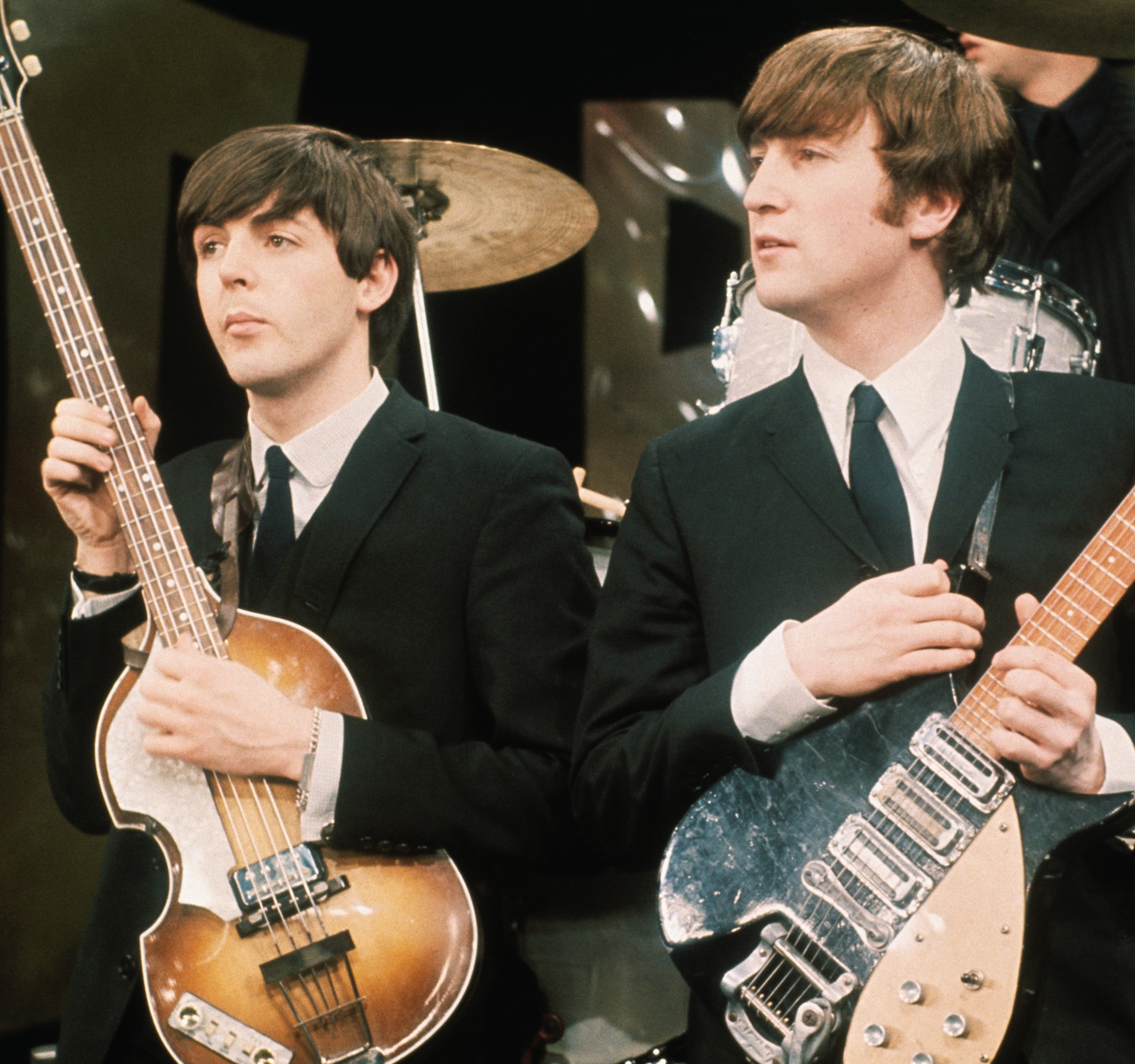
During this "apprenticeship" phase in Liverpool and Hamburg, they developed a collaborative method often called "eyeball to eyeball." Sitting across from each other with acoustic guitars, they would trade lines and chords, a process that ensured no song was finished until it had survived the other’s scrutiny.
The Mechanics of Collaboration: Competitive Synergy
As The Beatles’ fame exploded, the nature of the Lennon-McCartney relationship shifted from purely collaborative to a more competitive, yet still integrated, dynamic. While they continued to share the credit, by the mid-1960s, many songs were primarily the work of one individual. However, the "Lennon-McCartney" brand remained a reality because of their roles as each other's primary editors.
The "Middle Eight" and The "Sanding Down"
Lennon’s style was typically characterized by raw, introspective lyrics and a preference for rock and roll grit. McCartney, conversely, leaned toward melodic complexity, sophisticated arrangements, and character-driven narratives. Their greatest works often occurred when one provided the "missing piece" for the other.
For instance, in "We Can Work It Out," McCartney’s optimistic verses are countered by Lennon’s philosophical and impatient middle eight ("Life is very short, and there's no time for fussing and fighting, my friend"). This tension between Lennon's cynicism and McCartney’s optimism created a balanced "universal" perspective that neither could achieve in isolation.
Songwriting Archetypes Comparison
| Feature | John Lennon’s Primary Traits | Paul McCartney’s Primary Traits |
|---|---|---|
| Lyrical Focus | Introspection, social commentary, surrealism. | Storytelling, optimism, domesticity. |
| Harmonic Approach | Static melodies, blues-inflected, rhythm-heavy. | Wide intervals, walking basslines, classical influence. |
| Production Preference | Raw, "honest" sounds, experimental tape loops. | Polished, multi-layered, symphonic arrangements. |
| Key Instrument | Rhythm guitar, piano. | Bass guitar, piano, lead guitar. |
The Fracture: 1967–1970
The death of manager Brian Epstein in August 1967 is widely cited by historians as the beginning of the end for the Lennon-McCartney partnership. Epstein had served as the buffer and the unifying force for the group’s business and personal affairs. In his absence, the power vacuum led to friction.
McCartney, sensing the band’s lack of direction, took a de facto leadership role, spearheading projects like Magical Mystery Tour. Lennon, meanwhile, began to retreat from the group dynamic, influenced by his relationship with Yoko Ono and a growing desire for artistic autonomy. The "eyeball to eyeball" sessions became rarer, replaced by a "separate but equal" recording process where the author of a song acted as the "director" for the rest of the band.
The relationship finally ruptured over business disagreements. The choice of a new manager—Lennon (along with George Harrison and Ringo Starr) favored the aggressive Allen Klein, while McCartney favored his father-in-law, Lee Eastman—created an irreconcilable divide. By the time of the Get Back sessions in 1969 (re-examined through Peter Jackson's 2021 documentary), the tension was palpable, though glimpses of their old camaraderie remained.
Post-Beatles Conflict and the 1970s Legal Wars
When McCartney publicly announced the "breakup" of The Beatles in April 1970 to promote his solo album, Lennon felt betrayed, as he had privately told the band he was leaving months earlier. The 1970s began with a period of "public sniping" through music.
- McCartney’s "Too Many People" (1971): Contained veiled jabs at Lennon’s political preaching.
- Lennon’s "How Do You Sleep?" (1971): A brutal, direct attack on McCartney’s character and talent.
Despite the public animosity, the personal link was never fully severed. In 1974, during Lennon’s "Lost Weekend" in Los Angeles, McCartney visited him, leading to the only known recording of the two playing together post-Beatles (a loose, bootlegged jam session known as A Toot and a Snore in '74). By the mid-1970s, the legal battles were largely resolved, and the two began to communicate more warmly as friends and fathers, though they never officially collaborated on a song again.
The Legacy from a 2026 Perspective
As of 2026, the Lennon-McCartney relationship is viewed through a more nuanced lens than the "rivalry" narrative of the late 20th century. The release of archival footage and extensive biographies has clarified that their partnership was not just about the notes on the page, but about a profound psychological mirroring.
Modern musicological analysis emphasizes that they functioned as a "closed system." Even when they weren't in the same room, they were writing for each other. Lennon once noted that he could feel Paul's presence when writing a lyric, wondering if Paul would think a line was "too soft." This "phantom collaboration" ensured that the quality control established in the 1950s persisted until Lennon's death in 1980.
In the current landscape of 2026, the Lennon-McCartney catalog remains the benchmark for collaborative success. Their ability to sublimate individual ego for the benefit of the song remains the standard taught in music conservatories and business leadership courses alike.
Frequently Asked Questions
Who wrote more of The Beatles' hits?
While the credits are joint, statistical analysis and historical records (including the 1980 Playboy interview with Lennon and McCartney’s book Many Years From Now) suggest they were nearly equal. McCartney wrote more of the later "Number 1" hits like "Hey Jude" and "Let It Be," while Lennon was the primary architect of the early "Beatlemania" sound and experimental masterpieces like "Strawberry Fields Forever."
Did they ever reconcile before John Lennon's death?
Yes. By 1980, the relationship was cordial. McCartney has frequently recalled their final phone conversations as being friendly and focused on domestic life, cooking, and their children. While a professional reunion was not imminent, the "war" of the early 70s had ended years prior to the tragedy in New York.
Why did they always use the Lennon-McCartney credit even for solo songs?
The credit was a binding legal agreement signed in their youth. Beyond the legalities, it served as a brand that signified a specific standard of quality. Even when a song was 100% written by one person (such as McCartney's "Yesterday" or Lennon's "Julia"), the joint credit acknowledged the foundational role each played in the other’s development.
What was the main cause of their breakup?
There was no single cause. It was a combination of "business versus family." The dispute over Allen Klein's management, the differing influences of Yoko Ono and Linda McCartney, and the natural desire of two maturing artists to exert total control over their work all contributed to the inevitable dissolution of the partnership.
Is it true they wrote "eyeball to eyeball" for every song?
In the early days (1957-1964), yes. Most songs were written in hotel rooms or at Forthlin Road with both present. As they grew more independent, they would bring "unfinished" songs to each other to fix a bridge, a lyric, or a chord progression. By the end (1968-1970), they were mostly writing separately but still recording together.
Recommendation for Further Study
To truly understand the intricacies of the Lennon-McCartney dynamic, researchers should prioritize primary source materials. The The Beatles Anthology provides firsthand accounts of their collaboration, while the British Library's Lennon-McCartney manuscripts offer a visual look at how they edited each other's work. For those interested in the psychological aspects of the partnership, the 2021 Get Back documentary remains the most essential visual evidence of their creative shorthand.
Image Gallery