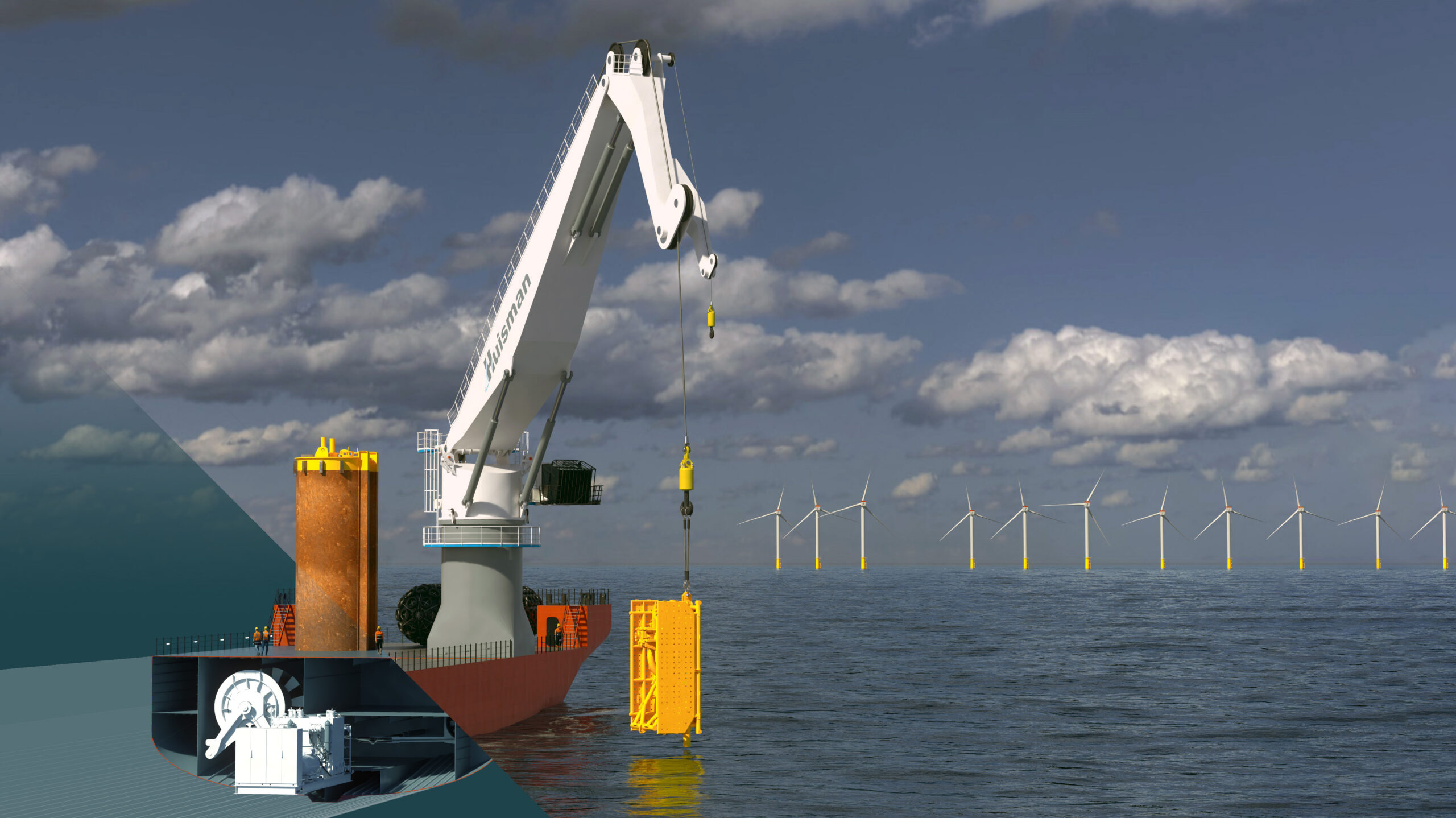
The Huisman Crane in Modern Construction: Engineering the Future of Heavy Lifting
Huisman cranes represent the pinnacle of heavy-lift engineering, primarily serving the offshore wind, subsea, and maritime construction sectors in 2026. By utilizing a unique mast-based design rather than traditional revolving structur...
Huisman cranes represent the pinnacle of heavy-lift engineering, primarily serving the offshore wind, subsea, and maritime construction sectors in 2026. By utilizing a unique mast-based design rather than traditional revolving structures, these cranes offer superior capacity-to-weight ratios, enabling the installation of massive 20MW+ wind turbines and complex deep-water infrastructure with unmatched precision.
Contents
The Role of Huisman Engineering in 2026 Offshore Construction
As of 2026, the global push toward renewable energy and the decommissioning of legacy oil and gas assets has placed unprecedented demand on heavy-lift equipment. The Huisman crane has emerged as the industry standard for these high-stakes environments. Unlike conventional land-based construction cranes, Huisman’s systems are designed to operate in dynamic maritime environments where stability, footprint, and weight distribution are critical.
The shift toward larger offshore wind components has been the primary driver of Huisman’s recent innovations. With wind turbine generators now surpassing 15 and even 20 megawatts in capacity, the height and weight of the nacelles and blades require cranes that can reach over 150 meters while maintaining lifting capacities of several thousand metric tons. Huisman’s specialized Leg Encircling Cranes (LEC) and Offshore Mast Cranes (OMC) provide the necessary height and stability by integrating directly into the vessel’s structure, a design choice that has redefined the capabilities of modern Wind Turbine Installation Vessels (WTIVs).
The Core Technology: Mast Crane Design vs. Traditional Systems
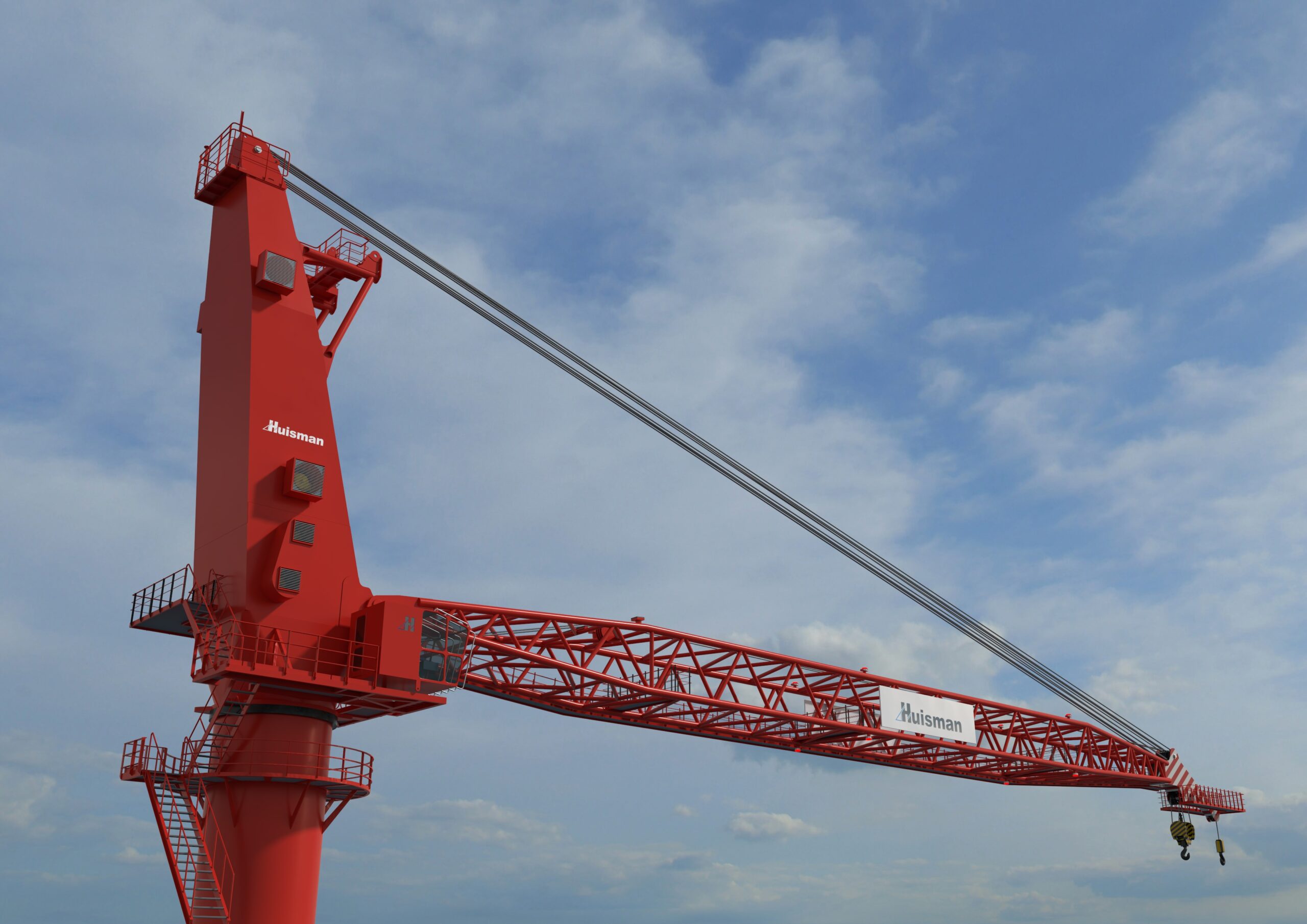
The fundamental differentiator of a Huisman crane is its Mast Crane configuration. In a traditional revolving crane, the entire structure—including the machinery house and counterweights—rotates around a central point. This requires a massive slew bearing and a large deck footprint.
Huisman’s design utilizes a fixed vertical mast. The boom and the winch system rotate around this mast. This architectural choice provides several technical advantages essential for modern construction:
- Reduced Footprint: Because the machinery is often located inside the mast or below deck, the crane occupies significantly less deck space. This allows construction vessels to carry more cargo, such as additional wind turbine foundations or transition pieces.
- Lower Center of Gravity: By placing heavy winch equipment lower in the vessel’s structure, Huisman cranes improve the overall stability of the ship. This is vital when performing heavy lifts in rough seas.
- Small Tail Swing: The absence of a large rotating machinery house means there is virtually no tail swing. This allows for safer operations in confined spaces, such as when working alongside existing offshore platforms or within busy ports.
- Enhanced Stiffening: The fixed mast provides a rigid structure that minimizes "boom bounce" and harmonic oscillations during high-altitude lifts, a frequent challenge when installing long turbine blades.
Specialized Crane Types and Their Modern Applications
In 2026, the Huisman portfolio is categorized by the specific construction challenges each crane addresses. Understanding these categories is essential for project managers and engineers planning offshore operations.
Leg Encircling Cranes (LEC)
These are the giants of the offshore wind industry. Designed specifically for jack-up vessels, the crane is built around one of the vessel's legs. This integration saves immense amounts of space and allows for a massive lifting radius. Modern LECs are now capable of lifting over 3,000 metric tons, making them the primary tool for installing the next generation of "Ultra-Large" offshore wind foundations.
Hybrid Boom Cranes
The Hybrid Boom Crane combines the advantages of a lattice boom (strength and reach) with the flexibility of a knuckle boom (precision and low-headroom capability). In modern construction, these are used heavily for Subsea Umbilicals, Risers, and Flowlines (SURF) projects. They allow for the precise placement of equipment on the seabed while compensating for the vessel's movement caused by waves.
Pedestal Mounted Cranes (PMC)
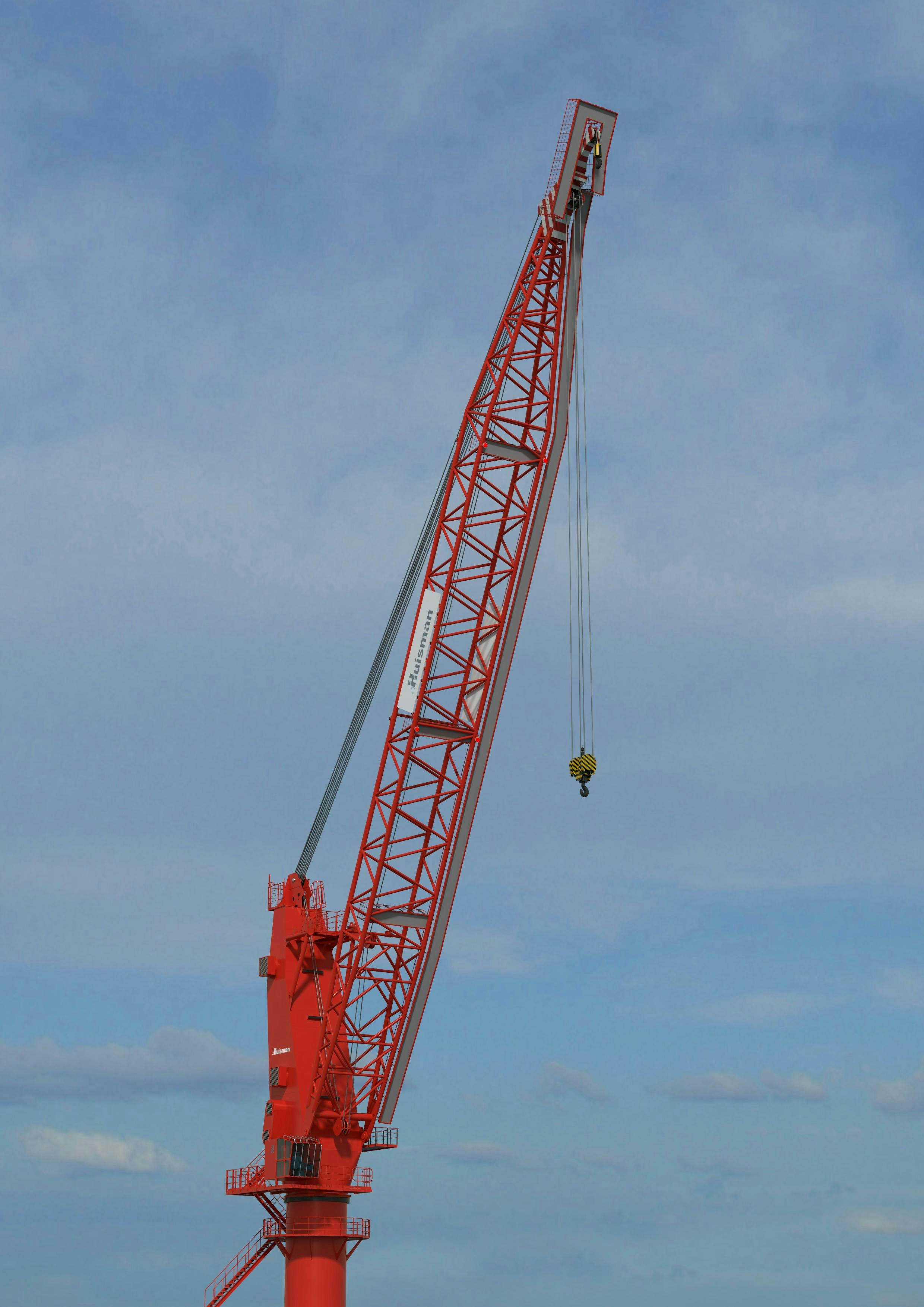
Commonly found on smaller construction support vessels and floating production storage and offloading (FPSO) units, these cranes are the workhorses of general offshore maintenance. They utilize a high-capacity slew bearing and are often fully electrified to meet the 2026 carbon-neutral operational standards required by many global jurisdictions.
Technical Specifications and Performance Metrics
To appreciate the scale of these machines, one must look at the technical data governing their operation. Modern Huisman units are characterized by their "Active Heave Compensation" (AHC) systems and advanced winch technology.
| Crane Type | Typical Capacity (mt) | Max Hook Height (m) | Primary Application (2026) |
|---|---|---|---|
| Leg Encircling (LEC) | 1,500 – 5,000+ | 160 - 190 | Offshore Wind (20MW+ Turbines) |
| Offshore Mast (OMC) | 300 – 8,000 | 120 - 150 | Heavy Lift & Decommissioning |
| Knuckle Boom (KBC) | 50 – 1,000 | Variable | Subsea Installation & IRM |
| Pedestal Mounted (PMC) | 10 – 500 | 40 - 80 | General Construction Support |
Innovations in Material Science: The Shift to Fiber Rope
One of the most significant changes in crane technology observed in the mid-2020s is the integration of synthetic fiber rope (such as Dyneema) as an alternative to traditional steel wire. Huisman has been a leader in this transition.
In deep-water construction, the weight of the steel wire itself becomes a limiting factor. At depths of 3,000 meters, a steel cable can weigh hundreds of tons, significantly reducing the actual "payload" the crane can lift. Fiber rope is neutrally buoyant in water. This means the crane’s full capacity is available for the load, regardless of the depth. Furthermore, Huisman’s proprietary winch designs prevent the heat build-up that historically plagued synthetic ropes, making 2026-era fiber rope cranes more reliable and durable than their predecessors.
Sustainability and Electrification in Crane Operations
By 2026, the construction industry has faced rigorous mandates to reduce greenhouse gas emissions. Huisman responded by transitioning its entire crane lineup toward Full Electric Drive systems.
Unlike older hydraulic systems, which are prone to leaks and energy loss, electric cranes offer:
- Energy Recovery: When a load is lowered, the electric motors act as generators, feeding power back into the vessel’s grid or battery storage systems.
- Reduced Noise Pollution: Electric operations are significantly quieter, which is critical for protecting marine life during offshore construction.
- Precision Control: Electric winches provide micro-millimeter control, which is essential when mating a turbine nacelle to a tower in high-wind conditions.
Operational Safety and Automated Control Systems
Safety in modern heavy lifting is no longer just about mechanical strength; it is about data. Huisman cranes in 2026 are equipped with a suite of sensors and automated systems that assist the operator.
The Motion Compensation System is perhaps the most vital. It uses real-time GPS and vertical reference units (VRUs) to detect the ship’s motion. The crane's winch then automatically adjusts—paying out or hauling in cable—to keep the load perfectly stationary relative to the seabed or a fixed platform. This technology has expanded the "operating window" for construction, allowing work to continue in sea states that would have previously forced a shutdown.
Additionally, Huisman’s Digital Twin technology allows onshore engineers to monitor the structural health of the crane in real-time. By analyzing stress patterns and cycle counts, maintenance can be performed preventatively, avoiding the catastrophic failures that can derail a multi-million dollar construction project.
Maintenance and Lifespan Considerations
Maintaining a Huisman crane requires specialized technical knowledge. Given their presence in corrosive saltwater environments, the maintenance schedule is rigorous.
- Slew Bearing Inspection: For pedestal and revolving models, the slew bearing is the most critical component. Huisman uses proprietary segmented bearings in larger models, allowing for the replacement of individual parts without dismantling the entire crane.
- Winch Maintenance: The high-speed winches require precise lubrication and heat monitoring. In 2026, many of these systems feature self-diagnostic sensors that alert the crew to microscopic wear before it becomes a functional issue.
- Software Updates: Modern cranes are "software-defined." Regular updates to the control algorithms are required to optimize energy consumption and enhance safety features.
Frequently Asked Questions
What is the maximum lifting capacity of a Huisman crane in 2026?
Huisman has engineered cranes with capacities exceeding 10,000 metric tons. These are typically Heavy Lift Cranes used in dual-crane configurations on semi-submersible vessels for massive decommissioning projects or the installation of large offshore platforms.
How does a Huisman crane differ from a standard lattice boom crane?
The primary difference is the Mast Design. While a standard crane rotates its entire base and machinery, the Huisman Mast Crane keeps the mast fixed and rotates the boom around it. This results in a smaller footprint, lower weight, and better stability for maritime operations.
Can Huisman cranes be retrofitted onto older vessels?
Yes, Huisman offers modular pedestal and mast cranes designed for retrofitting. However, the vessel's deck strength and stability must be verified, as the high lifting capacities of these cranes exert significant forces on the hull.
Are these cranes used for land-based construction?
While Huisman's heritage is maritime, their engineering principles are occasionally applied to specialized land-based heavy lifting, such as the Huisman Compact Ringer Crane. However, their primary niche remains offshore wind, subsea construction, and the oil and gas sector.
What training is required to operate a Huisman crane?
Operators typically require a specialized certification from Huisman’s own training academies. This involves extensive simulator training to master the Active Heave Compensation and automated control systems, which differ significantly from standard hydraulic crane controls.
Future-Proofing Your Lifting Operations
For developers and contractors in the 2026 construction market, choosing a Huisman crane is often a strategic decision driven by the need for efficiency and compliance with environmental standards. To maximize the value of these systems, organizations should prioritize vessels equipped with all-electric drives and fiber-rope capability, as these technologies provide the greatest operational flexibility in both shallow-water wind farms and deep-water subsea fields.
As construction projects continue to scale in size and complexity, the integration of real-time data monitoring and motion compensation will remain the baseline for safe, successful heavy-lift operations.
Image Gallery