A Comprehensive Guide to Political Advertising Firms: Strategy, Selection, and Execution in 2026
Political advertising firms are specialized agencies that manage a candidate’s or organization’s media presence, message development, and ad placement. They blend data analytics, creative production, and strategic buying across digital...
Political advertising firms are specialized agencies that manage a candidate’s or organization’s media presence, message development, and ad placement. They blend data analytics, creative production, and strategic buying across digital, broadcast, and print platforms to influence voter behavior and achieve specific electoral or legislative outcomes through targeted communication.
Contents
Political advertising firms operate at the intersection of psychology, technology, and civic engagement. Unlike traditional commercial marketing agencies that focus on long-term brand equity, political firms operate within condensed, high-stakes timeframes where the "product" is a person or a policy, and the "sale" happens on a single day. As of 2026, the landscape of political consulting has shifted toward a digital-first, AI-augmented approach that prioritizes precision over broad-reach messaging.
The Core Functions of a Political Advertising Firm
A political advertising firm is rarely just a creative shop. In the modern era, these organizations function as the "nerve center" of a campaign's external communications. Their primary objective is to move a specific number of voters from a state of indecision or apathy to a state of action.
Strategic Message Development
The foundation of any campaign is the narrative. Firms conduct extensive polling and focus group research to identify which issues resonate most with the target electorate. In 2026, this involves sophisticated sentiment analysis of social media trends and real-time feedback loops. The firm then distills these findings into a "core message" that is consistent across all mediums—from 15-second TikTok spots to traditional direct mail.
Media Buying and Planning
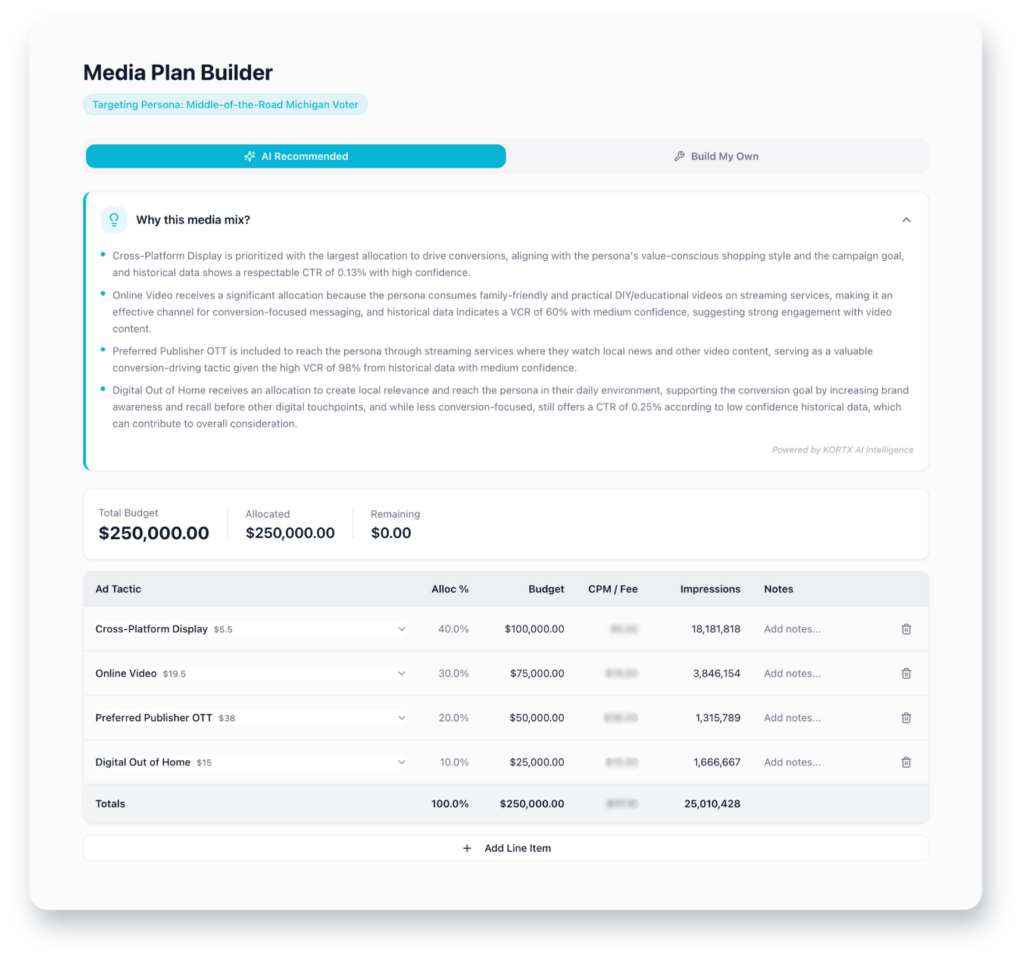
Media buying is the process of purchasing ad space. Political firms specialize in "political rates" and the legal requirements surrounding them. They determine the optimal mix of:
- Connected TV (CTV) and OTT: Delivering ads via streaming services like Hulu, Roku, or YouTube TV, allowing for household-level targeting.
- Linear Broadcast: Traditional television, still vital for reaching older, high-propensity voters.
- Digital and Social Media: Highly granular targeting based on interests, geography, and online behavior.
- Out-of-Home (OOH): Billboards and physical signage in strategic high-traffic areas.
Creative Production
Once the strategy is set, firms produce the actual content. This includes high-definition video production, graphic design for digital banners, and copy for email marketing. In 2026, many firms have integrated generative AI tools to rapidly iterate on ad creative, allowing them to test dozens of variations of a single ad to see which performs best with specific demographics.
The Evolution of Targeting: Data and AI in 2026
The most significant differentiator for a political advertising firm in 2026 is its use of data. The days of "spray and pray" advertising—buying a broad spot on the local evening news and hoping it hits the right people—are largely over for sophisticated campaigns.
Micro-Targeting and Identity Graphs
Modern firms utilize "identity graphs" to link voters across multiple devices. If a voter visits a candidate's website on their laptop, the firm can ensure they see a follow-up ad on their mobile phone and a related commercial on their smart TV that evening. This level of synchronization requires a deep technical stack and partnerships with major data providers like L2, TargetSmart, or i360.
Predictive Modeling
Firms now use predictive models to estimate not just who a voter is likely to support, but how "persuadable" they are. This allows campaigns to allocate their limited budgets efficiently. Instead of spending money on voters who are already "locked in" for or against a candidate, firms focus their resources on the narrow "swing" segment that will actually decide the election.
Rapid Response and Crisis Management
In a 24-hour news cycle, the ability to respond to an opponent's attack or a breaking news story within hours is critical. Political advertising firms maintain rapid-response teams that can script, film, edit, and push a rebuttal ad to digital platforms in a matter of hours.
Types of Political Advertising Firms
Choosing a firm requires understanding the specific niche they fill. Not all firms are created equal, and most align themselves with a specific political party or ideological movement.
Partisan-Aligned Firms
The vast majority of political firms in the United States are strictly partisan. This is because campaigns need to trust that their consultants share their core values and because "crossing the aisle" is often seen as a betrayal that can end a firm's career within a party's ecosystem.
- Democrat-Aligned: Firms like GMMB or SKDK focus on progressive candidates and causes.
- Republican-Aligned: Firms like Harris Media or Targeted Victory specialize in conservative messaging and GOP infrastructure.
Issue-Based and Non-Profit Firms
Some firms eschew candidate work to focus entirely on ballot initiatives, environmental causes, or corporate advocacy. These firms are experts in "persuasion" rather than "mobilization," as their goal is often to change public opinion on a specific policy rather than to win a seat for an individual.
Full-Service vs. Specialized Boutiques
A "full-service" firm handles everything from media buying to mailers and digital strategy. Conversely, a boutique firm might only handle "Digital Fundraising" or "Direct Mail." Large-scale gubernatorial or presidential campaigns often hire multiple specialized firms, whereas local mayoral or state legislative races usually opt for one full-service partner.
Comparison of Agency Structures and Pricing
Understanding the financial side of political advertising is crucial for campaign managers and treasurers. Firms typically use one of three pricing models.
| Model Type | Best For | Pros | Cons |
|---|---|---|---|
| Commission-Based | Large TV/Digital buys | Incentivizes firm to maximize reach | Can lead to "over-spending" to increase fees |
| Monthly Retainer | Long-term strategy/Management | Predictable costs for the campaign | Doesn't always cover heavy production costs |
| Project-Based/Flat Fee | Direct Mail or specific video shoots | Clear ROI for a single deliverable | Less flexibility for ongoing strategic shifts |
Most modern firms in 2026 use a "Hybrid" model, charging a monthly retainer for strategic advice plus a commission (usually 10%–15%) on all media placements.
Key Considerations When Selecting a Firm
When evaluating a political advertising firm, the following criteria are essential for ensuring a successful partnership.
- Win/Loss Record (Contextualized): A high win rate is impressive, but it must be weighed against the difficulty of the races. A firm that wins "safe" seats is less proven than one that successfully flipped a "toss-up" district.
- Technological Infrastructure: Ask about their data stack. Do they have proprietary tools for AI-driven sentiment analysis? How do they handle voter file integration?
- Compliance and Ethics: Ensure the firm is well-versed in Federal Election Commission (FEC) regulations and state-level disclosure laws. In 2026, this includes strict adherence to new "AI Transparency" laws that require disclosures for synthesized media.
- Reporting and Transparency: Demand to know how they measure success. Impressions and clicks are "vanity metrics." A top-tier firm should be able to show how their ads are impacting "voter intent" through regular tracking polls.
The Legal and Regulatory Environment in 2026
Political advertising is one of the most regulated forms of speech in the United States. Firms must navigate a complex web of rules that change depending on whether they are working for a candidate's committee, a Political Action Committee (PAC), or a 501(c)(4) "dark money" group.
Disclosure Requirements
Every ad must contain a "disclaimer" or "paid for by" notice. Firms are responsible for ensuring these notices meet specific size, duration, and placement requirements set by the FEC. Failure to do so can result in significant fines and negative PR for the candidate.
AI and Synthetic Media Laws
By 2026, several states and federal agencies have enacted "Deepfake" legislation. Political advertising firms are now legally required to label any ad that uses "materially deceptive" AI-generated content. This has led to the rise of "Verification Officers" within agencies whose sole job is to ensure all digital assets are compliant with truth-in-advertising laws for political speech.
Platform-Specific Restrictions
Platforms like Google and Meta (Facebook/Instagram) have their own internal rules for political ads. Firms must be certified by these platforms to run "Issues of National Importance" ads. This involves identity verification and strict limits on how certain demographics (like age or race) can be targeted to prevent discrimination or "voter suppression" tactics.
Frequently Asked Questions
What is the average cost of hiring a political advertising firm?
Costs vary wildly by the scale of the race. For a local city council race, a firm might charge a $2,000–$5,000 monthly retainer. For a US Senate race, the retainer could be $20,000+ per month, plus millions in commissions on ad buys. Generally, a campaign should expect to spend 60% to 80% of its total budget on media and the firms that manage it.
Do firms work for both sides of the political aisle?
Almost never. The political world is highly siloed. Working for a Democrat typically precludes a firm from ever being hired by a Republican, and vice versa. There are "non-partisan" firms that focus on municipal non-partisan races or non-profit advocacy, but they are the exception.
How do firms measure if an ad actually worked?
Firms use "Tracking Polls" and "Digital Lift" metrics. Tracking polls involve calling or texting voters daily to see if their opinion changes after an ad flight. Digital lift measures how many people searched for a candidate or visited their site after seeing a specific video ad.
Can a political advertising firm help with fundraising?
While their primary focus is advertising, most firms design their digital ads to include "Call to Action" buttons for donations. However, dedicated "Digital Fundraising Firms" usually handle the specific technical infrastructure for recurring donations and email list management.
Is AI currently used to write political ads?
Yes. In 2026, AI is used to draft scripts, generate varied visual backgrounds for ads, and analyze vast amounts of polling data to suggest which topics to highlight. However, most reputable firms still require a human "creative director" to finalize any ad to ensure it feels authentic and avoids "uncanny valley" effects.
Practical Recommendation: Starting the Search
If you are a candidate or organization looking to hire a firm, your first step should be to define your "Path to Victory." Determine how many votes you need and what your projected budget is.
Begin your search by consulting the American Association of Political Consultants (AAPC) directory, which lists vetted professionals across various specialties. Request "Request for Proposals" (RFPs) from at least three firms, and pay close attention to their communication style. A firm that is slow to respond during the pitch phase will likely be even slower during the heat of a campaign. Prioritize firms that offer a clear data-backed strategy over those that simply promise "viral" content.
Image Gallery