Auto Insurance Policy Declaration Page: Key Elements and How to Read Your Coverage Summary
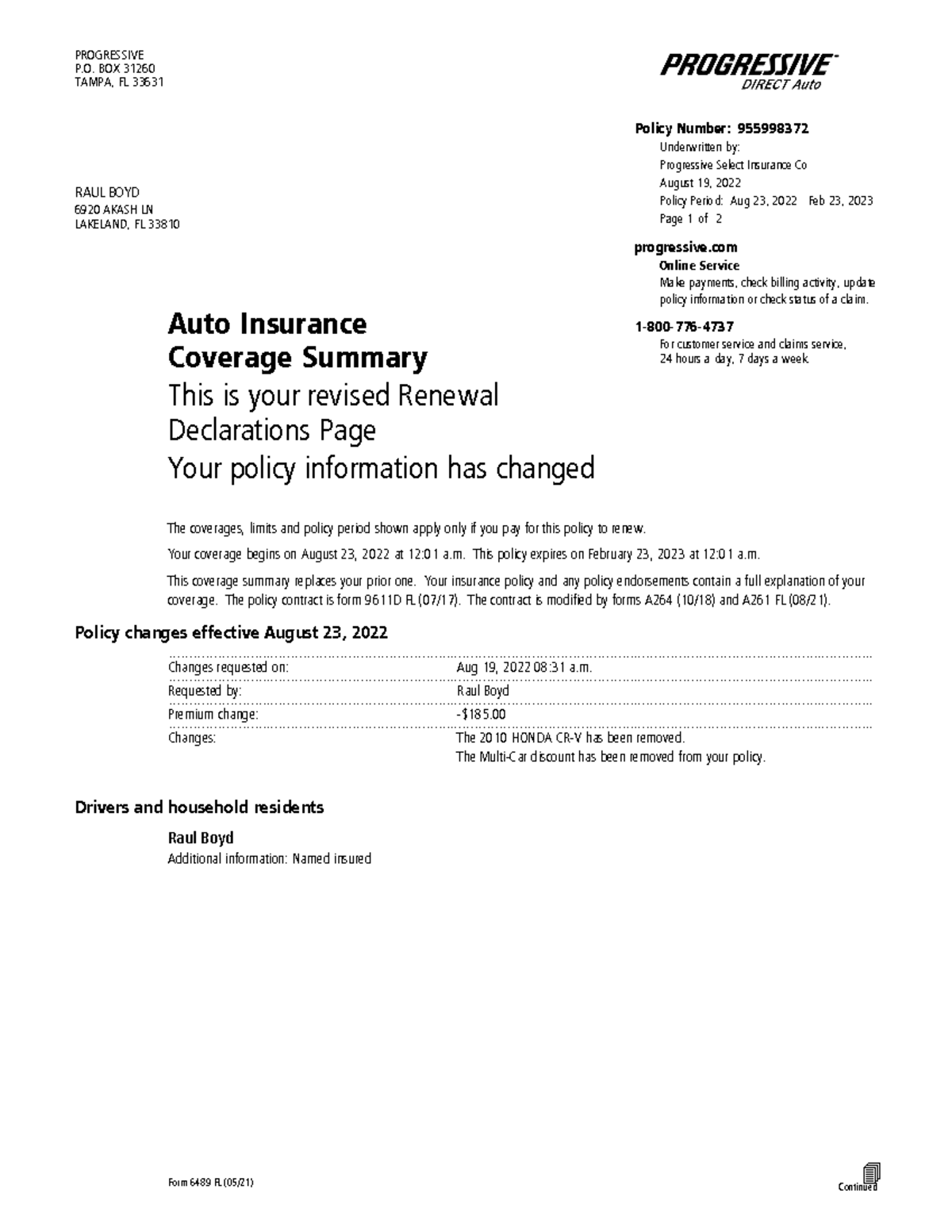
An auto insurance policy declaration page, often called a "dec page," is a concise summary of your insurance contract. It identifies who is insured, what vehicles are covered, the specific types of coverage purchased, policy limits, de...
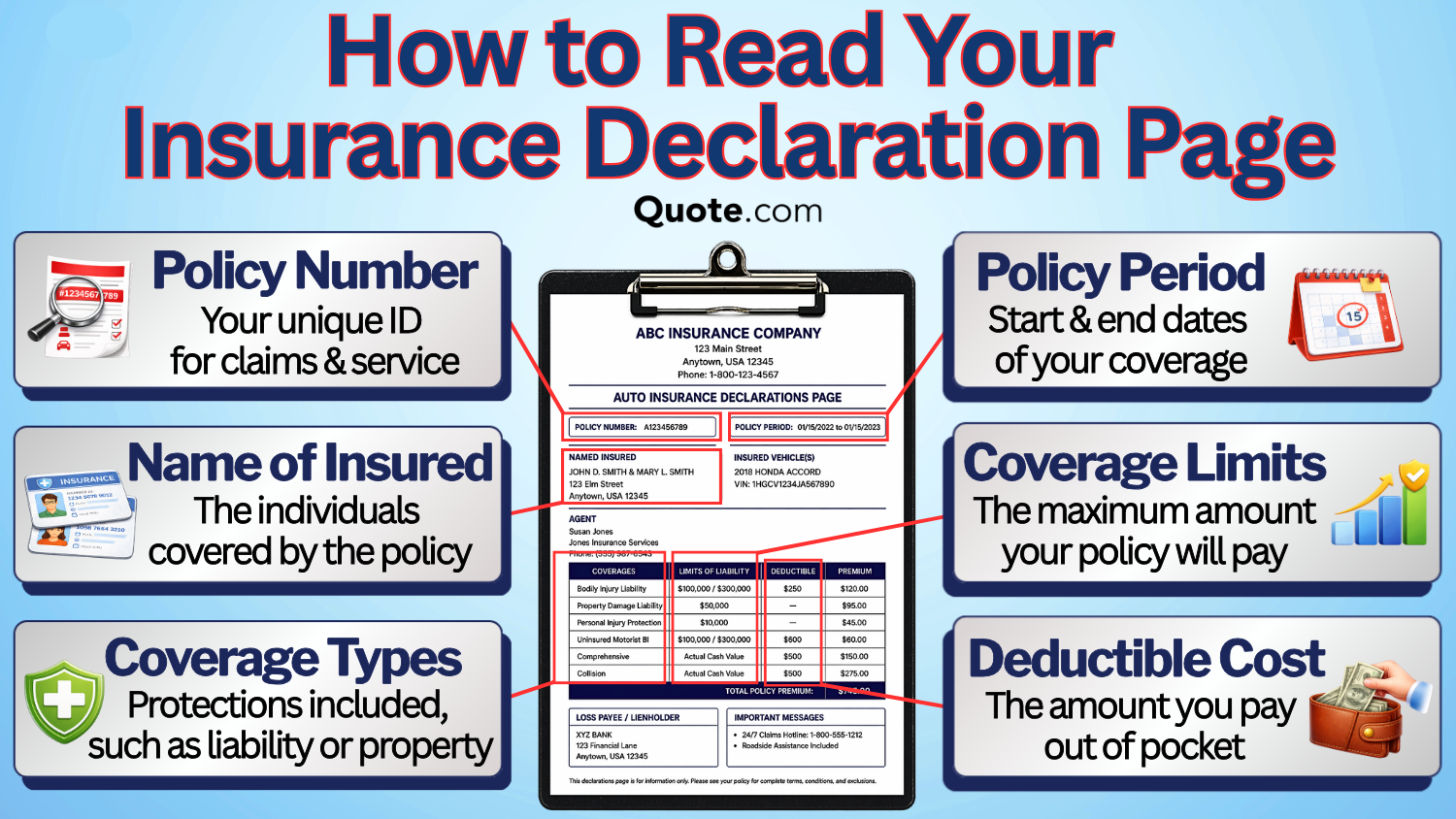
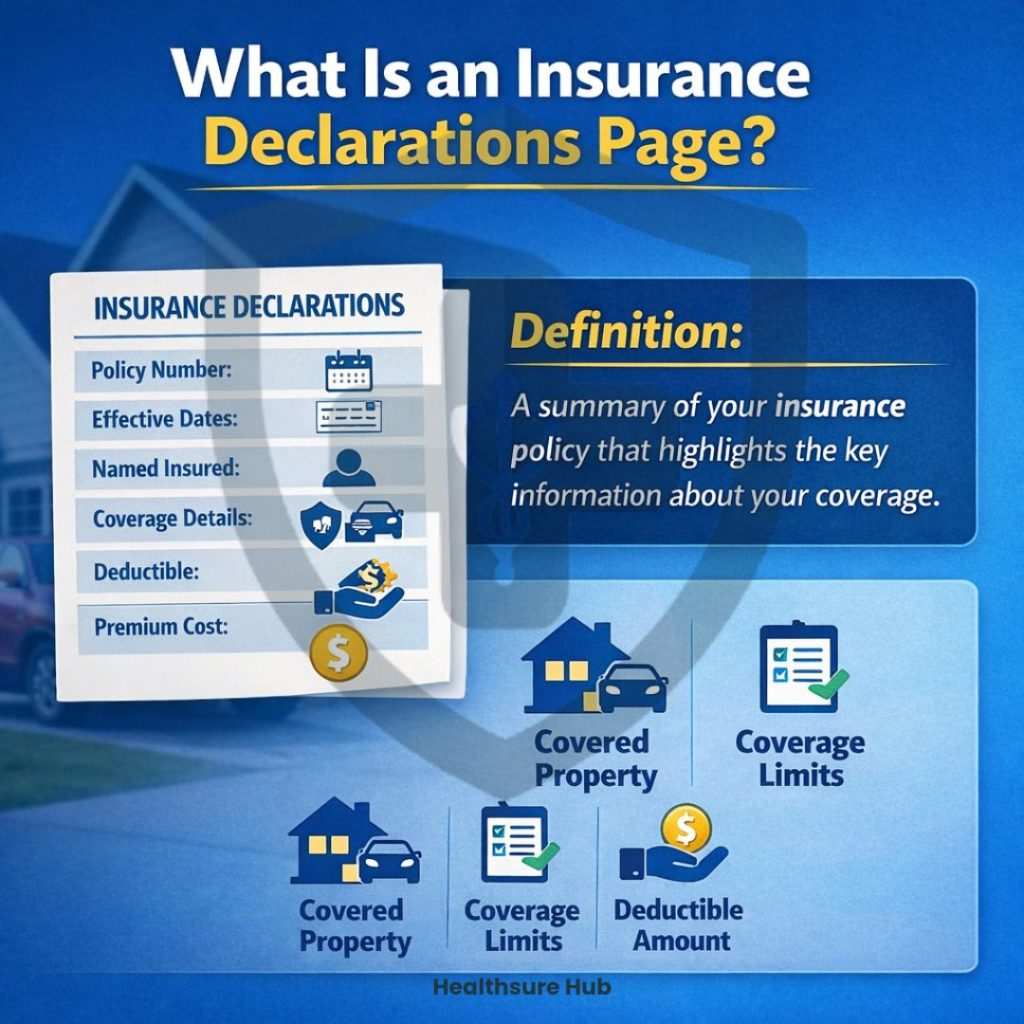
An auto insurance policy declaration page, often called a "dec page," is a concise summary of your insurance contract. It identifies who is insured, what vehicles are covered, the specific types of coverage purchased, policy limits, deductibles, and the total premium cost for the defined policy period.
Contents
Understanding your declaration page is the most efficient way to verify that your insurance meets legal requirements and personal financial needs. While the full policy booklet contains the "fine print" and legal definitions, the declaration page acts as the "cheat sheet" that summarizes the specific choices you made when purchasing the policy. Whether you are renewing your coverage in 2026 or shopping for a new provider, mastering the layout of this document ensures you are never caught underinsured after an accident.
The Administrative Essentials: Policy Identity and Term
The top section of an auto insurance declaration page typically contains the administrative data required to identify the legal agreement between you and the insurer. This section is critical for communication with your agent, the Department of Motor Vehicles (DMV), or a claims adjuster.
Named Insured and Contact Information
The "Named Insured" is the person or entity that owns the policy and has the primary right to make changes or cancel it. In many households, this includes both spouses. It is vital to ensure that all regular drivers in the household are listed correctly. If a resident driver is not listed on the declaration page or elsewhere in the policy, a claim could potentially be denied. The address listed here should be your primary residence, as insurance rates are heavily influenced by the zip code where the vehicle is "garaged."
Policy Number and Effective Dates
Your policy number is your unique identifier. In 2026, many insurers use digital-first systems where this number links your account to mobile apps and automated claims processing. The "Policy Period" or "Term" specifies exactly when your coverage begins and ends. Most auto policies run for six or twelve months. It is important to note that coverage typically begins and ends at 12:01 A.M. on the dates listed. Missing a renewal payment by a single day can result in a "lapse," which may lead to higher premiums in the future or legal penalties for driving uninsured.
Covered Vehicles and Rating Information
The declaration page lists every vehicle covered under the specific policy. If you have a multi-car policy, each vehicle will be listed separately, often with its own specific set of coverages and premiums.
Vehicle Identification Number (VIN)
The VIN is the 17-digit code unique to your vehicle. Accuracy here is paramount. An error in the VIN can lead to issues with vehicle registration renewals or delays in total loss settlements. When reviewing your 2026 declaration page, cross-reference the VIN with the code found on your vehicle’s dashboard or driver-side door jamb.
Garaging Location and Usage
Insurers categorize how you use your vehicle—typically as "Commute," "Pleasure," or "Business." By 2026, many policies also include specific notations for "Rideshare" or "Delivery" usage. If you are using your vehicle for DoorDash or Uber but your declaration page lists usage as "Pleasure," you may have a significant gap in coverage during an accident. The garaging location reflects where the car is parked most nights; if you move and fail to update this, it could be considered material misrepresentation.
Breakdown of Liability Coverages
Liability coverage is the core of most auto insurance policies and is mandated by law in almost every state. It protects your assets if you are found legally responsible for injuring someone else or damaging their property.
Bodily Injury Liability (BI)
This is often expressed as two numbers, such as $100,000/$300,000. The first number is the maximum the insurer will pay for injuries to a single person in an accident. The second number is the total maximum the insurer will pay for all injuries sustained by multiple people in a single accident. Given the rising medical costs in 2026, many financial advisors recommend limits far higher than state minimums to protect personal savings and home equity from lawsuits.
Property Damage Liability (PD)
This limit is the maximum your insurer will pay to repair or replace someone else's property—usually their car, but it also covers fences, lamp posts, or buildings. With the average cost of new electric vehicles and high-tech SUVs continuing to climb, a low property damage limit (like $25,000) can easily be exhausted in a multi-car pileup, leaving you personally liable for the remaining balance.
Understanding Physical Damage Coverages and Deductibles
While liability covers others, physical damage coverage protects your own vehicle. These coverages are usually optional unless you have a loan or lease on the car.
Collision Coverage
Collision insurance pays for damage to your vehicle resulting from a crash with another car or an object (like a tree or guardrail). On your declaration page, you will see a "Deductible" associated with this coverage. The deductible is the amount you agree to pay out-of-pocket before the insurance company contributes. For example, if you have a $500 deductible and $3,000 in damage, you pay $500, and the insurer pays $2,500.
Comprehensive Coverage
Often labeled as "Other Than Collision," this covers damage from non-accident events such as theft, vandalism, fire, falling objects, or weather events like hail. Comprehensive coverage also typically has its own deductible. In 2026, as climate-related events become more frequent, many drivers are opting for lower comprehensive deductibles to mitigate the risk of expensive glass repairs or flood damage.
| Coverage Type | What it Covers | Required by Law? | Typical 2026 Limits/Deductibles |
|---|---|---|---|
| Bodily Injury | Others' medical bills | Yes (Most states) | $100k/$300k |
| Property Damage | Others' property | Yes (Most states) | $50k - $100k |
| Collision | Your car (accidents) | No (Lenders require) | $500 - $1,000 deductible |
| Comprehensive | Your car (non-accident) | No (Lenders require) | $250 - $500 deductible |
| UM/UIM | You (hit by uninsured) | Varies by state | Matches BI limits |
| PIP/MedPay | Your medical bills | Varies by state | $5,000 - $10,000 |
Uninsured and Underinsured Motorist Coverage (UM/UIM)
Despite legal requirements, a significant percentage of drivers remain uninsured. UM/UIM coverage is your primary defense against these drivers.
- Uninsured Motorist (UM): Pays for your medical expenses (and sometimes property damage) if you are hit by a driver who has no insurance or in the case of a hit-and-run.
- Underinsured Motorist (UIM): Steps in when the at-fault driver has insurance, but their limits are too low to cover the full extent of your injuries.
On your declaration page, these limits usually mirror your own Bodily Injury Liability limits. If you see "Stacked" vs. "Non-Stacked" UM coverage, "Stacked" allows you to combine limits across multiple vehicles on your policy, providing a higher total pool of coverage.
Personal Injury Protection (PIP) and Medical Payments
Medical Payments (MedPay) and Personal Injury Protection (PIP) are "no-fault" coverages. They pay for medical expenses for you and your passengers regardless of who caused the accident.
PIP is more comprehensive than MedPay; it often covers lost wages and essential services (like childcare) if your injuries prevent you from working. In "no-fault" states, PIP is a mandatory element of the declaration page. In 2026, these coverages remain essential for bridging the gap between your auto insurance and your health insurance, especially considering health insurance deductibles and co-pays.
Endorsements and Additional Benefits
The bottom portion of the declaration page often lists "Endorsements" or "Riders." These are specialized add-ons that customize your policy.
- Roadside Assistance: Covers towing, flat tire changes, and lockout services.
- Rental Reimbursement: Provides a daily allowance for a rental car while your vehicle is in the shop for a covered loss.
- Gap Insurance: If your car is totaled, this pays the difference between the car's actual cash value and what you still owe on your loan.
- Telematics/Safe Driver Programs: In 2026, many declaration pages feature a line item for "Telematics Discount" or "Usage-Based Insurance," reflecting data gathered from smartphone apps or plug-in devices that track driving behavior.
Discounts and Premium Calculation
The declaration page provides a transparent breakdown of how your final premium was calculated. It lists the "Gross Premium" and then subtracts various discounts. Common discounts visible in 2026 include:
- Multi-Policy: Combining auto with homeowners or renters insurance.
- Anti-Theft: For vehicles equipped with GPS tracking or advanced alarms.
- Education/Professional: Discounts for certain degrees or affiliations.
- Paperless/Full Pay: Incentives for receiving digital documents or paying the entire six-month premium upfront.
Reviewing this section ensures you are receiving credit for all the safety features and lifestyle factors that make you a lower risk to the insurer.
Lienholders and Additional Interests
If you are financing or leasing your vehicle, the bank or leasing company will be listed on the declaration page as a "Lienholder" or "Loss Payee." This ensures that in the event of a total loss, the insurance company pays the bank first to satisfy the loan balance. It also means the insurer is legally obligated to notify the bank if you cancel your policy or if it lapses for non-payment.
Frequently Asked Questions
Is the declaration page the same as my insurance ID card?
No. While an ID card is a small document (or digital screen) used to prove coverage to law enforcement, the declaration page is a multi-page summary detailing specific coverage limits, deductibles, and premiums. The ID card only shows the policy number, vehicle, and effective dates.
Why does my declaration page show a "Surcharge"?
A surcharge is an additional fee added to your premium, usually due to a recent at-fault accident, a major traffic violation, or a lapse in prior coverage. The declaration page will typically list the reason for the surcharge and how long it will remain on your policy (often three to five years).
Can I use my declaration page to register a car at the DMV?
Yes, in most jurisdictions, a printed or digital copy of your declaration page is accepted as proof of financial responsibility. It provides more detail than a standard ID card, which some state agencies require for specific types of registrations or to resolve insurance verification flags.
What should I do if I find an error on my declaration page?
Contact your agent or insurance company immediately. Even small errors, like a misspelled name or an incorrect VIN digit, can complicate claims or legal compliance. Most insurers can issue a "Corrected Declaration Page" or an "Endorsement" within 24 hours of being notified of the error.
Does the declaration page list every driver?
It should list all "Rated Drivers." These are the individuals whose driving records were used to calculate the premium. In 2026, some policies may also list "Excluded Drivers"—individuals specifically prohibited from driving the car. If an excluded driver crashes the vehicle, there is typically zero coverage.
Final Recommendation
You should review your auto insurance declaration page at least once every six months or whenever you experience a major life event, such as moving, buying a new car, or adding a teen driver to the policy. For 2026, ensure your liability limits are sufficient to cover your current net worth, as vehicle repair and medical costs have risen significantly. If you have a loan, double-check that your lienholder is correctly listed to avoid issues with your financing agreement. Always keep a digital copy of the most recent declaration page on your smartphone for immediate access during an emergency.
Image Gallery