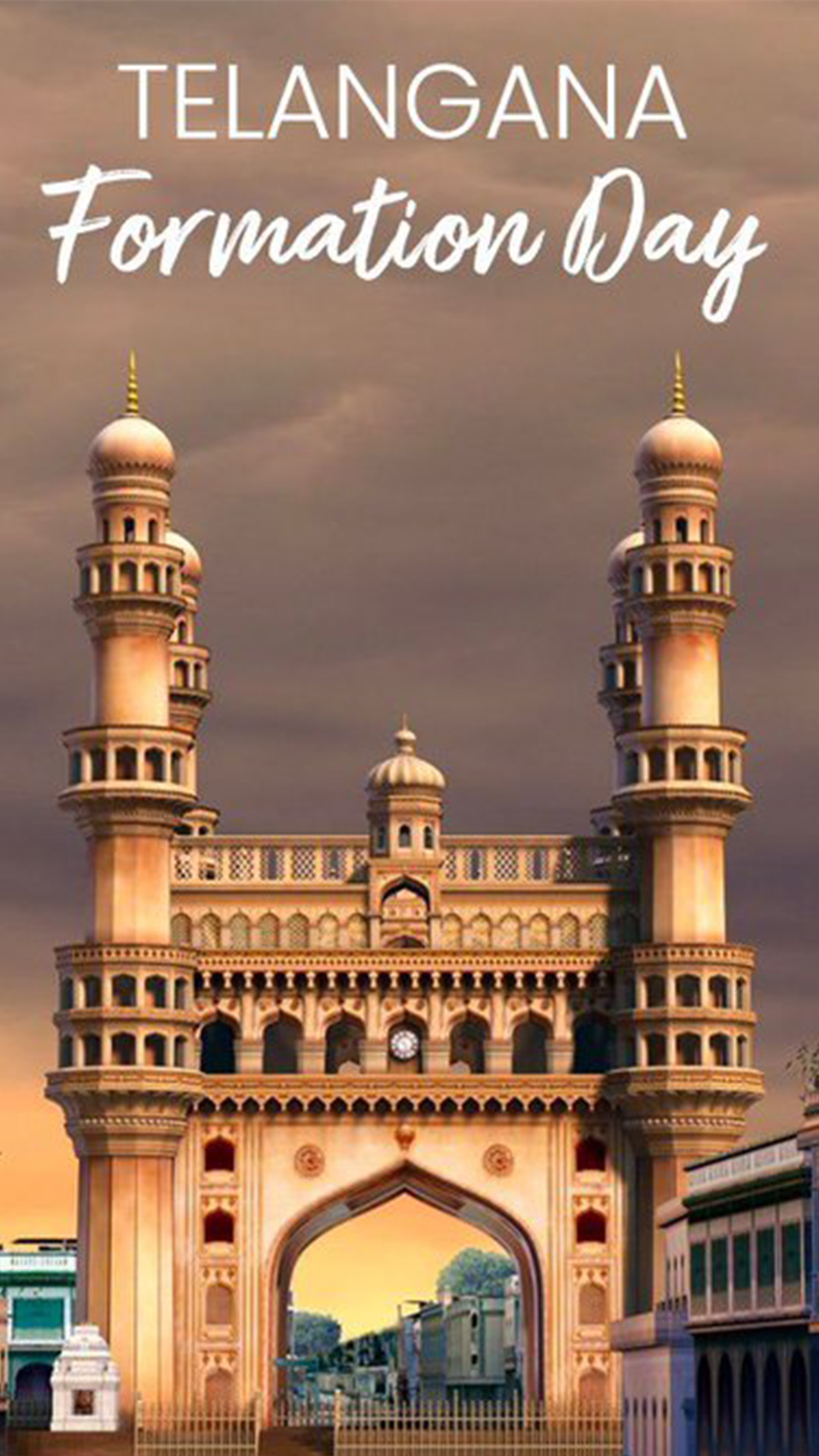
Understanding Telangana Formation Day: History, Significance, and Cultural Celebrations
Telangana Formation Day is officially observed on June 2nd each year to commemorate the formal establishment of India's twenty-ninth state, Telangana, which separated from Andhra Pradesh in 2014. This annual holiday honors decades of p...
Telangana Formation Day is officially observed on June 2nd each year to commemorate the formal establishment of India's twenty-ninth state, Telangana, which separated from Andhra Pradesh in 2014. This annual holiday honors decades of political struggle, cultural preservation, and legislative maneuvering that culminated in the bifurcation of the erstwhile state, establishing a distinct administrative and territorial identity for the region's residents.
Contents
The Historical Background of the Telangana Movement
The political and social roots of Telangana Formation Day extend far back into the mid-twentieth century, intertwining with the complex reorganization of Indian states along linguistic lines. Understanding why June 2, 2014, represents such a monumental shift requires examining the unfulfilled agreements, economic grievances, and cultural assertions that drove millions of people to demand a separate statehood.
The 1956 Merger and the Gentlemen's Agreement
Following India's independence, the States Reorganization Commission initially recommended maintaining Hyderabad State as a distinct entity, or at least preserving certain safeguards for its people. However, political pressures led to the signing of the Gentlemen's Agreement of 1956. This pact was designed to protect the interests of the Telangana region—which had historically been governed by the Nizam of Hyderabad—upon its merger with the Andhra State to form a unified Andhra Pradesh.
The agreement included provisions regarding:
- Equitable distribution of government jobs and educational opportunities.
- Safeguarding local land rights against influxes from non-local populations.
- Fair allocation of state revenues for regional development projects.
Over the ensuing decades, local leaders and activists argued that these constitutional and moral safeguards were systematically violated, laying the groundwork for intense public dissatisfaction.
Key Milestones in the Struggle for Statehood
The dissatisfaction with the united state structure boiled over into major political uprisings at various intervals, most notably in 1969 and 2001.
- The 1969 Agitation: Student groups and government employees launched a massive protest movement demanding the implementation of safeguards and job protections. This phase witnessed widespread protests and severe political turbulence, though it ultimately ended without state bifurcation.
- The 2001 Turning Point: The movement gained renewed momentum when K. Chandrashekar Rao (KCR) resigned from the Telugu Desam Party and founded the Telangana Rashtra Samithi (TRS)—later renamed Bharat Rashtra Samithi (BRS)—with the single-agenda goal of achieving separate statehood.
- The 2009 Fast Unto Death: In December 2009, KCR launched a hunger strike that galvanized state-wide support, forcing the central government to announce that the process of forming a separate state would begin.
Legislative Passage: The Andhra Pradesh Reorganization Act, 2014
The transition from a regional political demand to constitutional reality required complex parliamentary procedures. The formal legal mechanism that birthed the state was the Andhra Pradesh Reorganization Act, 2014.
| Legislative Stage | Date / Period | Description |
|---|---|---|
| Cabinet Approval | December 2013 | The Union Cabinet approved the draft bill for the creation of Telangana. |
| Parliamentary Passage | February 2014 | Both houses of the Parliament of India (Lok Sabha and Rajya Sabha) passed the bill amid intense debate. |
| Presidential Assent | March 1, 2014 | President Pranab Mukherjee signed the bill, giving it legal force. |
| Appointed Day | June 2, 2014 | The official date designated for the coming into force of the Act and the birth of the state. |
Under the provisions of the Act, Hyderabad was designated as the common capital for both Andhra Pradesh and Telangana for a transitional period not exceeding ten years (concluding in 2024, after which Hyderabad became exclusively the capital of Telangana). The legislation also established specific guidelines for asset division, river water sharing, and police administration.
Cultural Significance and Statewide Celebrations
Every year on June 2nd, the state government and citizens observe Telangana Formation Day as a major public holiday and cultural milestone. The day is marked by official state events, public addresses, and displays of regional heritage.
Official Parades and State Honors
The primary official celebration traditionally takes place at the historic Parade Grounds in Secunderabad or around major monuments like the Telangana Martyrs' Memorial in Hyderabad. The Chief Minister of Telangana inspects the guard of honor, hoists the national flag, and delivers an address outlining the state's developmental achievements over the past year.
Key aspects of the official observances include:
- Tribute to Martyrs: Homage is paid to the Telangana Amarula Sthoopam (Martyrs' Memorial) to remember activists who lost their lives during the long statehood struggle.
- Awards and Recognition: The state government presents awards to meritorious employees, artists, scientists, and social workers who have contributed significantly to the region's growth.
Cultural Exhibitions and Culinary Traditions
Telangana boasts a distinct cultural identity characterized by unique folk arts, festivals, and culinary traditions that are prominently showcased during the anniversary celebrations.
- Folk Arts: Traditional performance arts such as Bathukamma (the floral festival), Bonalu (the goddess Mahakali festival), Perini Shivatandavam (the ancient dance of warriors), and Gussadi tribal dances are performed by artists across districts.
- Literary and Historical Seminars: Academic institutions and cultural organizations host seminars focusing on the literary history, language nuances, and socio-economic evolution of the region.
- Culinary Heritage: Public gatherings feature traditional Telangana cuisine, including dishes like Jonna Rotte (sorghum flatbread), Sarva Pindi (spicy savory pancake), and Telangana Mamsam (spicy mutton curry), emphasizing indigenous flavors distinct from coastal Andhra styles.
Economic and Infrastructural Evolution Post-2014
Beyond cultural pride, Telangana Formation Day provides an annual benchmark for evaluating the economic progress, infrastructural expansion, and governance models implemented since the state's inception.
Since 2014, the state has witnessed significant investments in irrigation, IT sector growth, and rural welfare initiatives. Flagship infrastructure and social welfare programs launched over the years include:
- Mission Kakatiya: A massive initiative aimed at restoring minor irrigation tanks and lakes to boost agricultural productivity.
- Mission Bhagiratha: A piped drinking water supply project designed to provide safe drinking water to every rural household.
- IT Sector Expansion: Continued strengthening of Hyderabad as a premier global technology hub, attracting major multinational corporations and fostering a thriving startup ecosystem.
Frequently Asked Questions
When was Telangana officially formed as a separate state?
Telangana was officially formed on June 2, 2014, following the enactment of the Andhra Pradesh Reorganization Act, 2014. It became the twenty-ninth state of the Republic of India.
Is Telangana Formation Day a public holiday?
Yes, June 2nd is gazetted as an official public holiday throughout the state of Telangana. Government offices, educational institutions, and banks remain closed, while official state functions take place across districts.
Which city serves as the capital of Telangana?
Hyderabad serves as the capital city of Telangana. Under the 2014 Reorganization Act, it functioned as a joint capital for both Andhra Pradesh and Telangana for a transitional ten-year period ending in 2024.
What is the historical significance of the Gentlemen's Agreement of 1956?
The Gentlemen's Agreement of 1956 was a political pact signed before the merger of Telangana with the Andhra State. It was designed to safeguard the economic, educational, and employment interests of the Telangana region, though dissatisfaction over its implementation later fueled the renewed statehood movement.
What major cultural festivals are unique to Telangana?
Telangana is widely known for unique cultural festivals such as Bathukamma, a floral festival celebrated by women during the autumn season, and Bonalu, a traditional Hindu festival dedicated to the goddess Mahakali, celebrated during the monsoon.
Image Gallery