Understanding Withdrawals from Account Value Life Insurance: Rules, Taxes, and Policy Impact
Taking a withdrawal from account value life insurance—commonly known as a partial surrender—allows policyholders to access accumulated cash inside permanent policies like universal or variable life. These withdrawals are generally tax-...
Taking a withdrawal from account value life insurance—commonly known as a partial surrender—allows policyholders to access accumulated cash inside permanent policies like universal or variable life. These withdrawals are generally tax-free up to the paid premium basis, but they permanently reduce both the policy's cash value and the ultimate death benefit.
Contents
What Is Account Value in Life Insurance?
In permanent life insurance policies—such as universal life (UL), variable universal life (VUL), and indexed universal life (IUL)—the policy is divided into two distinct components: the insurance protection (death benefit) and the cash accumulation account. The money that accumulates within this account is referred to as the account value (or cash accumulation value).
The account value grows over time through premium payments and credited interest or investment returns, minus monthly policy charges, administrative expenses, and the cost of insurance (COI). It is important to distinguish between two related metrics:
- Account Value: The gross total dollar amount currently held within the policy’s accumulation sub-accounts or fixed interest account before applying surrender charges.
- Cash Surrender Value: The net amount available to the policyholder if the contract is completely terminated. This equals the account value minus any outstanding policy loans and applicable surrender charges.
When a policyholder takes a withdrawal, funds are drawn directly from the account value, which in turn reduces the net cash surrender value and alters the contract's long-term performance trajectory.
How Life Insurance Withdrawals Work
A withdrawal from a life insurance policy is structured legally as a partial surrender of the policy contract. Unlike taking a loan against the policy, a withdrawal is a permanent transaction. Once funds are removed via a partial surrender, they cannot simply be repaid into the policy as standard premium payments without triggering annual contribution limits or tax consequences.
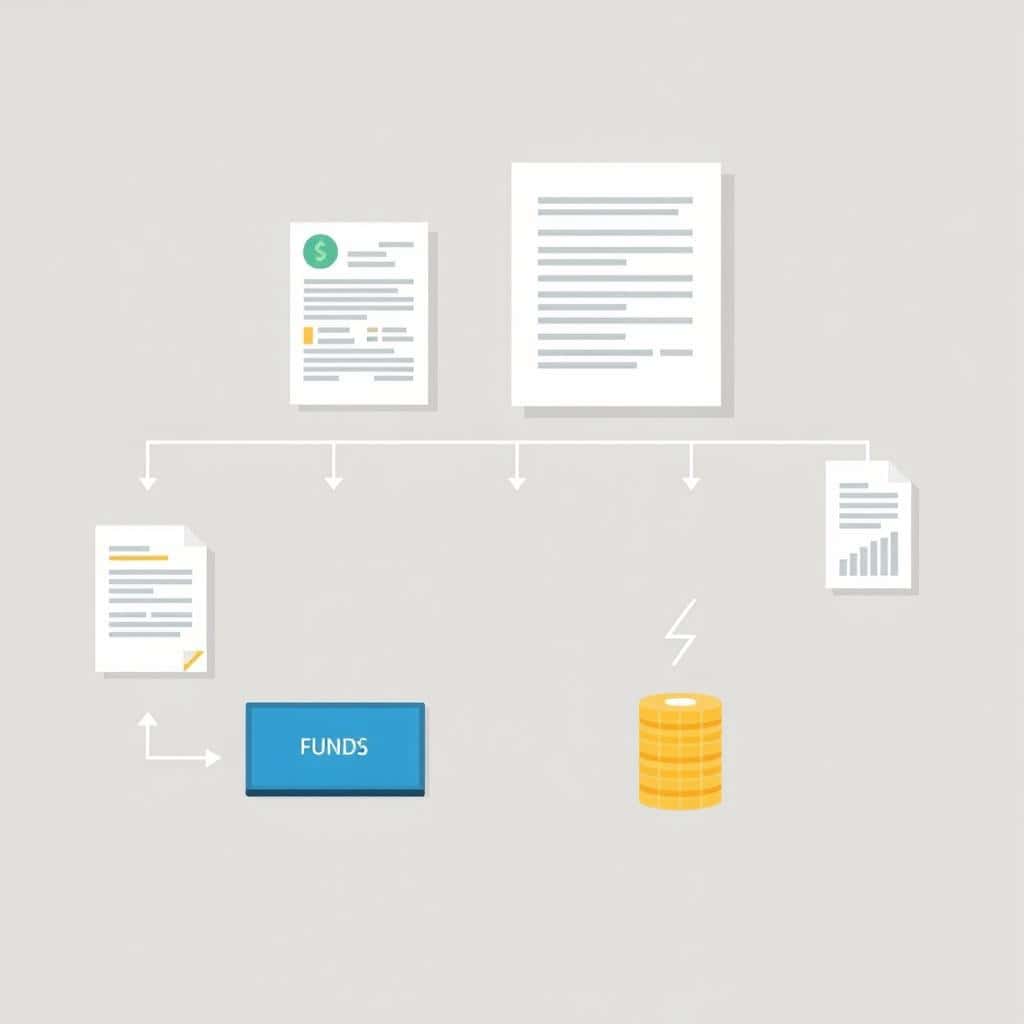
- Policy Account Value
- Cost Basis (Premiums Paid) + Untaxed Growth / Earnings
- Partial Withdrawal
- Standard Policy (Non-MEC)
- Tax Treatment: FIFO
- Tax-free up to Cost Basis
- Gains Taxed Only After Basis Removed
- MEC Policy
- Tax Treatment: LIFO
- Taxable Earnings Out First
- 10% Penalty if Under Age 59½
- Standard Policy (Non-MEC)
Impact on Death Benefit and Policy Structure
The effect of a withdrawal on the policy's death benefit depends largely on the death benefit option selected when the policy was issued:
- Option A (Level Death Benefit): The death benefit remains constant over time. If a policyholder has a $500,000 Level Death Benefit and takes a $50,000 partial withdrawal, the face amount of the policy is permanently reduced by $50,000, lowering the net death benefit to $450,000.
- Option B (Increasing Death Benefit): The death benefit equals the face amount plus the accumulated account value. A $50,000 withdrawal reduces the account value directly, which automatically decreases the total death benefit by $50,000 while keeping the base face amount unchanged.
Administrative Fees and Minimum Constraints
Insurance carriers establish specific rules governing partial surrenders. Most insurers enforce a minimum withdrawal threshold (often $200 to $500) and may charge an administrative fee per transaction, typically ranging from $25 to $50. Furthermore, carriers usually specify that a minimum remaining cash surrender value (e.g., $1,000 to $5,000) must stay in the account to keep the policy active and cover ongoing monthly deductions.
Tax Rules for Life Insurance Withdrawals
The tax treatment of cash distributions from life insurance is governed by the Internal Revenue Code (IRC), specifically 26 U.S. Code § 72. Understanding these rules is essential to avoiding unexpected income tax liabilities.
The First-In, First-Out (FIFO) Accounting Standard
Under standard non-MEC permanent life insurance contracts, withdrawals are taxed on a First-In, First-Out (FIFO) basis under IRC § 72(e). This means distributions are treated as coming from the policyholder's investment in the contract (cost basis) first, before touching any tax-deferred earnings.
- Cost Basis: Total premiums paid into the policy minus any previous tax-free distributions or non-taxable dividends received.
- Tax Implications: Withdrawals up to the policy’s cumulative cost basis are completely free from federal income tax. Only withdrawals that exceed the total cost basis are treated as taxable ordinary income.
For example, if a policyholder has paid $80,000 in total premiums and the policy's account value has grown to $110,000, the cost basis is $80,000. A withdrawal of up to $80,000 can be taken tax-free. If the policyholder withdraws $90,000, the first $80,000 is tax-free, while the remaining $10,000 is taxed as ordinary income.
Exception 1: Modified Endowment Contracts (MECs)
If a life insurance policy fails the "7-pay test" outlined in 26 U.S. Code § 7702A—meaning it was funded too quickly relative to its death benefit—the IRS classifies it as a Modified Endowment Contract (MEC).
For MECs, the tax order flips to Last-In, First-Out (LIFO) accounting:
- Withdrawals are treated as coming from accumulated interest or gain first.
- All distributions of gain are fully taxable as ordinary income.
- If the policyholder is under age 59½, taxable distributions from a MEC are generally subject to an additional 10% federal penalty tax under IRC § 72(v), unless an exception applies.
Exception 2: IRC Section 7702(f)(7) Recapture Rules
Under IRC § 7702(f)(7), if a policy withdrawal triggers a reduction in the policy's face amount within the first 15 years after policy issuance, a special tax calculation applies. If the withdrawal causes a mandatory force-out of cash value to maintain the required corridor between cash value and death benefit, part or all of the withdrawal may be taxed on a LIFO (gain-first) basis, even if the total policy is not a MEC.
Comparing Cash Access Methods: Withdrawals vs. Policy Loans vs. Full Surrender
Policyholders seeking liquidity from account value life insurance have three primary mechanisms available. Each carries distinct operational, tax, and structural consequences.
| Feature | Partial Withdrawal | Policy Loan | Full Surrender |
|---|---|---|---|
| Primary Mechanics | Direct reduction of account value via contract surrender. | Borrowing against cash value using policy as collateral. | Terminating contract completely for net cash value. |
| Repayment Requirement | Cannot be repaid under standard terms. | Voluntary; can be repaid anytime or left unpaid. | N/A (policy ends). |
| Tax Basis Accounting | FIFO (Tax-free up to cost basis for non-MECs). | Generally tax-free while policy remains active. | Taxable to the extent cash value exceeds basis. |
| Interest Charged | None. | Yes (carrier charges loan interest annually). | None. |
| Death Benefit Impact | Permanently reduced by withdrawal amount. | Temporarily reduced by loan balance plus interest. | Eliminated entirely. |
| Surrender Charges | May apply if within surrender charge period. | Generally no surrender charge applied. | Full surrender charges deducted from payout. |
| Policy Lapse Risk | Moderate; reduces asset base supporting fee deductions. | High if accrued loan interest exceeds remaining cash value. | None (contract is terminated). |
When to Choose a Withdrawal Over a Loan
A partial withdrawal is generally preferred when:
- The policyholder needs permanent capital access without incurring annual loan interest charges.
- The goal is to intentionally reduce the policy's face amount and monthly internal cost of insurance (COI) charges.
- The distribution amount is well below the policy’s calculated cost basis.
Conversely, a policy loan is often superior when the policyholder intends to restore the cash value later, wants to avoid lowering the permanent death benefit, or owns a policy whose gain exceeds its basis and wishes to avoid triggering an immediate taxable event.
Step-by-Step Process for Requesting a Withdrawal
Taking a withdrawal requires coordination with the life insurance carrier to ensure the policy remains solvent and tax-efficient.
Step 1: Request an In-Force Illustration
Before taking a distribution, request an in-force policy illustration from the insurance provider. Model the projection with the intended withdrawal amount to verify how the reduction in cash value will affect future cost of insurance (COI) deductions, cash value growth, and long-term policy guarantees.
Step 2: Determine Current Cost Basis and MEC Status
Confirm the exact cumulative cost basis with the insurer’s policy services department. Verify that the policy is classified as a non-MEC and that the proposed withdrawal will not trigger an unintended force-out tax under IRC § 7702(f)(7).
Step 3: Complete the Partial Surrender Form
Submit the carrier’s official partial surrender request form. This form requires specifying:
- The exact dollar amount to withdraw.
- The allocation choice (which underlying sub-accounts or fixed accounts to pull funds from).
- Tax withholding elections (federal and state taxation choices).
- Acknowledgment of the corresponding death benefit reduction.
Step 4: Monitor Account Processing and Post-Withdrawal Values
Once processed, review the carrier confirmation statement to verify the updated account value, adjusted face amount, remaining cash surrender value, and newly adjusted cost basis.
Common Pitfalls and Risk Factors
1. Accidental Policy Lapse Due to Monthly Expenses
Account value life insurance policies rely on the internal cash accumulation to pay for monthly administrative and cost-of-insurance charges. If a large withdrawal leaves an insufficient account balance, interest earnings may no longer cover these monthly deductions. If cash value reaches zero, the policy enters a grace period and will lapse, causing the complete loss of death benefit protection.
2. Tax Consequences of Policy Lapse with Outstanding Debt
If a policyholder has both an outstanding policy loan and takes withdrawals, the policy risks lapsing. If a policy lapses while carrying an outstanding loan balance higher than the cost basis, the IRS treats the forgiven loan as a taxable distribution, potentially resulting in a substantial, unexpected tax bill.
3. Surrender Charge Deductions
During the initial surrender charge period (which often lasts 10 to 15 years from policy issuance), carriers assess surrender fees on partial withdrawals exceeding annual penalty-free withdrawal limits (typically 10% of account value annually). Always review the surrender charge schedule before confirming the transaction.
Frequently Asked Questions
Can I deposit money back into my account value after taking a withdrawal?
No. Unlike a policy loan, a partial withdrawal is a permanent transaction. Subsequent payments into the policy are classified as premium payments, which are subject to contract contribution limits, premium expense charges (loads), and potential 7-pay test restrictions under IRC § 7702A.
Do withdrawals from life insurance affect Social Security taxability?
Tax-free withdrawals up to your cost basis are not included in your gross income or Modified Adjusted Gross Income (MAGI). Therefore, tax-free life insurance withdrawals do not trigger taxation on Social Security benefits or increase Medicare Part B/Part D premiums (IRMAA surcharges).
What happens if I take a withdrawal from a policy with an Option A death benefit?
Under Option A (Level Death Benefit), a partial withdrawal directly reduces the policy's face amount by the exact dollar amount withdrawn. For example, a $30,000 withdrawal from a policy with a $300,000 level death benefit reduces the ongoing coverage to $270,000.
Are universal life insurance withdrawals subject to early withdrawal penalties?
If the policy is a standard non-MEC contract, withdrawals up to the cost basis are not subject to the IRS 10% early withdrawal penalty, regardless of the policyholder's age. However, if the policy is a Modified Endowment Contract (MEC), taxable gains distributed prior to age 59½ are subject to a 10% penalty under IRC § 72(v).
How does a withdrawal impact indexed universal life (IUL) index caps?
When funds are withdrawn from an IUL policy, the carrier removes money from the specified index segment accounts. If the withdrawal occurs mid-segment (before the index crediting anniversary), the withdrawn funds typically forfeit accumulated interest or index gains for that pricing segment term.
Strategic Guidance and Recommended Next Steps
Taking a withdrawal from account value life insurance can be an effective way to access liquidity without creating a mandatory repayment schedule. However, because partial surrenders permanently reduce death benefits and reduce the cash balance generating future earnings, they require careful planning.
Prior to executing a withdrawal:
- Request a Tax Basis Statement: Obtain written documentation from your carrier detailing total premiums paid, prior distributions, and available non-taxable basis.
- Model an In-Force Projection: Require your insurance agent or carrier to model the policy's solvency to age 100 or beyond using realistic non-guaranteed interest rate assumptions post-withdrawal.
- Evaluate Loans vs. Withdrawals: Compare the long-term impact of a taxable or non-taxable withdrawal against a policy loan, taking into account current borrowing rates and payback flexibility.
- Consult a Tax Professional: For complex policy structures, older contracts within the 15-year § 7702 window, or high-value policies, consult a certified CPA or estate planning attorney to prevent unexpected tax liabilities.
Image Gallery