The Pacific Southwest Airlines Flight 182 Crash: A Critical Analysis of Aviation Safety Evolution
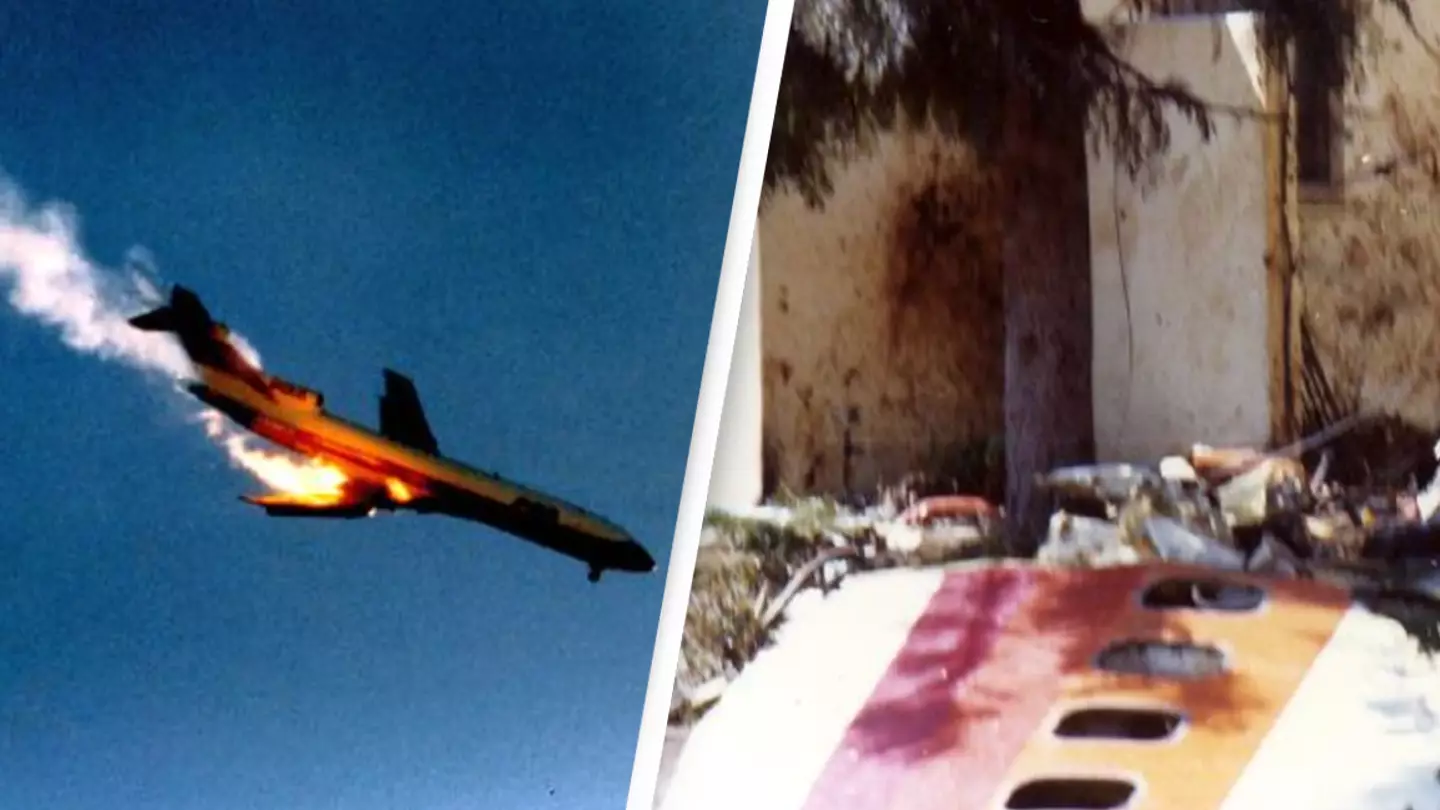
The Pacific Southwest Airlines (PSA) Flight 182 crash, which occurred on September 25, 1978, remains a defining event in aviation history due to its profound impact on mid-air collision avoidance protocols. The collision between a Boei...
The Pacific Southwest Airlines (PSA) Flight 182 crash, which occurred on September 25, 1978, remains a defining event in aviation history due to its profound impact on mid-air collision avoidance protocols. The collision between a Boeing 727 and a Cessna 172 over San Diego fundamentally reshaped air traffic control procedures and cockpit resource management standards.
Contents
The Sequence of Events: Technical Breakdown of the Mid-Air Collision
On the morning of September 25, 1978, PSA Flight 182, a Boeing 727-214, was conducting an approach into San Diego International Airport (Lindbergh Field). Simultaneously, a private Cessna 172 was performing practice instrument approaches. The convergence of these two aircraft occurred in clear visibility conditions under visual flight rules (VFR), leading to a catastrophic loss of life and property.
The National Transportation Safety Board (NTSB) investigation revealed that the loss of visual contact by the Boeing 727 flight crew, coupled with ambiguous communication between the pilots and the approach controller, led to the collision. As the Boeing 727 overtook the smaller Cessna from above and behind, the Cessna was lost in the high-wing silhouette and the ambient sun glare, preventing the PSA crew from identifying the hazard until the final seconds before impact.
Critical Deficiencies Identified in the 1978 Investigation
The NTSB report categorized the factors contributing to the crash into specific operational and regulatory failures. Understanding these is essential for comprehending modern aviation safety infrastructure:
- Communication Ambiguity: Controllers utilized terminology that implied the PSA crew had visual contact with the Cessna, when in reality, the crew had lost sight of the aircraft.
- Visual Limitations: The design of the Boeing 727 cockpit and the Cessna’s position relative to the airliner made visual acquisition difficult, a factor that was severely underestimated by all parties.
- ATC Workload and Radar Procedures: The radar monitoring procedures of the era did not provide sufficient redundancy to compensate for the pilots' loss of visual separation.
- Human Factors: The "see and avoid" doctrine, which placed the entire burden of separation on the pilots during visual approaches, proved insufficient in high-density terminal areas.
Evolution of Aviation Safety Protocols Post-1978
Following the tragedy, the Federal Aviation Administration (FAA) mandated sweeping changes to the National Airspace System. These changes remain the foundation of how aircraft navigate terminal areas in 2026.
Primary Regulatory and Technical Upgrades
| Improvement Feature | Technical Implementation | Impact on Aviation Safety |
|---|---|---|
| TCAS Implementation | Traffic Collision Avoidance System | Provides active alerts and climb/descend commands to pilots. |
| Terminal Control Areas | Expansion of TCA/Class B Airspace | Requires mandatory ATC clearance and transponder use in dense zones. |
| Radar Monitoring | Mandatory Terminal Radar Service | Ensures continuous ATC tracking of VFR and IFR aircraft interactions. |
| CRM Training | Cockpit Resource Management | Standardized communication protocols to reduce hierarchy-based errors. |
The Role of TCAS and Modern Separation Standards
The most significant outcome of the PSA 182 investigation was the accelerated development and eventual universal adoption of the Traffic Collision Avoidance System (TCAS). In 2026, TCAS II is standard on virtually all commercial and large turbine-powered aircraft.
TCAS functions independently of ground-based air traffic control. By interrogating the transponders of nearby aircraft, it generates a "Resolution Advisory" (RA) that informs the pilot exactly how to maneuver to avoid a collision. This technology effectively eliminated the primary failure mode of the PSA 182 incident—the inability to visually track an aircraft during the final stages of a landing approach.
Analyzing Human Factors: The Birth of Cockpit Resource Management
The PSA 182 crash, along with other notable accidents of the era, forced the aviation industry to acknowledge that technical skill alone was insufficient. The investigation highlighted a lack of assertive communication within the cockpit. This led to the formalization of Cockpit Resource Management (CRM).
Modern CRM in 2026 mandates that flight crews operate as a cohesive unit. This includes:
- Assertion Training: Encouraging junior officers to challenge the decisions of captains if safety is perceived to be at risk.
- Standardized Phraseology: Eliminating ambiguous language in radio transmissions between ATC and flight crews to prevent misunderstandings.
- Situational Awareness: A systematic approach to scanning, identifying, and communicating traffic threats in the immediate vicinity of the aircraft.
Frequently Asked Questions Regarding the PSA 182 Incident
Could modern technology have prevented the collision of PSA 182?
Yes. The implementation of modern TCAS II would have alerted the Boeing 727 crew to the presence and trajectory of the Cessna 172 long before the collision, regardless of the crew's visual status.
What is the "see and avoid" doctrine and why did it fail?
The "see and avoid" doctrine places the legal responsibility on pilots to visually identify and maintain distance from other aircraft. It failed in this instance because the physical limitations of the cockpit and external environmental factors made it impossible for the pilots to maintain the required visual contact throughout the approach.
Did the FAA change pilot-controller communication after this crash?
Yes. Post-accident reviews led to a strict standardization of radio terminology, ensuring that controllers and pilots use specific phrases to confirm visual separation, removing any room for assumptions.
How did this accident influence modern terminal airspace?
It led to the creation and expansion of Class B terminal airspace, which enforces strict control and separation standards for all aircraft, both commercial and private, entering major metropolitan hubs.
Where can I find the official NTSB report for this accident?
The official investigative report remains available in the NTSB's historical accident database and serves as a cornerstone document for aviation safety training and air traffic control curriculum globally.
Implications for Future Aviation Safety Strategy
As we look toward the integration of Unmanned Aerial Systems (UAS) and Advanced Air Mobility (AAM) in 2026, the lessons of PSA 182 remain highly relevant. The move from human-centric visual separation to automated, digital-centric collision avoidance is a direct progression from the vulnerabilities exposed in San Diego. Pilots and aviation professionals must continue to study these historical events to ensure that the automation of the future does not introduce new versions of the communication and situational awareness gaps that plagued the industry in 1978. Rigorous adherence to standardized ATC procedures remains the most effective tool in the modern aviator's repertoire for ensuring safe flight operations.
Image Gallery