Comprehensive Examples of Sales Promotion in Retail: Strategies and Impact
Sales promotions in retail are short-term marketing tactics designed to stimulate immediate consumer demand, increase foot traffic, and accelerate inventory turnover. A quintessential example is the "Buy One, Get One Free" (BOGO) offer...
Sales promotions in retail are short-term marketing tactics designed to stimulate immediate consumer demand, increase foot traffic, and accelerate inventory turnover. A quintessential example is the "Buy One, Get One Free" (BOGO) offer, which leverages the psychological power of "free" to clear stock quickly while maintaining a high perceived value for the customer.
Contents
Retailers utilize these incentives to bridge the gap between advertising and the final purchase decision. While traditional marketing builds brand awareness over time, sales promotions focus on the "now," providing a tangible reason for a customer to choose a specific product or store immediately. As we navigate the retail landscape of 2026, the integration of data analytics and personalized digital delivery has made these promotions more targeted and effective than ever before.
The Mechanics of Popular Retail Sales Promotions
To understand the practical application of sales promotions, it is essential to analyze the specific formats that have consistently proven successful in both physical and digital retail environments. Each type serves a unique purpose, from clearing seasonal "deadstock" to acquiring new long-term customers.
Buy One, Get One (BOGO) and Multi-Buy Offers
The BOGO promotion remains one of the most effective tools in a retailer’s arsenal. Its success is rooted in consumer psychology; people are far more likely to respond to something labeled "free" than a percentage-based discount, even if the mathematical value is identical (e.g., "50% off when you buy two").
In 2026, retailers often use "BOGO 50%" variants to protect profit margins while still encouraging a higher "basket size"—the total number of items a customer purchases in a single visit. This strategy is particularly effective for consumable goods like toiletries, pantry staples, and apparel basics, where consumers are comfortable stocking up on items they know they will eventually use.
Flash Sales and Limited-Time Offers
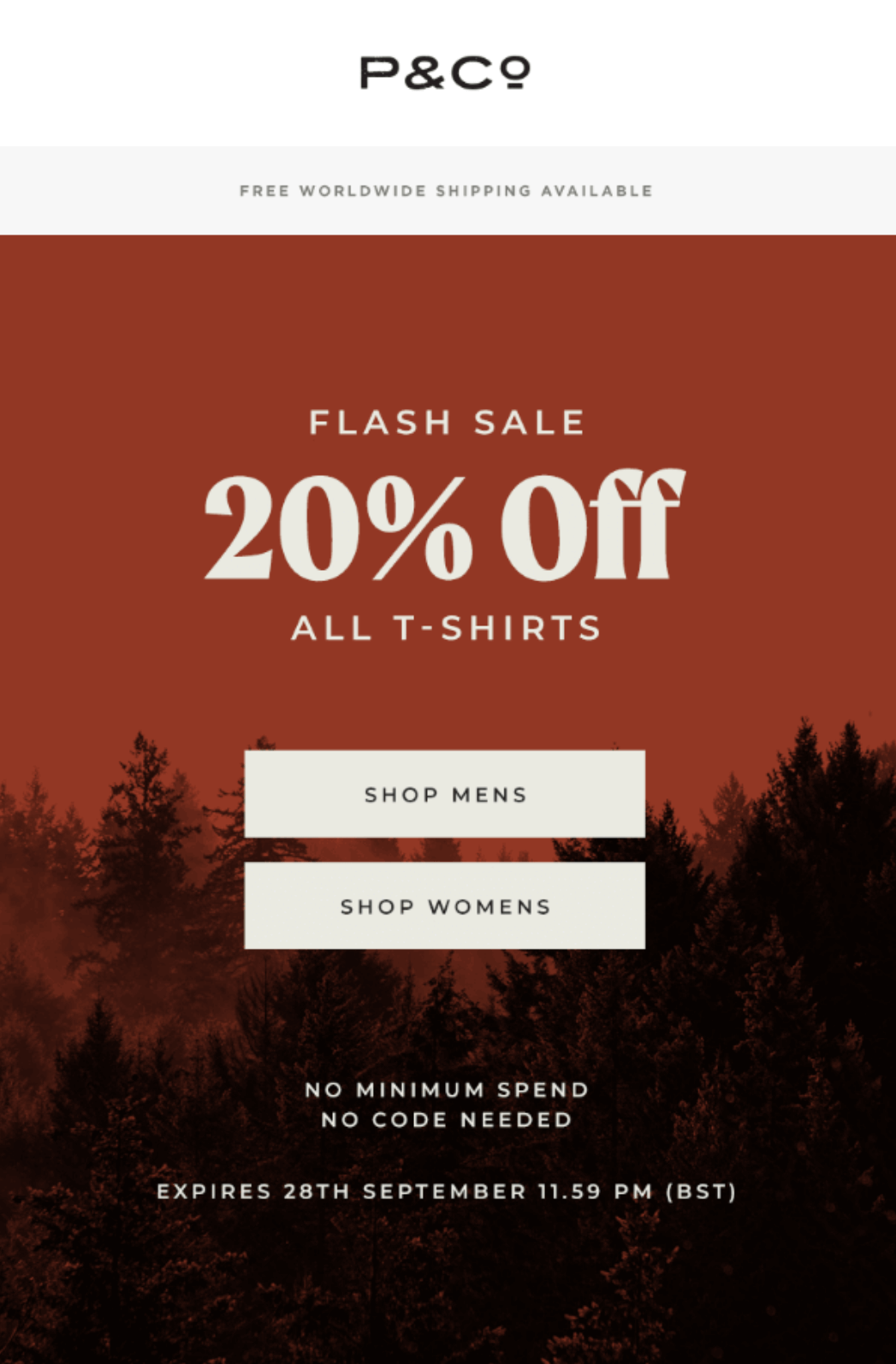
Flash sales rely on the principles of urgency and scarcity. By offering a significant discount for a very short window—sometimes only a few hours—retailers trigger a "fear of missing out" (FOMO) that bypasses the typical consumer hesitation period.
Technically, flash sales are excellent for moving high-volume inventory that has reached the end of its peak demand period. For example, a consumer electronics retailer might launch a four-hour flash sale on last year’s tablet models to make room for an incoming shipment. This not only clears warehouse space but also generates a temporary spike in website traffic that can lead to "halo purchases" of non-discounted accessories like cases or chargers.
Loss Leaders
A loss leader is a product sold at a price below its market cost to stimulate other, more profitable sales. This is a common strategy for grocery stores and big-box retailers. For instance, a store might sell a gallon of milk or a specific brand of popular soda at a loss.
The technical goal is not to make money on that specific item but to lure the customer into the store. Once there, the customer is statistically likely to complete their full shopping list, purchasing high-margin items like produce, meat, or household goods that more than compensate for the initial loss. In 2026, retailers use sophisticated AI to identify which products are most likely to act as "anchor" items for specific demographic groups.
Strategic Objectives: Why Retailers Deploy Promotions
While the immediate goal of a promotion is often a "sale," the underlying strategic objectives are frequently more complex. Retailers must balance the short-term revenue boost against potential long-term impacts on brand equity and price sensitivity.
Inventory Management and Liquidation
Inventory that sits on shelves is "dead capital." It incurs holding costs, takes up valuable floor space, and risks becoming obsolete. Seasonal promotions, such as "End of Summer" or "Post-Holiday" sales, are essential for liquidating stock that will no longer be relevant in the coming months. This allows the retailer to recover liquidity and reinvest it in fresh, full-price merchandise.
Customer Acquisition and Market Penetration
For new retailers or those launching a new product line, sales promotions serve as a low-barrier entry point for skeptical consumers. A "First-Time Buyer" discount or a deep introductory offer reduces the perceived risk of trying an unfamiliar brand. Once the customer has experienced the product quality and the retailer's service, the goal shifts toward retaining them at full price.
Boosting Cash Flow
Retail is a cash-intensive business. There are times when a business may need an immediate infusion of liquidity to meet payroll, pay suppliers, or fund an expansion. Deep, store-wide promotions can generate a massive influx of cash in a single weekend. While the profit margins on these sales are lower, the sheer volume provides the necessary capital to sustain operations during slower periods.
Comparing Retail Promotion Strategies
The following table compares common sales promotion types based on their typical objectives, cost-to-retailer, and impact on consumer behavior.
| Promotion Type | Primary Objective | Profit Margin Impact | Consumer Urgency | Best For |
|---|---|---|---|---|
| BOGO | Inventory Clearance | Moderate | High | Consumables & Apparel |
| Flash Sale | Immediate Revenue | High (Negative) | Extreme | Electronics & Fashion |
| Loss Leader | Foot Traffic | Very High (Negative) | Moderate | Groceries & Essentials |
| Loyalty Rewards | Retention | Low | Low | Specialty Retail & Services |
| Coupons | Targeted Acquisition | Variable | Moderate | New Product Launches |
| Rebates | Data Collection | Low | Low | High-Ticket Appliances |
The Role of Consumer Psychology in Promotions
The effectiveness of a sales promotion is rarely about the math alone; it is about how the discount is framed. Retailers use specific cognitive biases to influence the shopper's journey.
The Anchoring Effect
When a retailer shows the "Original Price" crossed out next to a "Sale Price," they are utilizing anchoring. The original price serves as a mental anchor, making the sale price appear as a significant gain. Without the anchor, the consumer might perceive the sale price as the standard value of the item and feel less compelled to act.
The Power of "Free"
Research in behavioral economics suggests that the word "free" triggers an emotional response that "discounted" does not. In a BOGO promotion, the second item being "free" eliminates the psychological pain of spending money on that specific unit. This is why a "Buy Two, Get One Free" offer often outperforms a "33% off when you buy three" offer, despite the financial outcome being nearly identical.
Gamification and Rewards
In 2026, promotions are increasingly gamified. "Spin the wheel" digital coupons or "unlocked" discounts based on spending tiers turn the act of saving money into a challenge or a game. This increases engagement time with the brand's app or website, creating more opportunities for cross-selling and upselling.
Digital vs. Physical Sales Promotions in 2026
The implementation of sales promotions differs significantly between the "bricks" and the "clicks," though the two are increasingly converging through omnichannel strategies.
In-Store Tactics: Point-of-Purchase (POP)
Physical retail relies heavily on Point-of-Purchase (POP) displays. These are the end-caps, dump bins, and checkout-line displays that house promotional items. The goal is to capture the "impulse buy." When a customer sees a "10 for $10" bin, the physical accessibility of the products combined with the simple pricing structure leads to rapid decision-making.
Digital Tactics: Personalization and Retargeting
Online retail promotions are driven by data. In 2026, "blanket" discounts are becoming rarer, replaced by dynamic pricing and personalized coupons. If a customer abandons a shopping cart, the retailer may automatically trigger a "10% off" email 24 hours later to close the deal. Digital promotions also allow for A/B testing, where a retailer can send two different versions of a promotion to small segments of their audience to see which performs better before launching it to the entire database.
Common Pitfalls in Retail Sales Promotions
While promotions can drive volume, they are not without risks. Poorly planned promotions can damage a brand's long-term health.
- Training Customers to Wait: if a retailer runs a 20% off sale every long weekend, customers will stop buying at full price, simply waiting for the next scheduled discount. This "devalues" the brand and erodes margins permanently.
- Attracting "Cherry Pickers": These are customers who only buy the discounted or loss-leader items and never return for full-priced goods. If a promotion doesn't lead to a broader relationship, it may result in a net loss for the business.
- Complexity Issues: Promotions with too many "fine print" exclusions (e.g., "Not valid on brands X, Y, or Z") frustrate customers and can lead to negative reviews or brand abandonment at the checkout counter.
Measuring the Success of a Promotion
To determine if a promotion was actually successful, retailers must look beyond the "Gross Sales" figure. Key performance indicators (KPIs) include:
- Incremental Sales: Sales that would not have happened without the promotion.
- Customer Acquisition Cost (CAC): How much was spent on the promotion divided by the number of new customers gained.
- Redemption Rate: The percentage of issued coupons or offers that were actually used.
- Basket Analysis: Did the promotion lead to customers buying other, non-discounted items?
Frequently Asked Questions
What is the difference between a sales promotion and advertising?
Advertising is a long-term strategy aimed at building brand awareness, identity, and desire. It tells the story of why you should buy a product. A sales promotion is a short-term tactical tool that provides a direct incentive (like a discount or a free gift) to encourage an immediate purchase. Advertising pulls the customer toward the brand, while promotions push the product toward the customer.
Can sales promotions hurt a premium brand's image?
Yes. Premium or "luxury" brands must be very careful with sales promotions. Over-discounting can lead consumers to believe the product's quality has declined or that the brand is no longer exclusive. High-end brands often use "Value-Added" promotions instead—such as a free high-quality travel bag with a perfume purchase—rather than a direct price cut, to maintain their prestige.
How do retailers calculate the discount rate for a BOGO?
Retailers calculate the "effective discount" by considering the margin of the product. In a standard "Buy One, Get One Free" (BOGO), the effective discount is 50% off the total transaction. To be profitable, the retailer’s markup on the item must be high enough that selling two units at half-price still covers the Cost of Goods Sold (COGS) and associated overhead, or they must view the promotion as a customer acquisition cost.
What are "Trade Promotions" vs. "Consumer Promotions"?
Consumer promotions are directed at the end-user (the person buying the item in the store). Trade promotions are directed at the "trade"—the wholesalers, distributors, or retailers. For example, a manufacturer might give a grocery store a discount for buying 1,000 cases of cereal. The store then decides whether to pass that saving on to the consumer as a "sale" or keep the extra margin.
Why do some promotions require a "Mail-In Rebate"?
Mail-in rebates are used because they have a lower "slippage" rate. Many consumers will buy a product because of the lower "after-rebate" price, but a significant percentage will never actually follow through with the paperwork to claim the money. This allows the retailer to advertise a very low price while only paying out the discount to a fraction of the buyers.
Next Steps for Implementing Retail Promotions
If you are planning a retail promotion for 2026, your first step should be to define a singular, measurable goal: are you clearing old stock, or are you trying to get new customers through the door? Once the goal is set, choose the promotion type that matches your margin requirements. Use a small-scale "pilot" or A/B test on your digital platforms to verify the offer's appeal before committing to a full-scale in-store rollout. Always ensure your staff is fully trained on the promotion's terms to prevent friction at the point of sale.
Image Gallery