Exploring the Impact of Von Erik on Modern Education
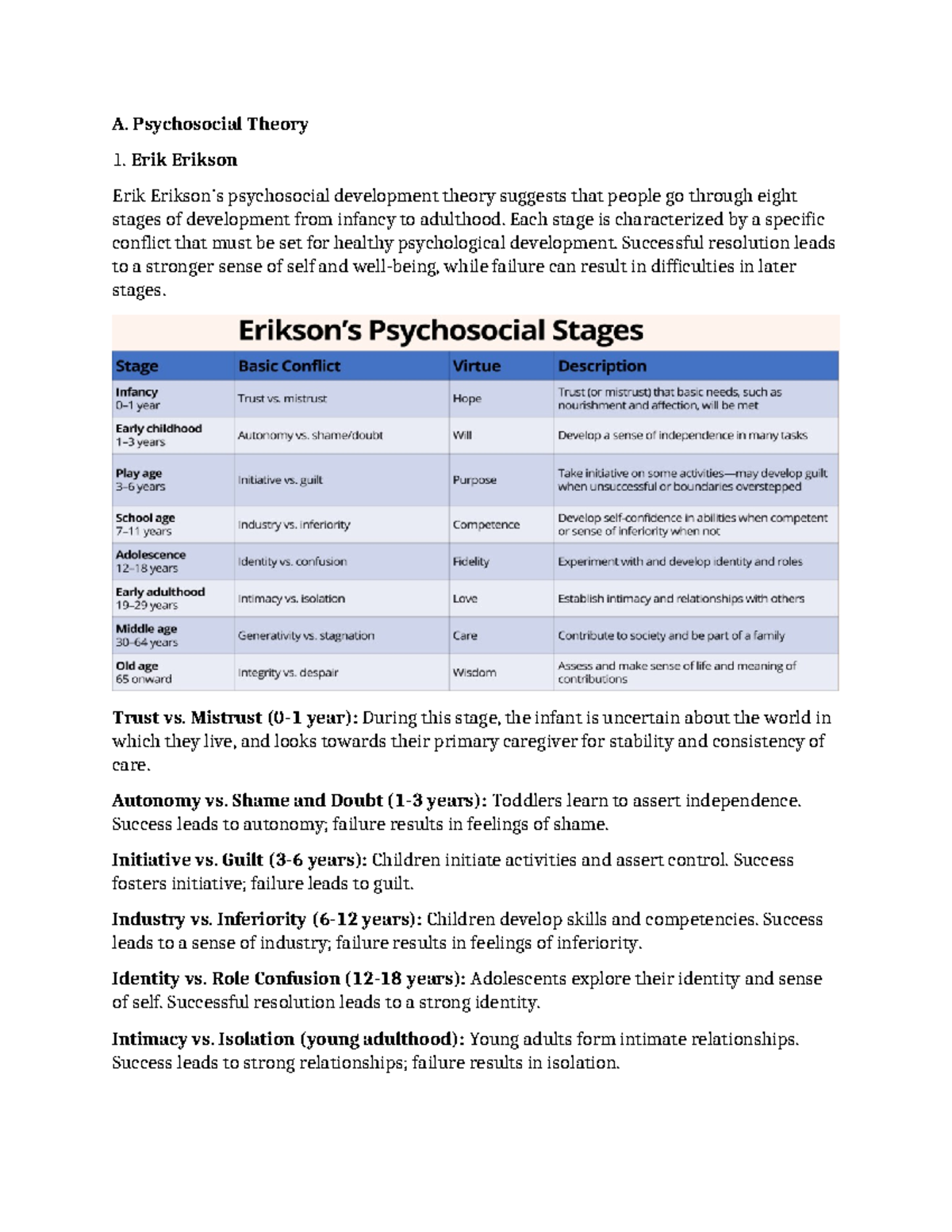
The educational legacy of Erik von Glasersfeld—often referenced alongside developmental theorist Erik Erikson under the umbrella of "von Erik" educational influences—fundamentally transformed modern instruction. Von Glasersfeld introdu...
The educational legacy of Erik von Glasersfeld—often referenced alongside developmental theorist Erik Erikson under the umbrella of "von Erik" educational influences—fundamentally transformed modern instruction. Von Glasersfeld introduced radical constructivism, establishing that learners actively construct knowledge rather than passively absorb it, while Erikson defined the psychosocial stages of student development. Together, their frameworks dictate modern student-centered pedagogy, inquiry-based STEM curricula, and adaptive educational technology.
Contents
Disambiguating the Theoretical Foundations: Constructivism and Psychosocial Development
In contemporary educational discourse, references to "von Erik" primarily point to Erik von Glasersfeld (1917–2010), the philosopher and cognitive scientist who formulated radical constructivism. However, literature examining developmental psychology in schooling frequently intersects his work with that of Erik Erikson (1902–1994), the pioneer of psychosocial development theory. Understanding modern educational architecture requires evaluating how both thinkers dismantled 20th-century transmission-style teaching in favor of cognitive and social agency.
| Core Educational Influences | Principles |
|---|---|
| Erik von Glasersfeld (Radical Constructivism) | - Knowledge is built by the individual, not transmitted.- Focus on conceptual viability over absolute truth.- Shift from rote memory to active schema reconstruction. |
| Erik Erikson (Psychosocial Development) | - Identity formation drives learning capacity.- Classroom environments must support psychosocial milestones.- Social-Emotional Learning (SEL) integrated into instruction. |
Von Glasersfeld built upon Jean Piaget’s developmental biology, arguing that knowledge is not a copy of reality transferred from teacher to student. Instead, an individual constructs mental models (schemas) to make sense of subjective experiences. In an educational setting, this means a student does not "receive" mathematical or scientific truths; they build internal structures that accommodate or assimilate new empirical evidence.
Simultaneously, Erikson’s framework provided the affective counterpart: learning cannot occur in a vacuum isolated from a student's search for identity, autonomy, and competence. Modern educational systems synthesize these perspectives to design learning environments that address both cognitive schema building and emotional maturity.
Core Tenets of Von Glasersfeld’s Radical Constructivism in Pedagogy
Radical constructivism departs sharply from traditional behaviorist and direct-transmission models of education. To apply von Glasersfeld’s concepts effectively, educators must recognize four foundational principles:
- Knowledge as an Active Process: Learning is an action performed by the student, not an item delivered by the instructor. Lecturing without interactive engagement yields superficial retention rather than conceptual understanding.
- The Principle of Viability: Concepts are maintained by a learner not because they are objective external truths, but because they prove viable—meaning they successfully resolve cognitive conflict and fit within the student's existing framework of experience.
- Cognitive Adaptation: Learning occurs when prior expectations fail, forcing the mind to modify its existing schemas through accommodation to restore equilibrium.
- Social Constructivism: Language and social interaction serve as the primary tools for testing whether individual mental constructs operate effectively within a broader peer community.
By shifting the metric of successful learning from correct answer regurgitation to viable mental model construction, radical constructivism altered how educators evaluate student comprehension. Mistakes are no longer viewed simply as errors to be penalized; they represent active hypotheses within a student's evolving cognitive architecture.
Practical Applications in Modern Curricula and STEM Learning
The practical footprint of constructivist theory is most evident in modern Science, Technology, Engineering, and Mathematics (STEM) instruction, alongside project-based learning (PBL) frameworks across primary, secondary, and higher education.
Traditional Direct Instruction vs. Radical Constructivist Pedagogy
- Traditional Approach
- Teacher Lectures
- Student Memorizes
- Standardized Test
- Passive Knowledge
- Constructivist Approach
- Problem Introduced
- Student Explores
- Cognitive Dissonance
- Schema Refinement
- Applied Problem Solving
1. Inquiry-Based Science and Mathematics
Rather than presenting formulas first and asking students to solve pre-formulated problem sets, constructivist curricula present authentic phenomena. For instance, in physics, students manipulate interactive simulations or physical balance beams before formalizing the mathematical law of torque. The mathematical equation becomes a formalization of an insight the student has already constructed intuitively.
2. The Shift in Teacher Roles: From Transmitter to Facilitator
Constructivism redefines the educator from the "sage on the stage" to a facilitator of cognitive dissonance. Teachers design learning tasks that deliberately challenge incomplete student assumptions. By asking targeted Socratic questions rather than providing immediate answers, the teacher prompts students to test the boundaries of their internal models.
3. Assessment Reform and Formative Evaluation
Standardized, multiple-choice testing often fails to measure whether a student understands a concept or has merely memorized a process. Constructivist-aligned assessment relies on:
- Explanatory Tasks: Requiring students to explain why a phenomenon occurs or how they reached a conclusion.
- Portfolio Documentation: Tracking the evolution of student concepts over extended periods.
- Authentic Problem Solving: Assessing performance through novel scenarios where memorized algorithms are insufficient.
The Integration of Constructivism with Educational Technology
Modern educational technology leverages constructivist theory to build adaptive learning platforms, digital twin simulations, and interactive software environments. In computational environments, learners manipulate variables in real time, receiving immediate feedback that directly challenges incorrect mental models.
EdTech Implementation of Constructivism
| System Layer | Constructivist Function |
|---|---|
| Interactive Simulations | Allows active manipulation of variables to test theoretical models in real-time environments. |
| Adaptive Learning Engines | Identifies cognitive gaps and presents targeted anomalies to prompt schema accommodation. |
| Generative AI Tutors | Acts as a Socratic dialogue partner, questioning student logic rather than delivering static answers. |
Generative AI tutoring tools designed on constructivist principles refrain from providing direct solutions to complex prompts. Instead, the AI guides the student through self-correction, asking prompts such as: "You concluded that velocity doubles when mass doubles—what observed data in your simulation supports that claim?" This maintains the cognitive burden on the learner, preserving the constructivist learning dynamic.
Comparative Framework: Traditional, Constructivist, and Psychosocial Models
The table below contrasts traditional educational models with the cognitive-constructivist approach of von Glasersfeld and the psychosocial approach of Erikson across key instructional dimensions:
| Instructional Dimension | Traditional Transmission Model | Von Glasersfeld’s Constructivist Model | Erikson’s Psychosocial Model |
|---|---|---|---|
| Primary Goal of Education | Mastery of standardized content and facts | Development of viable cognitive models and problem-solving | Healthy identity formation and social competence |
| View of Knowledge | Objective truth transmitted from instructor to student | Subjective, viable schemas constructed by the learner | Contextual understanding built through social roles |
| Educator Role | Information broadcaster and evaluator | Learning environment designer and cognitive coach | Mentor supporting emotional and identity development |
| Student Role | Passive receiver and memorizer | Active experimenter and sense-maker | Developing individual balancing autonomy and social integration |
| Primary Classroom Mechanism | Lectures, textbooks, rote recitation | Problem-based learning, experiments, Socratic dialogue | Group collaboration, peer leadership, mastery tasks |
| Assessment Approach | Summative testing, standardized scoring | Formative assessment, explanations, authentic tasks | Self-reflection, milestone tracking, peer review |
| EdTech Application | Digital flashcards, video lectures | Interactive labs, coding sandboxes, AI Socratic tutors | Collaborative workspaces, peer-to-peer discussion portals |
Common Misconceptions and Operational Challenges
Implementing constructivist framework in institutional settings presents distinct operational challenges and theoretical misunderstandings. School systems frequently struggle with misinterpretations that degrade instructional quality.
Common Constructivist Pitfalls and Practical Solutions
- Pitfall 1: Unguided Discovery
- Incorrect: Leaving students without instruction
- Solution: Structured Scaffolding & Guided Inquiry
- Pitfall 2: Neglecting Foundational Skills
- Incorrect: Rejecting basic procedural fluency
- Solution: Explicit Teaching integrated into Constructivist Tasks
Misconception 1: Constructivism Means "Unguided Discovery"
A common error among curriculum developers is confusing constructivism with minimal guidance. Pure discovery learning—where students are given materials without structured constraints or clear goals—frequently leads to high cognitive load, frustration, and the formation of persistent misconceptions. Effective constructivist pedagogy relies heavily on scaffolded inquiry, where teachers provide structured boundaries, foundational knowledge, and strategic constraints.
Misconception 2: Rejection of Direct Instruction and Practice
Constructivism does not imply that direct instruction is invalid. Complex conceptual understanding often requires prior fluency with basic facts and procedures (such as multiplication tables or basic vocabulary). Effective modern curricula balance explicit instruction of foundational tools with constructivist tasks where those tools are applied to solve novel problems.
Institutional Challenges
- Curricular Pace: Constructivist learning requires time for exploration, processing, and self-correction, which often conflicts with state-mandated content coverage deadlines.
- Teacher Preparation: Facilitating a constructivist classroom requires deep subject matter expertise. Instructors must understand a field well enough to anticipate and navigate unexpected student reasoning paths in real time.
- Assessment Alignment: High-stakes testing often continues to reward rapid recall over conceptual flexibility, creating systemic tension between instructional philosophy and institutional accountability.
Actionable Strategy for Implementing Constructivist Design in the Classroom
Educators and curriculum leaders seeking to integrate von Glasersfeld’s principles into existing instructional units can follow a four-step redesign process:
- Step 1: Identify Target Misconception
- Step 2: Introduce Discrepant Event (Cognitive Dissonance)
- Step 3: Facilitate Collaborative Sense-Making
- Step 4: Formalize and Apply Viable Concepts
Step 1: Target Core Misconceptions
Identify the fundamental concept within the unit where students commonly rely on rote algorithms rather than deep understanding (e.g., fraction division, natural selection, or electrical circuits).
Step 2: Introduce a Discrepant Event
Design an initial task or experiment that produces results contradicting common student assumptions. This generates the cognitive dissonance necessary to motivate schema accommodation.
Step 3: Facilitate Collaborative Sense-Making
Structure student groups to debate findings, present alternative explanations, and defend their logic using empirical evidence gathered during the exercise. The instructor asks clarifying questions without revealing the target concept prematurely.
Step 4: Formalize and Extend
Once students have built a viable conceptual framework to explain the phenomenon, introduce standard technical terminology, mathematical equations, or theoretical names. Conclude by assigning a novel problem that requires transferring the new concept to a different context.
Frequently Asked Questions
What is the core difference between Piaget's constructivism and von Glasersfeld's radical constructivism?
Jean Piaget focused primarily on cognitive development stages and how individuals assimilate and accommodate information biologically. Erik von Glasersfeld extended this into epistemology, asserting that knowledge does not reflect an objective reality at all; it only represents a viable interpretation of experiential reality constructed by the learner.
How does von Glasersfeld’s theory influence social-emotional learning (SEL)?
While von Glasersfeld focused primarily on cognitive architecture, radical constructivism highlights that learners build knowledge through social interactions and dialogue. When combined with Erikson's psychosocial theory, SEL frameworks use constructivist group work to build empathy, self-awareness, and collaborative problem-solving skills alongside academic knowledge.
Does constructivism work for students with learning differences or neurodivergent profiles?
Yes, but it requires deliberate structural scaffolding. Neurodivergent learners often benefit from explicit instructional supports, clear visual representations, and structured task parameters alongside hands-on, constructivist exploration. Pure unguided discovery can overwhelm executive function capacities.
How do constructivist classrooms handle incorrect student conclusions?
In a constructivist framework, an incorrect conclusion is viewed as a rational result of an incomplete internal model. Rather than simply declaring the answer wrong, the teacher presents counter-evidence or asks probing questions that force the student to recognize the internal contradiction within their existing model.
Is constructivism compatible with standardized state curricula?
Constructivism is compatible with standardized learning outcomes, but it alters how those standards are reached. Instead of teaching to the test via memorization drills, constructivist methods teach underlying principles, enabling students to apply knowledge flexibly across standardized test formats.
Final Guidance and Next Actions
To modernize educational programs using constructivist principles, institutions should focus on teacher development over curriculum replacement. Educational leaders should evaluate current programs by examining whether students are spending more time listening to conceptual explanations or directly manipulating concepts to build their own conclusions.
- For Classroom Teachers: Identify one upcoming instructional unit and replace the introductory lecture with an inquiry-based problem or discrepant event.
- For Instructional Designers: Review digital learning tools to ensure software interactive elements require hypothesis testing rather than passive content consumption.
- For School Administrators: Align professional development budgets toward training teachers in high-level Socratic facilitation and formative cognitive assessment strategies.
Image Gallery