FOB Origin Pricing Explained: A Comprehensive Guide to Shipping Terms and Liability
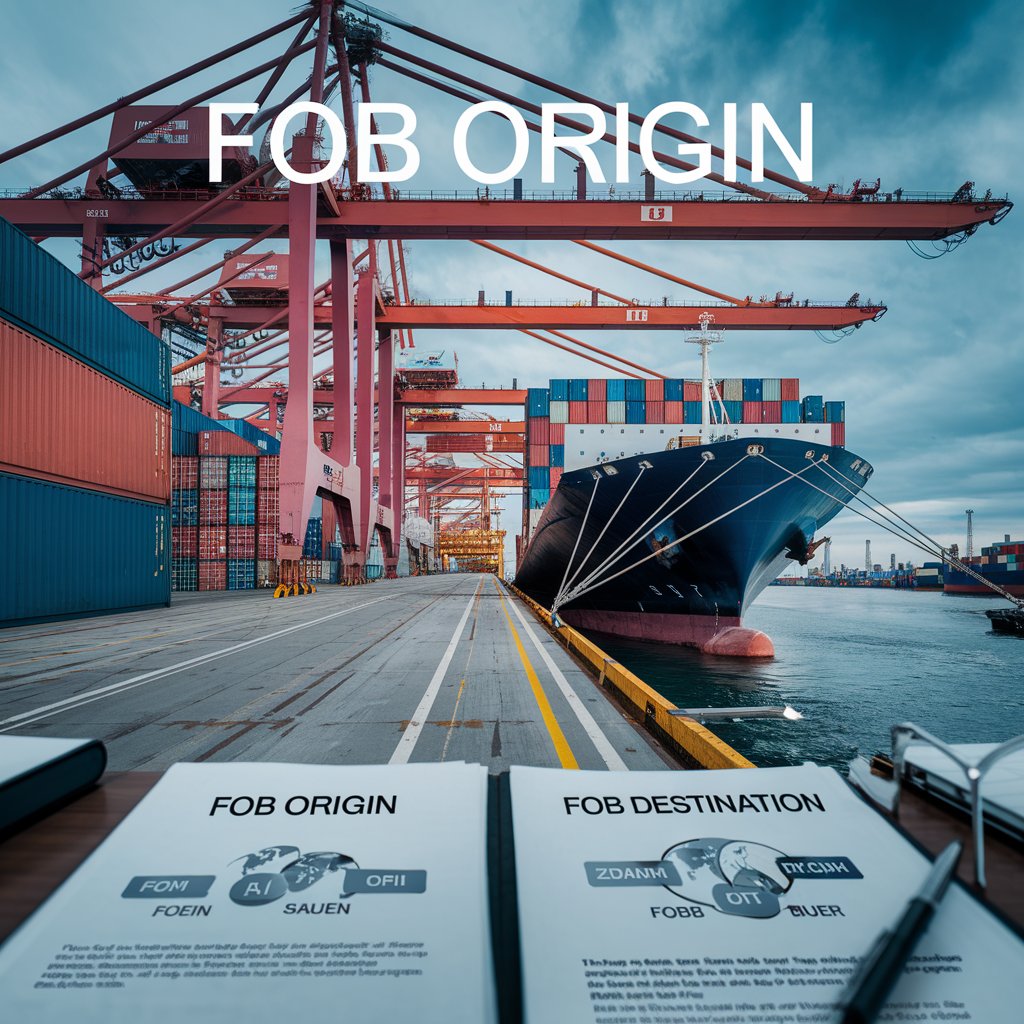
FOB Origin is a shipping term indicating that the buyer assumes ownership and liability for goods the moment they leave the seller's shipping dock. Under these terms, the buyer is responsible for all freight costs, transit insurance, a...
FOB Origin is a shipping term indicating that the buyer assumes ownership and liability for goods the moment they leave the seller's shipping dock. Under these terms, the buyer is responsible for all freight costs, transit insurance, and any damages that occur during transportation to the final destination.
Contents
In the complex landscape of global and domestic trade as of 2026, understanding shipping "Incoterms" and domestic freight agreements is critical for maintaining healthy margins. "FOB," which stands for Free on Board (or sometimes Freight on Board), is a cornerstone of commercial law and logistics. Specifically, FOB Origin—also known as FOB Shipping Point—dictates the exact geographical location where the "title" or legal ownership of goods transfers from the seller to the buyer.
The Fundamental Mechanics of FOB Origin
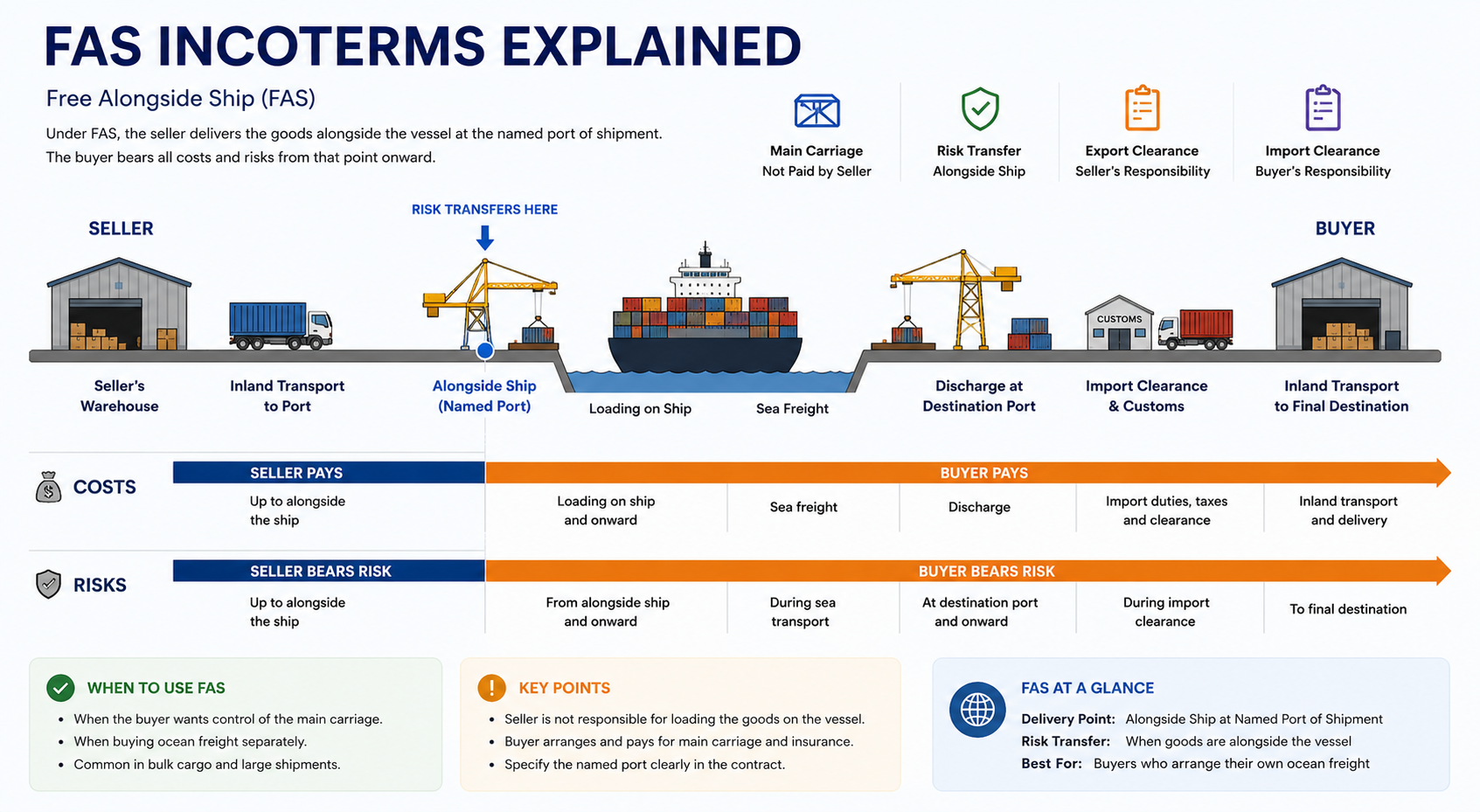
When a contract specifies FOB Origin, the seller’s obligation is fulfilled once the goods are safely loaded onto the carrier’s vehicle at the seller's location. This location is typically a warehouse, factory, or distribution center. Once the carrier signs the Bill of Lading, the seller is legally "free" of the goods, and the buyer becomes the legal owner.
This transfer of ownership is not merely a logistical detail; it has profound implications for a company's financial statements. Because ownership transfers at the point of departure, the buyer must record the goods as inventory on their balance sheet while the items are still in transit. Conversely, the seller can recognize the revenue from the sale the moment the shipment leaves their dock. In the 2026 fiscal environment, where "just-in-time" inventory and rapid revenue recognition are prioritized, these distinctions are vital for accurate quarterly reporting.
Cost Allocation and Responsibility
The most immediate impact of FOB Origin is on the bottom line. Under these terms, the buyer is responsible for selecting the freight carrier, negotiating the shipping rates, and paying all related costs. These costs often include:
- Freight Charges: The primary cost of moving the goods from Point A to Point B.
- Transit Insurance: Since the buyer owns the goods during the journey, they must insure them against loss, theft, or damage.
- Handling Fees: Any secondary costs related to offloading or intermediate storage during the journey.
- Import Duties: In international contexts, the buyer manages all customs clearance and associated taxes.
Risk Management and the "Transfer of Title"
One of the most misunderstood aspects of FOB Origin pricing is the legal risk associated with damage in transit. Because the title transfers at the origin, any damage that occurs during the voyage is the buyer's problem. If a truck overturns or a container is lost at sea, the buyer still owes the seller the full purchase price of the goods.
To mitigate this, buyers must be diligent in filing claims against the carrier. However, carrier liability is often limited by law or contract (such as "released value" rates). Consequently, savvy procurement departments in 2026 utilize comprehensive "all-risk" marine or inland cargo insurance policies to protect their investment.
The Role of the Bill of Lading
The Bill of Lading (BoL) serves as the "birth certificate" of the shipment. In an FOB Origin arrangement, the BoL acts as a receipt of goods, a contract of carriage, and a document of title. When the carrier signs the BoL at the seller’s dock, it confirms that the goods were received in "apparent good order and condition." If the buyer receives damaged goods later, the BoL is the primary piece of evidence used to prove the damage occurred while the goods were in the carrier’s possession, rather than being shipped in a damaged state by the seller.
Variations of FOB Origin Pricing
While "FOB Origin" is the base term, several variations exist that further refine who pays the carrier and who bears the ultimate freight expense. These variations are essential for tailoring agreements to the specific needs of a supply chain.
FOB Origin, Freight Collect
This is the "purest" form of FOB Origin. The buyer pays the freight charges directly to the carrier upon arrival. The buyer owns the goods in transit and bears all risks. This is common when the buyer has a high shipping volume and can negotiate better rates with carriers than the seller can.
FOB Origin, Freight Prepaid
In this scenario, the seller pays the carrier's freight charges at the time of shipment, but the buyer still owns the goods and bears the risk during transit. The seller usually adds these costs to the buyer's invoice. This is often done as a convenience to the buyer, particularly if the buyer is a smaller entity without established carrier relationships.
FOB Origin, Freight Prepaid and Charged Back
The seller pays the freight bill and then adds the exact cost to the invoice sent to the buyer. This differs from "Prepaid" in that the freight cost is explicitly listed as a line item on the invoice. This allows the buyer to see exactly what they are paying for shipping while still allowing the seller to handle the initial payment logistics.
Comparing FOB Origin vs. FOB Destination
To fully grasp FOB Origin, it must be compared to its counterpart: FOB Destination. The choice between these two can significantly affect a company’s risk profile and logistics workload.
| Feature | FOB Origin (Shipping Point) | FOB Destination |
|---|---|---|
| Ownership Transfer | At the seller's dock/origin. | At the buyer's dock/destination. |
| Liability for Damage | Buyer bears the risk in transit. | Seller bears the risk in transit. |
| Freight Cost Payment | Usually the buyer. | Usually the seller. |
| Revenue Recognition | When goods leave the seller. | When goods arrive at the buyer. |
| Carrier Selection | Typically the buyer. | Typically the seller. |
| Insurance Responsibility | Buyer’s responsibility. | Seller’s responsibility. |
Strategic Advantages of FOB Origin for Buyers
While FOB Origin shifts more responsibility to the buyer, it is often the preferred method for large-scale enterprises and experienced procurement professionals in 2026.
1. Control Over Logistics
When a buyer controls the shipping, they can choose the specific carrier and the route. This is vital for time-sensitive materials or fragile goods where the buyer trusts a particular carrier’s handling procedures over a generic one selected by the seller.
2. Freight Cost Transparency
Sellers often "pad" shipping costs in FOB Destination pricing to cover potential fluctuations or administrative overhead. By using FOB Origin, the buyer pays the actual market rate for freight, avoiding the hidden markups often found in "delivered" pricing models.
3. Consolidation Opportunities
Large buyers often source from multiple vendors in the same geographical region. With FOB Origin, the buyer can coordinate a single carrier to pick up goods from several sellers (milk-runs), significantly reducing the per-unit shipping cost through freight consolidation.
Common Pitfalls and Troubleshooting
Despite its widespread use, FOB Origin can lead to disputes if not managed correctly.
The "Hidden Damage" Conflict: If a buyer signs for a delivery and later finds internal damage, the seller may refuse to help, citing that the title transferred at the origin. Buyers must perform a thorough inspection upon delivery and note any external damage on the delivery receipt immediately.
Inconsistent Terminology: There is often confusion between the Uniform Commercial Code (UCC) used in the United States and the International Chamber of Commerce (ICC) Incoterms used globally. Under ICC Incoterms 2020 (the standard still prevalent in 2026), "FOB" is strictly for sea and inland waterway transport. For road or rail transport, the correct international term is FCA (Free Carrier). Using "FOB Origin" for a truck shipment to an international customer can lead to legal ambiguity.
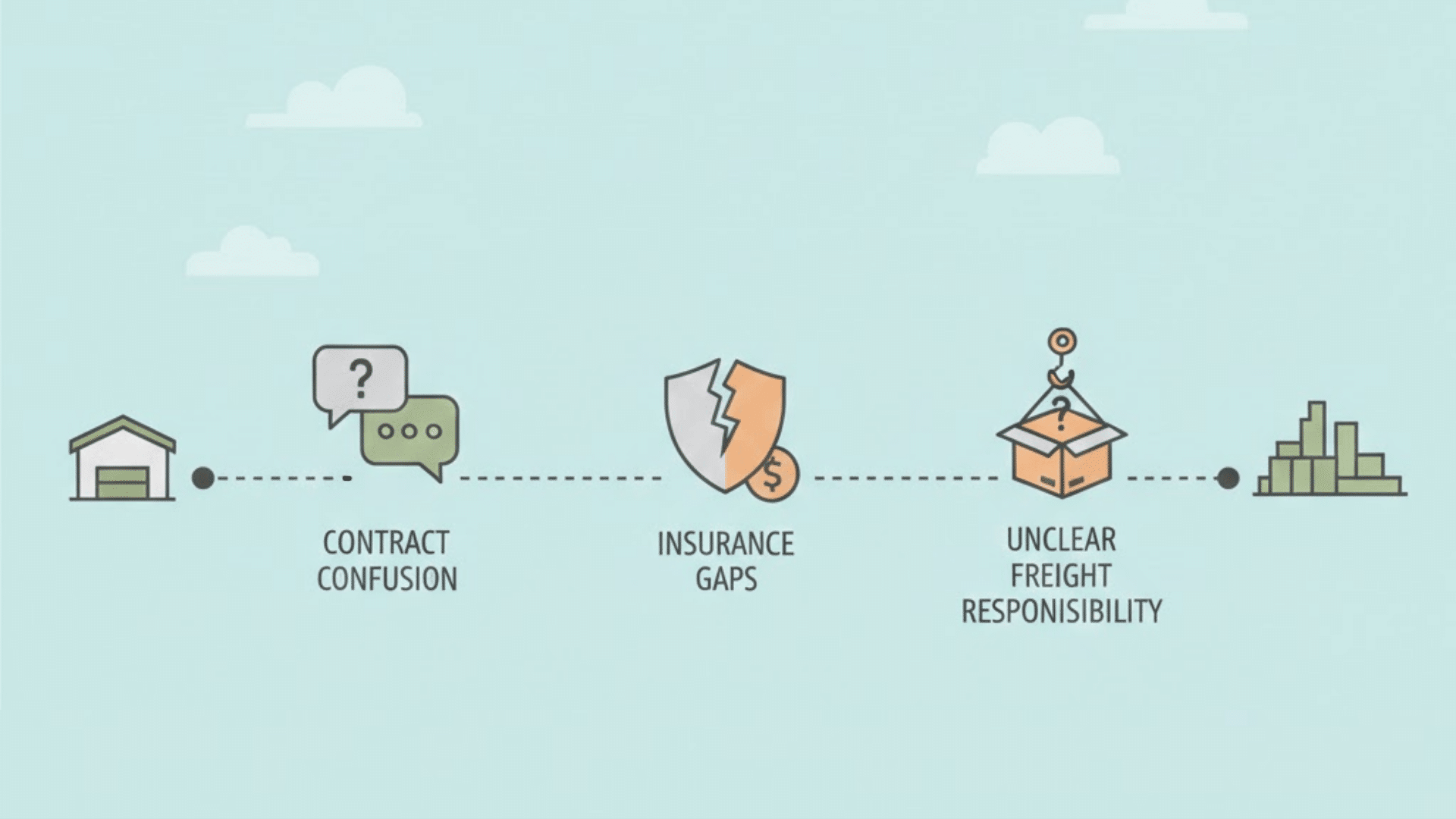
Insurance Gaps: Many buyers assume their general business insurance covers goods in transit. Often, it does not. Companies must ensure they have a specific "Inland Marine" or "Cargo" rider to cover FOB Origin shipments.
Legal and Regulatory Context in 2026
In 2026, the interpretation of FOB terms remains grounded in the Uniform Commercial Code (UCC) within the U.S. and Incoterms 2020 internationally. However, recent trends in environmental regulations have added a new layer to these terms. Some jurisdictions now require the "owner" of the goods in transit to account for the carbon emissions generated during transport. Under FOB Origin, this carbon accounting responsibility falls squarely on the buyer, who must track and report the emissions of their chosen carriers.
Furthermore, digital smart contracts on blockchain platforms are increasingly used to automate the transfer of title. In these systems, the "transfer of title" in an FOB Origin agreement happens automatically when the carrier’s digital signature is registered in the system at the point of pickup, triggering an immediate electronic invoice to the buyer.
Frequently Asked Questions
Is FOB Origin always cheaper for the buyer?
Not necessarily. While it eliminates seller markups on shipping, the buyer must have the administrative capacity to manage logistics. If a buyer has low shipping volumes, they might pay higher retail freight rates than a large seller who has negotiated deep discounts with national carriers.
Who files the insurance claim if goods are damaged in an FOB Origin shipment?
The buyer is responsible for filing the claim. Since the buyer owns the goods from the moment they leave the seller's dock, the loss is legally theirs. The buyer must work with the carrier’s claims department or their own insurance provider to recover the value of the damaged goods.
Does FOB Origin apply to international shipping?
Yes, but with caveats. In international trade, the International Chamber of Commerce (ICC) Incoterms are the gold standard. While "FOB" exists in Incoterms, it is only for maritime transport. For air or ground transport, the equivalent of FOB Origin is usually "FCA" (Free Carrier). It is vital to specify which set of rules (UCC or Incoterms) governs the contract.
When should a seller insist on FOB Origin?
A seller should prefer FOB Origin when they want to minimize their liability and simplify their accounting. It allows for immediate revenue recognition and removes the headache of managing claims for goods that are no longer in their possession. It is ideal for sellers dealing in high-volume, standardized commodities.
How does FOB Origin affect sales tax?
In many jurisdictions, the "point of sale" for tax purposes is determined by where the title transfers. Under FOB Origin, the sale occurs at the seller's location. This can impact which state or local sales taxes are applicable, though the specific rules vary significantly by region and current 2026 tax treaties.
Recommendation for Businesses
For most organizations, the decision to use FOB Origin should be based on logistical maturity. If your company has a dedicated logistics team and established relationships with freight brokers or carriers, FOB Origin is almost always the superior choice. It provides the transparency and control necessary to optimize your supply chain and reduce "landed costs."
However, if you are a smaller operation or are purchasing from a vendor with a world-class distribution network, you may find that FOB Destination provides better peace of mind. Regardless of the choice, always ensure that your purchase orders explicitly state whether the agreement is governed by the UCC or Incoterms 2020 to avoid costly legal disputes during transit.
Image Gallery