Puffy Verdict Explained: Key Charges, Legal Defense Strategies, and Jury Outcomes
The "Puffy verdict" primarily refers to the landmark 2001 Manhattan criminal acquittal of music mogul Sean "Puff Daddy" Combs following a 1999 nightclub shooting. Jury deliberations centered on illegal firearm possession and bribery al...
The "Puffy verdict" primarily refers to the landmark 2001 Manhattan criminal acquittal of music mogul Sean "Puff Daddy" Combs following a 1999 nightclub shooting. Jury deliberations centered on illegal firearm possession and bribery allegations, ultimately clearing Combs while convicting co-defendant Jamal "Shyne" Barrow of assault, establishing a key legal precedent in high-profile criminal defense strategy.
Contents
Understanding the "Puffy Verdict" Context
The legal term "Puffy verdict" refers to the jury decision reached on March 16, 2001, in New York State Supreme Court in Manhattan, stemming from an incident on December 27, 1999, at Club New York. The case involved recording artist and entrepreneur Sean Combs (then known professionally as Puff Daddy or Puffy), his co-defendant and protégé Jamal "Shyne" Barrow, and bodyguard Anthony "Wolf" Jones.
While public discussion occasionally references recent federal legal actions against Combs, the phrase historically and legally points to the 2001 criminal trial. That trial remains one of the most widely analyzed celebrity court cases in American legal history. It examined complex issues regarding the statutory presumption of weapon ownership in vehicles, witness credibility under aggressive cross-examination, and the prosecution's burden of proof in multi-defendant criminal cases.
The 1999 Club New York Incident and State Charges
The events leading to the trial began during an late-night altercation at Club New York in Times Square. Following a verbal confrontation involving Combs and club patron Matthew "Scar" Allen, gunshots were fired inside the venue, injuring three bystanders: Natania Reuben, Julius Jones, and Robert Thompson.
In the immediate aftermath, police stopped a Lincoln Navigator carrying Combs, his then-partner Jennifer Lopez, driver Wardel Fenderson, and bodyguard Anthony Jones. Law enforcement officers discovered a loaded, stolen 9mm handgun inside the vehicle, leading to the arrest of all occupants. A second firearm was recovered near the scene and attributed to Jamal Barrow.
- Nightclub Altercation (Dec 27, 1999)
- Gunshots inside venue (3 bystanders injured)
- Vehicle Pursuit & Police Stop (Lincoln Navigator)
- Recovery of Stolen 9mm Handgun in Vehicle
- Sean Combs: Charged with Weapon Possession & Bribery
- Anthony Jones: Charged with Weapon Possession
- Jamal "Shyne" Barrow: Charged with Attempted Murder & Weapon Possession
Grand Jury Indictments
The Manhattan District Attorney's office obtained grand jury indictments charging the defendants under New York State Penal Law:
- Sean Combs: Two counts of criminal possession of a weapon in the second degree (class C felonies) and third degree (class D felony), alongside one count of bribery in the third degree. The bribery count alleged that Combs offered driver Wardel Fenderson a $40,000 diamond ring and financial compensation to claim ownership of the handgun found in the SUV.
- Jamal "Shyne" Barrow: Multiple felony counts, including attempted murder, first-degree assault, reckless endangerment, and criminal possession of a weapon.
- Anthony "Wolf" Jones: Criminal possession of a weapon related to the firearm recovered from the vehicle.
Prosecution Strategy vs. Criminal Defense Tactics
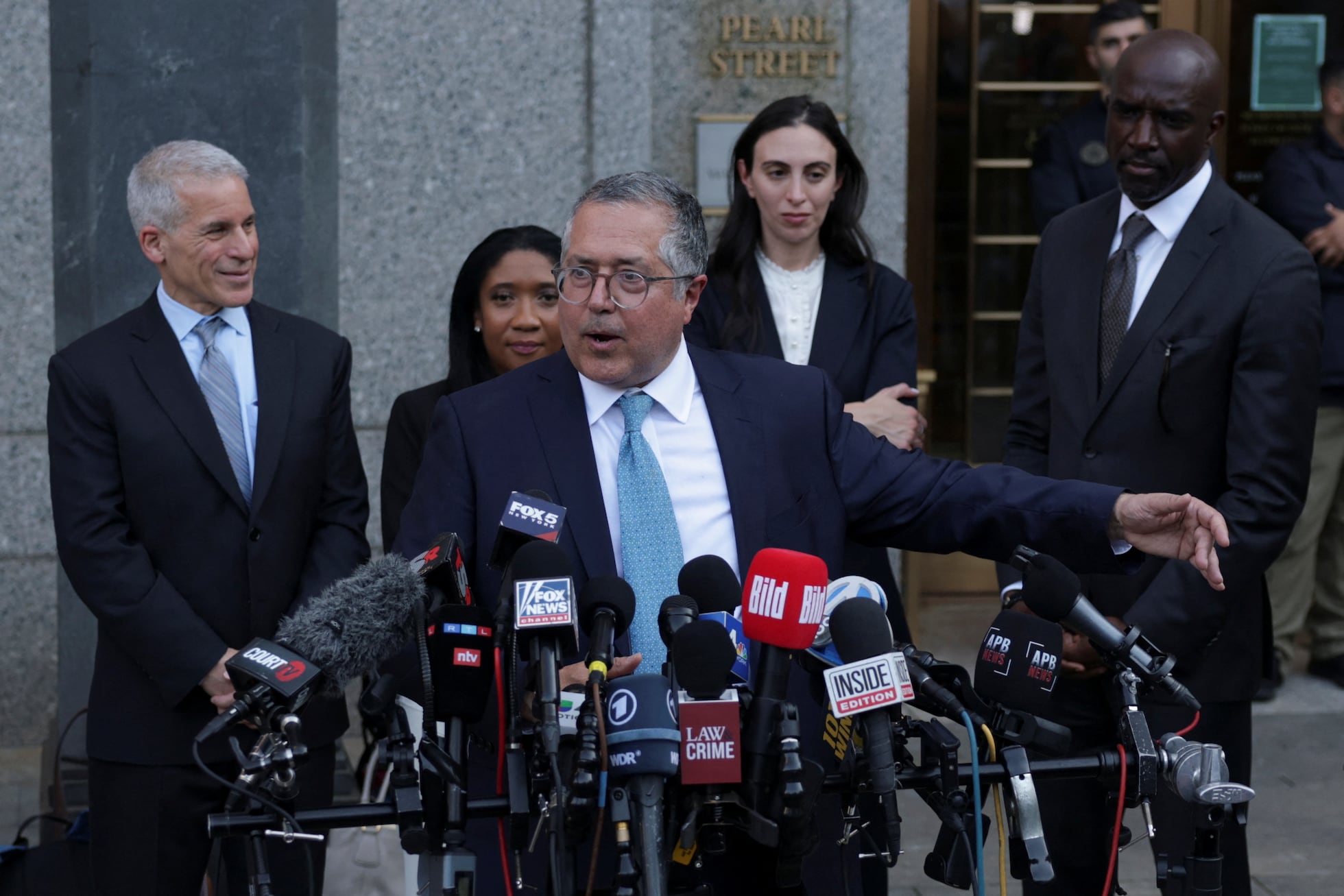
The seven-week trial presented sharp contrasts in trial strategy, evidentiary interpretation, and witness handling between Manhattan prosecutors and the defense team, led by defense attorneys Benjamin Brafman and Johnnie Cochran.
| Prosecution Theory | Defense Counter-Strategy |
|---|---|
| Statutory vehicle presumption | Physical evidence absence (No DNA/Prints) |
| Driver testimony on bribery offer | Witness impeachment (Driver credibility) |
| Fleeing the scene shows guilt | Panic response; no constructive control |
The Prosecution's Case
Assistant District Attorneys Matthew Bogdanos and Joan Illuzzi-Orbon built their case on three main pillars:
- Statutory Presumption of Possession: Under New York Penal Law § 265.15(3) (commonly known as the "automobile presumption"), the presence of a firearm in an automobile is presumptive evidence of its possession by all persons occupying the vehicle at the time the weapon is found.
- Witness Testimony: The prosecution relied heavily on the testimony of driver Wardel Fenderson, who testified that Combs attempted to persuade him to take responsibility for the gun, offering money and a diamond ring.
- Flight and Consciousness of Guilt: Prosecutors argued that driving away from the scene after shots were fired demonstrated consciousness of guilt.
The Defense Strategy
The defense team mounted a multi-layered challenge to the state's case:
- Absence of Forensic Evidence: Defense attorneys highlighted that modern forensic testing produced no latent fingerprints or DNA linking Combs or Anthony Jones to the 9mm handgun recovered from the SUV.
- Impeachment of Key Witnesses: Defense counsel systematically cross-examined Wardel Fenderson, revealing inconsistencies in his prior statements to police, his financial civil claims against Combs, and discrepancies regarding the alleged bribery timeline.
- Rebutting the Automobile Presumption: The defense established that the vehicle contained multiple occupants, operated in chaos during an active security emergency, and that presence alone did not establish constructive possession or intent to control the firearm.
- Self-Defense and Identification in Barrow's Defense: Barrow's counsel argued self-defense, contending that Barrow drew his weapon only after another unidentified individual drew a firearm during the club fight.
Legal Analysis of the Jury Verdict
On March 16, 2001, after nearly 23 hours of jury deliberation spread over four days, the 12-person jury delivered its verdict:
- Sean "Puffy" Combs: Acquitted of all counts (both weapon possession counts and the bribery count).
- Anthony "Wolf" Jones: Acquitted of all weapon possession counts.
- Jamal "Shyne" Barrow: Convicted of assault in the first degree, reckless endangerment, and gun possession. Acquitted of attempted murder.
2001 Manhattan Trial Verdict Summary
| Defendant | Primary Charges | Final Jury Verdict |
|---|---|---|
| Sean Combs | Gun Possession (2x), Bribery | Acquitted (All) |
| Anthony Jones | Gun Possession | Acquitted (All) |
| Jamal Barrow | Attempted Murder, Assault, Gun Possession | Convicted (Assault & Weapon counts) |
Why the Verdict Handed Down Differing Outcomes
The distinct outcomes between Combs and Barrow demonstrate fundamental principles of criminal law regarding burden of proof and constructive possession.
1. Constructive Possession vs. Actual Control
To convict an individual of weapon possession when the weapon is not found directly on their person, prosecutors must establish constructive possession—meaning the defendant had both the power and intent to exercise control over the object.
While New York's automobile presumption creates an initial inference, it is rebuttable. The jury concluded that the prosecution failed to prove beyond a reasonable doubt that Combs had knowledge of or operational control over the firearm hidden in the vehicle, particularly given the total lack of physical forensic evidence.
2. Reasonable Doubt in Bribery Allegations
The bribery charge hinged almost entirely on the oral testimony of driver Wardel Fenderson. Under cross-examination, defense attorneys established that Fenderson was pursuing civil damages against Combs, creating a potential financial motivation to tailor his testimony. Because independent corroborating evidence (such as recorded audio or neutral third-party witnesses) was absent, the jury determined the threshold of proof beyond a reasonable doubt was not met.
3. Direct Witness Testimony against Barrow
In contrast to Combs, multiple witnesses directly testified to seeing Jamal Barrow draw and discharge a firearm inside the crowded venue. While Barrow argued self-defense, the jury found his actions created a grave risk of death to others, satisfying the statutory elements of first-degree assault and reckless endangerment, though rejecting the specific intent required for attempted murder.
Comparison of Defendants, Evidence, and Outcomes
The following table summarizes the legal proceedings, evidence thresholds, and trial outcomes for the primary individuals involved in the 2001 Club New York trial.
| Defendant | Charges Tried | Key Evidence Offered | Legal Defense Raised | Final Verdict & Sentence |
|---|---|---|---|---|
| Sean Combs | Gun Possession (2nd & 3rd Degree); 3rd-Degree Bribery | Vehicle recovery of 9mm gun; Driver testimony regarding ring offer | Forensic absence (no prints/DNA); Witness credibility challenge | Acquitted on all counts; No criminal sentence |
| Jamal Barrow ("Shyne") | Attempted Murder; 1st-Degree Assault; Illegal Weapon Possession | Eyewitness identification of shooter; Bullet casings inside venue | Self-defense response to perceived armed threat | Convicted of Assault & Weapon Possession; Sentenced to 10 years in prison |
| Anthony Jones | Criminal Possession of a Weapon (2nd & 3rd Degree) | Presence in vehicle where concealed 9mm handgun was seized | Lack of control/knowledge; Rebuttal of automobile presumption | Acquitted on all counts; No criminal sentence |
| Wardel Fenderson | Uncharged (Cooperating Witness / Driver) | Sworn testimony regarding driving events and alleged bribery offer | N/A (Key prosecution witness) | Granted immunity/no charges filed; Filed separate civil suit |
Subsequent Legal Action and Civil Settlements
An acquittal in criminal court does not shield a defendant from civil liability, as civil proceedings operate under a lower evidentiary threshold: a preponderance of the evidence (more likely than not) rather than beyond a reasonable doubt.
Following the 2001 criminal acquittal:
- Civil Personal Injury Claims: Victims injured during the shooting filed civil suits against Sean Combs, Jamal Barrow, and Bad Boy Entertainment. Natania Reuben, who suffered facial injuries from bullet fragments, pursued a multi-million-dollar lawsuit.
- Out-of-Court Settlements: In February 2011—nearly twelve years after the incident—civil claims brought by shooting victims were formally resolved through confidential financial settlements without any admission of wrongdoing by Combs.
Evolution of Legal Context: 2001 State Case vs. Federal Indictments
When researching the "Puffy verdict," legal analysts frequently distinguish between the 2001 state criminal prosecution and subsequent legal matters, including federal indictments brought decades later.
| 2001 New York State Trial | Federal Indictments (SDNY) |
|---|---|
| Jurisdiction: State (NY Supreme Court) | Jurisdiction: U.S. District Court (SDNY) |
| Scope: Single incident (Club New York) | Scope: Multi-year racketeering / RICO allegations |
| Core Focus: Weapon possession & bribery | Core Focus: Enterprise conspiracy & sex trafficking |
| Outcome: Full Acquittal (Combs) | Status: Separate federal evidentiary standards |
Understanding these distinctions clarifies why evidence and verdicts from state weapon cases do not automatically dictate outcomes in federal grand jury proceedings:
- Jurisdiction: The 2001 trial was prosecuted by the Manhattan District Attorney under New York State criminal statutes. Federal cases are prosecuted by the United States Department of Justice (e.g., U.S. Attorney’s Office for the Southern District of New York - SDNY) under federal law.
- Statutory Elements: State charges centered on specific physical acts (possession of a firearm in a specific car on a specific date). Federal racketeering (RICO) or conspiracy charges focus on patterns of ongoing enterprise activity over extended time periods.
- Evidentiary Scope: Federal rules of evidence (Federal Rules of Evidence) govern federal trials, permitting broad enterprise-level evidence that is distinct from localized state assault or weapon possession rules.
Key Legal Lessons from the Verdict
The 2001 trial remains a standard case study in criminal defense literature, illustrating critical principles of trial practice:
- Rebutting Statutory Presumptions: Statutory presumptions (such as vehicle gun ownership rules) are starting points, not automatic convictions. Defense attorneys can overcome them by demonstrating a lack of direct physical connection or intent.
- The Power of Forensic Negation: When eye-witness testimony is disputed, the absence of physical DNA or fingerprint evidence creates significant reasonable doubt for jurors.
- Witness Credibility as a Decisive Factor: The credibility of key prosecution witnesses can crumble under rigorous cross-examination if financial interests or prior inconsistent statements are successfully exposed.
Frequently Asked Questions
What charges was Sean Combs acquitted of in the 2001 verdict?
Sean Combs was acquitted of all charges, which included two counts of criminal possession of a weapon in the second and third degrees and one count of third-degree bribery.
Why was Jamal "Shyne" Barrow convicted while Sean Combs was acquitted?
Barrow was convicted because eyewitnesses testified to seeing him draw and fire a gun inside Club New York. In contrast, no physical evidence or credible witness testimony established that Combs personally possessed or controlled the weapon found in the getaway vehicle.
What is the "automobile presumption" rule used in the trial?
Under New York Penal Law § 265.15(3), any firearm found inside an automobile is presumed to be possessed by everyone inside the vehicle. The defense successfully rebutted this presumption by demonstrating that Combs had no knowledge of, physical contact with, or control over the gun.
Did the victims receive compensation after the 2001 criminal verdict?
Yes. Although Combs was acquitted in criminal court, victims filed civil lawsuits. These civil actions were settled out of court in 2011 under confidential terms.
How does the 2001 state verdict relate to more recent federal legal proceedings?
The 2001 verdict was a state criminal case focused strictly on weapon possession and bribery charges from a single 1999 incident. Subsequent federal charges involve entirely distinct federal statutes, grand jury indictments, and legal standards independent of the 2001 state court acquittal.
Practical Takeaways for Analyzing Legal Verdicts
When evaluating high-profile criminal verdicts or legal analyses of past cases, keep the following evaluation criteria in mind:
- Distinguish Between Standards of Proof: Criminal convictions require proof beyond a reasonable doubt (99%+ certainty), whereas civil cases require only a preponderance of evidence (more than 50%). An acquittal in criminal court does not prevent civil liability.
- Examine Physical vs. Testimonial Evidence: Trial outcomes depend heavily on whether witness statements are corroborated by neutral forensic evidence like DNA, fingerprints, or digital records.
- Identify Specific Statutory Elements: Defendants are tried on specific statutory counts, not general moral assessments. Understanding the precise legal elements prosecutors must prove is essential to understanding why juries acquit or convict.
Disclaimer: This article provides historical legal analysis and educational information regarding court proceedings. It does not constitute formal legal advice or legal representation.
Image Gallery