How Text Mining Integrates with Natural Language Processing
Text mining integrates with Natural Language Processing (NLP) by utilizing NLP's computational linguistic techniques—such as tokenization, part-of-speech tagging, dependency parsing, and semantic vector embeddings—to convert unstructur...
Text mining integrates with Natural Language Processing (NLP) by utilizing NLP's computational linguistic techniques—such as tokenization, part-of-speech tagging, dependency parsing, and semantic vector embeddings—to convert unstructured text into structured mathematical representations. Text mining then applies statistical algorithms, data mining methods, and machine learning to these structured representations to extract high-level patterns, trends, relationships, and quantitative insights.
Contents
Defining the Distinct Roles: Text Mining vs. Natural Language Processing
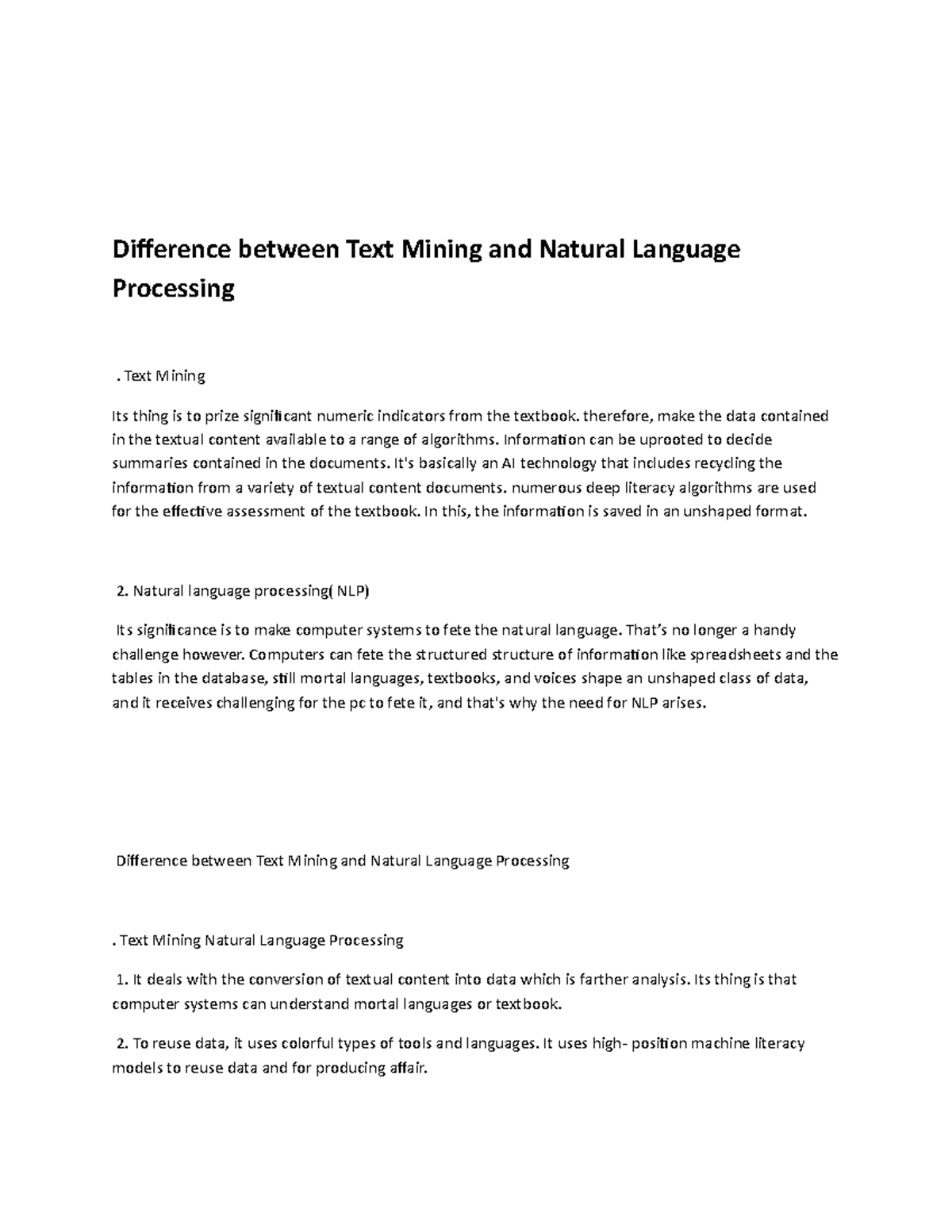
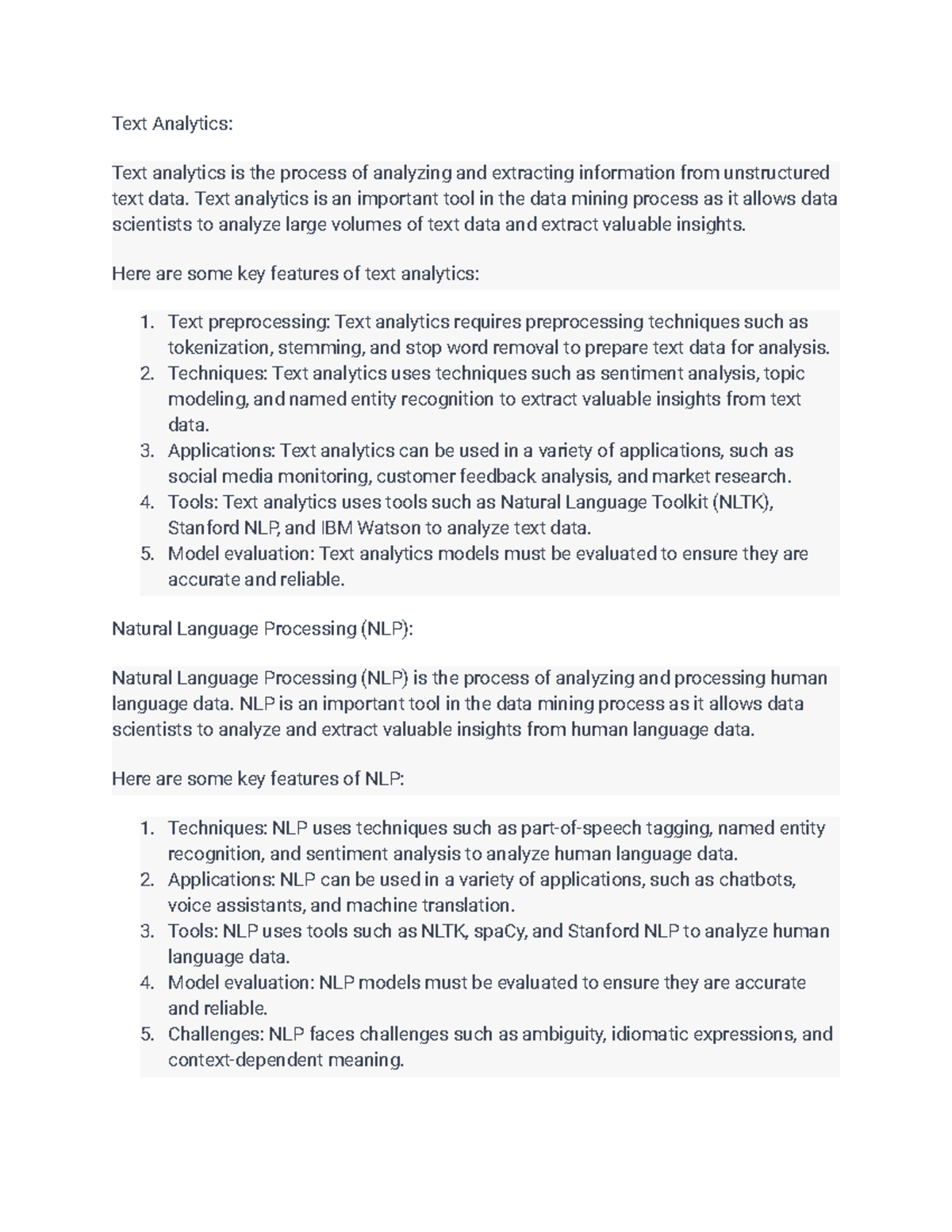
To understand how text mining integrates with Natural Language Processing, it is essential to distinguish between their core objectives, methodological foundations, and operational outputs. While practitioners frequently use the terms interchangeably in high-level discussions, they represent complementary engineering disciplines within data science.
- Text Mining
- Focus: Statistical Pattern Discovery, Trend Analysis, Business Metrics
- Integrates & Consumes:
- Natural Language Processing
- Focus: Computational Linguistics, Syntax, Semantics, Generation
- Natural Language Processing
What is Text Mining?
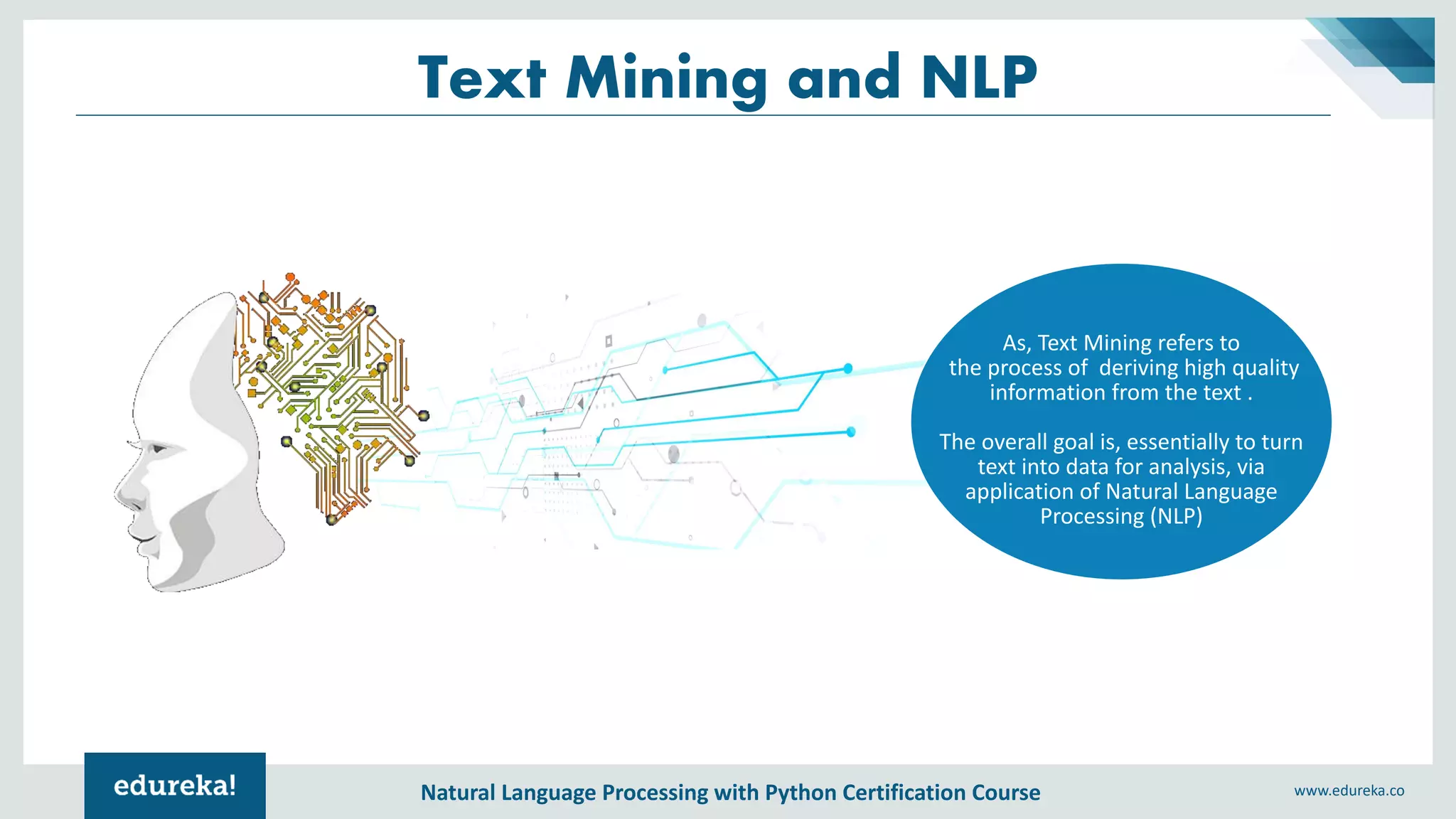
Text mining, also referred to as text data mining or Knowledge Discovery in Text (KDT), is the process of deriving high-quality, non-trivial information from unstructured text documents. Derived from traditional data mining principles, text mining focuses on identifying statistically significant patterns, relationships, correlations, and distributions across large document corpora. The primary objective is to transform raw written language into structured quantitative data that can feed business intelligence tools, executive dashboards, predictive financial models, and automated classification systems.
What is Natural Language Processing?
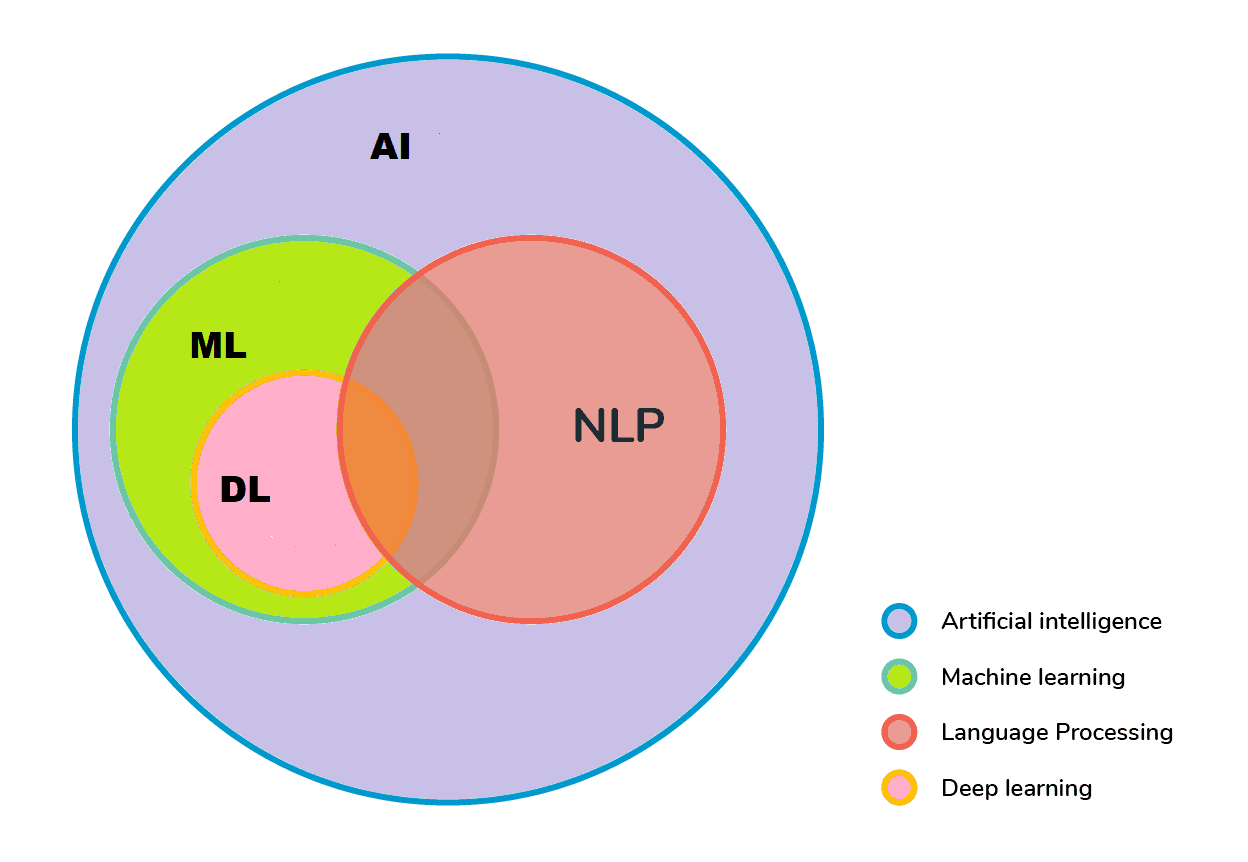
Natural Language Processing is a multidisciplinary field at the intersection of computer science, artificial intelligence, and computational linguistics. Its primary goal is to give machines the ability to understand, parse, interpret, and generate human language in a syntactically correct and semantically accurate manner. NLP focuses on resolving the inherent ambiguity, polysemy, context dependence, and idiomatic complexity of human communication.
The Synergistic Integration Point
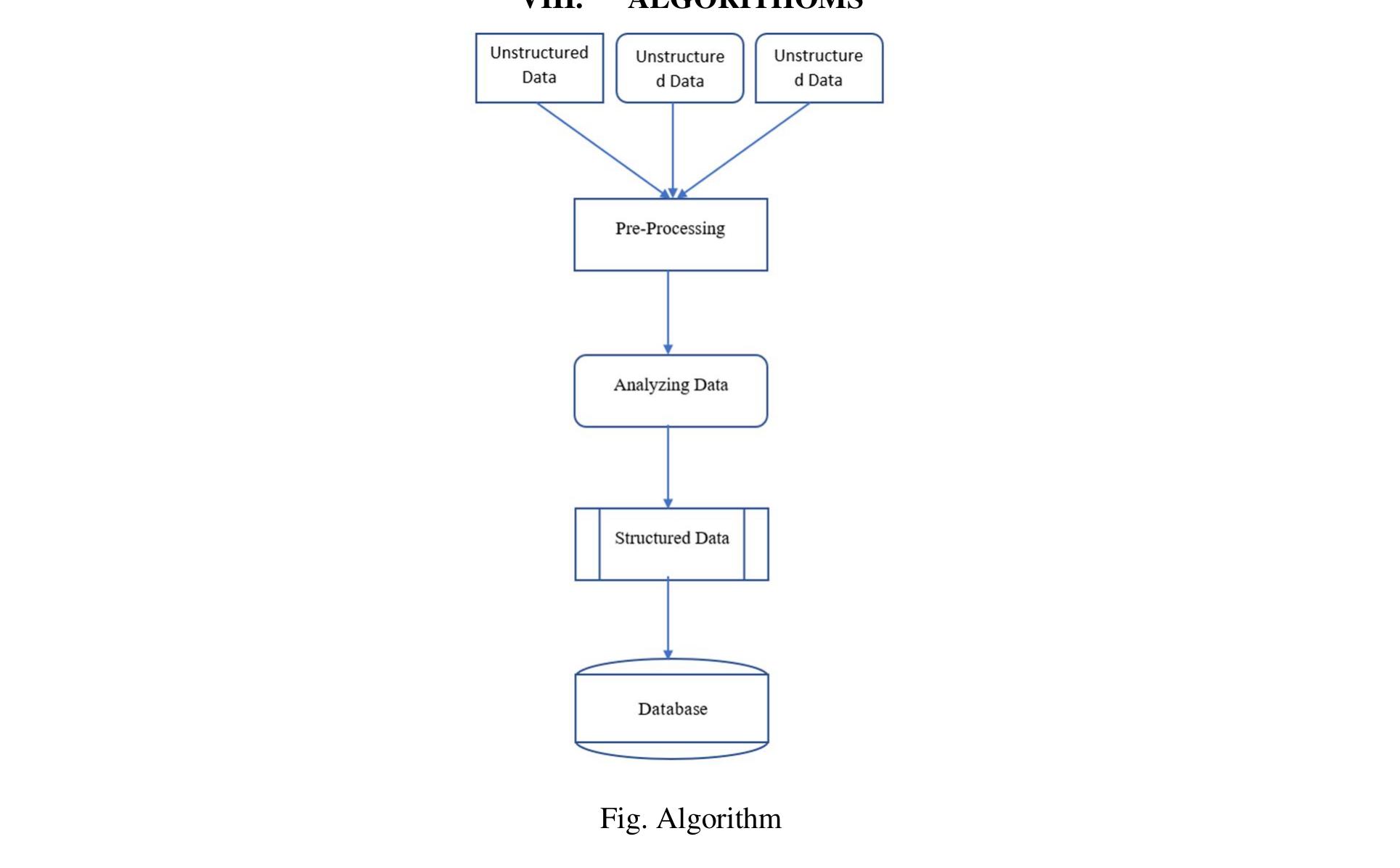
The integration between the two fields is structural: NLP provides the linguistic understanding, while text mining delivers the statistical analysis. Raw text is inherently unstructured and high-dimensional, making it incompatible with standard statistical and machine learning algorithms. NLP serves as the parsing and enrichment layer that decodes linguistic structure, extracts semantic meaning, and normalizes unstructured text into structured vectors or relational records. Text mining then acts as the analytical layer, processing those structured representations across thousands or millions of documents to reveal aggregate macro-level insights.
Without NLP, text mining would be limited to simplistic string matching and keyword counting, missing nuanced context, negation, and semantic relationships. Conversely, without text mining methodologies, NLP processes would analyze individual sentences or documents in isolation without discovering systemic trends, document clusters, or emerging topics across enterprise-scale datasets.
The Integrated Technical Pipeline: How NLP Powers Text Mining Workflows
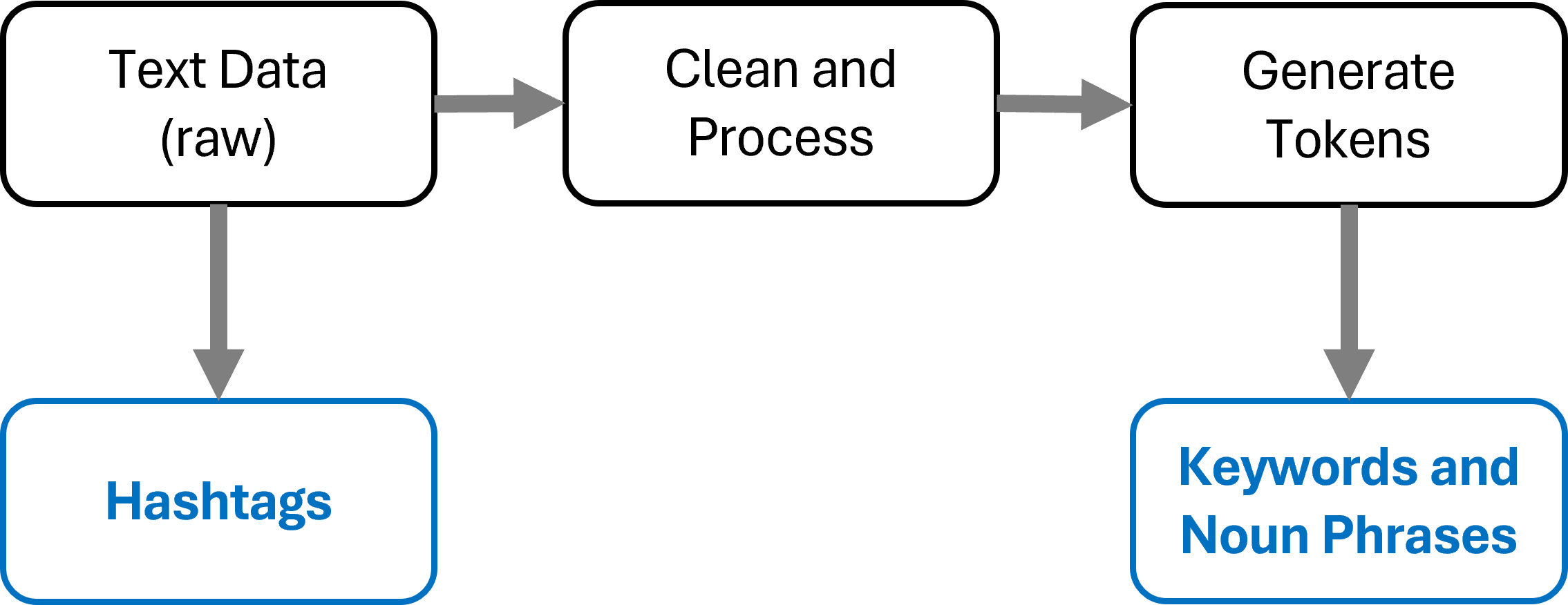
The operational integration of NLP and text mining follows a multi-stage sequential architecture. Each stage transforms the document collection, progressively moving from raw textual characters to syntactically annotated tokens, dense vector representations, and finally, actionable analytical models.
- Raw Text Documents
- Phase 1: NLP Preprocessing & Syntactic Parsing
- Tokenization, Stemming/Lemmatization, POS Tagging, Stop-word Removal
- Phase 2: Semantic Representation & Feature Vectorization
- TF-IDF Matrix Construction, Dense Vector Embeddings (BERT/RoBERTa)
- Phase 3: Text Mining & Statistical Pattern Discovery
- Topic Modeling (LDA), Document Clustering, Trend & Co-occurrence Analysis
- Structured Business Intelligence & Actionable Insights
Phase 1: NLP Preprocessing and Syntactic Parsing
Before statistical data mining algorithms can run, raw text must undergo rigorous linguistic preprocessing performed by specialized NLP toolkits (such as spaCy, NLTK, or Hugging Face tokenizers).
- Tokenization: The raw string is segmented into discrete linguistic units (tokens), such as words, subwords, or punctuation marks.
- Stop-Word Filtering: Non-informative grammatical terms (e.g., "the," "is," "at") are removed based on domain-specific rule sets to reduce dimensionality.
- Lemmatization and Stemming: Words are reduced to their canonical dictionary form (lemma) using morphological analysis (e.g., "running," "runs," and "ran" map to "run"). Lemmatization relies on accurate NLP part-of-speech context rather than simple heuristic chopping (stemming).
- Part-of-Speech (POS) Tagging: NLP models assign grammatical categories (noun, verb, adjective) to every token by evaluating syntactic context, allowing text mining algorithms to filter out irrelevant speech parts.
- Dependency Parsing: Syntactic parsers construct grammatical trees that reveal subject-verb-object relationships, mapping how words depend on one another within a sentence structure.
Phase 2: Semantic Representation and Feature Vectorization
Once raw text is linguistically cleaned and tagged, NLP models transform the tokens into mathematical representations suitable for quantitative text mining.
- Sparse Representations (TF-IDF): Term Frequency-Inverse Document Frequency measures how important a token is to a specific document relative to an entire corpus. While computationally efficient, sparse bag-of-words models do not capture word order or semantic similarity.
- Dense Semantic Embeddings: Modern NLP leverages deep learning models to project text into high-dimensional vector spaces. Static embeddings (like Word2Vec and GloVe) and context-aware transformer models generate dense vectors where words or sentences with similar contextual meanings reside close to one another in vector space.
Phase 3: Text Mining and Statistical Pattern Discovery
With documents converted into structured numerical matrices or dense embedding vectors, text mining algorithms execute statistical analysis across the entire dataset.
- Document Clustering: Unsupervised machine learning algorithms (such as K-Means, Hierarchical Clustering, or HDBSCAN) group similar documents together based on distance metrics in vector space (such as cosine similarity).
- Topic Modeling: Algorithms like Latent Dirichlet Allocation (LDA) or neural topic modeling frameworks analyze word co-occurrence matrices across the corpus to discover latent thematic clusters automatically.
- Classification and Regression: Supervised classifiers (such as Support Vector Machines, Random Forests, or Fine-tuned Neural Networks) categorize text into predefined taxonomy classes, predicting outcomes based on extracted linguistic features.
- Association Rule Mining: Algorithms evaluate frequent itemsets to identify structural relationships and co-occurrence patterns between distinct entities across historical records.
Core Integration Methodologies in Modern Engineering
The integration of NLP and text mining produces specialized analytics capabilities that power modern software enterprise platforms.
Core Integration Methodologies
- Information Extraction & Named Entity Recognition (NER)
- Maps unstructured text to structured entity attributes
- Aspect-Based Sentiment Analysis (ABSA)
- Pairs entity extraction with fine-grained sentiment scoring
- Dynamic Topic Modeling & Trend Detection
- Tracks thematic shifts and document clusters over time
1. Information Extraction (IE) and Named Entity Recognition (NER)
Information extraction is one of the clearest demonstrations of NLP enabling text mining. Natural language processing models use conditional random fields (CRFs) or transformer architectures to identify named entities—such as individuals, organizations, geographical locations, dates, monetary values, and medical terms—within unstructured text.
Once NLP identifies and normalizes these entities, text mining algorithms aggregate them across millions of records. For example, in competitive intelligence, NLP extracts entity mentions from news feeds, while text mining calculates co-occurrence matrices to construct network graphs showing corporate partnerships, executive movements, or emerging market risks.
2. Aspect-Based Sentiment Analysis (ABSA)
Standard sentiment analysis assigns a single broad polarity score (positive, negative, neutral) to a document. Integrated Aspect-Based Sentiment Analysis combines NLP syntactic parsing with text mining classification to deliver granular operational insights.
NLP dependency parsers identify specific target entities or product features (e.g., "battery life," "customer support") along with their modifier adjectives (e.g., "abysmal," "exceptional"). Text mining algorithms then aggregate these aspect-sentiment pairs across thousands of customer feedback tickets, giving product engineering teams quantitative metrics detailing precisely which product components drive user dissatisfaction.
3. Dynamic Topic Modeling and Trend Detection
Traditional text mining relied on keyword counts to track emerging trends, which failed when vocabulary shifted or authors used synonyms. By integrating NLP transformer embeddings with probabilistic topic modeling frameworks, systems can map semantic context dynamically.
NLP models convert document streams into continuous semantic representations. Text mining algorithms track the trajectories of these clusters over chronological timelines, alerting researchers to emerging scientific breakthroughs, shift in public sentiment, or developing supply chain disruptions before standard keyword monitoring systems detect them.
Methodological Comparison Matrix
The table below contrasts standalone text mining techniques, standalone NLP capabilities, and the integrated pipeline resulting from their combination.
| Dimension | Standalone Text Mining | Standalone Natural Language Processing | Integrated Pipeline (NLP + Text Mining) |
|---|---|---|---|
| Primary Focus | Discovering statistical patterns, trends, and correlations across document collections. | Understanding syntax, semantics, grammar, and communicative intent of language. | Converting complex natural language into structured, quantifiable business metrics at scale. |
| Data Scope | Macro-level: Large-scale document corpora, database records, and aggregated text fields. | Micro-level: Individual sentences, utterances, paragraphs, and single documents. | Full Spectrum: Sentence-level semantic parsing aggregated into enterprise-wide pattern analytics. |
| Core Methods | Clustering (K-Means), Association Rules, Matrix Factorization, Frequency Distributions. | Tokenization, POS Tagging, Syntactic Dependency Parsing, Transformer Embeddings. | Aspect-Based Sentiment Mining, Deep Topic Modeling, Knowledge Graph Construction from NER. |
| Linguistic Awareness | Low to Moderate: Relies primarily on bag-of-words or statistical word distributions. | High: Captures complex grammar, negation, coreference, polysemy, and contextual nuances. | High Semantic Depth combined with High Statistical Rigor. |
| Primary Output | Graphs, clusters, trend lines, frequency matrices, association tables. | Syntactic trees, semantic vectors, translated text, machine-generated text. | Predictive metrics, automated classification systems, populated relational schema databases. |
| Computational Complexity | Dependent on dataset volume and dimensionality reduction algorithms. | Dependent on model parameter scale (e.g., parameter sizes in deep learning architectures). | High: Requires optimized GPU/CPU inference pipelines for preprocessing prior to data mining execution. |
Enterprise Use Cases: Where NLP and Text Mining Converge
The integration of NLP and text mining drives critical operational capabilities across modern enterprises, enabling automated decision-making and pattern discovery in document-heavy industries.
Enterprise Applications
- Healthcare & Life Sciences
- Medical records analysis
- Clinical trial matching
- Financial Services & Compliance
- Regulatory filing processing
- Fraud & risk pattern detection
- CX & Support
- Churn risk
- Root cause
Healthcare and Life Sciences
Clinical documentation, pathology reports, medical imaging notes, and scientific literature contain vast amounts of unstructured medical data. Standard database queries cannot effectively search these narrative fields due to complex medical terminology, abbreviations, and varied phrasing.
- NLP Function: Specialized clinical NLP models (such as ClinicalBERT or ScispaCy) parse electronic health records (EHRs), recognizing clinical entities including drug names, dosages, anatomical sites, diagnoses, and side effects while normalizing them to standard terminologies (such as SNOMED CT or RxNorm).
- Text Mining Function: Text mining algorithms aggregate these clinical entities across patient populations to identify rare drug adverse reactions, discover candidate cohorts for clinical trials, and model epidemiological trends across public health systems.
Standardization bodies like the National Institute of Standards and Technology (NIST) frequently evaluate these text retrieval and extraction frameworks to improve precision in clinical and enterprise information systems.
Financial Services and Regulatory Compliance
Financial institutions process millions of SEC filings, earnings call transcripts, legal contracts, regulatory updates, and loan applications every day.
- NLP Function: Natural language processing parses legal syntax, extracts financial clauses, performs coreference resolution, and evaluates sentiment tone in executive statements during earnings presentations.
- Text Mining Function: Mining algorithms analyze these extracted metrics to measure credit risk automatically, detect market manipulation patterns across news feeds, monitor changing regulatory compliance obligations, and build predictive quantitative trading strategies based on structural shifts in management sentiment.
Researchers publish cutting-edge evaluation benchmarks and computational architectures for these domain-specific applications through the Association for Computational Linguistics (ACL) Anthology.
Customer Experience and Operations Optimization
Enterprise support organizations receive high volumes of unstructured feedback across survey responses, live agent chat logs, social channels, and product reviews.
- NLP Function: NLP processes multi-lingual customer support interactions, identifying customer intents, recognizing specific product models mentioned, and parsing subtle emotional markers like frustration or urgency.
- Text Mining Function: Text mining algorithms group customer interactions into root-cause complaint hierarchies, correlate product features with customer churn probability, and provide product design teams with prioritized roadmaps based on feature issue frequencies.
Technical Challenges and Implementation Best Practices
While integrating NLP and text mining unlocks substantial business value, technical teams often encounter infrastructural and methodological challenges during implementation.
Implementation Challenges & Solutions
- High Dimensionality & Noise
- Solution: Subword Tokenization & Feature Selection
- Domain-Specific Jargon & Acronyms
- Solution: Domain Fine-Tuning & Custom Lexicon Integration
- Model Drift & Computational Scaling
- Solution: Vector Databases & Continuous Retraining Pipelines
Addressing High Dimensionality and Noise
Unstructured text datasets contain tens of thousands of unique words, leading to the "curse of dimensionality" when generating feature matrices. High sparsity increases compute requirements and can introduce statistical noise into text mining clustering algorithms.
- Best Practice: Combine linguistic filtering with statistical dimensionality reduction. Use NLP part-of-speech tagging to strip out low-information tokens (such as filler adverbs and auxiliary verbs), and apply statistical methods like Principal Component Analysis (PCA) or Uniform Manifold Approximation and Projection (UMAP) to dense embeddings prior to clustering.
Domain Adaptation and Vocabulary Shifts
General-purpose NLP models trained on web corpora (like Wikipedia or Common Crawl) often perform poorly when processing specialized domains, such as legal contracts, scientific papers, or technical engineering logs.
- Best Practice: Implement domain-specific model fine-tuning. Fine-tune open-weight transformer backbones on in-house domain text before performing entity extraction or feature vectorization. Additionally, maintain custom domain dictionaries to handle company-specific acronyms, product codenames, and specialized technical jargon.
Computational Efficiency and Vector Scaling
Generating high-dimensional dense embeddings using deep transformer models requires significant computational resource expenditure, particularly when scaling to millions of enterprise documents.
- Best Practice: Implement a multi-tiered processing architecture. Use lightweight, CPU-efficient NLP preprocessing pipelines (such as spaCy rule-based matchers or TF-IDF filtering) to perform initial document pruning. Reserve heavy, GPU-accelerated transformer embeddings and deep neural text mining models for high-priority or complex document subsets. Store generated semantic vectors in scalable vector databases to allow efficient nearest-neighbor searches without needing continuous re-inference.
Frequently Asked Questions
Is text mining a subset of Natural Language Processing?
Text mining is not strictly a subset of NLP; rather, they are intersecting fields within data science. Text mining stems from classical data mining and statistical analysis, focusing on pattern discovery and trend identification across document collections. NLP stems from computational linguistics and artificial intelligence, focusing on understanding, interpreting, and generating natural language. The overlap occurs when text mining uses NLP techniques as a preprocessing and feature-extraction engine.
Can text mining function effectively without using NLP?
Simple text mining can function without advanced NLP by relying purely on basic string matching, character n-grams, and crude word counts. However, text mining without NLP suffers from high noise, vulnerability to synonymy and polysemy, and an inability to account for sentence structure, negation, or context. Integrating NLP significantly improves the precision, semantic depth, and actionable quality of text mining results.
How do transformer models influence text mining architectures?
Transformer models (such as BERT, RoBERTa, and modern large language models) transform text mining by replacing sparse bag-of-words representations with dense, context-aware semantic vector embeddings. This shift allows text mining algorithms—such as clustering, topic modeling, and classification— to operate on deep semantic meaning rather than surface-level keyword overlap.
What software frameworks are standard for integrating NLP and text mining?
Modern data engineering pipelines typically combine specialized libraries across the Python ecosystem:
- NLP Preprocessing & Extraction:
spaCy,NLTK,Hugging Face Transformers,Stanza. - Text Mining & Statistical Modeling:
scikit-learn(for classification and clustering),Gensim(for topic modeling and word vector spaces),BERTopic(for neural topic modeling), andHDBSCAN(for density-based document clustering).
What is the difference between text mining and document classification?
Document classification is a specific task within text mining and machine learning, where the goal is to assign predefined category labels to documents. Text mining is a broader umbrella discipline that encompasses document classification, along with topic modeling, relationship extraction, trend analysis, cluster identification, and anomaly detection.
Next Steps for Technical Implementation
To establish an integrated NLP and text mining pipeline within an enterprise architecture, engineering teams should follow a structured deployment strategy:
- Define the Analytical Metric: Identify the target business outcome (e.g., reducing support ticket triage latency, identifying regulatory compliance gaps, or monitoring customer sentiment trends).
- Audit and Prepare Corpus Data: Aggregate unstructured text sources, remove corrupted records, and implement standard data privacy protocols (such as PII redaction) before linguistic processing.
- Select the NLP Processing Layer: Choose an appropriate linguistic engine based on domain specialization and compute resources. Use lightweight pipelines like
spaCyfor high-throughput rule-based extraction, or fine-tuned transformer models for complex semantic parsing. - Construct Vector and Feature Storage: Implement a vector database (or optimized matrix store) to decouple NLP inference from text mining execution. This architecture allows real-time statistical querying, clustering, and trend mining without repeatedly running expensive computational models over identical text.
- Evaluate and Benchmark Pipeline Accuracy: Validate the system using domain-specific evaluation sets. Measure precision and recall for NLP entity extraction, and evaluate silhouette scores or domain expert reviews for text mining clustering outputs.
Image Gallery