Mollie Tibbetts Investigation: Overview of the Suspect, Surveillance Evidence, and Legal Outcome
The investigation into the July 2018 disappearance of 20-year-old University of Iowa student Mollie Tibbetts culminated in the arrest and conviction of Cristhian Bahena Rivera. Law enforcement identified Bahena Rivera through security...
The investigation into the July 2018 disappearance of 20-year-old University of Iowa student Mollie Tibbetts culminated in the arrest and conviction of Cristhian Bahena Rivera. Law enforcement identified Bahena Rivera through security camera footage showing his vehicle following Tibbetts during her evening jog in Brooklyn, Iowa, leading to a confession and the recovery of her body.
Contents
Disclaimer: This overview provides an objective summary based on public court records, law enforcement press briefings, and official appellate filings. It is intended for educational and analytical purposes and does not constitute formal legal advice.
Background of the Disappearance and Initial Search Strategy
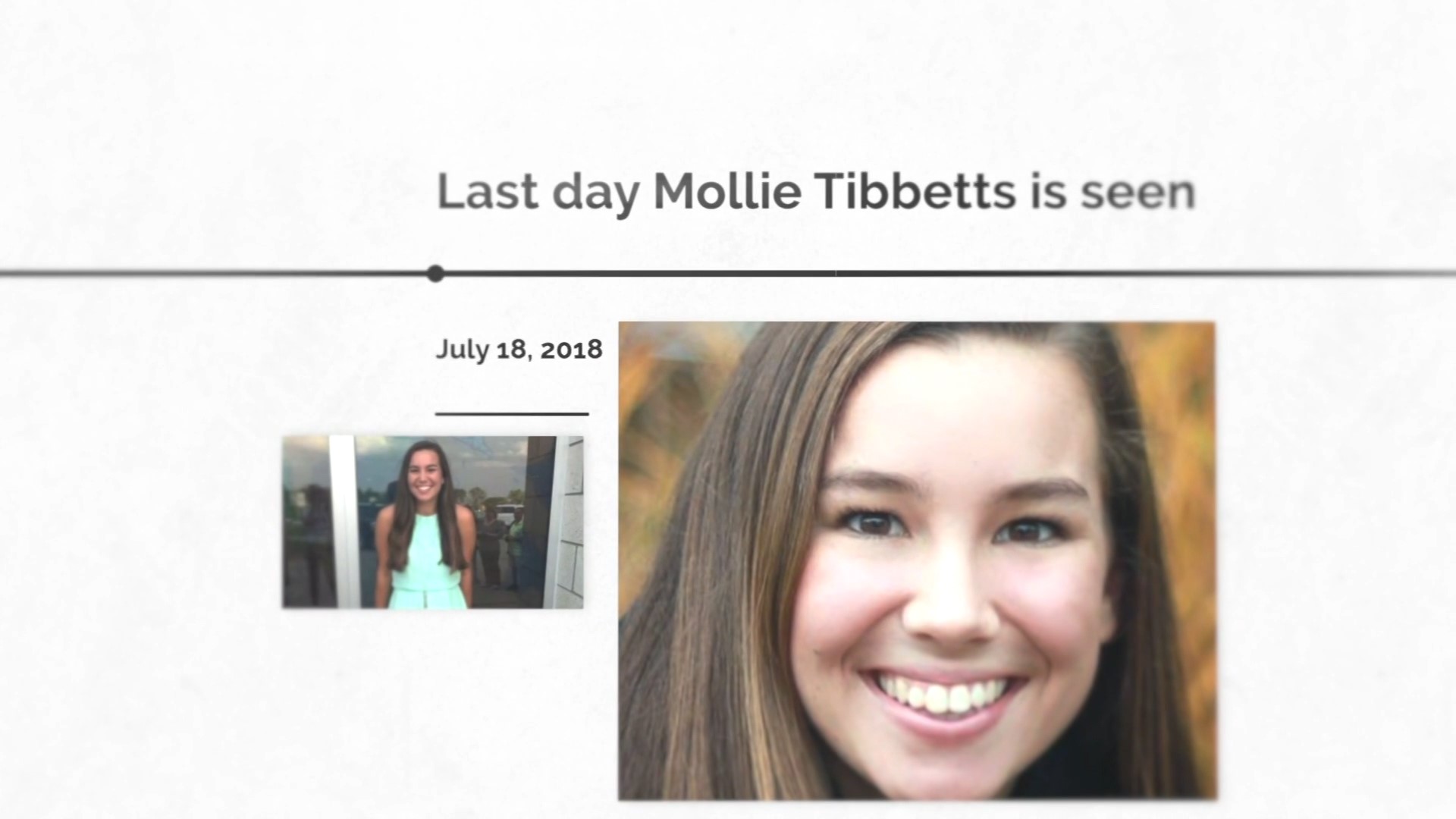
On the evening of July 18, 2018, Mollie Tibbetts was last seen jogging in her hometown of Brooklyn, Iowa, a small community in Poweshiek County. When she failed to report to her job at a local day care the following morning and stopped responding to messages from her family and boyfriend, her family formally reported her missing on July 19, 2018.
The initial missing persons investigation mobilized multiple agencies, combining local, state, and federal law enforcement resources. The Poweshiek County Sheriff’s Office partnered with the Iowa Division of Criminal Investigation (DCI) and the Federal Bureau of Investigation (FBI). Investigators established a multi-pronged approach:
- Physical Searches: Hundreds of local volunteers and search teams canvassed rural farmland, ditches, cornfields, and local waterways near Brooklyn.
- Digital and Telecommunications Forensics: Investigators analyzed data from Tibbetts's Fitbit device, cell phone location logs, and social media accounts to establish her last known whereabouts and exact timeline on July 18.
- Tip Line and Community Outreach: Authorities launched a dedicated tip line, reviewing over 4,000 public submissions while offering a substantial reward for information leading to her safe return.
Despite extensive ground searches during the first three weeks, direct physical evidence remained minimal until investigators shifted focus to private digital surveillance systems in the surrounding neighborhood.
Identification of the Suspect: Cristhian Bahena Rivera
The breakthrough in the case occurred when investigators conducted a comprehensive canvas of private security camera systems along potential jogging routes in Brooklyn. Video footage retrieved from a resident's outdoor surveillance camera provided a critical lead: a black Chevrolet Malibu was captured repeatedly driving past Tibbetts as she jogged along a rural street on the evening of July 18.
Through license plate identification and vehicle profiling, law enforcement traced the black Chevrolet Malibu to Cristhian Bahena Rivera, a 24-year-old local resident. At the time of his arrest, Bahena Rivera had been residing in rural Poweshiek County and worked at Yarrabee Farms, a local dairy operation.
Investigators established the following key facts regarding the suspect:
- Employment and Status: Bahena Rivera had lived in the United States for several years. Federal immigration authorities later determined he was an undocumented immigrant living under an alias provided during his employment verification.
- Vehicle Matching: The vehicle captured on the residential video footage matched Bahena Rivera’s personal automobile in make, model, trim, and unique secondary features.
- Proximity to the Route: Analysis confirmed that Bahena Rivera frequented the rural corridors where Tibbetts routinely took her evening runs.
Surveillance Video Analysis ➔ Identification of Black Chevy Malibu ➔ Registration Link to Bahena Rivera ➔ Target Interrogation (Aug 20, 2018)
Key Investigative Breakthroughs, Interrogation, and Recovery
On August 20, 2018, investigators located Bahena Rivera and requested that he accompany them to the Poweshiek County Sheriff's Office for voluntary questioning. The interrogation lasted over 11 hours, conducted primarily in Spanish by a bilingual law enforcement officer.
The Interrogation and Confession
During questioning, Bahena Rivera initially offered conflicting statements regarding his activities on July 18. However, when confronted with the surveillance video showing his black Malibu trailing Tibbetts, his narrative changed. He admitted to the following details:
- He saw Tibbetts jogging and found her attractive, prompting him to follow her in his vehicle.
- He got out of his car and ran alongside her. When Tibbetts threatened to call the police and pulled out her cell phone, he claimed he became enraged and "blacked out."
- He stated that he recalled coming out of the blackout while driving his car, realizing that Tibbetts was in his trunk. Upon stopping, he found her body bleeding, carried her into a secluded rural cornfield near Deep River, Iowa, and covered her body with corn stalks.
Recovery of the Body and Forensic Evidence
Following his admissions, Bahena Rivera led investigators to the exact location in a remote Poweshiek County cornfield early on the morning of August 21, 2018. Investigators located Tibbetts’s remains, which were hidden beneath corn leaves.
An autopsy conducted by the Iowa State Medical Examiner revealed that Tibbetts died from multiple sharp-force injuries to the head, neck, and chest, officially ruling the manner of death as a homicide. DNA evidence gathered from the trunk of Bahena Rivera's Chevrolet Malibu matched Mollie Tibbetts's genetic profile, establishing direct physical evidence connecting the suspect's vehicle to the victim.
Chronological Overview of the Investigation and Legal Proceedings
The following table summarizes the key milestones from the initial disappearance of Mollie Tibbetts through the final legal outcomes.
| Date | Investigative / Legal Milestone | Key Findings or Outcomes |
|---|---|---|
| July 18, 2018 | Disappearance | Mollie Tibbetts reported missing after failing to return from an evening jog in Brooklyn, IA. |
| July 19–August 15, 2018 | Multi-Agency Search | FBI, Iowa DCI, and local sheriff canvas areas; digital data (Fitbit/phone) analyzed. |
| August 16–18, 2018 | Surveillance Footage Review | Security video reveals a black Chevy Malibu repeatedly passing Tibbetts on her route. |
| August 20, 2018 | Interrogation of Bahena Rivera | Suspect questioned for 11+ hours; admits to following Tibbetts and hiding her body. |
| August 21, 2018 | Recovery of Victim | Bahena Rivera leads police to Tibbetts's body in a rural Poweshiek County cornfield. |
| August 22, 2018 | Formal Criminal Charges | Bahena Rivera charged with First-Degree Murder; held on cash-only bond. |
| August 2019–2020 | Pre-Trial Suppression Motions | Defense challenges admissibility of early interrogation statements based on Miranda warnings. |
| May 19–28, 2021 | Criminal Trial | Trial held in Scott County, IA; jury returns unanimous guilty verdict for First-Degree Murder. |
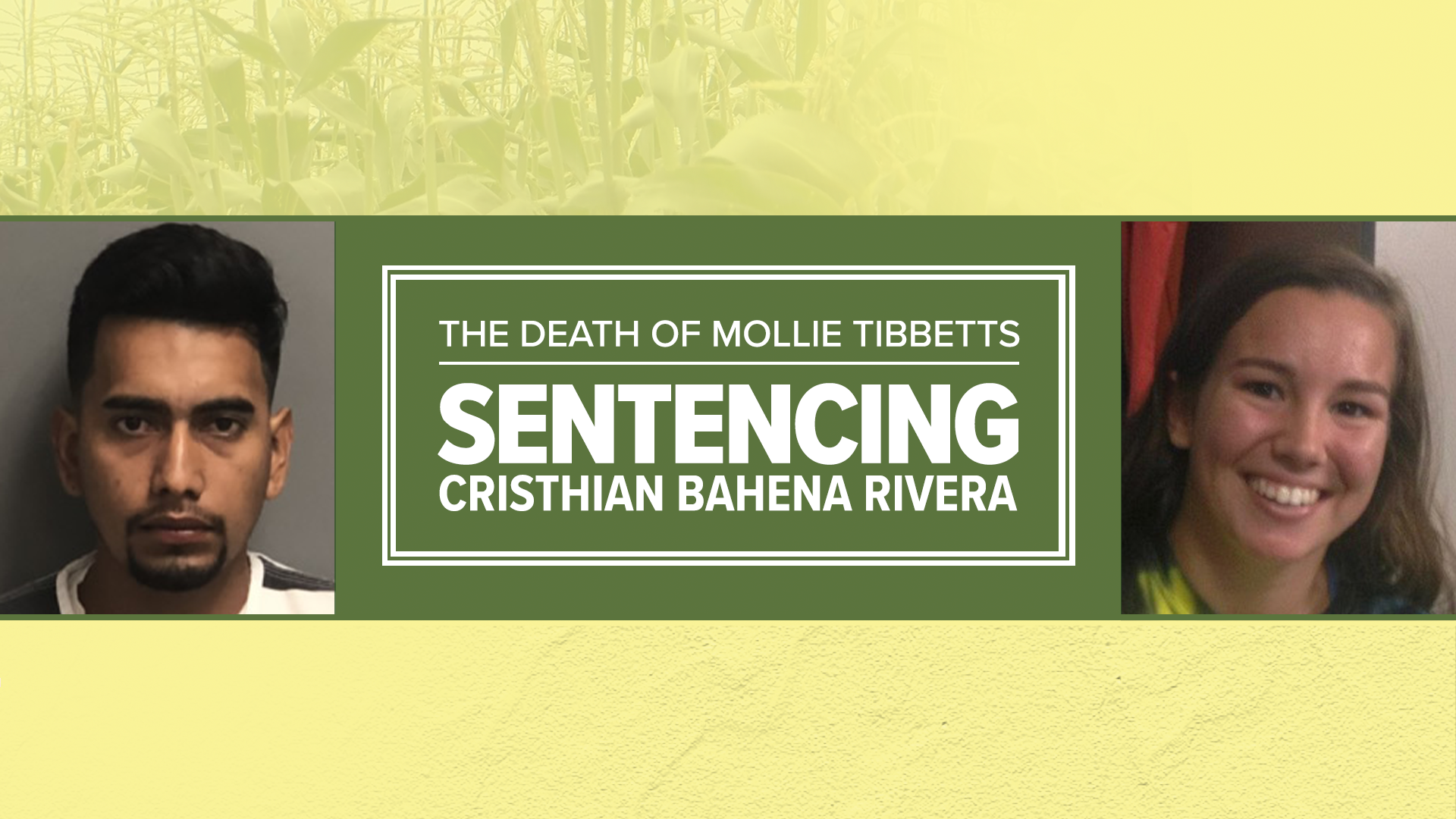
| August 30, 2021 | Sentencing | Bahena Rivera sentenced to life imprisonment without the possibility of parole. |
| 2022–2024 | Appellate Review | Iowa Court of Appeals and State Supreme Court affirm the conviction and sentence. |
Defense Arguments, Pre-Trial Motions, and Alternative Theories
Throughout the pre-trial and trial phases, the defense team—led by attorneys Chad and Jennifer Frese—raised legal challenges regarding constitutional rights, police procedures, and third-party liability.
1. Suppression of Interrogation Statements (Miranda Issues)
The defense filed pre-trial motions seeking to suppress Bahena Rivera’s entire August 20–21 interrogation. They argued that officers failed to properly administer Miranda warnings at the precise moment questioning transitioned from voluntary to custodial, and raised concerns regarding translation accuracy.
The District Court judge issued a partial suppression ruling:
- Statements made during a brief segment of the interrogation prior to formal Miranda read-outs were excluded.
- Crucially, the physical evidence—including the recovery of Tibbetts's body and the subsequent DNA findings—remained admissible under the legal doctrine of inevitable discovery and voluntary guidance, as Bahena Rivera voluntarily led officers to the site.
2. Third-Party Perpetrator Claims
During the trial in May 2021, Bahena Rivera took the witness stand in his own defense and presented a alternative narrative. He testified that two armed, masked men had forced their way into his car, ordered him to drive while following Tibbetts, killed her, forced him to place her body in his trunk, and ordered him to dispose of her under threat of harm to his family.
Prosecutors countered this testimony by noting that:
- Bahena Rivera had never mentioned masked gunmen during his initial 11-hour interrogation.
- No forensic evidence, DNA, or secondary surveillance footage indicated the presence of two additional individuals in or around his vehicle.
- The physical evidence inside the trunk linked solely to Tibbetts and Bahena Rivera.
Trial Proceedings, Verdict, and Appellate Status
Because of pre-trial publicity in Poweshiek County, the court granted a motion for a change of venue, moving the trial to the Scott County Courthouse in Davenport, Iowa.
The Trial and Verdict
The trial commenced on May 19, 2021. The prosecution, led by Assistant Iowa Attorney General Scott Brown and Poweshiek County Attorney Bart Klaver, presented:
- Security camera video showing the black Chevrolet Malibu trailing Tibbetts.
- Forensic DNA evidence from the trunk of the vehicle matching Tibbetts.
- Blood evidence recovered from the car liner.
- Testimonial evidence from DCI agents, medical examiners, and digital forensic experts.
On May 28, 2021, after deliberating for approximately seven hours, the jury found Cristhian Bahena Rivera guilty of First-Degree Murder.
Sentencing and Post-Conviction Status
Under Iowa law, a conviction for First-Degree Murder carries a mandatory penalty of life imprisonment without the chance of parole. On August 30, 2021, Presiding Judge Joel Yates formally sentenced Bahena Rivera to life in prison without parole, alongside statutory financial restitution obligations.
Subsequent appeals filed by the defense challenging evidence admissibility and requesting a new trial based on late-arriving tips were systematically reviewed and rejected by the Iowa appellate courts, upholding the conviction. As of 2026, Bahena Rivera remains incarcerated within the Iowa Department of Corrections system serving his mandatory life term.
Key Takeaways from the Investigation
The investigation into the disappearance of Mollie Tibbetts remains a landmark case in modern rural law enforcement for several reasons:
- Integration of Private Security Video: The case highlighted how private residential surveillance technology can serve as a primary breakthrough in missing persons cases, bridging gaps where public traffic cameras do not exist.
- Digital Forensics in Search Operations: Telecommunications data from wearable devices (Fitbit) helped law enforcement narrow the exact time frame of the victim's movement, establishing a precise window for security video analysis.
- Constitutional Compliance in Interrogations: The court's partial suppression of interrogation statements demonstrated the legal scrutiny applied to law enforcement questioning tactics, reinforcing the strict necessity of timely Miranda warnings during high-stakes investigations.
Frequently Asked Questions (FAQ)
How was the suspect in the Mollie Tibbetts case initially identified?
Investigators identified Cristhian Bahena Rivera by analyzing private residential surveillance video recorded along Tibbetts's jogging route. The video showed a black Chevrolet Malibu trailing her on the evening of July 18, 2018. License plate and vehicle registration records subsequently tied the car directly to Bahena Rivera.
What physical evidence connected Cristhian Bahena Rivera to the crime?
The primary physical evidence included Mollie Tibbetts's DNA and blood stains found inside the trunk of Bahena Rivera's Chevrolet Malibu. Additionally, Bahena Rivera directly guided law enforcement officers to the remote cornfield where her body was hidden.
Why were parts of the suspect's initial confession suppressed?
The trial court suppressed a portion of Bahena Rivera’s initial police interview because officers briefly paused questioning to transition to Miranda warnings late in the interview process. However, the court ruled that the location of the body and the physical DNA evidence were admissible due to voluntary cooperation when guiding officers to the site.
What was the final verdict and sentence in the case?
On May 28, 2021, a jury convicted Cristhian Bahena Rivera of First-Degree Murder. On August 30, 2021, he was sentenced to life in prison without the possibility of parole under Iowa law.
Did the defense attempt to present alternative suspects?
Yes. During trial testimony, Bahena Rivera claimed two masked men forced him to participate in the crime. The defense also raised motions regarding external tips, but prosecutors established that no forensic or physical evidence supported the presence of third-party perpetrators.
Image Gallery