The Owners of RTX Explained: Corporate Structure, Shareholders, and Brand Identity
RTX Corporation is a publicly traded conglomerate primarily owned by major institutional investment firms, including The Vanguard Group, BlackRock, Inc., and State Street Corporation, alongside retail shareholders and corporate insider...
RTX Corporation is a publicly traded conglomerate primarily owned by major institutional investment firms, including The Vanguard Group, BlackRock, Inc., and State Street Corporation, alongside retail shareholders and corporate insiders. In tech contexts, "RTX" refers to Nvidia's graphics technology, which is owned entirely by Nvidia Corporation and its public shareholders.
Contents
Disambiguating RTX: Defense Giant vs. Graphics Brand
Understanding who owns RTX requires first identifying which entity is being discussed, as the acronym "RTX" represents two distinct multi-billion-dollar global brands:
- RTX Corporation (NYSE: RTX): Formerly known as Raytheon Technologies Corporation, RTX is one of the world's largest aerospace and defense manufacturers. It operates three major business segments: Collins Aerospace, Pratt & Whitney, and Raytheon.
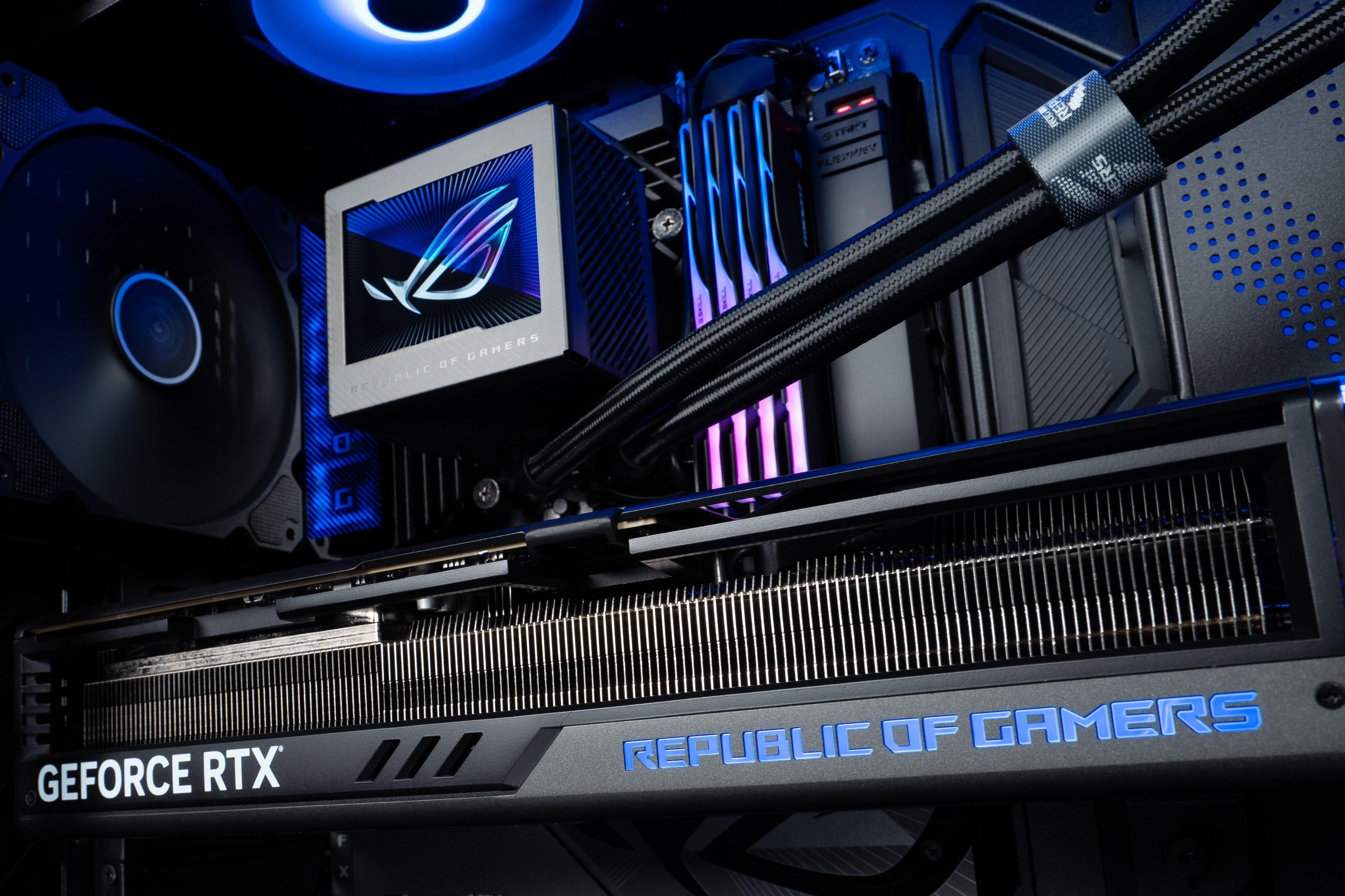
- Nvidia GeForce RTX: A proprietary product line and trademark owned by Nvidia Corporation (NASDAQ: NVDA), representing ray-tracing graphics processing units (GPUs) and microarchitecture technology.
While general search queries about "RTX ownership" overwhelmingly target the publicly traded defense and aerospace company listed under the NYSE ticker symbol RTX, technology consumers frequently seek clarification regarding Nvidia's hardware branding. This analysis covers the equity distribution, corporate hierarchy, and controlling interest of both entities, focusing principally on RTX Corporation.
Who Owns RTX Corporation? (NYSE: RTX)
As a publicly traded corporation incorporated in Delaware, RTX Corporation does not have a single individual owner, founding family, or sovereign owner. Instead, ownership is distributed among millions of shares traded daily on the New York Stock Exchange.
According to regulatory disclosures filed with the U.S. Securities and Exchange Commission (SEC), institutional investors hold approximately 80% to 85% of the outstanding shares of RTX Corporation. The remaining shares are held by individual retail investors, executive insiders, and pension funds.
| RTX Corporation Shareholder Structure | Ownership Share |
|---|---|
| Institutional Investors | ~80 - 85% |
| - The Vanguard Group | ~8.5% |
| - BlackRock, Inc. | ~7.5% |
| - State Street Corporation | ~4.5% |
| - Geode Capital, Capital Research, etc. | ~55% |
| Individual & Retail Investors | ~14 - 19% |
| Corporate Insiders & Executives | < 1% |
1. Major Institutional Shareholders
Institutional investors—such as asset management companies, index funds, mutual funds, and commercial banks—hold the vast majority of voting power in RTX Corporation. Because RTX is a core component of major stock indices, including the S&P 500 and the Dow Jones Industrial Average, index-tracking funds are required to hold substantial blocks of RTX stock.
- The Vanguard Group, Inc.: Holds the largest single stake in RTX Corporation, typically hovering between 8.5% and 9.0% of total shares outstanding. Vanguard manages these holdings through passive index funds like the Vanguard Total Stock Market Index Fund and the Vanguard 500 Index Fund.
- BlackRock, Inc.: Controls the second-largest voting block, managing approximately 7.0% to 8.0% of total equity. These shares are largely distributed across BlackRock's iShares exchange-traded funds (ETFs) and institutional client portfolios.
- State Street Corporation: Maintains roughly 4.5% to 5.0% of outstanding stock, largely driven by State Street’s management of the SPDR S&P 500 ETF Trust (SPY) and the Industrial Select Sector SPDR Fund (XLI).
- Geode Capital Management & Capital World Investors: Other prominent asset managers maintaining multi-billion-dollar positions in RTX stock, catering to institutional pension funds and private accounts.
Because these asset management firms hold stock on behalf of underlying fund investors, ultimate economic beneficial ownership belongs to millions of individual retirement account holders and retail investors across the globe.
2. Executive Officers and Insider Ownership
Corporate insiders—including members of the Board of Directors and senior executive officers—collectively hold less than 1% of the total outstanding stock of RTX Corporation. While this percentage appears small relative to total equity, the dollar value of these holdings remains substantial.
Executive equity compensation programs align executive leadership with shareholder performance. Key executive insiders include:
- Christopher T. Calio: Chief Executive Officer and President of RTX Corporation. His compensation includes direct share ownership, restricted stock units (RSUs), and performance-based stock options.
- Board of Directors: Independent directors who serve on the board are required to hold equity in the company to maintain alignment with public shareholders.
3. Retail and Private Investors
The remaining equity in RTX Corporation (approximately 15% to 20%) is owned by individual retail investors, private wealth clients, employee stock purchase plans (ESPPs), and private trusts.
The Evolution of RTX: From United Technologies and Raytheon to RTX Corp
To understand current ownership, it is necessary to examine the structural transformation that created the modern RTX entity.
In April 2020, United Technologies Corporation (UTC) completed an all-stock "merger of equals" with Raytheon Company. As part of this historic defense industry consolidation:
UTC spun off its non-aerospace business units, Otis Elevator Company and Carrier Corporation, into independent publicly traded entities.
The remaining aerospace assets of UTC (which included Pratt & Whitney and UTC Aerospace Systems) merged with Raytheon Company.
The combined company was named Raytheon Technologies Corporation and traded under the ticker symbol RTX.
In July 2023, the parent organization officially rebranded its corporate name from Raytheon Technologies Corporation to RTX Corporation, retaining the historic subsidiaries as operating divisions.
United Technologies Corp (UTC) (Aerospace & Defense Segments) and Raytheon Company (Defense Electronics & Missiles)
2020 All-Stock Merger
Raytheon Technologies Corp
2023 Corporate Rebrand
RTX Corporation
Core Subsidiaries Under RTX Ownership
RTX Corporation serves as the parent holding entity for three primary operational units:
- Collins Aerospace: Formed from the combination of UTC Aerospace Systems and Rockwell Collins, providing avionics, structures, power systems, and flight controls.
- Pratt & Whitney: A pioneer in commercial and military jet propulsion, producing engines for military aircraft like the F-35 Lightning II and commercial aircraft like the Airbus A320neo family.
- Raytheon: The unified defense business segment specializing in radar technology, air defense systems (such as the Patriot missile system), precision weapons, and cybersecurity solutions.
Detailed financial and operational performance across these three business segments is published regularly on the official RTX Investor Relations portal.
Detailed Breakdown: RTX Entity Ownership & Governance
The following structure illustrates the organizational ownership, governance ticker symbols, and main equity managers for both RTX entities:
| Feature / Metric | RTX Corporation | Nvidia RTX (Product Line) |
|---|---|---|
| Primary Business Focus | Aerospace, Commercial Aviation, & Defense | Microprocessors, Ray-Tracing & AI Hardware |
| Stock Ticker Symbol | NYSE: RTX | NASDAQ: NVDA (Parent Entity) |
| Parent Entity | RTX Corporation | Nvidia Corporation |
| Largest Shareholder | The Vanguard Group (~8.5–9.0%) | The Vanguard Group (~8.0–8.5%) |
| Second Largest Shareholder | BlackRock, Inc. (~7.5–8.0%) | BlackRock, Inc. (~7.0–7.5%) |
| Key Executive Leader | Christopher T. Calio (CEO) | Jensen Huang (Co-Founder & CEO) |
| Corporate Head Office | Arlington, Virginia, USA | Santa Clara, California, USA |
| Primary Regulatory Body | US DoD / US SEC | US SEC |
Who Owns Nvidia GeForce RTX?
When consumers, gamers, and software developers refer to "RTX," they are often referring to Nvidia’s flagship GPU line introduced in 2018 with the Turing microarchitecture.
Nvidia GeForce RTX is not an independent business or separate corporation; it is a registered trademark and product division of Nvidia Corporation (NASDAQ: NVDA).
- Nvidia Corporation (NASDAQ: NVDA)
- Nvidia GeForce RTX (Consumer GPUs & Laptops)
- Nvidia Enterprise / AI (H100, B200, Tensor Core)
Ownership Structure of Nvidia Corporation
Because Nvidia GeForce RTX is an internal product segment, its ownership is identical to the corporate ownership of Nvidia Corporation:
- Institutional Investors (~65–75%): Similar to RTX Corporation, Nvidia's primary institutional owners are The Vanguard Group, BlackRock, Inc., and Fidelity/FMR LLC.
- Insider Ownership & Jensen Huang: Unlike RTX Corporation, Nvidia retains a high level of founder ownership. Co-founder and CEO Jensen Huang holds a substantial personal stake in Nvidia equity, making him one of the largest individual private shareholders of the company.
- Public Shareholders: The remaining shares trade on the NASDAQ exchange under the ticker symbol NVDA.
Factors Influencing RTX Equity Ownership Trends
Institutional ownership in defense and aerospace entities like RTX Corporation fluctuates based on macro-economic, political, and operational variables:
- Defense Expenditure and Geopolitics: Global security spending drives defense contract awards. Changes in U.S. Department of Defense (DoD) budget allocations directly affect RTX segment revenues and institutional buying interest.
- Commercial Aviation Cycles: Pratt & Whitney and Collins Aerospace depend heavily on commercial airliner production volumes (such as Boeing and Airbus delivery rates) and flight-hour maintenance demand.
- ESG and Ethical Investment Mandates: Environmental, Social, and Governance (ESG) criteria lead certain European and North American institutional funds to exclude or restrict holdings in defense contractors. Conversely, specialized aerospace and industrial index funds maintain steady long-term allocations.
- Supply Chain Dynamics: Raw material availability, specialized manufacturing constraints, and engine maintenance programs (such as Pratt & Whitney GTN fleet inspections) influence earnings stability and market capital evaluations.
Frequently Asked Questions
Is RTX Corporation owned by the U.S. Government?
No. RTX Corporation is an independent, publicly traded private enterprise owned by commercial investors and listed on the New York Stock Exchange. However, the U.S. federal government is RTX’s primary client, with defense contracts accounting for a significant portion of annual net sales under strict federal procurement regulations.
What is the difference between Raytheon and RTX?
Raytheon was an independent defense company until its 2020 merger with United Technologies Corporation. Today, "Raytheon" is one of the three primary operating divisions of RTX Corporation, alongside Collins Aerospace and Pratt & Whitney. RTX Corporation is the parent company name adopted in 2023.
Can an individual buy shares in RTX?
Yes. Any individual with a retail brokerage account can purchase common shares of RTX Corporation on the New York Stock Exchange under the ticker symbol RTX.
Who owns the highest individual percentage of Nvidia RTX?
Because Nvidia RTX is a brand owned by Nvidia Corporation, its primary individual owner is Nvidia co-founder and CEO Jensen Huang, who maintains a multi-billion-dollar equity stake in NVDA.
Are RTX Corporation and Nvidia linked business entities?
No. RTX Corporation (aerospace/defense) and Nvidia Corporation (semiconductors/computing) are completely unrelated companies with different management teams, board members, corporate headquarters, and stock exchange listings.
Practical Actions for Shareholders and Analysts
For investors, researchers, or analysts tracking ownership trends and corporate governance for RTX Corporation or Nvidia Corporation, follow these official procedures:
- Review Quarterly Filings (Form 10-Q) and Annual Reports (Form 10-K): Access official financial disclosures directly through the SEC EDGAR search system or the company’s investor relations portal.
- Examine Institutional Holdings (Form 13F): Review quarterly Form 13F filings to track real-time portfolio adjustments made by Vanguard, BlackRock, and State Street.
- Monitor Insider Transactions (Form 4): Verify direct share purchases and stock sales executed by corporate officers or board members to assess internal leadership confidence.
Image Gallery