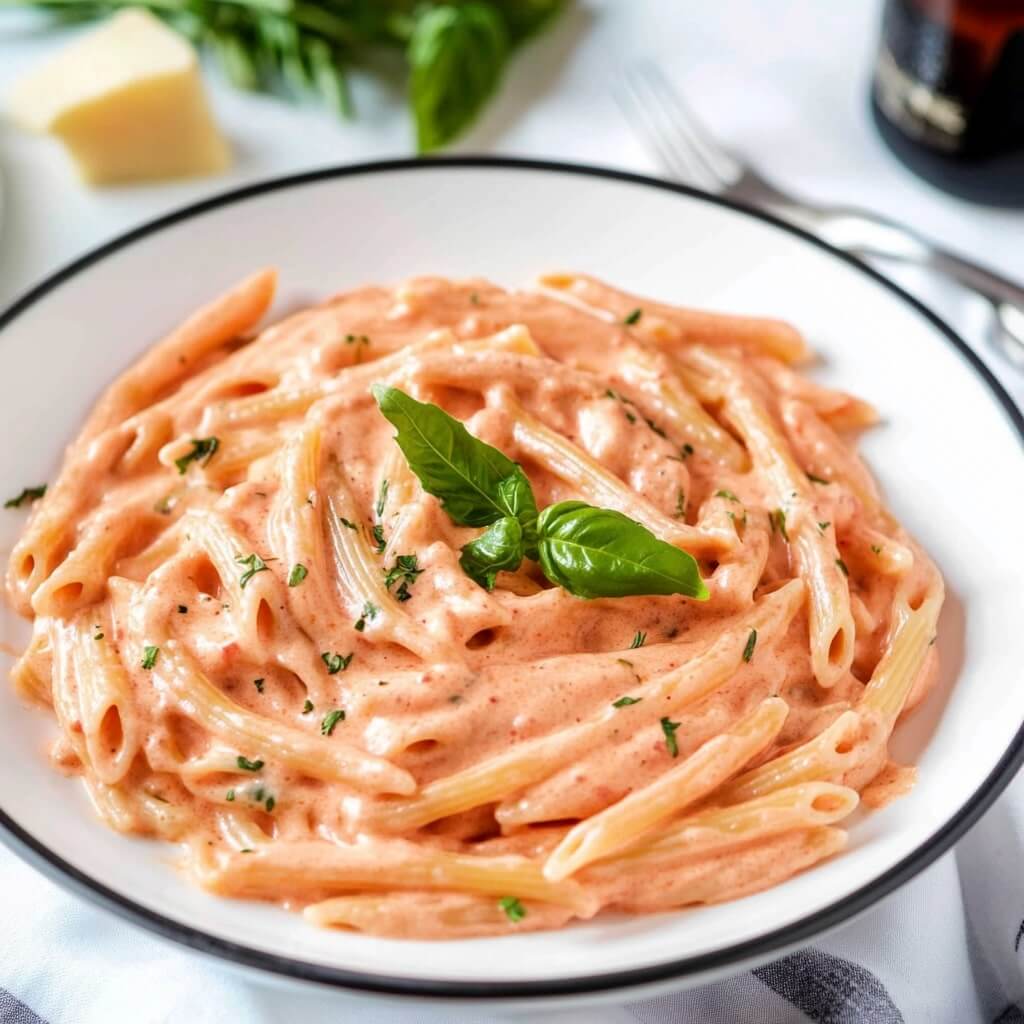
How to Cook Pasta in Sauce: Step-by-Step Culinary Guide
Cooking pasta directly in sauce—or finishing partially boiled noodles inside a bubbling skillet of sauce—infuses the pasta with deep flavor while creating a glossy, cohesive emulsion. By leveraging the natural starches released by the...
Cooking pasta directly in sauce—or finishing partially boiled noodles inside a bubbling skillet of sauce—infuses the pasta with deep flavor while creating a glossy, cohesive emulsion. By leveraging the natural starches released by the pasta, this technique binds fats and liquids together so the sauce clings tightly to every noodle instead of pooling at the bottom of the bowl.
Contents
The Science of Cooking Pasta in Sauce
To understand why cooking pasta in sauce elevates a dish, it helps to examine starch gelatinization and emulsion chemistry. Standard dry pasta is made from semolina flour and water, forming a matrix of proteins (gluten) and starch granules (amylose and amylopectin). When pasta boils in water, these starch granules absorb liquid, swell, and eventually burst, releasing free starches into the cooking environment.
When pasta is drained entirely and topped with cold or barely warmed sauce, the surface of the noodle remains smooth, creating a mechanical barrier that prevents sauce from adhering. The fats in the sauce separate from the watery phase, leaving a slick layer of oil on the noodles and a watery pool at the bottom of the plate.
- Process Ingredients: Unfinished Pasta + Sauce Base + Starchy Pasta Water + Agitation / Friction
- Result: Emulsified, Glossy Coating Bound to Pasta
Finishing pasta directly inside a saucepan resolves this separation through three distinct culinary mechanisms:
- Flavor Absorption: As the pasta finishes hydrating in the sauce, it absorbs the seasoned liquid directly into its outer structure, flavoring the core of the noodle rather than just coating the exterior.
- Starch Emulsification: The amylose starch suspended in reserved pasta water acts as a natural emulsifier. When combined with pan agitation (tossing or stirring) and the fats in your sauce (olive oil, butter, or cured pork fat), it creates a stable, silky suspension.
- Viscosity Control: The physical friction of tossing pasta in a skillet sloughs off microscopic starch particles from the noodle surface. This thickens the sauce dynamically without requiring heavy cream, flour roux, or commercial thickeners.
Method 1: The "Risottare" Technique (Finishing Undercooked Pasta in Sauce)
The gold standard in classical and modern Italian cooking is risottare—a technique named after risotto preparation. In this method, pasta is boiled in salted water until it is roughly 70% to 80% cooked, then transferred into a pan of simmering sauce to complete its final minutes of cooking.
- Boil Pasta in Salted Water (70–80% Cooked)
- Transfer Pasta Directly to Warm Sauce in Skillet
- Add Ladle of Reserved Starchy Water & Simmer
- Vigorously Stir/Toss to Build Emulsion
- Kill Heat and Add Finishing Fat & Cheese (Mantecatura)
Required Equipment and Prerequisites
- Wide Skillet or Saute Pan: A pan with high sides and a broad surface area (10 to 12 inches) allows maximum contact between pasta, sauce, and heat.
- Tongs or Spider Skimmer: Tools to transfer pasta directly from pot to pan without draining through a colander.
- Reserved Starchy Water: Never dump cooking water down the drain; keep 1 to 2 cups available.
- Properly Salted Water: The boiling water should taste like mild seawater (roughly 1% salinity, or about 7 to 10 grams of kosher salt per liter of water).
Step-by-Step Instructions
1. Par-Boil the Pasta
Bring a large pot of salted water to a rolling boil. Drop the dry pasta and stir immediately to prevent sticking. Check the package instructions for the recommended al dente time. Subtract 2 to 3 minutes from that duration. For example, if the box specifies 10 minutes for al dente, pull the pasta out at the 7-minute mark. The center of the noodle should still show a faint white core or resist slightly when bitten.
2. Prepare the Sauce Base
While the pasta boils, ensure your sauce is gently simmering in a wide skillet over medium-low heat. Whether using a marinara, a garlic and oil (aglio e olio) base, or a pan sauce made from rendered guanciale, the sauce should be hot and liquid enough to receive the noodles without scorching.
3. Transfer the Pasta Directly
Use tongs (for long shapes like spaghetti or bucatini) or a spider skimmer (for short shapes like rigatoni or penne) to move the wet pasta directly from the boiling pot into the simmering sauce. Do not rinse the pasta. The surface starch clinging to the wet noodles is essential for binding.
4. Add Starchy Water and Simmer
Immediately pour in approximately 1/3 cup (about 80 mL) of the hot pasta cooking water. Increase the heat under the skillet to medium-high to establish a vigorous simmer.
5. Agitate and Toss
Stir the pasta continuously with a wooden spoon or execute pan-flips to keep the noodles in constant motion. The combination of heat, rapid movement, and evaporating liquid forces the starch molecules, water, and fats to blend. If the sauce reduces too quickly and looks dry before the pasta reaches ideal tenderness, splash in another 2 to 4 tablespoons of pasta water.
6. Execute the Mantecatura (Finishing Step)
Once the pasta is perfectly al dente and coated in a glossy reduction, remove the pan completely from the heat source. This thermal drop is crucial. Add cold cubed butter, high-quality extra virgin olive oil, and finely grated hard cheese (such as Parmigiano-Reggiano or Pecorino Romano). Stir or toss vigorously off the heat. Removing heat prevents the proteins in the cheese from clumping or separating into oily grease, yielding a velvety finish.
Method 2: The One-Pot Method (Cooking Dry Pasta Entirely in Sauce)
The one-pot method skips separate boiling altogether. Dry, uncooked pasta is placed directly into a skillet along with cold or lukewarm liquid—a combination of tomato passata, broth, water, and aromatics—and cooked from start to finish in a single vessel.
This approach is highly efficient, conserves energy and cleanup time, and produces an intensely starchy sauce because 100% of the liberated starch stays contained within the pan.
- Combine Dry Pasta + Diluted Sauce Base + Liquids in Cold Skillet
- Bring to a Boil, Then Reduce to Active Simmer
- Cover/Uncover Dynamically & Stir Continuously
- Adjust Viscosity with Warm Broth as Hydration Occurs
Liquid Ratios and Hydrodynamics
The primary challenge of the one-pot method is balancing evaporation with hydration. If there is too little liquid, the pasta remains raw while the sauce burns against the pan surface. If there is too much liquid, the pasta turns mushy before the sauce reduces into an appetizing coating.
- Standard Dry-to-Liquid Ratio: For every 8 ounces (225 grams) of standard dry wheat pasta, you typically require 2.5 to 3 cups (600 to 710 mL) of total fluid volume.
- Fluid Composition: The liquid volume should not consist purely of thick puree or heavy sauce. Pure sauce lacks sufficient water mobility to hydrate dry semolina. A balanced split is 1 part concentrated sauce base (e.g., tomato puree or crushed tomatoes) to 1.5 or 2 parts water or low-sodium broth.
Step-by-Step Instructions
- Combine Ingredients Cold: Place dry pasta, aromatics (minced garlic, diced onions, herbs), oil, tomato base, and cold liquid into a wide, shallow pot or deep pan.
- Bring to a Full Boil: Turn the heat to high. As the liquid reaches a boil, stir constantly to prevent noodles from clumping together or sticking to the bottom.
- Maintain a Steady Simmer: Once boiling, reduce heat to medium-low. Keep the liquid at an active, bubbling simmer.
- Stir Regularly: Stir every 1 to 2 minutes. Because all the starch remains in a reduced volume of fluid, un-stirred pasta will quickly adhere to the pan.
- Monitor Hydration: As the pasta absorbs fluid, test a piece 2 minutes prior to the estimated package time. If the pan dries out before the pasta is cooked, add 1/4 cup of warm water or broth at a time. If the sauce remains too thin when the pasta is nearly done, increase heat slightly to speed up evaporation during the final 60 seconds.
Comparing Pasta Finishing Techniques
| Technical Parameter | Classic Boiling & Draining | Method 1: Risottare (Recommended) | Method 2: One-Pot Cooking |
|---|---|---|---|
| Initial Hydration Medium | 100% Salted Water | Salted Water (70–80% of duration) | Diluted Sauce / Broth Mixture |
| Starch Retention in Sauce | Low (Most starch is poured down the drain) | Medium-High (Controlled addition of starchy water) | Maximum (100% of released starch stays in pan) |
| Emulsion Stability | Low (Sauce tends to slide off noodles) | Exceptional (High stability via pan tossing and fat phase) | Very High (Thick, dense sauce consistency) |
| Control Over Doneness | Precise | Excellent (Easily adjusted with water splashes) | Moderate (Requires close liquid management) |
| Best Sauce Compatibility | Heavy ragùs, baked dishes | Carbonara, Cacio e Pepe, Cream, Tomato, Butter/Oil | Simple Tomato, Vegetable Broths, One-Skillet Weeknight Pastas |
| Clean-Up Footprint | Large (Pot, Colander, Saucepan) | Medium (Pot, Wide Skillet) | Minimal (Single Skillet/Pan) |
Choosing the Right Pasta Shapes and Sauces
Not every pasta shape or sauce base behaves identically when cooked inside sauce. Understanding physical pairings ensures optimal cooking dynamics.
- Pasta & Sauce Pairs:
- Long Strands / Ribbons (Spaghetti, Tagliatelle, etc.)
- Best with oil, butter, & thin emulsion sauces.
- Requires wide pan for rapid tossing without breakage.
- Short / Tubular (Rigatoni, Penne, Farfalle)
- Best with chunky ragùs, creams, & vegetable purées.
- Traps reduced sauce inside cavities and ridges.
- Long Strands / Ribbons (Spaghetti, Tagliatelle, etc.)
Bronze-Die vs. Teflon-Die Extruded Pasta
Look for pasta labeled "Bronzo" or "Extruded through Bronze Dies." Bronze dies leave a rough, chalky, matte finish on the exterior of the dry noodle. This coarse micro-texture releases substantially more surface starch into your sauce, creating a vastly superior emulsion compared to smooth, shiny pasta extruded through industrial Teflon dies.
Matching Shapes to Finishing Methods
- Long Strands (Spaghetti, Linguine, Bucatini): Excellent for Method 1 (Risottare). The high surface-area-to-volume ratio creates rapid evaporation and coating. Use wide pans so long strands lay flat without breaking.
- Wide Ribbons (Pappardelle, Tagliatelle): Delicate egg-based ribbons absorb liquid faster than hard durum wheat pasta. When finishing ribbons in sauce, lower the simmer temperature to prevent tearing the delicate edges.
- Tubular Shapes (Rigatoni, Penne, Tortiglioni): Ideal for capturing thicker, chunkier sauces. When using Method 2 (One-Pot), ensure liquid completely fills internal cavities so internal walls hydrate at the same rate as the exterior shell.
- Intricate Shapes (Fusilli, Radiatori, Campanelle): The extensive folds and ridges trap starch emulsion effectively. These shapes hold up exceptionally well to both finishing methods without losing structural integrity.
Common Mistakes That Ruin Sauce-Cooked Pasta
1. Rinsing Pasta with Water
Rinsing cooked or par-boiled pasta under cold tap water washes away the surface layer of amylose starch and cools the wheat matrix down instantly. Without that surface starch, sauce cannot bind to the noodle, rendering both the risottare and traditional methods ineffective.
2. Adding Cheese Over Direct High Heat
Dairy proteins (casein) coagulate when exposed to high temperatures, causing grated cheeses like Parmigiano-Reggiano or Pecorino to break into rubbery clumps and separated clear oil. Always remove the pan from active heat before stirring in cheese, allowing the residual heat of the pasta to melt it gently into the emulsion.
- High Direct Heat + Grated Cheese: Protein Coagulation (Clumpy, Oily Separation)
- Off-Heat / Residual Heat + Grated Cheese: Smooth Emulsified Mantecatura
3. Under-Salting the Boiling Water (Method 1)
Pasta dough does not contain salt. The boiling stage is your only opportunity to season the interior matrix of the noodle. If your pasta water is un-salted, the interior of the pasta will taste flat, even if your sauce is well-seasoned. Salt the water until it tastes pleasantly savory prior to dropping the pasta.
4. Overcrowding the Pan
Attempting to finish a full pound (450g) of pasta in a small 8-inch skillet leads to uneven heating, steaming rather than simmering, and broken noodles. Match the vessel size to your batch volume: use a 12-inch skillet or a broad pan for 3 to 4 servings.
5. Using Un-Diluted Sauce for One-Pot Cooking
Pouring dry pasta directly into an un-thickened jar of commercial sauce without adding extra water will cause the sugars in the sauce to burn against the bottom of the pan long before the dry semolina absorbs enough moisture to soften. Always dilute thick sauces with water or broth when executing Method 2.
Frequently Asked Questions
Can I cook dry pasta directly in store-bought jarred sauce?
Yes, but you must dilute the jarred sauce with additional liquid first. Standard jarred sauce is already reduced and lacks the free water necessary to hydrate raw pasta. Add approximately 1 to 1.5 cups of water or broth for every cup of jarred sauce used, bring the mixture to a boil, drop the dry pasta, and simmer while stirring frequently until the liquid reduces back to a thick consistency.
How much pasta water should I add when finishing pasta in sauce?
Start with 1/3 cup (about 80 mL) of reserved pasta water for every 8 ounces (225 grams) of pasta. Add it incrementally as the sauce simmers. If the sauce looks greasy or too dry, add another splash. If it looks overly thin, allow it to bubble for an extra minute to evaporate excess moisture.
Does cooking pasta in sauce alter total cooking times?
Yes. Finishing undercooked pasta in sauce (Method 1) usually takes 1 to 2 minutes longer than the total package boiling time because sauce is denser than pure water and transfers heat slightly slower. Cooking raw pasta entirely in liquid (Method 2) can take 2 to 4 minutes longer than package instructions due to lower thermal mass and varied liquid viscosity.
Can gluten-free pasta be cooked directly in sauce?
Gluten-free pasta (made from rice, corn, or quinoa) releases starches that behave differently from wheat starches. Rice and corn starches break down more easily and can make a sauce gummy if cooked entirely in the pan. For gluten-free pasta, Method 1 (Risottare) works best, but shorten the par-boil time slightly and handle the noodles gently, as gluten-free pasta breaks more easily during aggressive pan-tossing.
Why does my sauce separate or turn greasy when I finish it in the skillet?
Sauce separation occurs when the fat-to-water balance breaks, usually caused by excessive heat or insufficient starch. To fix a greasy sauce, remove the pan from heat, add a splash of reserved hot pasta water (which contains emulsifying starches), and whisk or toss vigorously to re-emulsify the fats back into the liquid phase.
Practical Action Plan for Your Next Pasta Meal
To master this technique during your next meal prep, follow this step-by-step framework:
- Set Up Your Station: Place a large pot of salted water on high heat and heat a wide skillet on an adjacent burner.
- Time the Par-Boil: Check your pasta package instructions. Set a timer for 3 minutes less than the lowest recommended al dente time.
- Save the Cooking Water: Before turning off the pasta burner, scoop out at least 1 to 2 cups of the cloudy cooking water using a heat-safe measuring cup or mug.
- Combine and Simmer: Use tongs to transfer the undercooked pasta straight into the simmering sauce. Add 1/3 cup of pasta water immediately.
- Toss and Emulsify: Maintain medium-high heat, stirring and tossing continuously for 2 to 3 minutes until the noodles achieve an ideal al dente texture and the sauce forms a glossy sheen.
- Finish Off-Heat: Slide the skillet off the burner. Toss in cold butter or extra virgin olive oil and freshly grated hard cheese, stirring briskly until fully incorporated before serving immediately on warmed plates.
Image Gallery