Unnerving Police Sketches: Forensic Art, the Uncanny Valley, and Criminal History
Unnerving police sketches are composite drawings whose distorted proportions, blank expressions, or unnatural features evoke profound fear or discomfort. These unsettling visuals typically occur due to witness trauma, cognitive retriev...
Unnerving police sketches are composite drawings whose distorted proportions, blank expressions, or unnatural features evoke profound fear or discomfort. These unsettling visuals typically occur due to witness trauma, cognitive retrieval errors, or the uncanny valley effect—where an image looks almost human, but is fundamentally off.
Contents
The Science of Forensic Composites: Why Certain Faces Terrify Us
Forensic art occupies an uneasy intersection between scientific methodology and subjective psychological recall. When a witness sits down with an artist, they are not producing a photographic copy; they are retrieving fragmented, emotionally altered impressions of human facial anatomy. This process often produces visuals that deeply disturb the human subconscious.
The Uncanny Valley in Facial Composites
The uncanny valley effect describes the human psychological reaction to an entity that looks almost human, but misses key micro-characteristics, causing a feeling of repulsion or revulsion. In standard robotic design, this occurs when movements lack natural fluid dynamics. In forensic sketches, the uncanny valley emerges from subtle geometric misalignments:
- Asymmetrical Eye Spacing: Even slight deviations in pupil alignment or ocular depth trigger visual danger mechanisms in the viewer.
- Absence of Dynamic Micro-Expressions: Forensic facial approximations frequently lack micro-expression lines around the mouth and eyes, yielding a "dead-eyed" or waxwork appearance.
- Inconsistent Shading: Blending charcoal or digital graphite layers incorrectly can flatten the zygomatic arch (cheekbones) or forehead, transforming an organic human form into a flattened mask.
When the human brain scans a face, the fusiform face area (FFA)—a specialized region of the visual cortex—processes the image holistically. If an image checks some facial criteria but deviates significantly in critical spatial relationships, the FFA flags the inconsistency as biologically irregular, provoking an automatic fear response.
The Fragility of Memory Under Trauma
During a violent or traumatic event, human memory does not function like a high-definition recording device. Under acute stress, high levels of cortisol and adrenaline trigger tunnel vision, known scientifically as weapon focus. A victim's gaze naturally locks onto immediate threats (such as a blade or firearm) rather than peripheral facial structures like the hairline, jaw width, or ear shape.
Consequently, when forensic artists rely on cognitive interview protocols, witnesses fill perceptual voids with reconstructions. When asked to estimate the shape of an attacker's eyes or jaw, the witness often recalls extreme emotional states—anger, hostility, malice—magnifying certain features to abnormal scales. A criminal described through intense trauma might emerge with abnormally hollow eyes, unnatural grins, or unnervingly jagged facial contours.
Infamous Cases: When Sketches Crossed into Nightmares
Forensic history is full of sketches that unsettled the public while serving as critical instruments in identifying, pursuing, or documenting suspects. The following cases demonstrate how cognitive processing, artistic limitations, and traumatic memory have created some of the most unnerving police sketches in criminal history.
The Unabomber: The Hooded Avator
Ted Kaczynski's composite sketch (1987)
In 1987, a witness in Salt Lake City, Utah, saw a man drop a piece of lumber embedded with nails into a computer store parking lot. The resulting sketch produced by forensic artist Jeanne Boylan depicted a figure clad in an oversized hooded sweatshirt, completely obscuring the hairline, with heavy aviator sunglasses concealing the eyes, and a single, pencil-thin, expressionless mouth line.
The utter lack of visible human expression turned the sketch into an ominous, featureless archetype. The viewer's brain cannot locate the eyes—the primary focal point for identifying intent—making the figure read as an emotionless, predatory void. Kaczynski evaded capture for years until his manifesto led to his brother identifying his writing, but the hooded composite remains etched in public memory.
The Zodiac Killer: The San Francisco Composite
Following the October 11, 1969 murder of taxi driver Paul Stine in the Presidio Heights neighborhood of San Francisco, teenage witnesses observed a man wiping down the cab. The San Francisco Police Department produced an initial composite, followed quickly by a revised "amended" sketch days later.
The sketch shows thick horn-rimmed glasses, a crew cut with widow's peak, and an unsettlingly blank, asymmetric stare. The eyes appear slightly cross-angled, and the lips are pressed together into a line devoid of emotional resonance. Despite hundreds of leads and intense forensic investigation, the Zodiac was never conclusively unmasked, compounding the eerie weight of the drawing.
The Derrick Todd Lee Sketch: The Baton Rouge Serial Killer
During the hunt for the Baton Rouge Serial Killer in Louisiana throughout the late 1990s and early 2000s, police generated a composite based on witness testimony that became infamous for its stark, wide-eyed stare.
The sketch captured Derrick Todd Lee with exaggerated, round, protruding eyes, an uneven hairline, and an unblinking gaze that unsettled residents across southern Louisiana. While many dismissed the sketch as an anatomical caricature, DNA profiling and eventual shoe-leather investigative work confirmed Lee's guilt; he was sentenced to death in 2004 for the murders of several women. The sketch remains a prominent real-world example of how severe ocular exaggeration can terrify the public while still leading to an arrest.
The East Area Rapist / Original Night Stalker (EAR/ONS)
Before Joseph James DeAngelo was identified via investigative genetic genealogy in 2018, California law enforcement agencies collected dozens of wildly contradictory, nightmarish sketches across several jurisdictions spanning the late 1970s and early 1980s.
One composite—often referred to as the "open-mouthed" or "surprised" sketch—showed a suspect with wide, blank eyes, an unaligned nose, and an agape mouth suggesting cold detachment. Another sketch featured a ski mask where the eyes behind the openings appeared entirely black, devoid of pupils or irises. These conflicting visuals conveyed the psychological terror of a phantom stalking suburban Sacramento neighborhoods.
The Mr. Cruel Composite
In Victoria, Australia, during the late 1980s and early 1990s, an unidentified perpetrator committed a series of violent abductions and assaults against young girls, murdering 13-year-old Karmein Chan. The composite sketch released by Victoria Police depicted a figure wearing a heavy balaclava with hand-stitched, oversized, uneven holes cut out for the eyes and mouth.
The sight of human eyes framed by crudely tailored dark wool transformed the suspect into an unnerving, faceless figure. Mr. Cruel was never officially identified, and the composite remains an enduring source of dread in Australian true crime history.
Technical Comparison of Historic Unnerving Composites
The following table provides a technical evaluation of high-profile composite sketches that generated significant public unease, detailing the forensic methodologies utilized, their cognitive limitations, and their ultimate investigative outcomes.
| Suspect / Case | Year Released | Primary Medium / Tool | Source Material & Limitations | Psychological Trigger | Final Case Resolution |
|---|---|---|---|---|---|
| Ted Kaczynski (Unabomber) | 1987 | Graphite Sketch (Jeanne Boylan) | Distant profile observation; heavy reliance on clothing details | Missing facial indicators; featureless voids behind glasses | Identified via linguistic analysis of manifesto (1996) |
| Zodiac Killer | 1969 | Charcoal on Paper (SFPD) | Three adolescent witnesses from an upstairs window | Unblinking gaze, asymmetric ocular alignment | Unsolved; official status remains open |
| Baton Rouge Killer (Derrick Todd Lee) | 2002 | Mechanical Pencil / Early Digital | Traumatic recall from surviving victims; stress distortion | Severe ocular widening; hyper-dilated pupil appearance | Convicted via DNA profiling (2004) |
| East Area Rapist (Composite Variants) | 1977–1979 | Ink & Pencil / Identikit | Contradictory witness sightings across multiple crime scenes | Blank, mask-like expressions; voided eye sockets | Identified via forensic genetic genealogy as Joseph DeAngelo (2018) |
| Mr. Cruel | 1991 | Ink / Pen Overlay | Survivor testimony describing customized head coverings | Facelessness; crude geometric mask openings | Unsolved; active cold case file |
| Delphi Murders (Bridge Guy) | 2017 / 2019 | Digital Composite Software | Grainy low-resolution video combined with witness statements | Drastic revision between two wildly divergent faces | Suspect Richard Allen convicted at trial (2024) |
The Shift from Hand-Drawn Composites to Digital Software
Forensic facial reconstruction has evolved dramatically over the last several decades, shifting from freehand charcoal sketching toward computerized composite platforms and algorithm-assisted facial identification.
The Traditional Hand-Drawn Approach
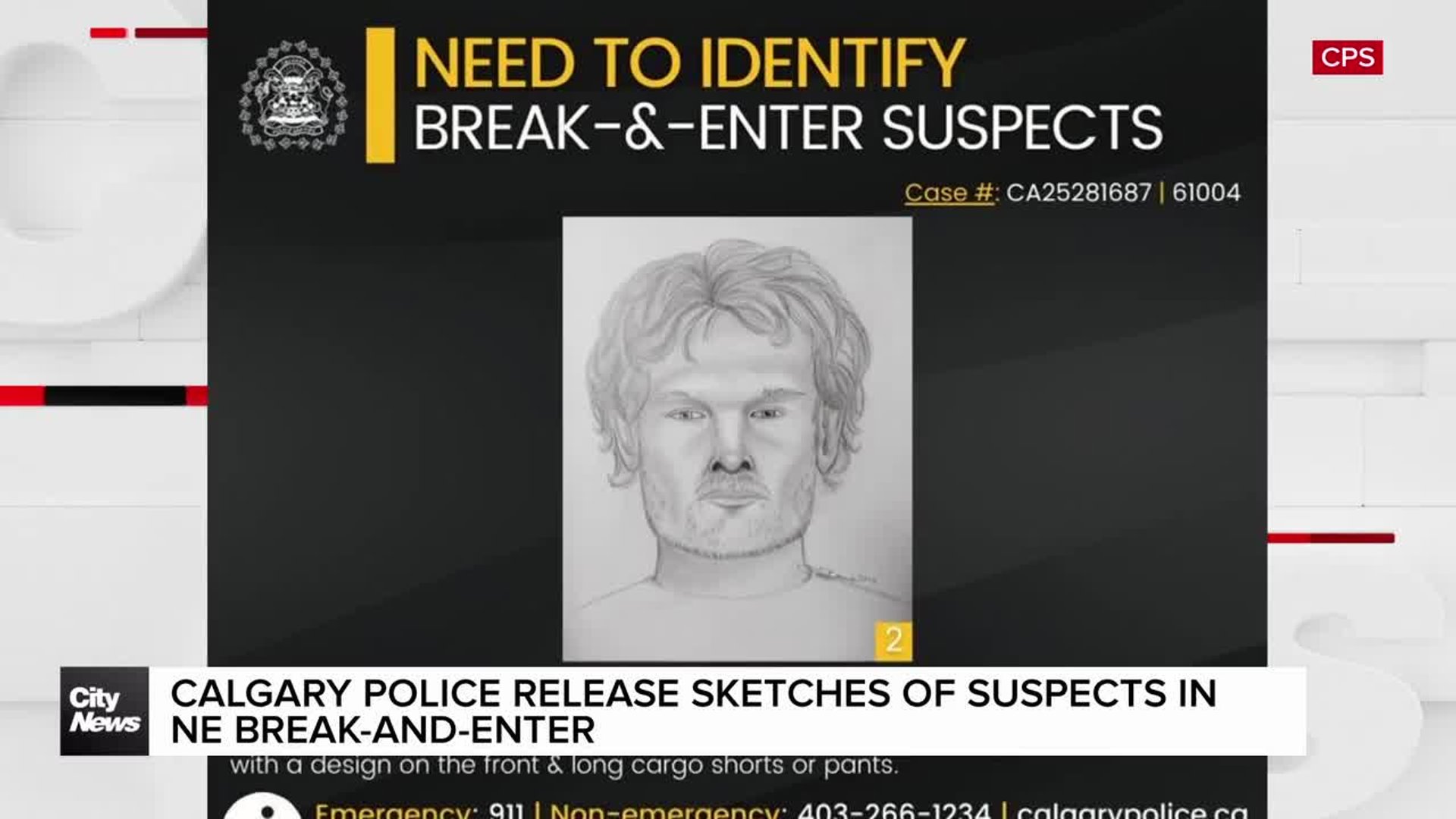
Historically, an artist worked one-on-one with a witness over four to ten hours. The process was rooted in classical portraiture. Skilled artists used charcoal, conté crayons, or graphite to achieve soft gradients, delicate anatomical transitions, and dynamic depth.
Hand-drawn sketches capture organic nuance well, but they are vulnerable to the individual artist's stylistic biases. If an artist naturally sketches prominent brows or hollow cheeks, those tendencies filter into every suspect portrait, skewing public recognition.
Modular Composite Kits: Identi-Kit and Photo-FIT
During the 1960s and 1970s, law enforcement agencies sought to bypass the need for trained fine artists by introducing modular visual kits:
- Identi-Kit: Utilized clear plastic film overlays, each imprinted with distinct facial components (hairlines, eye shapes, noses, chins, and facial hair) that could be stacked layer by layer.
- Photo-FIT (Facial Identification Technique): Introduced real photographic fragments divided into zones (foreheads, eyes, noses, mouths, and chins) arranged within a frame.
Because these modular kits forced organic human faces into rigid mechanical jigsaw puzzles, the resulting images looked distinctly unnatural. The borders between a photograph of a nose and the cheeks beneath it lacked skin tone continuity, resulting in jagged lines, disjointed shadows, and rigid, synthetic expressions. Many of the most unnerving composites from the 1970s and 1980s came directly from these modular systems.
Modern Digital Suites: FACES and EFIT-V
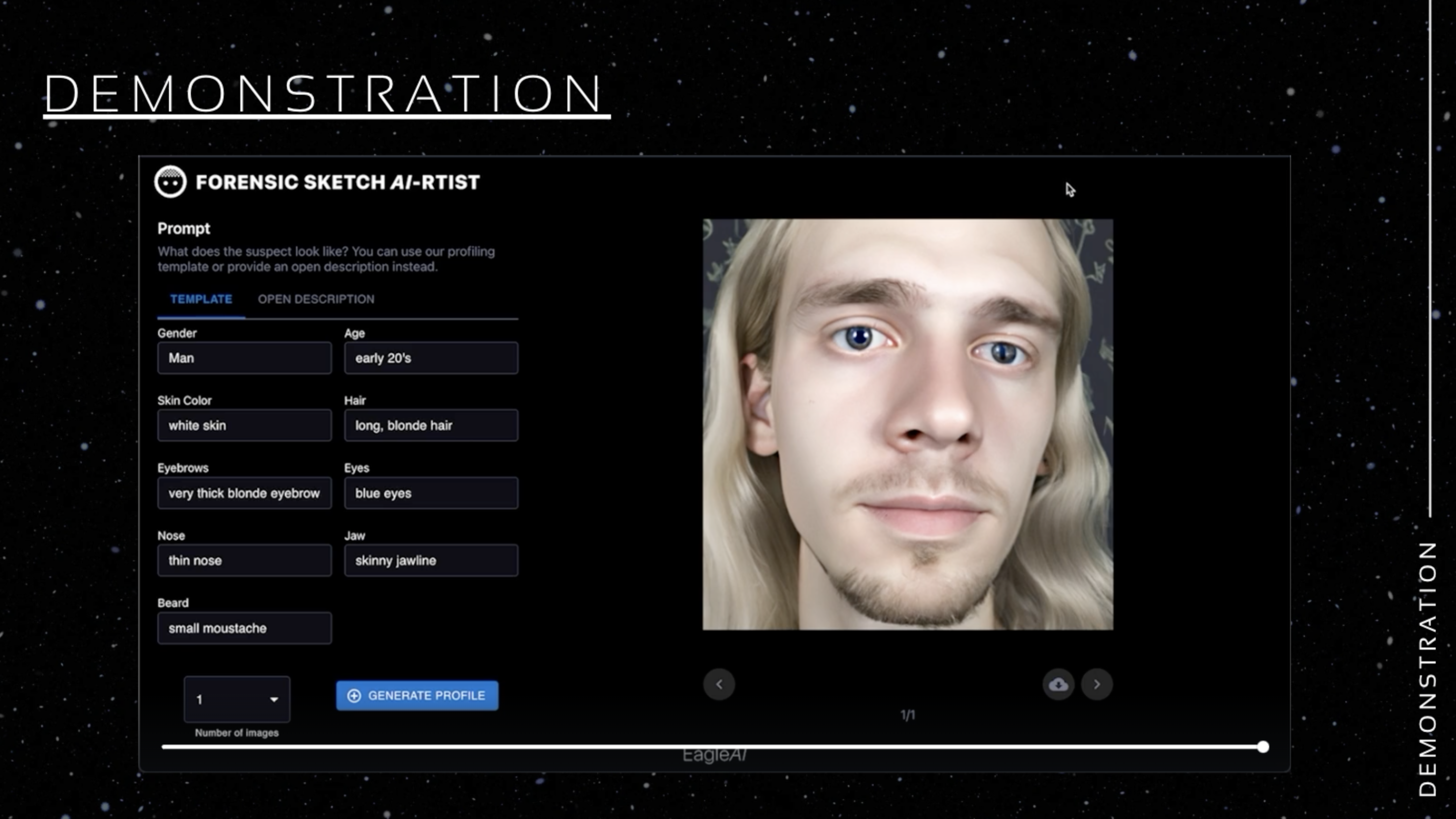
Today, law enforcement relies heavily on computerized suites like FACES, EFIT-6, and EvoFIT. Modern systems approach facial reconstruction through evolutionary algorithms:
- Eigenface Algorithms: Instead of asking a traumatized witness to design a nose from memory, software presents multiple full-face arrays.
- Holistic Selection: The witness chooses the faces that most closely resemble their recollection. The algorithm breeds those variants together, generating new iterations through genetic computational models.
- Micro-Texture Balancing: Automated engines blend skin tones, minimize visual seam lines, and soften anatomical borders, avoiding the disjointed issues common with 1970s systems.
Yet even advanced software can produce unsettling results. When digital tools over-smooth skin tones, the resulting face can look synthetic or porcelain-like, causing a different kind of uncanny valley unease.
The Cognitive Interview: How Forensic Artists Retrieve Facial Details
Producing an accurate composite requires a meticulous psychological interview designed to bypass trauma responses and access intact semantic memories.
Step-by-Step Cognitive Retrieval Workflow
1. Establishing Rapport and Sensory Decompression
The interview begins without drawing materials. The artist or forensic interviewer creates a low-stress environment to lower the witness's acute cortisol levels. Traumatized witnesses who feel rushed will quickly agree to inaccurate stock facial shapes just to complete the process. The forensic specialist never shows "mugbooks" immediately before or during an interview, as doing so contaminates memory through unconscious transference, where the witness replaces their real memory of the suspect with a face they just viewed.
2. Context Reinstatement
The interviewer mentally guides the witness back to the scene of the incident using sensory cues rather than direct questions about facial dimensions:
"Do not think about the face right now. Picture the lighting on the street. Was it cold? What sounds did you hear right before you turned around? What color was the ambient light?"
This approach activates episodic memory networks in the brain's hippocampus, helping the witness retrieve sensory and situational details that frame their memory of the face.
3. Open-Ended, Unprompted Recall
The artist avoids leading questions. Rather than asking, "Did he have thin lips?" the interviewer asks, "Describe the mouth area." The witness is encouraged to use comparative, abstract language:
- "His eyes looked heavy and tired."
- "His chin seemed blunt, like an anvil."
- "The skin looked tight across his forehead."
The artist translates these descriptive, emotional metaphors into precise anatomical markers—such as heavy supraorbital ridges, pronounced mental protuberances, or tight superficial musculoaponeurotic systems.
4. Component-to-Holistic Assembly
The artist begins with broad proportions before refining individual features:
- Face Shape and Aspect Ratio: Establishing the baseline relationship between cranial width and vertical facial height (the facial width-to-height ratio, or fWHR).
- Facial Thirds Placement: Dividing the face from trichion (hairline) to glabella (between eyebrows), glabella to subnasale (base of nose), and subnasale to menton (bottom of chin).
- Feature Sculpting: Layering in the orbital contours, the nasal bridge, and the labial commissures (mouth corners).
- Continuous Verification: The artist regularly pauses, turning the board toward the witness to ask: "Does this look closer to or further from what you remember?" The witness controls the adjustments, preventing the artist from imposing their own visual bias.
The Dangers of Inaccurate and Terrifying Composites
While an unsettling police sketch can focus public attention and spread rapidly online, poorly constructed or distorted composites can derail active investigations, create confirmation bias, and cause real harm to innocent individuals.
The Misdirection of Investigative Resources
When an unnerving sketch is broadcast across major news networks and social media platforms, it immediately primes public perception. If the sketch exaggerates a hooked nose, hyper-widened eyes, or an asymmetrical jaw, law enforcement call centers are often overwhelmed by thousands of bad tips:
- Citizens report neighbors, colleagues, or estranged family members who share only superficial resemblances to the distorted drawing.
- Investigators spend valuable operational hours chasing down unsubstantiated leads based on a flawed visual aid.
- The actual perpetrator, who may have softer, symmetrical features, walks past checkpoints and tipsters unnoticed because they do not resemble the menacing face seen on television.
Confirmation Bias and Witness Cross-Contamination
Releasing an uncanny sketch can also compromise the memory of other potential witnesses who have not yet been formally interviewed.
Once a witness sees a terrifying composite in a newspaper or online, their original memory can easily warp to match the published drawing. In court, defense attorneys can challenge the validity of eyewitness identifications, arguing that the public composite tainted the witness's independent recollection.
Wrongful Accusations and Public Panic
Unnerving police sketches can foster intense community fear, particularly when the subject appears menacing or monstrous. In historical investigations, inaccurate sketches have led to the harassment, public shunning, and unlawful detention of innocent individuals whose only crime was sharing a broad cranial profile with an artist's composite.
Professional standards set by the International Association for Identification (IAI) emphasize that composite art is merely an investigative tool meant to prompt recognition, not forensic identification evidence like fingerprints or nuclear DNA.
Frequently Asked Questions
Why do police sketches look creepy?
Police sketches look creepy because they fall squarely into the uncanny valley, presenting an image that is recognizably human but lacks natural micro-expressions, balanced proportions, or biological realism. The human brain interprets these slight anatomical distortions as unnatural or threatening, which triggers an involuntary fear response.
Composite drawings often combine fragmented memory recall with artistic approximations, flattening facial contours and leaving the eyes looking vacant, unblinking, or mismatched. These subtle structural flaws disrupt standard facial recognition pathways in the brain.
Can a police composite sketch be used as physical evidence in court?
No, a police composite sketch cannot be introduced as direct evidence of identity in a court of law. Composite sketches are strictly categorized as investigative leads, designed to generate tips and narrow down suspect lists.
Because they rely on subjective human recall and are inherently prone to distortion, composites cannot prove a defendant's presence at a crime scene. Physical evidence, such as forensic DNA, latent fingerprints, authenticated surveillance footage, or direct in-court eyewitness testimony, is required to meet the legal standard of proof.
What is the primary difference between a composite artist and a forensic sculptor?
A composite artist produces two-dimensional drawings of living, unidentified suspects based on witness interviews, while a forensic sculptor builds three-dimensional facial reconstructions directly on the skeletal remains of unidentified decedents.
Forensic sculptors use physical skulls (or 3D-printed skull replicas) and apply clay at standardized anatomical depth markers across specific craniometric points to approximate what an unknown deceased individual looked like in life, aiding in missing persons and cold-case identification.
Why do some police sketches feature completely blank eyes or missing details?
Artists deliberately leave eyes blank, obscure hair, or omit portions of the jawline when a witness has no clear recollection of those specific features.
Filling in missing details with guesswork creates false leads and causes the public to focus on the wrong facial characteristics. By leaving an area featureless or lightly shaded, the artist forces the viewer to focus only on the elements the witness accurately observed.
How has genetic genealogy affected the need for traditional composite sketches?
Investigative genetic genealogy has significantly reduced law enforcement's reliance on composite sketches by using direct DNA data to predict an unknown subject's physical traits—a process known as forensic DNA phenotyping.
Advanced labs analyze genetic variants (SNPs) to forecast ancestry, pigmentation, eye color, hair color, and basic facial morphology. While digital phenotyping provides an objective, biologically driven baseline, traditional sketches and cognitive interviews remain essential for crimes that leave no usable suspect DNA.
Modern Forensic Integrity
Forensic facial approximation remains a powerful bridge between human memory and criminal investigation. When traumatic events yield unnerving police sketches, these striking visuals show how the brain struggles to reconstruct terrifying experiences. As modern police departments integrate 3D modeling and genetic genealogy alongside time-tested cognitive interview methods, the goal remains the same: transforming raw, fragmented human recall into accurate, actionable, and ethical investigative leads.
If you possess historical or current information regarding any unsolved case featured in public forensic notices, contact your local law enforcement agency's tip line or submit details securely to the National Center for Missing & Exploited Children or the Federal Bureau of Investigation.
Image Gallery