Navigating Moral Rights in Intellectual Property: A Comprehensive Guide for 2026
Moral rights represent the non-economic personal and legal connections between creators and their original works, ensuring that authors retain control over attribution and integrity regardless of who holds the commercial copyright. Unl...
Moral rights represent the non-economic personal and legal connections between creators and their original works, ensuring that authors retain control over attribution and integrity regardless of who holds the commercial copyright. Unlike standard economic rights that can be easily bought, sold, or licensed, moral rights protect the personal reputation and creative vision of the artist, writer, or filmmaker across global jurisdictions.
Contents
Understanding the Core Framework of Moral Rights
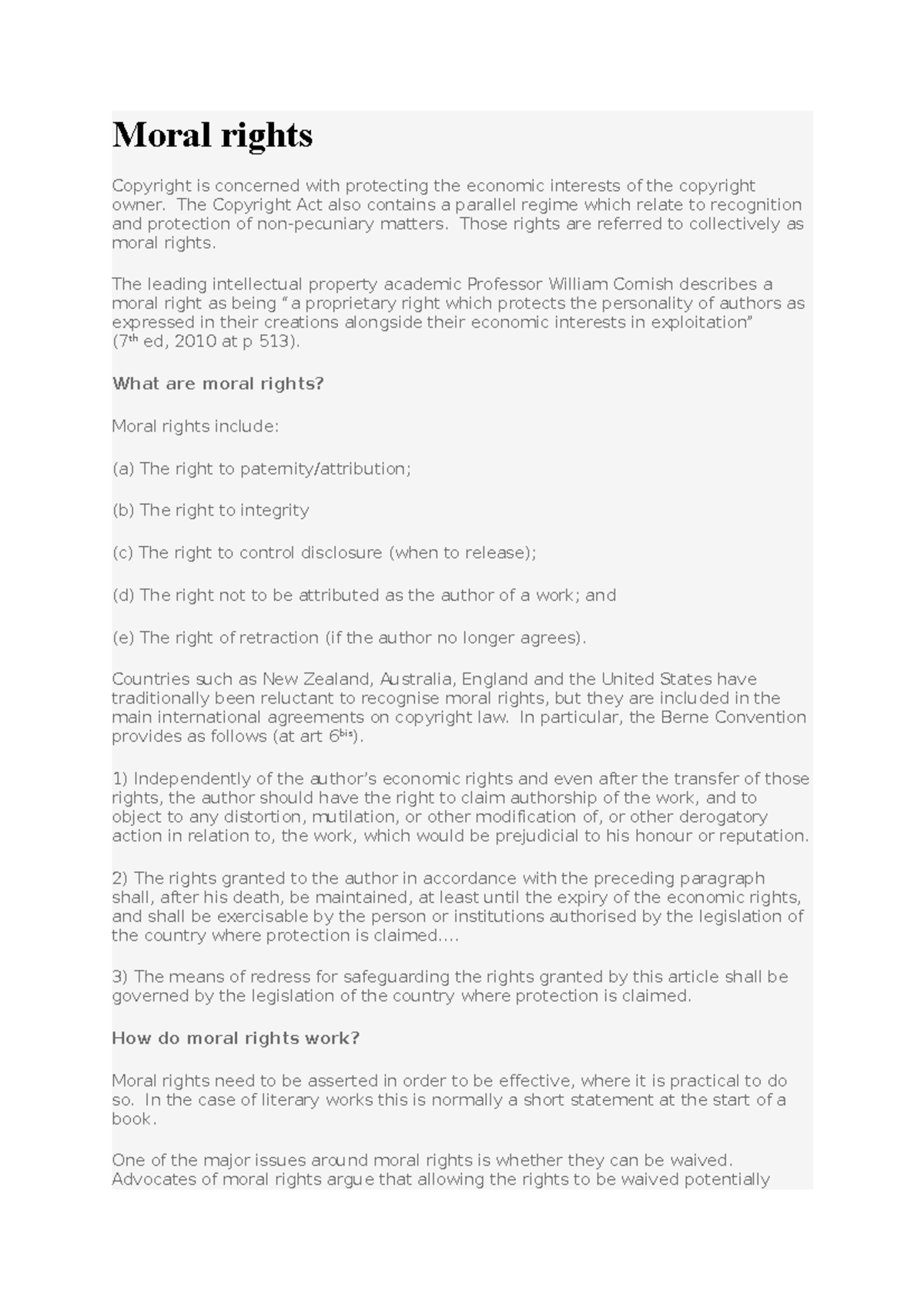
To fully grasp how creative protection functions in the modern legal landscape, one must look beyond standard commercial copyrights. While copyright law focuses primarily on reproduction, distribution, and financial monetization, moral rights address the spiritual and personal bond linking a creator to their tangible expression.
Under international treaties such as the Berne Convention for the Protection of Literary and Artistic Works, these rights are granted automatically to authors upon the creation of a qualifying work. They exist independently of the employer-employee relationship in many nations, though enforcement mechanisms vary wildly between civil law jurisdictions (like France and Germany) and common law jurisdictions (like the United States and the United Kingdom).
The Dual Pillars: Paternity and Integrity
Moral rights are fundamentally built upon two universally recognized principles:
- The Right of Paternity (Attribution): Creators maintain the absolute legal prerogative to claim authorship of their work and to have their name clearly associated with it. Conversely, this also includes the right to remain anonymous or use a pseudonym to protect personal privacy.
- The Right of Integrity: This grants creators the power to object to any distortion, mutilation, modification, or derogatory action taken against their work that could reasonably damage their professional honor, artistic standing, or personal reputation.
The Scope of Moral Rights Across Global Jurisdictions
The legal enforcement of creator protections differs significantly depending on geographic location and local statutory frameworks. Creators operating internationally must navigate these stark contrasts to ensure their professional legacy and personal standing remain protected.
| Jurisdiction | Legal Recognition | Transferability / Waiver | Duration of Protection |
|---|---|---|---|
| European Union (Civil Law) | Comprehensive and strictly enforced via national laws implementing the Berne Convention. | Generally inalienable; cannot be sold, though limited waivers are permitted in specific contexts. | Usually lasts for the life of the author plus 70 years. |
| United States | Limited and strictly codified via the Visual Artists Rights Act (VARA) of 1990. | Can be waived by explicit written agreement, but cannot be transferred. | Restricted exclusively to works of visual art; lasts for the life of the author. |
| United Kingdom | Protected under the Copyright, Designs and Patents Act 1988, but requires formal assertion. | Can be waived in writing, but must be explicitly claimed by the author to take effect. | Varies by right; generally matches standard copyright duration (Life + 70 years). |
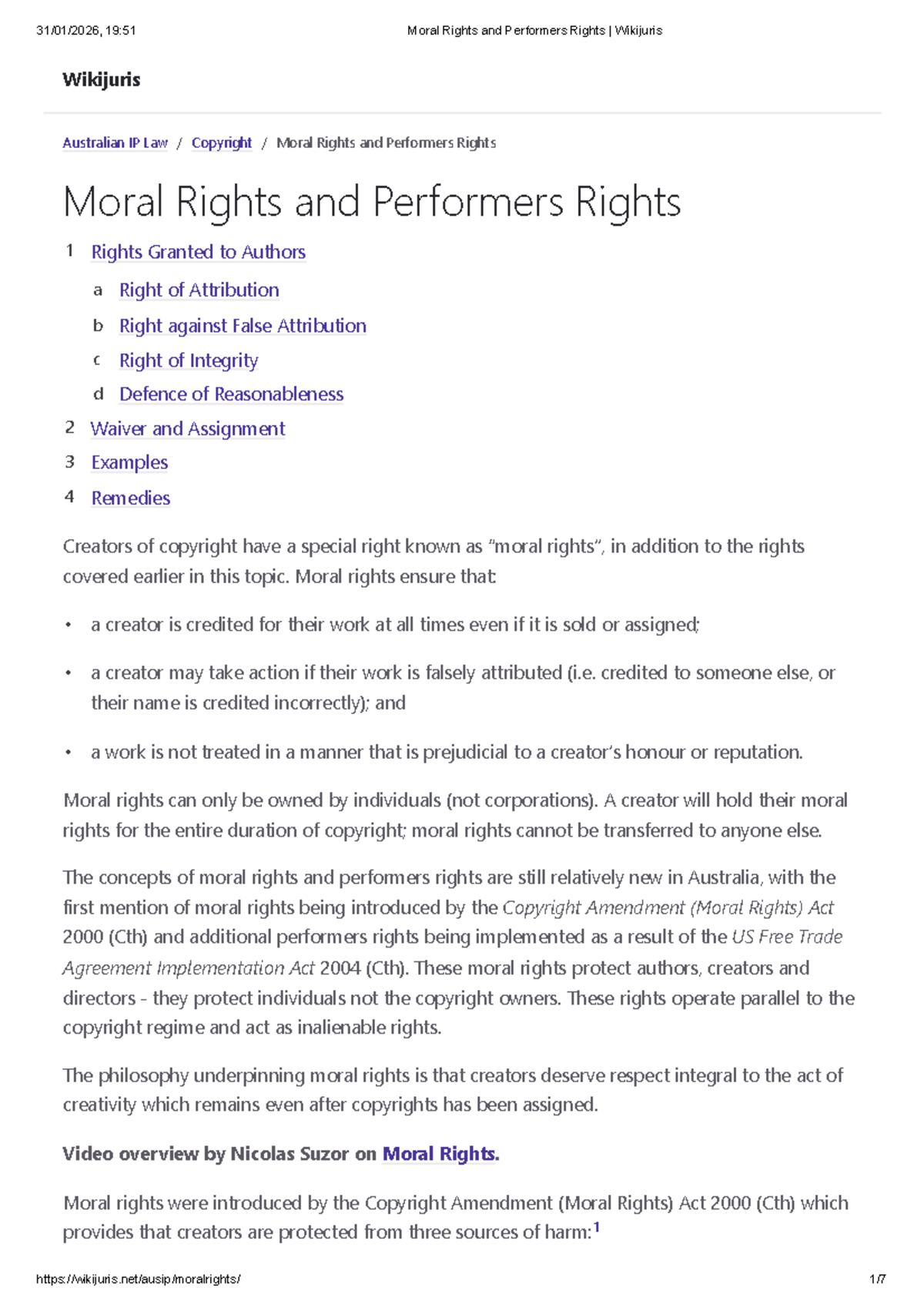
| Australia | Enforced under the Copyright Amendment (Moral Rights) Act 2000. | Inalienable, but allows for written "consent" that prevents future legal action for infringement. | Matches the duration of the underlying copyright of the work. |
Major Categories of Protected Works and Limitations
Not all creative output receives the same level of moral rights protection. In common law countries, restrictions are often placed on which industries benefit from these personal legal safeguards.
Visual Arts Versus Audio-Visual and Literary Works
In the United States, for instance, the Visual Artists Rights Act (VARA) strictly limits moral rights protections to paintings, drawings, prints, sculptures, and limited-edition photographs. Standard commercial creations, such as software code, applied art, motion pictures, and architectural works, are largely excluded from federal moral rights protection, leaving creators to rely on contract law, defamation claims, or union agreements (such as Writers Guild of America or Directors Guild of America rules) to protect their artistic vision.
Conversely, civil law nations apply these protections broadly across all mediums. A French novelist or a German filmmaker enjoys robust statutory protection against unauthorized edits, colorization, or structural alterations of their narrative works, regardless of who owns the underlying copyright or cinematic distribution rights.
The Practical Mechanics of Waiving and Asserting Moral Rights
Navigating commercial contracts requires a sophisticated understanding of how moral rights interact with standard work-for-hire agreements, licensing deals, and publishing contracts.
Best Practices for Creators
- Examine Every Contract Clause: Look closely for language requesting a "waiver of moral rights" or permission to "modify, adapt, or complete" the work without further consultation.
- Define Permitted Modifications: If a complete waiver is unacceptable to your artistic principles, negotiate narrow exceptions that allow only necessary technical edits (such as formatting adjustments for specific publishing platforms).
- Explicitly Assert Attribution Rights: In jurisdictions like the UK, formally assert your right to be identified as the author in writing before publishing or licensing the work.
- Monitor Derivative Uses: Keep track of how your work is distributed internationally to ensure foreign publishers or licensees do not alter the integrity of the original piece without authorization.
Pros and Cons of Strict Moral Rights Enforcement
Implementing and defending moral rights involves a careful balance between artistic protection and commercial flexibility.
Advantages
- Reputational Safeguards: Prevents third parties from associating a creator's name with altered, low-quality, or politically offensive versions of their art.
- Preservation of Cultural Heritage: Protects landmark architectural structures, sculptures, and literature from destructive commercial modifications.
- Empowerment of Creators: Empowers individual artists to maintain creative control even after signing away commercial exploitation rights to large corporations.
Disadvantages
- Commercial Friction: Strict non-waiver rules can make corporate entities hesitant to invest in or adapt valuable intellectual property due to fears of future litigation.
- Legal Ambiguity: Vague statutory definitions regarding what constitutes "damage to honor or reputation" frequently result in prolonged and costly courtroom battles.
- Cross-Border Conflicts: Discrepancies between US and EU laws create persistent compliance challenges for multinational media conglomerates and digital platforms.
Frequently Asked Questions
Can moral rights be sold or transferred to another party?
No, moral rights are fundamentally personal and inalienable in most jurisdictions, meaning they cannot be sold, assigned, or transferred like standard economic copyrights. However, in many legal systems, creators can sign a legally binding waiver agreeing not to enforce them under specific conditions.
Do moral rights apply to software development and computer code?
Generally, moral rights do not apply to software code or standard commercial digital products in common law countries, as these are viewed as utilitarian or functional creations rather than fine art. Civil law jurisdictions may offer broader interpretations, but commercial software licensing agreements routinely require comprehensive waivers of any potential personal claims.
How long do moral rights last after an author passes away?
In most Berne Convention signatory nations, moral rights persist for the exact same duration as the underlying economic copyright, which is typically the lifetime of the creator plus an additional 70 years. During this post-mortem period, designated literary executors or surviving family members often retain the legal authority to enforce the right of integrity.
What is the difference between copyright and moral rights?
Copyright governs the commercial exploitation of a work, including the exclusive rights to reproduce, distribute, display, and financially profit from the creation. Moral rights, by contrast, protect the non-economic personal connection between the creator and the art, focusing entirely on attribution and the preservation of artistic integrity.
Are moral rights recognized uniformly around the world?
No, moral rights recognition varies significantly between legal traditions. Civil law countries in continental Europe provide robust, perpetual protection, whereas common law countries like the United States and the United Kingdom offer much narrower statutory frameworks with permissive waiver options.
Securing Your Creative Legacy
Protecting your artistic output requires a proactive approach to contract negotiation, international compliance, and legal awareness. Whether you are licensing fine art, publishing literature, or entering into digital media production agreements, understanding the precise limits of moral rights ensures your professional reputation remains shielded from unauthorized alterations. Review your upcoming agreements carefully, consult with qualified intellectual property counsel when navigating cross-border deals, and actively secure your attribution and integrity safeguards to maintain long-term control over your creative footprint.
Image Gallery