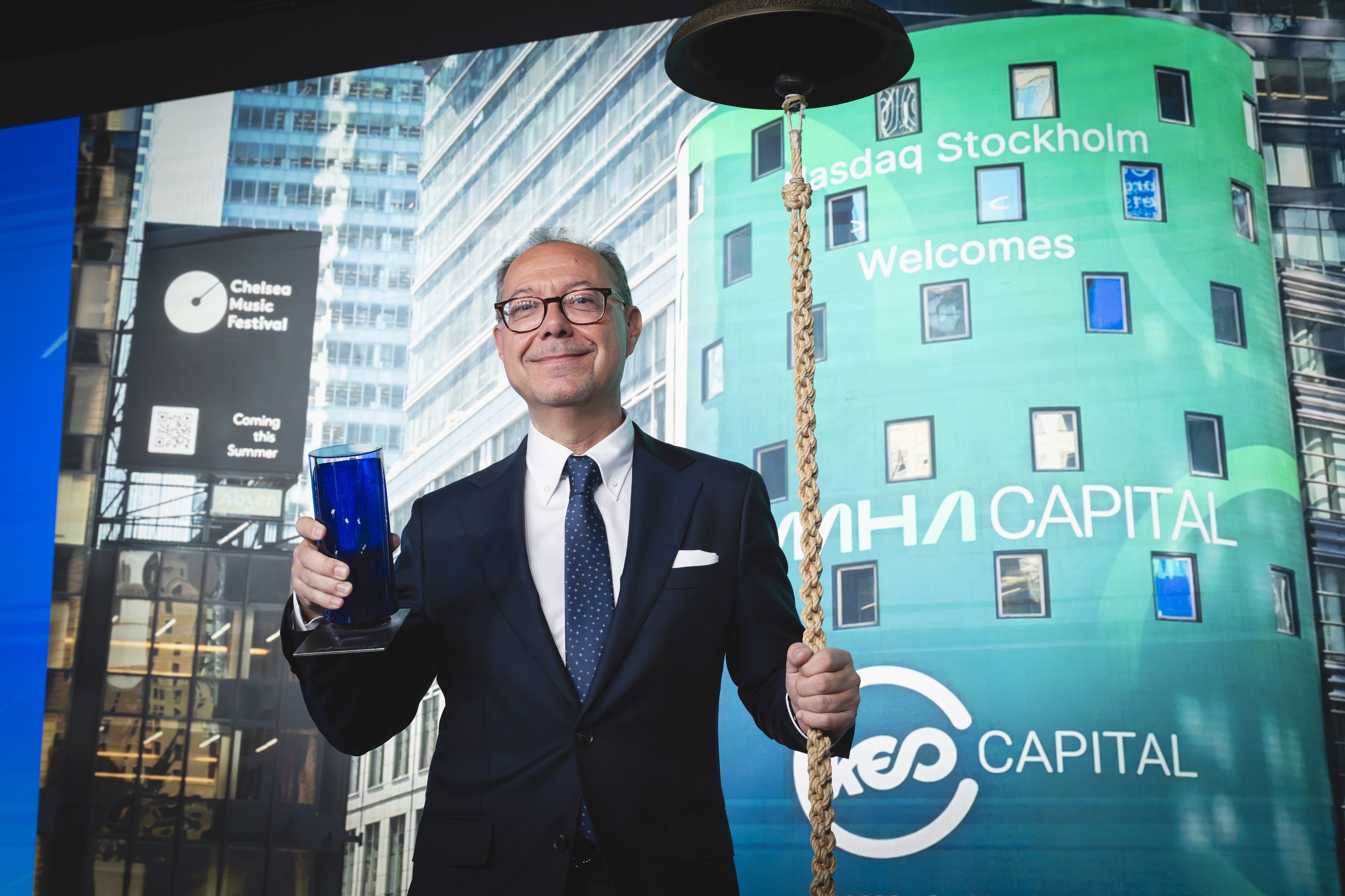
MAG Interactive: The Strategic Journey from Startup to Nasdaq Listing
MAG Interactive’s evolution from a small Stockholm startup to a Nasdaq-listed entity represents a masterclass in scaling digital products through data-driven design and strategic acquisitions. By leveraging the viral success of Ruzzle...
MAG Interactive’s evolution from a small Stockholm startup to a Nasdaq-listed entity represents a masterclass in scaling digital products through data-driven design and strategic acquisitions. By leveraging the viral success of Ruzzle and executing a disciplined path to the December 2017 IPO, the company established a sustainable model for casual mobile gaming.
Contents
The Genesis of a Swedish Gaming Powerhouse (2010–2012)
The story of MAG Interactive began in 2010 in Stockholm, Sweden, a city that would eventually become one of the world’s most concentrated hubs for game development. Founded by Daniel Hasselberg, Roger Skagerwall, Kaj Nygren, Johan Persson, Fredrik Stenh, and Anders Larsson, the company did not initially set out to be a global gaming titan. Like many successful tech firms, its early days were characterized by experimentation and a focus on high-quality engineering.
Initially, the team operated with a lean, consultancy-inspired mindset, but they quickly pivoted toward creating their own intellectual property (IP). The founders recognized a shift in consumer behavior: the "casual gamer" was no longer a niche demographic but a massive, untapped global market facilitated by the proliferation of the iPhone and Android devices. The objective was to create "good times"—short, engaging sessions that fit into the gaps of a user’s daily life.
The early years were spent refining the internal development process. Unlike studios that focused on high-fidelity graphics or complex mechanics, MAG prioritized social connectivity and intuitive UI. This philosophy laid the groundwork for their first major breakthrough, which would fundamentally change the company’s trajectory and financial prospects.
The Ruzzle Phenomenon: A Catalyst for Scale
In 2012, MAG Interactive released Ruzzle, a fast-paced word search game that allowed players to challenge friends or random opponents. While the game was initially successful in the Nordic regions, 2013 saw it explode into a global phenomenon. Within months, Ruzzle topped the charts in the United States, Italy, France, and dozens of other territories.
The success of Ruzzle was not merely a stroke of luck; it was the result of a meticulously tuned viral loop. The game’s integration with social media platforms and its competitive leaderboard system created a self-sustaining growth engine. By early 2013, the game had surpassed 50 million downloads, reaching 100 million shortly thereafter.
For the founders, Ruzzle proved that a small team could compete with giants like Electronic Arts or Zynga if they mastered the art of "sticky" gameplay and localized content. However, the surge in popularity presented significant technical and operational challenges. The transition from managing a few thousand concurrent users to millions required a rapid overhaul of server infrastructure and a dedicated approach to LiveOps (Live Operations), ensuring the game remained fresh through updates and events.
Transitioning from a Product to a Portfolio Strategy
A common pitfall for successful mobile startups is the "one-hit wonder" syndrome. To avoid this, MAG Interactive used the revenue generated by Ruzzle to diversify its portfolio. The strategy was two-fold: organic development of new titles and the acquisition of proven IPs.
In 2014, the company launched WordBrain, which offered a more puzzle-centric approach compared to the competitive nature of Ruzzle. WordBrain reached the #1 spot in the App Store in over 100 countries, proving that MAG’s success was repeatable. This title focused on longer-term retention rather than the sharp viral peaks seen with Ruzzle, providing a more stable revenue stream (ARPU - Average Revenue Per User).
During this period, MAG also began exploring the inorganic growth path. In 2017, just months before their public listing, they made a landmark acquisition: FEO Media, the creators of QuizDuel. This acquisition was a strategic masterstroke, as QuizDuel was the dominant trivia game in the DACH region (Germany, Austria, Switzerland). By integrating FEO Media’s massive user base, MAG significantly increased its Daily Active Users (DAU) and broadened its geographic footprint, making the company much more attractive to institutional investors ahead of the IPO.
The Path to Nasdaq First North Premier (2017)
By 2017, MAG Interactive had the financial maturity and the organizational structure required for a public offering. The decision to list on the Nasdaq First North Premier in Stockholm was driven by several factors:
- Access to Capital: To continue their acquisition strategy, they needed the liquidity provided by public markets.
- Brand Legitimacy: A public listing enhanced their reputation among potential talent and international partners.
- Currency for M&A: Public shares could be used as part of the consideration for future studio acquisitions.
The IPO process involved rigorous financial auditing and the formalization of corporate governance. At the time of the listing, MAG reported a turnover of approximately 250 million SEK (Swedish Krona) for the 2016/2017 fiscal year. The offering was significantly oversubscribed, reflecting strong investor confidence in the "Swedish Gaming Wonder"—a term used to describe the cluster of successful Swedish studios including Mojang, King, and Paradox Interactive.
On December 8, 2017, MAG Interactive officially began trading under the ticker MAGI. The listing price was set at 44 SEK per share, valuing the company at approximately 1.1 billion SEK (roughly $130 million USD at the time). This milestone marked the successful completion of their journey from a private startup to a transparent, publicly traded corporation.
Key Performance Metrics and Milestones
To understand the scale of MAG Interactive’s journey, it is useful to compare the key metrics of their flagship titles and the impact of their strategic moves.
| Metric/Title | Ruzzle (Launch) | WordBrain (Expansion) | QuizDuel (Acquisition) | MAG Interactive (IPO 2017) |
|---|---|---|---|---|
| Primary Genre | Competitive Word | Puzzle/Logic | Social Trivia | Portfolio Publisher |
| Global Downloads | 100M+ | 40M+ | 100M+ | 200M+ (Total) |
| Primary Market | USA, Italy | Global | Germany, Nordics | Global |
| Monetization | Ads / In-app | In-app / Hints | Subscription / Ads | Diversified Mix |
| Strategic Role | Viral Growth | Long-term Retention | Audience Consolidation | Market Leadership |
The "Good Times" Philosophy: Sustaining Post-IPO Growth
Following the Nasdaq listing, MAG Interactive did not rest on its laurels. The company shifted its focus toward maximizing the lifetime value (LTV) of its existing players. In the mobile gaming industry of 2026, the cost of user acquisition (UA) has risen sharply, making retention more valuable than ever.
MAG implemented a "Core/Growth" model. The "Core" titles (Ruzzle, QuizDuel) provide steady, predictable cash flow, while "Growth" projects explore new mechanics and market segments. A significant post-IPO development was the launch of New QuizDuel, which modernized the aging FEO Media title with better monetization features and social integration.
The company also leaned heavily into data science. By 2026 standards, their ability to analyze player behavior in real-time allows them to tailor ad frequency and difficulty curves to individual users, minimizing "churn" (the rate at which players stop playing). This technical depth is what separates a successful public gaming company from a struggling startup; it is the transition from making "art" to managing a "service."
Corporate Governance and the Swedish Ecosystem
A vital component of MAG’s success was its immersion in the Swedish tech ecosystem. The company maintained a flat organizational structure, a hallmark of Nordic business culture, which encouraged innovation and rapid iteration. Even after the Nasdaq listing, CEO Daniel Hasselberg emphasized a culture where "small, autonomous teams" could make significant product decisions without layers of bureaucracy.
Being listed on Nasdaq Stockholm also required adherence to strict transparency standards. This transition forced the company to become more disciplined in its financial forecasting and communication with shareholders. For investors, the appeal of MAG has always been its low-debt profile and its ability to generate high margins from intellectual property that requires relatively low maintenance compared to AAA console titles.
Lessons for Tech Entrepreneurs and Investors
The trajectory of MAG Interactive offers several critical takeaways for those looking to scale a digital business:
- Solve the "Success Problem" Early: MAG didn't just enjoy the Ruzzle success; they immediately moved to build a multi-product foundation.
- M&A as a Scaling Tool: The acquisition of QuizDuel showed that buying an established community is often more efficient than building one from scratch in a crowded market.
- The Power of Localization: By offering games in over 10 languages and tailoring content to local cultures (especially in word games), MAG built a moat that generic competitors couldn't easily cross.
- Public Markets are a Tool, Not an End Goal: The Nasdaq listing was treated as a beginning—a way to fuel the next decade of growth—rather than an exit for the founders.
Frequently Asked Questions
When did MAG Interactive go public on the Nasdaq?
MAG Interactive officially listed on the Nasdaq First North Premier Growth Market on December 8, 2017. The listing was a pivotal moment that allowed the company to transition from a private startup to a major player in the international mobile gaming market.
What is MAG Interactive's stock ticker symbol?
The company trades under the ticker symbol MAGI on the Nasdaq Stockholm exchange. Since its IPO, it has been a staple of the Swedish gaming sector, often analyzed alongside other Nordic gaming giants.
Which game made MAG Interactive famous?
The word-search game Ruzzle was the primary catalyst for the company’s fame. Released in 2012, it became a global viral sensation in 2013, reaching the #1 spot in dozens of countries and amassing over 100 million downloads.
How did the acquisition of FEO Media change the company?
The acquisition of FEO Media (creators of QuizDuel) in 2017 was a transformative event. It provided MAG with a massive, loyal user base in the DACH region and added a high-performing trivia game to their portfolio, which helped justify their valuation during the IPO process.
Is MAG Interactive still focused solely on word games?
While word and trivia games remain their core competency (Ruzzle, WordBrain, QuizDuel), MAG has expanded its portfolio to include various casual puzzle and tile-matching games. Their strategy focuses on "smart casual" games that prioritize long-term engagement and social interaction.
Practical Recommendation for Stakeholders
For investors and industry analysts looking at MAG Interactive in 2026, the focus should remain on their retention metrics and LiveOps efficiency. The company has proven it can survive the transition from a "hit-driven" startup to a "service-driven" enterprise. The next logical step for those following the company is to monitor their progress in integrating AI-driven content generation, which is expected to lower production costs for their puzzle and trivia games while increasing personalized player engagement.
Those interested in the Swedish tech sector should view MAG as a benchmark for how to successfully navigate the Nasdaq First North Premier market before considering a move to the Main Market. The company’s ability to maintain a healthy balance sheet while continuing to acquire smaller studios remains its strongest competitive advantage.
Image Gallery