Understanding How Foundation Repair in Seguin, Texas Works
Foundation repair in Seguin, Texas, functions by addressing the specific challenges posed by the region's highly expansive clay soils. The process typically involves stabilizing the soil moisture environment, installing structural supp...
Foundation repair in Seguin, Texas, functions by addressing the specific challenges posed by the region's highly expansive clay soils. The process typically involves stabilizing the soil moisture environment, installing structural support systems such as steel or concrete piers to bypass unstable strata, and restoring the elevation of the foundation to mitigate damage caused by differential settlement.
Contents
The Geological Context: Why Seguin Foundations Struggle
To understand how foundation repair works in Seguin, you must first understand the soil. Seguin sits within a region dominated by expansive clay soils, such as the Beaumont Formation and various vertisols. These soils are characterized by their ability to absorb significant amounts of water, causing them to swell during wet seasons, and then shrink significantly as they dry out during the intense Texas summers.
This cyclical movement exerts immense pressure on concrete slab foundations. When one part of a home’s foundation sits on soil that is expanding while another part rests on soil that is contracting, the foundation undergoes "differential settlement." This movement creates stress that the concrete cannot accommodate, leading to cracks in interior drywall, doors that no longer latch, and exterior brick fissures. Foundation repair is essentially the engineering response to these geological forces.
Prerequisites: Diagnosis and Structural Evaluation
Before any physical repair begins, a qualified professional must conduct a site assessment. Repairing a foundation is not a one-size-fits-all process; it requires an engineering-based approach to determine whether the foundation's issues are caused by moisture fluctuations, poor drainage, or true structural failure.
- Elevation Survey: Technicians use high-precision laser levels or water levels to map the topography of the foundation. By comparing these readings to a theoretical "level" plane, they identify high and low points.
- Moisture Analysis: Because soil volume is directly linked to moisture, inspectors evaluate the drainage around the perimeter. Sometimes, correcting downspouts and installing root barriers is enough to stabilize the foundation without structural intervention.
- Plumbing Leak Detection: In Seguin, persistent foundation shifts are often tied to leaking under-slab plumbing. A hydrostatic pressure test is standard practice to rule out a broken pipe, which would wash away soil support and cause "voids" beneath the slab.
The Mechanics of Structural Intervention
When drainage corrections are insufficient, contractors employ structural methods to support the foundation. In the Seguin area, these methods usually involve transferring the load of the building from the unstable surface soil to a more stable layer of earth deeper underground.
Pressed Concrete Piers
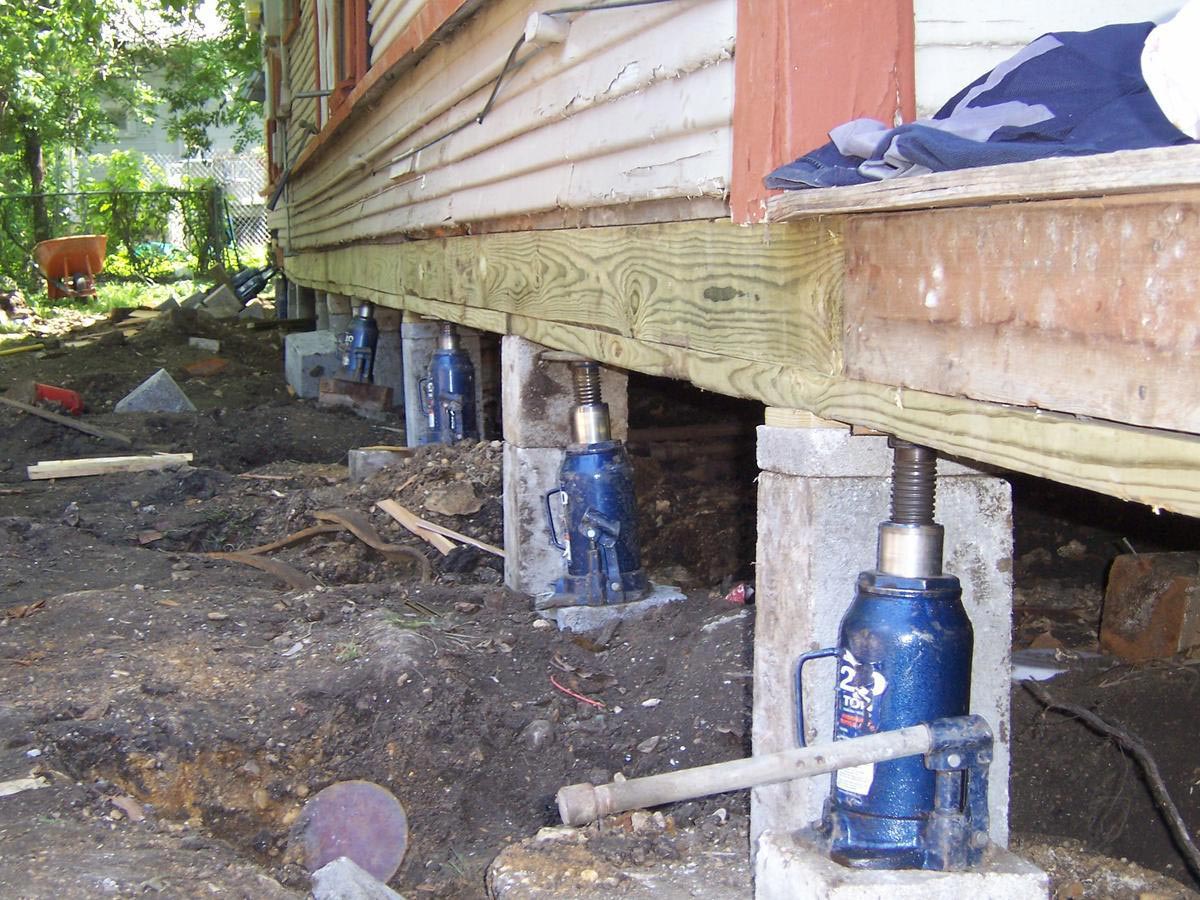
This is a common method where pre-cast concrete cylinders are hydraulically driven into the ground beneath the foundation's perimeter beam. The cylinders are stacked until they reach a point of "refusal"—where the resistance of the deeper, denser soil stops the downward movement. The foundation is then lifted back to its near-original position using hydraulic jacks, and the weight of the structure is shimmed onto the pier stack.
Steel Piers
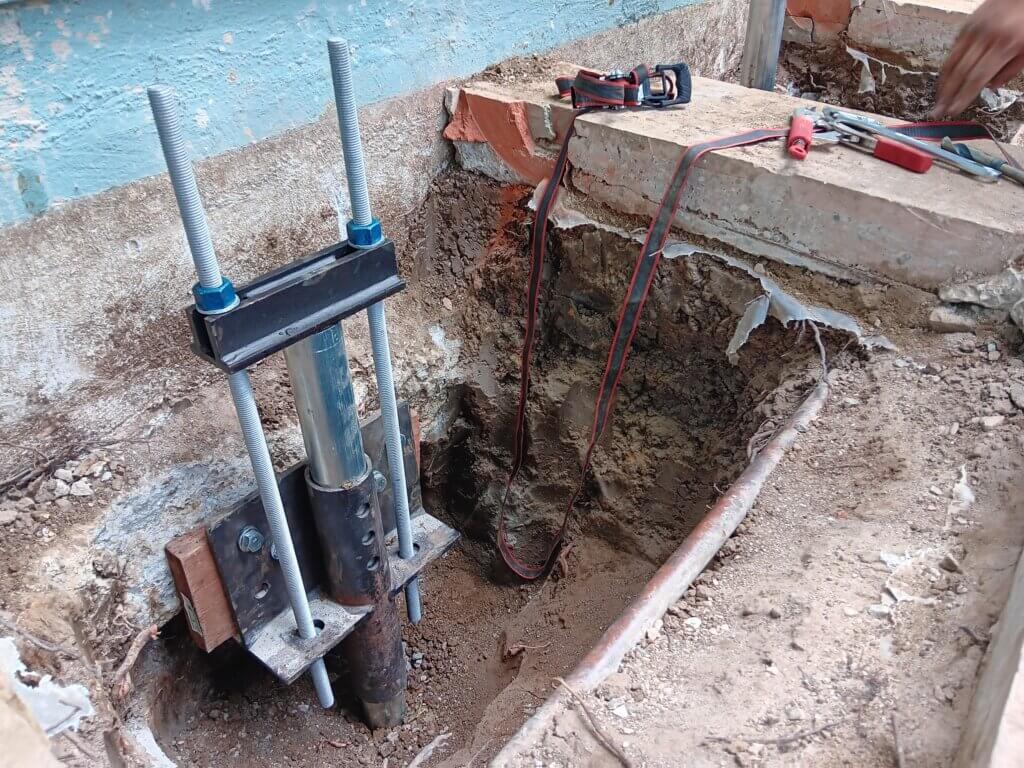
For homes with more significant movement or where reaching a deeper bedrock is required, steel piers are often preferred. Unlike concrete cylinders, steel pilings consist of high-strength steel pipes driven into the ground using hydraulic force. These piers can penetrate much deeper than concrete, reaching the load-bearing strata beneath the reactive clay layers. Steel piers provide higher levels of durability and are often the preferred recommendation for larger or heavier structures.
Comparison of Foundation Repair Methods
| Method | Best Use Case | Primary Advantage | Typical Scope |
|---|---|---|---|
| Drainage Correction | Minor movement; clay expansion | Non-invasive; low cost | Exterior work only |
| Pressed Concrete Piers | Slab-on-grade; moderate settlement | Cost-effective; proven | Perimeter access |
| Steel Piers | Significant settlement; deep clay | Long-term stability | Heavy duty support |
| Mudjacking/Polyjacking | Soil voids; minor sagging | Fast; fills empty space | Injection points |
Operational Limitations and Risks
It is a common misconception that foundation repair will make a house "perfect." When a concrete slab is lifted, it is under significant tension. As the foundation is raised to a level position, it is possible for new cracks to appear in the slab or walls. This is known as "rebound" stress.
Furthermore, repair contractors operate under the limitations of the local geology. If the soil is excessively saturated during the repair process, the "refusal" depth of the piers may be temporary. If the soil dries significantly later, the depth required for stability may change. This is why professional contractors will always emphasize the necessity of ongoing moisture maintenance after the mechanical work is complete.
Maintenance After Repair
Once the physical repair is finished, the responsibility shifts to the homeowner to prevent a recurrence of the movement. Seguin's climate makes moisture management the most important ongoing task:
- Soaker Hoses: Keeping the soil moisture consistent around the foundation perimeter prevents the "shrink-swell" cycle that drives settlement.
- Grading: Ensuring the ground slopes away from the foundation at least six inches over the first ten feet prevents water from pooling against the beam.
- Vegetation Management: Large trees consume vast amounts of water from the soil. Strategic root pruning or tree removal can prevent soil dehydration near foundation corners.
Frequently Asked Questions
How long does foundation repair typically take in Seguin? Most residential foundation repairs in Seguin take between two to five days. The duration depends heavily on the number of piers required and the accessibility of the foundation perimeter.
Will I have to move out of my house during the repair? No. Most foundation repair work is conducted on the exterior of the home. While there may be noise from hydraulic equipment and some vibration, residents can generally remain in their homes during the process.
How do I know if my foundation needs repair or if it's just "settling"? All homes settle, but structural failure involves patterns. Look for "stair-step" cracks in brick, doors that stick consistently, and cracks in floor tiles that span the entire room. If these cracks are wider than a quarter-inch, a professional inspection is advised.
Are foundation repairs in Seguin covered by homeowners insurance? Generally, no. Standard homeowners insurance policies in Texas exclude foundation movement caused by soil expansion or contraction. Insurance typically only covers damage resulting from specific "perils," such as a broken plumbing pipe that causes a sudden soil collapse.
What is the "rebound" effect? Rebound is the reaction of the foundation as the pressure is relieved through lifting. As the structure is moved toward a level position, the internal tension in the slab may release, sometimes causing hairline cracks in drywall or masonry to open or close during the process.
Recommendation for Next Steps
If you suspect foundation issues, start by documenting the cracks with photos and dates to establish a baseline of movement. Before signing a contract with a repair firm, engage an independent licensed professional engineer (PE) who is not affiliated with a repair company. A third-party engineer can provide an unbiased assessment of whether you truly require mechanical intervention or if you can stabilize the foundation through drainage and soil moisture management. This proactive step can save thousands of dollars and ensure that you are only paying for the work that is structurally necessary.
Image Gallery