Understanding What the Papers Received from the Workers’ Compensation Appeals Board Show
Papers received from the Workers’ Compensation Appeals Board (WCAB) represent official legal documentation regarding the status, progress, or resolution of a disputed work injury claim. These documents indicate whether a case has been...
Papers received from the Workers’ Compensation Appeals Board (WCAB) represent official legal documentation regarding the status, progress, or resolution of a disputed work injury claim. These documents indicate whether a case has been formally opened, when mandatory hearings are scheduled, what evidence has been admitted, or the final judicial decision regarding benefits and medical care.
Contents
Navigating the workers' compensation system in 2026 remains a complex procedural journey. When a claim moves beyond a simple agreement between an injured worker and an insurance carrier, it enters the jurisdiction of the Workers’ Compensation Appeals Board. This judicial body is responsible for resolving disputes through a formal legal process. The paperwork generated by this board is not merely informational; it carries legal weight that can determine your financial future and your access to healthcare. Understanding these documents is the first step in ensuring your rights are protected under state labor laws.
The Application for Adjudication of Claim
The first significant document most individuals receive or file is the Application for Adjudication of Claim. Receiving this paper signifies that the WCAB now has official jurisdiction over the case. In the past, a claim might have existed only between the employee and the insurance company; once this application is filed and assigned a case number, it becomes a formal legal proceeding within the state’s judicial system.
This document shows the specific body parts that are being claimed as injured and the dates of the alleged injury. It is critical to review this paper for accuracy. If an application lists only a "back injury" but the worker also suffered a "nerve injury" in their leg, the omission could lead to a denial of treatment for the leg later. In 2026, most of these applications are processed through the Electronic Adjudication Management System (EAMS), meaning the papers you receive may include barcodes or specific headers indicating they have been digitally logged into the state’s database.
Notice of Hearing and Proof of Service
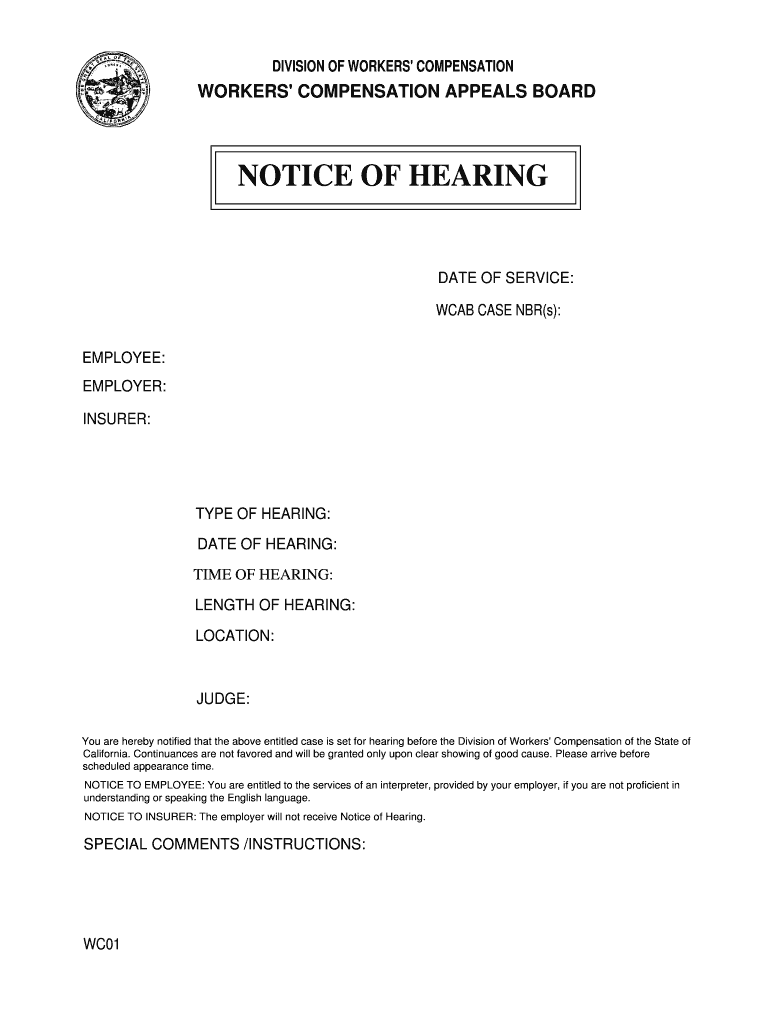
A Notice of Hearing is perhaps the most time-sensitive document sent by the WCAB. It informs all parties—the injured worker, the employer, the insurance carrier, and their respective attorneys—of an upcoming appearance before a Workers’ Compensation Administrative Law Judge (ALJ). The notice will specify the type of hearing, such as a Mandatory Settlement Conference (MSC), a Priority Conference, or a Trial.
The "Show" factor here is immediate: it shows you must appear or have your attorney appear on your behalf. Accompanying this is usually a Proof of Service. This is a legal declaration stating that the document was mailed or electronically delivered to all parties involved. If you receive a Notice of Hearing, it indicates that the dispute has reached a point where judicial intervention is required to move the case toward a resolution or a trial. Failing to respond to or attend a hearing listed on such a notice can result in the case being dismissed or an order being issued in your absence.
Minutes of Hearing and Summary of Evidence
After attending a hearing or a trial, the WCAB will issue the Minutes of Hearing (MOH) and the Summary of Evidence (SOE). These papers are a formal record of what transpired during the proceedings. They are not the final decision, but they are an essential bridge to that decision.
The Minutes of Hearing show which witnesses were present, which medical reports were admitted into the record, and what "stipulations" (agreements) were made between the parties. For example, if both sides agree that the injury occurred "AOE/COE" (Arising Out of Employment and in the Course of Employment), that agreement will be recorded here. The Summary of Evidence provides a narrative of the testimony given. It is vital to read these carefully to ensure the judge accurately captured your statements or the statements of medical experts, as this record forms the basis for the final ruling.
Findings and Award vs. Findings and Order
The most consequential papers received from the WCAB are the Findings and Award or the Findings and Order. These documents represent the judge’s final decision after a trial.
- Findings and Award: This shows that the judge has ruled in favor of the injured worker on one or more issues. It will detail the specific amount of Permanent Disability (PD) indemnity, the rate of Temporary Disability (TD) payments, and whether the worker is entitled to future medical treatment.
- Findings and Order: This is typically used when the judge rules that the worker is not entitled to a specific benefit or when the case is being settled in a way that does not involve a direct award of ongoing benefits.
These papers show the "Rating" of the disability. In 2026, these ratings are still derived from a complex formula involving the Whole Person Impairment (WPI) provided by a doctor, adjusted for age and occupation. The Findings and Award document is the legal tool used to compel the insurance company to pay the benefits owed.
The Opinion on Decision
Accompanying a Findings and Award is the Opinion on Decision. While the Award tells you what the judge decided, the Opinion shows you why. In this document, the judge explains their rationale, citing specific medical reports from Qualified Medical Evaluators (QME) or Treating Physicians.
The Opinion on Decision is crucial for identifying grounds for an appeal. If the judge relied on a medical report that was later found to be "not substantial medical evidence," the Opinion will reveal that reliance. It shows the judge's interpretation of conflicting testimony and clarifies which legal precedents were applied to the facts of the case. For a worker, this document provides the necessary context to understand if their case was fully understood by the court.
Petitions for Reconsideration and Removal
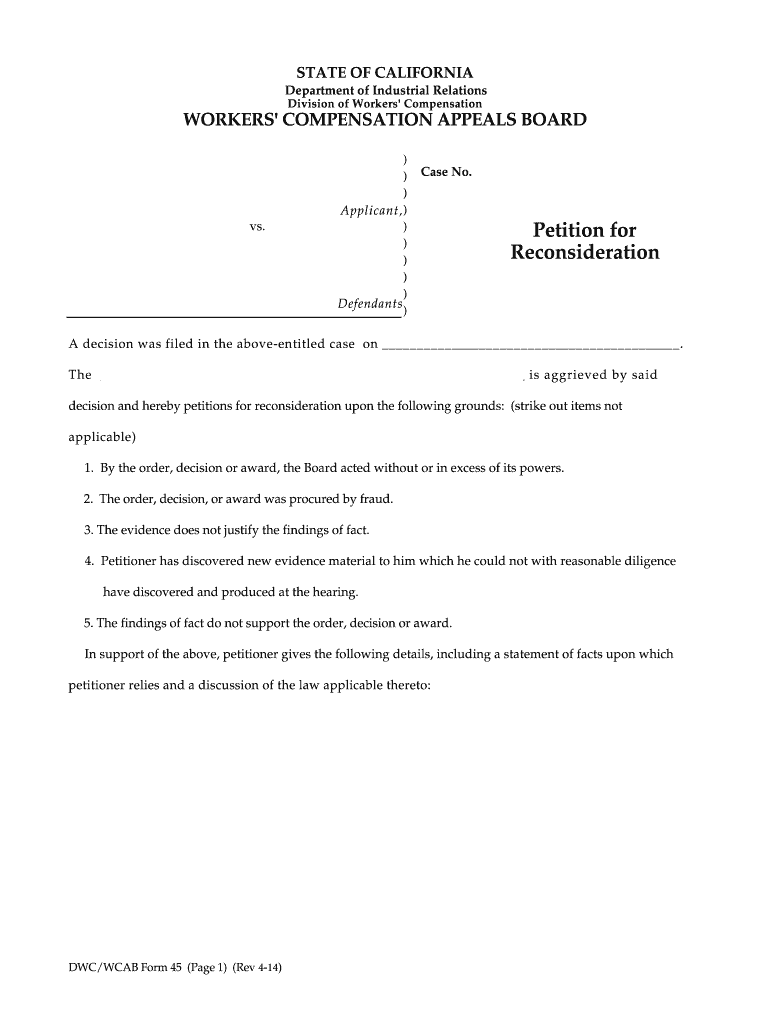
If any party is dissatisfied with the judge’s decision, they may file a Petition for Reconsideration. If you receive this paper, it shows that the case is not yet over and is being appealed to the higher-level Workers' Compensation Appeals Board in San Francisco.
A Petition for Reconsideration must be filed within 20 days of the service of the final order (plus additional days if the order was mailed). This document will outline the legal "errors" the appealing party believes the judge made. Similarly, a Petition for Removal might be received if a party wants the Appeals Board to intervene in a non-final, procedural issue. These papers signal a significant delay in the finality of the case and usually require a formal "Answer" to be filed by the opposing side to defend the original judge's decision.
Common WCAB Document Types and Their Implications
| Document Name | Primary Purpose | What It Shows | Action Required |
|---|---|---|---|
| Application for Adjudication | Opens a formal case | Jurisdiction and case number | Verify all injured body parts are listed. |
| Notice of Hearing | Schedules a court date | Date, time, and type of hearing | Mark your calendar; attendance is usually mandatory. |
| Stipulations with Request for Award | Formalizes an agreement | Agreed-upon disability ratings and benefits | Review carefully before signing; this closes parts of the case. |
| Compromise and Release (C&R) | Full settlement | A lump sum payment to close the entire claim | Understand that this usually ends your right to future medical care. |
| Findings and Award | Judicial Decision | The judge's ruling on benefits owed | Ensure the insurance carrier initiates payment within statutory deadlines. |
| Proof of Service | Verification of delivery | Who was sent the documents and when | Keep for your records to track appeal deadlines. |
Understanding Medical-Legal Reports and Ratings
While not always originating from the WCAB itself, papers filed with the board often include Permanent Disability Ratings. When a QME or AME (Agreed Medical Evaluator) issues a report, the Disability Evaluation Unit (DEU) may issue a "Summary Rating."
These papers show a percentage of disability (e.g., 25%). This percentage is translated into a dollar amount based on state-mandated tables relevant to the year of injury. If you receive a "Notice of Options Following a Permanent Disability Rating," it shows that the state has calculated your potential settlement value based on the medical evidence provided. This is a critical juncture where legal advice is often necessary to determine if the rating accurately reflects the physical and economic impact of the injury.
Frequently Asked Questions
What should I do if I receive a paper from the WCAB that I don't understand?
The first step is to check the case number and the "Proof of Service" to ensure it is actually intended for your case. Because WCAB documents are legal in nature, you should contact an Information and Assistance (I&A) officer at the local district office or consult with a workers' compensation attorney. Many documents have strict 20-day deadlines for response.
Does a "Notice of Hearing" mean I have to go to trial?
Not necessarily. Most hearings are "Mandatory Settlement Conferences" (MSC). These are designed to encourage the parties to reach an agreement before a trial is scheduled. The paper shows the intent to move the case forward, but a trial only occurs if a settlement cannot be reached and a "Declaration of Readiness to Proceed" (DOR) has been filed and granted.
Why did I receive a "Notice of Dismissal"?
A Notice of Intent to Dismiss usually shows that the court believes the case has been inactive for too long (often 180 days or more without action). If you receive this, you must act immediately to show "good cause" why the case should remain open. If you do not respond, your claim will be legally closed, and you may lose your right to benefits.
What is a "Lien" and why am I getting papers about them?
A Lien Claim is a demand for payment by a third party, such as a doctor or the Employment Development Department (EDD), who provided services or benefits while your case was pending. These papers show that the provider is seeking reimbursement from the insurance carrier. While these usually don't affect your direct benefits, they are a necessary part of closing the case file at the WCAB.
How can I verify the status of my case online in 2026?
In 2026, you can use the California Department of Industrial Relations (DIR) website to access the Public Information Search Tool. By entering your name or case number, you can see a "log" of all papers the WCAB has received and issued. This is a reliable way to verify if the papers you received in the mail are the most current updates.
Final Recommendations for Managing WCAB Correspondence
If you receive papers from the Workers' Compensation Appeals Board, the most important action is to preserve the envelope or the digital timestamp. The date of "service" (when it was sent to you) is the starting clock for almost every legal deadline in the system. Create a chronological file of all documents, as the "Summary of Evidence" may refer back to specific pages or exhibits from months or even years prior.
Given the high stakes of "Findings and Award" documents, ensure that your address is always updated with the WCAB by filing a Notice of Change of Address. Missing a single Notice of Hearing can lead to a "Take Nothing" order, effectively ending your claim without compensation. If the paperwork shows a dispute over "Maximum Medical Improvement" (MMI) or "Permanent and Stationary" (P&S) status, consider seeking a legal consultation to ensure your disability rating is being calculated fairly under the current 2026 guidelines.
Image Gallery