Understanding Pressure Groups in Modern Politics: Influence, Methods, and Impact
In modern politics, a pressure group is an organized collective of individuals who seek to influence government policy, legislation, or public opinion without seeking to exercise the formal powers of government themselves. Unlike polit...
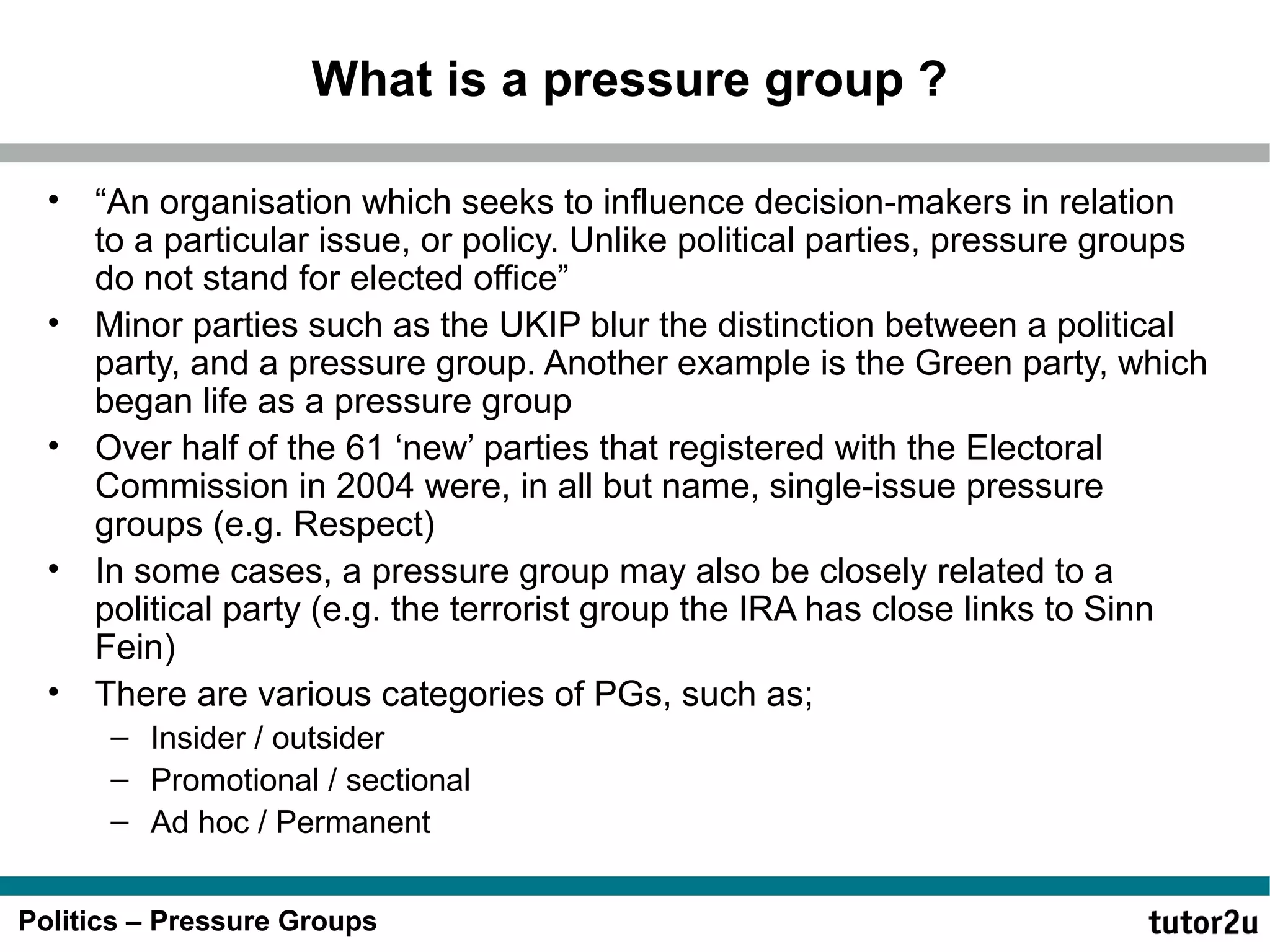
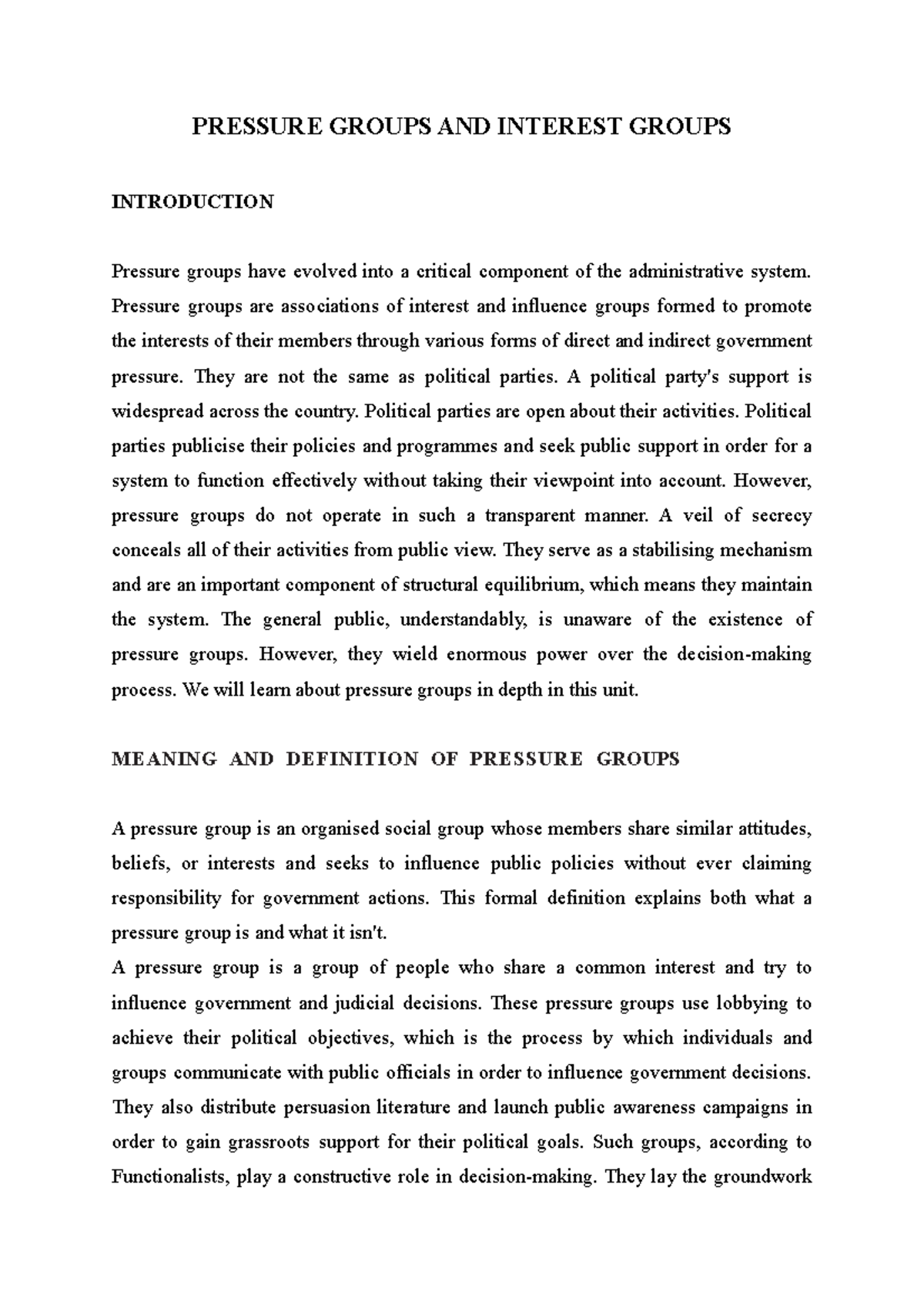
In modern politics, a pressure group is an organized collective of individuals who seek to influence government policy, legislation, or public opinion without seeking to exercise the formal powers of government themselves. Unlike political parties, these groups do not field candidates for election; instead, they focus on specific issues or the interests of a particular segment of society.
Contents
Pressure groups, often referred to as interest groups or advocacy groups, serve as a bridge between the citizenry and the state. By 2026, the landscape of political influence has shifted significantly, with digital mobilization and data-driven lobbying becoming as vital as traditional boardroom advocacy. These organizations operate at various levels of government—local, national, and international—to ensure that the voices of their members or the causes they represent are heard during the decision-making process.
Distinguishing Pressure Groups from Political Parties
Understanding the role of pressure groups requires a clear distinction between them and political parties. While both are essential components of a democratic system, their objectives and structures differ fundamentally.
Political parties seek to gain control of the government. They develop broad manifestos covering a wide range of policy areas—from defense and healthcare to taxation and education—to appeal to a majority of the electorate. Their primary goal is to win seats in a legislature and form a government.
In contrast, pressure groups are usually focused on a narrower range of issues. A trade union may focus primarily on labor rights and wages, while an environmental group may focus specifically on carbon emission targets. Pressure groups do not want to "be" the government; they want to "persuade" the government. Because they do not have to worry about the electoral consequences of a comprehensive platform, they can be more radical, specific, or niche in their demands.
Classification: Types of Pressure Groups
Not all pressure groups are structured or motivated in the same way. Political scientists typically classify them into two primary categories: Sectional Groups and Cause Groups.
Sectional (Interest) Groups
Sectional groups represent a specific section of society. Their membership is usually restricted to people in a particular occupation or social group. Examples include the British Medical Association (BMA), the American Bar Association (ABA), or various trade unions.
- Motivation: Their primary goal is to protect and advance the interests of their members.
- Longevity: These groups tend to be permanent and well-established because the interests they represent (such as workers' rights or professional standards) are ongoing.
- Influence: They often possess significant expertise and economic leverage, making them "insiders" in the political process.
Cause (Promotional) Groups
Cause groups are defined by a shared set of values or a specific objective rather than a social or professional identity. Membership is generally open to anyone who supports the cause. Examples include Greenpeace, Amnesty International, or the National Rifle Association (NRA).
- Motivation: They seek to achieve a specific goal that they believe will benefit society as a whole, or they focus on a moral or ethical issue.
- Methodology: They often rely on public awareness campaigns and grassroots mobilization to create a "moral mandate" for change.
- Scope: These can be single-issue groups (focused on a specific piece of legislation) or ideological groups (focused on a broad philosophy like environmentalism).
The Strategic Spectrum: Insider vs. Outsider Status
The effectiveness of a pressure group often depends on its relationship with the government. This relationship is typically categorized as either "insider" or "outsider" status.
Insider Groups
Insider groups are regularly consulted by the government. Because they are seen as responsible, expert, and law-abiding, they are often invited to sit on advisory committees or provide evidence to legislative inquiries.
- Advantages: They have direct access to ministers and civil servants, allowing them to influence legislation at the drafting stage before it ever reaches a public vote.
- Constraints: To maintain this access, insider groups must often avoid radical tactics or public criticism of the government. They operate through quiet diplomacy rather than loud protest.
Outsider Groups
Outsider groups lack direct access to the corridors of power. This may be because their goals are too radical for the current government, or because they prefer to remain independent to maintain their ideological purity.
- Tactics: Since they cannot influence policy from the inside, they use high-profile "outsider" tactics like protests, strikes, social media blitzes, and civil disobedience to force their issues onto the political agenda.
- Modern Shift: By 2026, the line between insider and outsider has blurred. Many groups use "dual strategies," maintaining professional lobbying arms while simultaneously funding grassroots digital campaigns to apply external pressure.
Methods of Influence in 2026
Pressure groups utilize a variety of methods to achieve their aims. The choice of method depends on the group's resources, status, and the specific political climate.
1. Direct Lobbying
Lobbying remains the most traditional and often most effective method for insider groups. This involves direct communication with legislators and policy-makers. In 2026, professional lobbying firms are frequently hired to navigate complex regulatory environments. Lobbyists provide research, draft potential amendments to bills, and arrange meetings between group leaders and government officials.
2. Litigation and Judicial Review
When the legislative branch is unresponsive, pressure groups often turn to the judiciary. By funding court cases, groups can challenge the legality of government actions. For instance, environmental groups frequently use judicial review to challenge planning permissions for projects that violate carbon reduction targets. This "legal activism" is a powerful tool for groups with significant financial resources.
3. Public Campaigns and Grassroots Mobilization
Outsider groups rely heavily on "people power." This includes organizing marches, petitions, and letter-writing campaigns. In the current year, digital mobilization has evolved into sophisticated data-driven operations. Groups use micro-targeting to find sympathetic citizens and encourage them to flood their local representative's inbox or social media feed with specific demands.
4. Direct Action
Direct action involves physical intervention to stop a perceived wrong or to gain media attention. This can range from peaceful sit-ins to more disruptive actions like blocking highways or "hacktivism." While controversial, direct action is often the only way for marginalized groups with no insider access to break into the news cycle and force a public conversation.
Pressure Groups vs. Political Parties: A Comparison
The following table summarizes the key functional and structural differences between these two types of political organizations.
| Feature | Pressure Groups | Political Parties |
|---|---|---|
| Primary Goal | To influence policy and legislation. | To win elections and exercise power. |
| Policy Focus | Narrow/Single-issue (e.g., climate, labor). | Broad/Multi-issue (comprehensive manifesto). |
| Accountability | Accountable to their members/donors. | Accountable to the entire electorate. |
| Method of Power | External influence (lobbying, protest). | Internal control (holding office). |
| Membership | Open or restricted by profession/interest. | Generally open to all voters. |
| Electoral Role | Support specific candidates or ignore elections. | Field candidates for almost all offices. |
The Role of Pressure Groups in a Healthy Democracy
The impact of pressure groups on democracy is a subject of intense debate among political theorists. There are two primary perspectives: Pluralism and Elitism.
The Pluralist View
Pluralists argue that pressure groups are essential for a healthy democracy. They believe that power should be dispersed among many competing groups rather than concentrated in a single elite.
- Representation: Pressure groups allow for the representation of minority interests that might be ignored by major political parties.
- Participation: They provide a way for citizens to stay politically active between elections, fostering a more engaged citizenry.
- Education: Groups often provide specialized information to the government that civil servants might lack, leading to better-informed policy decisions.
The Elitist View
Critics, or elitists, argue that pressure groups actually undermine democracy. They contend that not all groups are equal.
- Disproportionate Influence: Wealthy sectional groups, such as corporate interests or billionaire-funded think tanks, have significantly more influence than groups representing the poor or marginalized.
- "Dark Money": There are concerns about transparency, specifically regarding who funds these groups and what they get in return.
- Governance Gridlock: Some argue that the sheer number of pressure groups can lead to "hyper-pluralism," where the government is pulled in so many directions that it becomes unable to act decisively on major issues.
Modern Challenges: Digital Advocacy and "Astroturfing"
In 2026, the rise of digital advocacy has introduced new challenges. One of the most significant is astroturfing—the practice of creating a fake "grassroots" movement that is actually funded and directed by a large corporation or political entity. These "front groups" use bot networks and paid influencers to create the illusion of widespread public support for a policy that actually benefits a narrow corporate interest.
Furthermore, the "echo chamber" effect of social media allows pressure groups to radicalize their base, making compromise—the heart of democratic politics—increasingly difficult. Despite these challenges, the ability for individuals to organize quickly and cheaply online has also empowered genuine grassroots movements to challenge established interests more effectively than ever before.
FAQs
Are pressure groups legal?
Yes, the right to form and join pressure groups is a fundamental part of the freedom of association and freedom of speech in most democratic nations. However, their activities are often regulated by lobbying laws that require transparency regarding their funding and meetings with officials.
Can a pressure group become a political party?
Yes. Historically, some of the most influential political parties began as pressure groups. For example, the UK Labour Party grew out of the trade union movement and the desire for direct parliamentary representation for workers. Similarly, many "Green" parties globally evolved from environmental pressure groups.
How do pressure groups get their funding?
Funding sources vary widely. Cause groups often rely on membership fees, public donations, and grants from charitable foundations. Sectional groups, like trade unions or business federations, are funded by member dues. Some groups are also supported by wealthy individual donors or corporations, which often leads to debates about the transparency of political influence.
What is the difference between a pressure group and a think tank?
While both seek to influence policy, a think tank is primarily a research organization that produces reports and analysis to suggest new policy directions. A pressure group is more focused on advocacy and mobilization to ensure those policies (or their own) are actually adopted.
Can I join a pressure group?
Most cause groups (like those focused on human rights or animal welfare) are open to anyone who pays a membership fee or signs up for their mailing list. Sectional groups (like professional associations) usually require you to be a member of that specific profession or industry.
Next Actions for Citizens
If you are interested in the impact of pressure groups or wish to get involved, consider the following steps:
- Research Interests: Identify the issues you care about most—whether environmental protection, healthcare access, or economic reform—and search for groups active in that space.
- Verify Transparency: Before donating or joining, check the group’s transparency ratings on platforms like Transparency International or national lobbying registers to understand who funds them.
- Monitor Influence: Follow legislative trackers to see which groups are providing evidence to your local or national government on upcoming bills.
- Engage Responsibly: Utilize the digital tools provided by these groups to contact your representatives, but ensure you are contributing to a genuine dialogue rather than simply amplifying automated messages.
Image Gallery