AI in SaaS: Definition, Core Impact, and the 2026 Landscape
AI in SaaS refers to the integration of artificial intelligence—specifically machine learning, natural language processing, and generative models—directly into cloud-delivered software applications. This transformation enables platform...
AI in SaaS refers to the integration of artificial intelligence—specifically machine learning, natural language processing, and generative models—directly into cloud-delivered software applications. This transformation enables platforms to move beyond passive data storage to active problem-solving, providing automated insights, predictive capabilities, and personalized user experiences that redefine operational efficiency for global enterprises.
Contents
Defining AI in SaaS in the Current Era
As of 2026, the definition of Software as a Service (SaaS) has fundamentally shifted. While the delivery model remains cloud-based subscription access, the "software" component is no longer a static collection of code and databases. AI in SaaS represents the "intelligence layer" that sits between the user interface and the backend data, allowing software to learn, adapt, and perform tasks autonomously.
To understand this definition, one must look at the three primary technological pillars that support modern AI-SaaS applications:
- Machine Learning (ML) & Predictive Analytics: These algorithms analyze historical data to forecast future trends. In a CRM (Customer Relationship Management) context, this means identifying which leads are most likely to convert before a salesperson even opens the file.
- Natural Language Processing (NLP) and Generative AI: These technologies allow users to interact with software using human language. Instead of navigating complex menus, users in 2026 use "Agentic Interfaces" to query data or generate reports through conversation.
- Autonomous Agents: This is the most recent evolution. Unlike standard automation (which follows a strict if-then logic), autonomous agents within SaaS can plan, execute, and troubleshoot multi-step workflows with minimal human intervention.
The integration of AI into SaaS is categorized into two types: AI-Enabled SaaS, where AI features are added to existing legacy software, and AI-Native SaaS, where the entire architecture is built around a central model or vector database from the ground up.
The Transformation of Product Architecture
The impact of AI on SaaS architecture is profound. Historically, SaaS was built on a multi-tenant database structure designed for data entry and retrieval. In 2026, the architecture has evolved to include Vector Databases and Retrieval-Augmented Generation (RAG) pipelines.
From Static Databases to Knowledge Graphs
Traditional SaaS relied on structured SQL databases. Today, AI-driven SaaS utilizes knowledge graphs that understand the relationships between different data points. For instance, in an Enterprise Resource Planning (ERP) system, the AI doesn't just see "Inventory" and "Sales" as two different tables; it understands how a geopolitical event might delay a specific supplier, automatically suggesting alternative logistics routes.
The Role of RAG (Retrieval-Augmented Generation)
RAG has become the standard for maintaining data privacy while utilizing the power of Large Language Models (LLMs). By using RAG, a SaaS provider can ensure that the AI only generates answers based on the client’s specific, encrypted data rather than general training sets. This has resolved the early "hallucination" problems that plagued AI software in the early 2020s, making AI-SaaS viable for high-stakes industries like legal and medical services.
Primary Impacts on Business Operations
The impact of AI in SaaS is most visible in how it alters the relationship between the user and the tool. We have moved from "Software as a Tool" to "Software as a Teammate."
Hyper-Personalization and User Experience
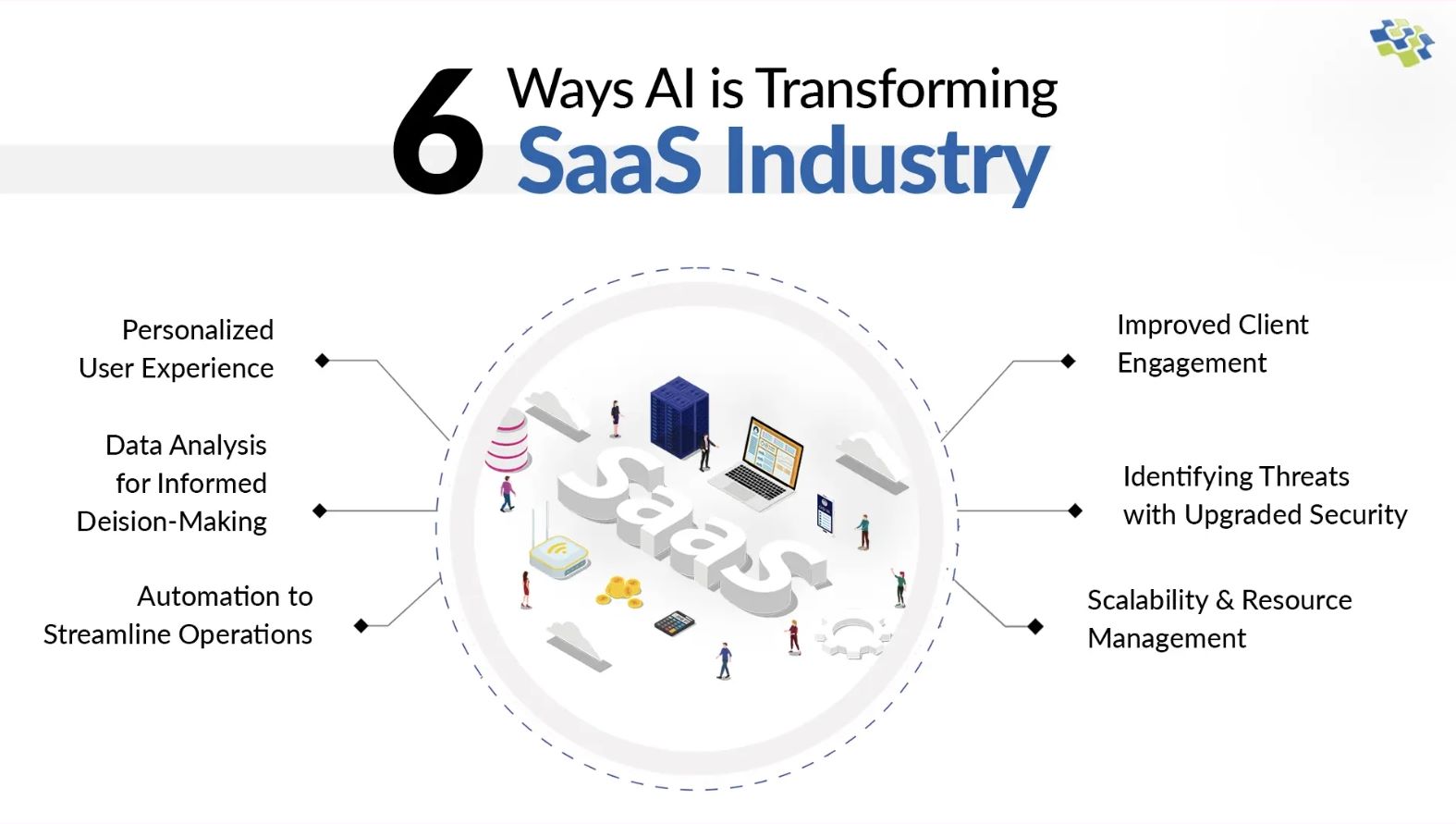
In the past, software "onboarding" was a tedious process of tutorials. AI-SaaS platforms now personalize the interface based on the user's specific role, past behavior, and current goals. If a marketing manager logs into a project management tool, the AI prioritizes creative assets and campaign deadlines; if a developer logs in, the same tool highlights sprint progress and bug reports. This reduces "software fatigue" and increases daily active usage.
Operational Efficiency through Agentic Workflows
The most significant impact in 2026 is the rise of Agentic Workflows. Previously, automation (like Zapier or legacy RPA) required a human to set up every step. AI-SaaS agents can now handle "fuzzy" logic. For example, an AI-SaaS accounting platform can detect an anomalous invoice, search the company’s email history to find the relevant contract, verify the discrepancy, and draft a polite clarification email to the vendor—all before the accountant starts their workday.
Shift in Pricing Models
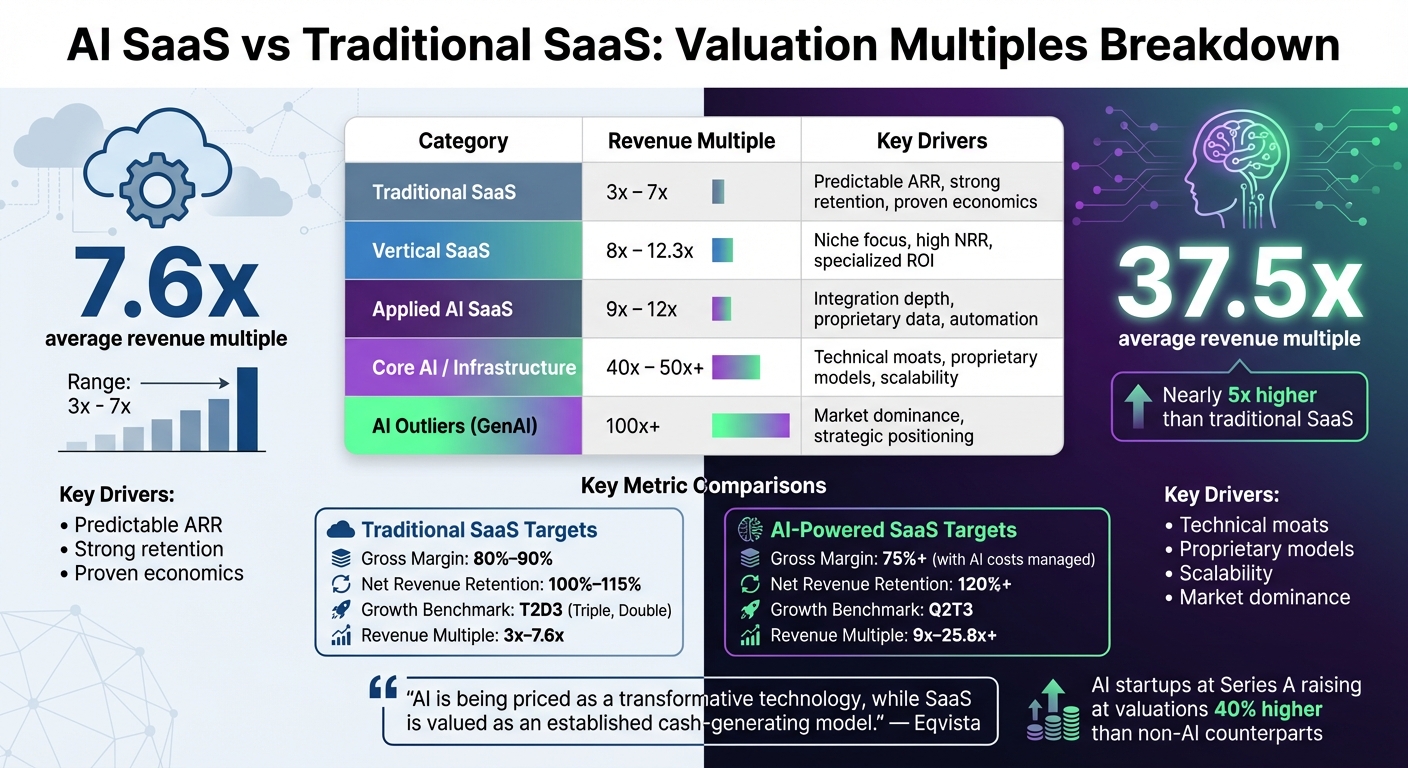
The traditional "per-seat" pricing model is being challenged. Because AI allows one person to do the work of five, SaaS companies are shifting toward Outcome-Based Pricing or Usage-Based Pricing. Customers now pay for the value created (e.g., "per successful lead generated" or "per automated resolution") rather than just the number of people with login credentials.
Comparing Traditional SaaS vs. AI-Driven SaaS (2026)
The following table highlights the core differences between the legacy cloud model and the modern intelligent SaaS ecosystem.
| Feature | Traditional SaaS (Legacy) | AI-Driven SaaS (2026) |
|---|---|---|
| Primary Interaction | Clicks, Menus, and Forms | Natural Language & Voice Agents |
| Data Processing | Manual Entry & Basic Reporting | Real-time Analysis & Predictive Insights |
| Automation Type | Linear (If-This-Then-That) | Dynamic (Autonomous Task Planning) |
| Customization | Hard-coded Settings/Templates | Self-evolving UI based on User Intent |
| Search Function | Keyword-based | Semantic & Contextual Search |
| Security Approach | Perimeter-based / MFA | Behavioral Biometrics & AI Threat Detection |
| Core Value | Data Storage & Accessibility | Decision Support & Action Execution |
Vertical vs. Horizontal AI Impact
The impact of AI varies significantly depending on whether the SaaS is horizontal (broadly applicable) or vertical (industry-specific).
Horizontal SaaS: Productivity and Collaboration
In tools like Slack, Microsoft 365, or Google Workspace, AI has become a background orchestrator. It summarizes meetings, drafts emails in the user’s specific "voice," and manages calendars across multiple time zones. The primary impact here is the reclamation of "shallow work" time, allowing employees to focus on deep, strategic tasks.
Vertical SaaS: Specialized Industry Intelligence
Vertical SaaS providers (serving industries like FinTech, HealthTech, and LegalTech) have seen the most disruptive changes.
- LegalTech: AI-SaaS platforms now perform first-pass contract reviews with 98% accuracy compared to senior partners, identifying hidden liabilities that manual reviews might miss.
- HealthTech: SaaS platforms for clinics now use computer vision to assist in diagnostic imaging and NLP to transcribe patient-doctor interactions directly into structured medical records, drastically reducing clinician burnout.
- FinTech: AI-SaaS treasury management systems now perform real-time fraud detection by analyzing trillions of patterns that are invisible to human auditors.
Security, Ethics, and Governance Challenges
Despite the benefits, the integration of AI into SaaS introduces new risks that organizations must manage in 2026.
Data Sovereignty and "Shadow AI"
As SaaS platforms integrate more powerful AI, the risk of data leakage increases. Organizations must ensure that their SaaS providers comply with regional regulations like the EU AI Act or updated CCPA guidelines. A major concern in 2026 is "Shadow AI"—employees using unauthorized AI features within SaaS tools that haven't been vetted by IT, potentially exposing proprietary trade secrets to public training models.
The Problem of "Black Box" Logic
As SaaS agents become more autonomous, the "explainability" of their decisions becomes critical. If an AI-SaaS HR platform rejects a candidate, the company must be able to audit why that decision was made to ensure no algorithmic bias was involved. Most premium SaaS providers now include "Explainability Dashboards" as a standard feature to mitigate legal risks.
Energy Consumption and Sustainability
The computational power required to run AI-SaaS is significantly higher than traditional cloud software. In 2026, many enterprise customers require Green AI Certifications from their SaaS vendors, forcing providers to optimize their models (using techniques like quantization) and run their data centers on renewable energy.
Implementation Strategies for 2026
For businesses looking to adopt or upgrade their AI-SaaS stack, the following steps are recommended:
- Audit the AI Architecture: Distinguish between "wrapper" apps (which simply plug into an LLM) and integrated platforms that use RAG for data accuracy.
- Evaluate Data Privacy: Ensure the SaaS provider offers "Zero-Retention" or "Private Instance" options where your data is never used to train their global models.
- Monitor "Agentic Overreach": Start with "Human-in-the-Loop" configurations for AI agents, where the AI drafts actions but requires a human "OK" before execution.
- Recalculate ROI: Move beyond measuring "time saved" and start measuring "output quality" and "revenue per employee," as AI fundamentally shifts these metrics.
Frequently Asked Questions
Does AI in SaaS mean I need to hire data scientists?
No. One of the primary benefits of AI-SaaS is that the provider handles the complex data science, model training, and infrastructure. Your team only needs to focus on "Prompt Engineering" and managing the outputs of the software. However, having a "Technical Product Manager" who understands AI limitations is highly recommended.
How does AI-SaaS handle data privacy differently than regular SaaS?
In 2026, advanced AI-SaaS uses Federated Learning or Differential Privacy. This allows the software to learn from patterns across all its customers to improve the product without ever actually "seeing" or moving your specific, sensitive data into a centralized training set.
Is AI-SaaS more expensive than traditional software?
Initially, yes. Most providers have introduced an "AI Premium" or a usage-based credit system. However, the cost is typically offset by the reduction in labor hours and the elimination of third-party tools that the integrated AI now replaces.
Can AI-SaaS replace human employees?
AI-SaaS is designed to augment human capability rather than replace it. While it automates repetitive tasks (data entry, basic scheduling, first-level support), it increases the demand for human skills like strategic decision-making, ethical oversight, and complex emotional intelligence.
What is "Model Collapse" in the context of SaaS?
Model collapse occurs when an AI starts learning from data generated by other AIs rather than human-generated data. SaaS providers in 2026 mitigate this by strictly curating their training sets and using "ground truth" verification from human experts to ensure the software's logic doesn't degrade over time.
Practical Recommendation
When selecting an AI-SaaS partner in 2026, prioritize interoperability and data transparency. The most valuable software will not be a closed ecosystem, but one that can share its "intelligence" with your other business tools via secure APIs. Ensure your vendor provides a clear roadmap for Agentic Autonomy and has a robust framework for ethical AI usage that aligns with your corporate governance standards.
Image Gallery