The Evolution of TWA Flight Attendant Standards: From Mid-Century Glamour to Modern Safety Excellence
The legacy of TWA flight attendants represents the gold standard of aviation history, transitioning from the ultra-glamorous "hostess" era of the 1950s and 60s to today’s rigorous, safety-first professional requirements. While the aest...
The legacy of TWA flight attendants represents the gold standard of aviation history, transitioning from the ultra-glamorous "hostess" era of the 1950s and 60s to today’s rigorous, safety-first professional requirements. While the aesthetic standards have evolved into inclusive, functional guidelines, the TWA commitment to service remains the foundational blueprint for modern cabin crew excellence.
Contents
The Golden Age of TWA: Defining the Legacy
Trans World Airlines (TWA), under the visionary—and often demanding—leadership of Howard Hughes, did more than just fly passengers; it sold an experience of mid-century sophistication. During the "Golden Age" of flight, the TWA flight attendant (then called a hostess) was the primary brand ambassador. This era established a legacy of impeccable service that continues to influence the hospitality aspect of the aviation industry in 2026.
The TWA legacy was built on the concept that the cabin crew were the "face of the sky." Unlike modern times, where the role is primarily defined by safety and security, the early TWA standards prioritized social grace, multilingualism, and a specific aesthetic. However, it is a common misconception that these women were merely "waitresses in the sky." Even in the 1950s, TWA’s training was grueling, emphasizing the technical aspects of the Lockheed Constellation and later the Boeing 707, ensuring that while the service was seamless, the crew was prepared for the nascent challenges of pressurized high-altitude flight.
Historical Requirements: The "Golden Wings" Era (1940s–1970s)
To wear the TWA "Golden Wings," candidates had to meet a set of rigid, often discriminatory criteria that would be illegal under modern labor laws. These standards were designed to maintain a very specific corporate image that catered to the predominantly male business travelers of the era.
Physical and Social Restrictions
During the peak of TWA’s influence, the requirements were meticulously documented in the "Hostess Manual." Candidates generally had to be:
- Unmarried: Marriage was often a ground for immediate termination, a policy that remained largely unchallenged until the late 1960s.
- Age-Restricted: Most hostesses were hired between the ages of 21 and 27, with a mandatory retirement age often set as low as 32 or 35.
- Physically Specific: Strict height-to-weight ratios were enforced. TWA hostesses were weighed regularly, and "weight checks" were a standard, if stressful, part of the job. Height requirements (usually 5'2" to 5'9") were practical, ensuring the crew could reach overhead bins while remaining agile in narrow aisles.
The Uniform as a Symbol of Authority
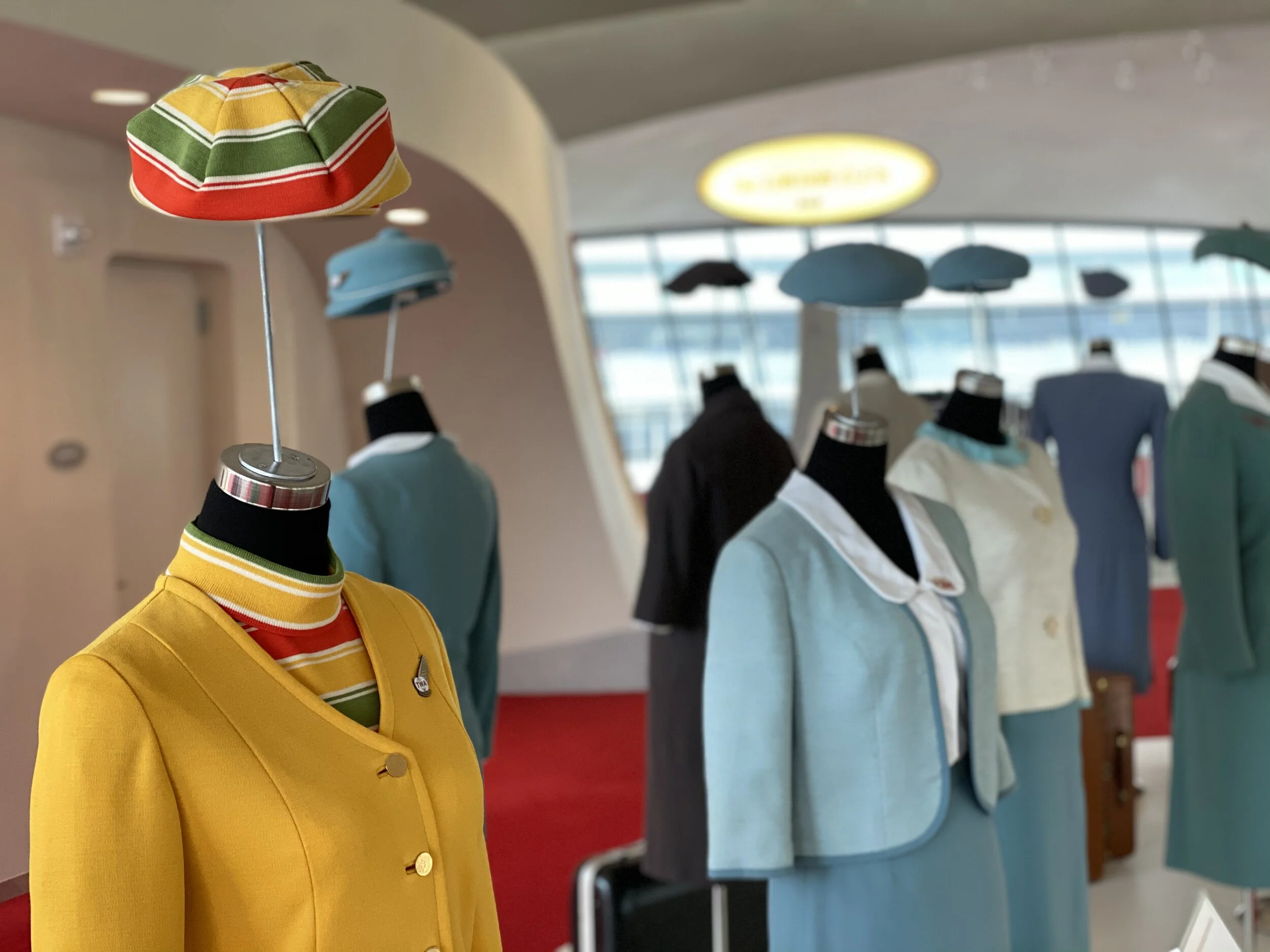
TWA revolutionized the flight attendant uniform by partnering with world-renowned fashion designers. From the military-inspired suits of the 1940s to the chic designs of Pierre Balmain, Dalton, and Ralph Lauren, the uniform was never just clothing—it was a couture statement. In 2026, many of these original pieces are preserved at the TWA Museum in Kansas City, serving as a reminder of an era where flight was a formal event. These uniforms required perfect grooming, including specific hair lengths and mandated lipstick shades, creating a unified, "high-fashion" front.
Training Excellence: The Legacy of Breech Academy
One of the most significant contributions TWA made to modern aviation standards was the establishment of the Jack Frye International Training Center, later known as the Breech Training Academy in Overland Park, Kansas. Opened in 1969, this multi-million dollar facility was the first of its kind, featuring mock-up cabins, grooming rooms, and emergency evacuation simulators.
The Breech Academy moved the profession away from informal "on-the-job" learning toward a structured, collegiate environment. Trainees spent weeks in intensive courses covering:
- Emergency Procedures: TWA was a pioneer in "ditching" (water landing) drills and fire suppression techniques.
- In-flight Service: This included the mastery of multi-course meal services, wine pairings, and "French Service" (serving food from a silver platter to the guest's plate).
- Cultural Sensitivity: As a premier international carrier, TWA required its crew to understand the customs of the destinations they served, from Rome to Bombay.
The rigorous nature of Breech Academy ensured that TWA crews were among the most highly respected in the world. Modern flight attendant training programs at Delta, United, and American Airlines still utilize the foundational pedagogical structures first perfected by TWA at Breech.
Transitioning to Modern Standards: The Shift to Safety
As the aviation industry moved through deregulation in the late 1970s and 80s, the focus of the flight attendant role underwent a fundamental shift. Legal challenges, spearheaded by organizations like Stewardesses for Women's Rights, successfully overturned discriminatory age, marriage, and gender restrictions.
From Service to Safety Professional
In 2026, the modern flight attendant is recognized primarily as a Safety Professional. While TWA’s legacy of hospitality remains a goal, the "standards" are now dictated by federal law rather than corporate vanity. The Federal Aviation Administration (FAA) requires all flight attendants to undergo rigorous certification processes that emphasize:
- Medical Proficiency: Training in the use of Automated External Defibrillators (AEDs), CPR, and managing in-flight medical emergencies like seizures or births.
- Security and Counter-Terrorism: Post-9/11 protocols that TWA’s early crews never had to envision, including cockpit security and passenger de-escalation.
- Technical Knowledge: Detailed understanding of aircraft systems, including smoke detection, oxygen systems, and emergency exits for multiple aircraft types (Boeing, Airbus, Embraer).
Comparative Analysis: Legacy vs. 2026 Standards
The following table highlights the stark differences between the TWA "Hostess" era and the professional standards required for cabin crew in 2026.
| Feature | TWA Legacy Standard (1950s-1970s) | Modern Professional Standard (2026) |
|---|---|---|
| Primary Title | Hostess / Stewardess | Flight Attendant |
| Marital Status | Must be single; terminated upon marriage | No restrictions; protected by labor laws |
| Age Limits | Usually 21–32; mandatory early retirement | 21+ with no maximum age; career longevity |
| Physical Req. | Strict weight/appearance "beauty" standards | Ability to perform safety tasks (lifting, reaching) |
| Training Focus | High-end hospitality and social etiquette | Safety, security, and medical emergency response |
| Regulatory Body | Internal TWA Corporate Standards | FAA (USA) / EASA (EU) / ICAO (Global) |
| Uniform Design | Fashion-forward, often restrictive couture | Functional, professional, and gender-inclusive |
| Gender | Exclusively or predominantly female | Inclusive of all genders |
Preserving the Heritage: The TWA Museum and Alumni Networks
The TWA legacy is not just a matter of history; it is a living community. The Silver Wings, an organization of former TWA flight attendants, remains active in 2026, preserving the stories and standards of the era. Their work ensures that the high bar for interpersonal communication and service recovery—skills that are sometimes lost in the high-volume, "low-cost carrier" era—remains a part of the industry conversation.
Furthermore, the TWA Hotel at JFK Airport has turned the legacy into a tangible experience. By restoring the iconic Eero Saarinen terminal, the industry has a permanent monument to the standards TWA set. For modern crew members, visiting these sites offers a perspective on how the profession evolved from a "short-term adventure" into a lifelong, highly skilled career.
Practical Guidance: What Modern Recruits Can Learn from TWA
For those entering the aviation industry in 2026, "TWA standards" should not be viewed as an outdated relic, but as a masterclass in the "Soft Skills" of aviation. While the FAA handles the "hard skills" of safety, the TWA legacy teaches:
- Service Recovery: How to handle a difficult situation with grace and a solution-oriented mindset.
- Professional Presence: The importance of representing the airline with dignity, regardless of the challenges of modern travel (delays, crowding).
- Cultural Competency: Recognizing that an international flight is a bridge between cultures, requiring empathy and adaptability.
Aspiring flight attendants should focus on achieving FAA certification while voluntarily adopting the TWA ethos of "customer-first" service. This combination creates a "Tier 1" professional who is as capable of saving a life as they are of providing a world-class travel experience.
FAQ: Understanding TWA Legacy and Modern Standards
Why did TWA flight attendants have to retire so young?
In the mid-20th century, airlines marketed the "hostess" role as a glamorous, temporary position for young, single women. TWA and other carriers believed that a youthful appearance was a core part of the "product" they were selling. It wasn't until the 1970s, through intense lobbying by labor unions and the Association of Flight Attendants (AFA), that these discriminatory age limits were ruled unconstitutional and removed.
Did TWA flight attendants actually receive safety training?
Yes, and it was often ahead of its time. While the public image focused on glamour, TWA's Breech Academy was a leader in safety education. TWA was one of the first airlines to use sophisticated flight simulators and cabin mock-ups to train crew members on how to evacuate a Boeing 707 in under 90 seconds in total darkness.
How do modern height and weight requirements compare to TWA's?
TWA had "beauty-based" weight limits where hostesses could be grounded or fired for gaining a few pounds. In 2026, "weight" is rarely a metric. Instead, airlines use "functional reach" and "fit" standards. A flight attendant must be able to reach emergency equipment in overhead bins and fit through emergency exits or jumpseats while wearing a safety harness. If you can perform the safety duties, your weight is generally irrelevant to hiring.
Can I still see original TWA uniforms today?
Yes. The most extensive collections are housed at the TWA Museum in Kansas City and the Smithsonian National Air and Space Museum in Washington, D.C. These exhibits showcase how the standards of professional dress evolved from 1930s nursing-style uniforms to 1960s paper dresses and eventually to the sophisticated Ralph Lauren suits of the 1980s.
What is the biggest difference in training between then and now?
The biggest difference is the shift toward Crew Resource Management (CRM). In the TWA legacy era, there was a strict hierarchy where the cockpit rarely consulted the cabin crew. Modern standards emphasize that the flight attendants are the "eyes and ears" of the pilots. Training now focuses heavily on communication between the front and back of the aircraft to prevent accidents before they happen.
Recommendation for Aspiring Crew Members
If you are pursuing a career in aviation in 2026, prioritize a dual-track preparation. First, ensure you meet the modern technical requirements by studying FAA Part 121 regulations and obtaining your Certificate of Demonstrated Proficiency. Second, study the TWA legacy of hospitality. The modern industry is highly competitive, and those who can combine 21st-century safety expertise with the "Golden Age" commitment to passenger care will find themselves at the top of the recruitment list for premier global carriers.
Image Gallery