How to Understand Your Nationwide Auto Insurance Policy
Understanding your Nationwide auto insurance policy requires reviewing the Declarations Page for customized details like limits and deductibles, followed by the main policy form, which details coverages, exclusions, definitions, and le...
Understanding your Nationwide auto insurance policy requires reviewing the Declarations Page for customized details like limits and deductibles, followed by the main policy form, which details coverages, exclusions, definitions, and legal conditions. By breaking down each section sequentially, you can verify your coverage limits, identify exclusions, and ensure your policy matches your financial protection needs.
Contents
Reading an auto insurance policy contract can feel like deciphering legal jargon. However, insurance policies are structured logically. Nationwide auto insurance contracts follow a standardized framework designed to outline explicit contractual obligations, coverage limits, policyholder duties, and financial protections.
Whether you are reviewing a newly issued policy, evaluating your annual renewal, or preparing to file a claim, knowing how to locate and interpret each section of your contract prevents costly coverage gaps and unexpected claim denials.
Disclaimer: Auto insurance policies are legal contracts governed by state laws. Terms, coverage availability, and policy forms vary by jurisdiction. For specific contractual interpretation or updates regarding your active account, consult a licensed Nationwide insurance agent or your state's department of insurance.
The Four Core Parts of a Nationwide Auto Policy Packet
When Nationwide issues or renews your car insurance, you receive a multi-page document packet. Rather than a single monolithic document, your insurance contract consists of four primary components that must be read together:
NATIONWIDE POLICY PACKET
Declarations Page: Custom limits, vehicles, drivers & rates
Policy Definitions: Legal meanings of terms like "you/car"
Standard Form: Coverage Parts A through F
Endorsements: Add-ons, state riders & custom rules
The Declarations Page ("Dec Page"): The customized summary sheet outlining who, what, when, and how much is covered.
Policy Definitions: A specialized glossary defining precise legal meanings for words used throughout the policy (such as "you," "your covered auto," or "occupying").
The Standard Policy Form: The base contract detailing coverage parts, standard inclusions, policyholder conditions, and broad exclusions.
Endorsements and Amendments: Special riders attached to the base policy that add, remove, or modify coverage terms (including state-specific requirements or optional programs like Nationwide Vanishing Deductible®).
Section 1: Decoding the Declarations Page
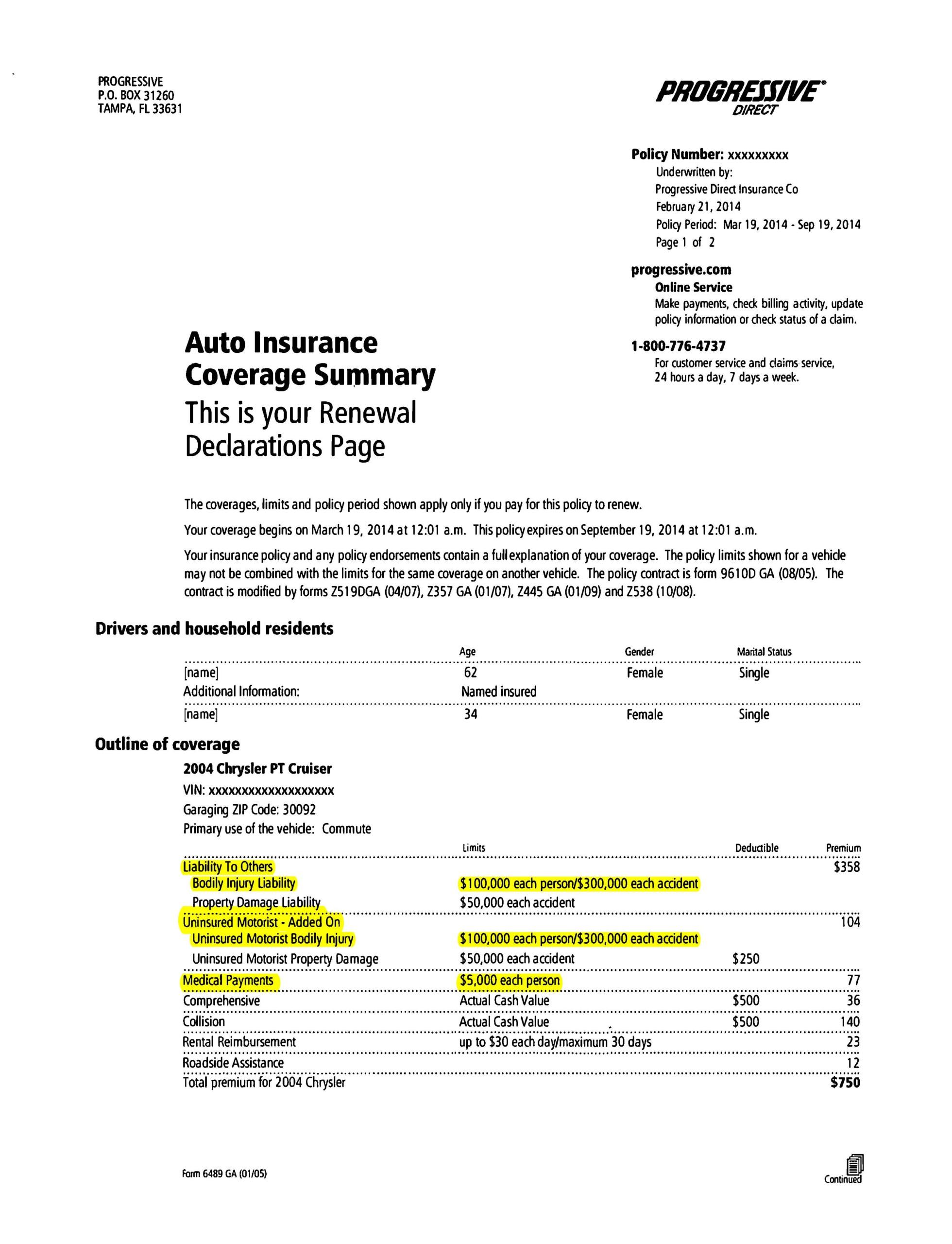
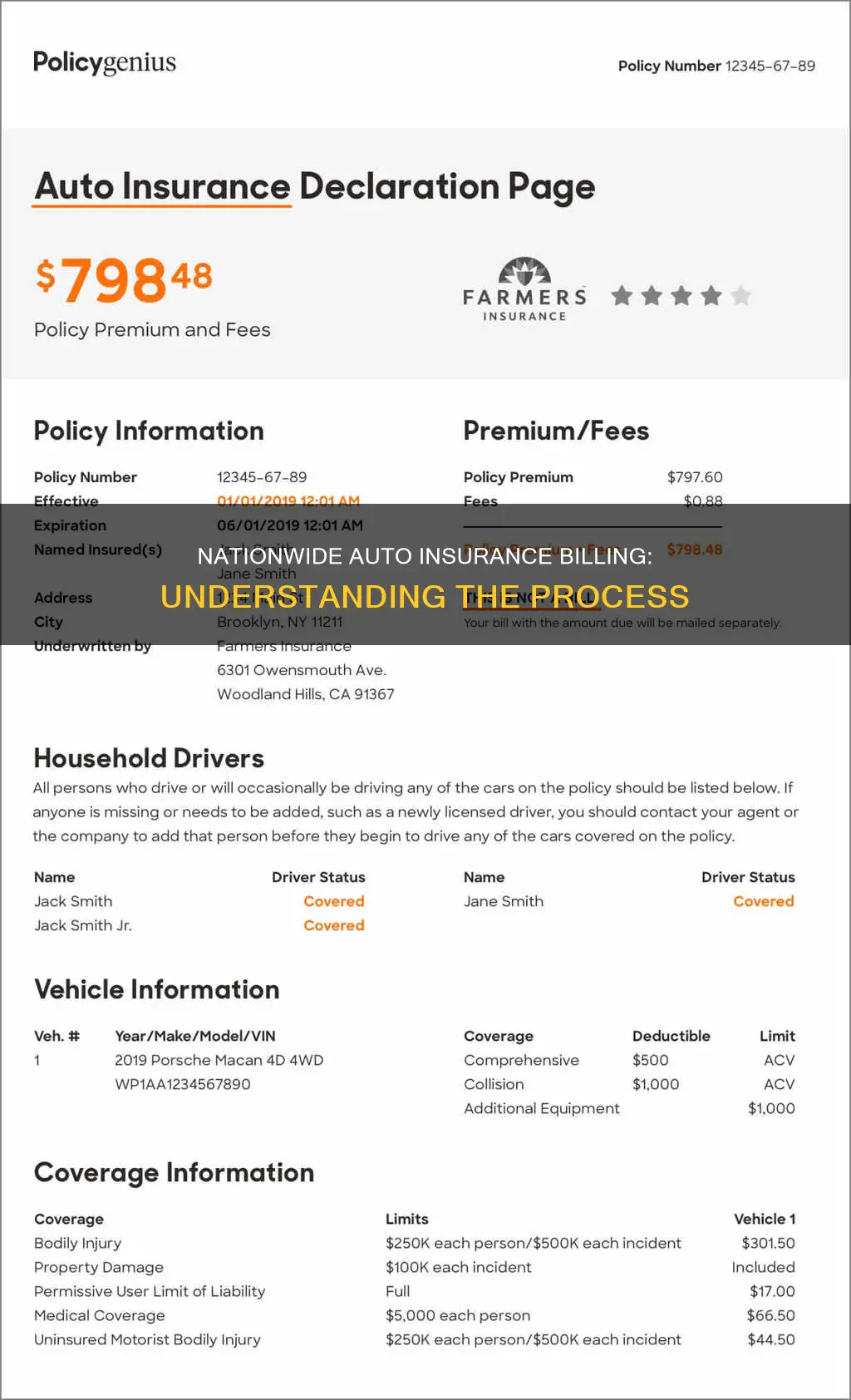
The Declarations Page is the most critical document to review first. It personalizes the master insurance policy form to your specific vehicle and household. If there is a conflict between general policy language and the Declarations Page, the specific limits listed on your Declarations Page govern your coverage cap.
| NATIONWIDE DECLARATIONS PAGE | ||
|---|---|---|
| Policyholder: Jane Doe | Policy Term: 01/01/2026-07/01/2026 | |
| Covered Vehicle: 2024 Sedan (VIN: 1FA6P8CF0R5100000) | ||
| COVERAGES | LIMITS | DEDUCTIBLE |
| Part A: Bodily Injury Liability | $100,000 / $300,000 | N/A |
| Part A: Property Damage Liability | $100,000 | N/A |
| Part B: Medical Payments | $5,000 | N/A |
| Part D: Collision Coverage | Actual Cash Value | $500 |
| Part D: Comprehensive Coverage | Actual Cash Value | $250 |
1. Named Insureds and Listed Drivers
The top section lists the primary named insured (the policy owner) and additional listed drivers. Every regular operator of your vehicle in your household must be accurately listed here. Unlisted regular drivers may lead to claim denials under nationwide material misrepresentation rules.
2. Vehicle Identification Numbers (VINs)
Ensure the Year, Make, Model, and 17-digit Vehicle Identification Number (VIN) for every vehicle matched your vehicle registration exactly. An error in a VIN can complicate claims processing or roadside assistance verification.
3. Policy Period
Auto insurance policies are typically issued for 6-month or 12-month terms. Check the effective date and expiration date (formatted as 12:01 A.M. Standard Time at the address of the named insured). Coverage applies only to accidents occurring within this timeframe.
4. Coverage Limits and Split Limits
Liability coverages are typically listed as split limits (e.g., $100,000/$300,000/$100,000 or 100/300/100).
- First Number ($100,000): Maximum Bodily Injury Liability paid per single person injured in an accident you cause.
- Second Number ($300,000): Maximum Bodily Injury Liability paid total across all injured parties in a single accident you cause.
- Third Number ($100,000): Maximum Property Damage Liability paid for damage to other vehicles, structures, or property in a single accident.
If your policy features a Combined Single Limit (CSL), a single dollar figure (e.g., $300,000) represents the total maximum payout per accident for both bodily injury and property damage combined.
5. Deductibles
Your deductible is the out-of-pocket amount you agree to pay before Nationwide covers damage to your own vehicle under physical damage coverages (Collision and Comprehensive). Lower deductibles mean higher monthly premiums, while higher deductibles reduce your recurring premium cost.
Section 2: Main Coverage Sections (Parts A through F)
The standard policy contract form breaks down coverage into lettered parts. Understanding what each part covers—and what it excludes—is central to knowing how protected you are on the road.
STANDARD COVERAGE MODULES
- Part A: Liability (Bodily Injury & Property Damage)
- Part B: Medical Payments / Personal Injury Protection (PIP)
- Part C: Uninsured & Underinsured Motorist Coverage (UM/UIM)
- Part D: Coverage for Damage to Your Auto (Collision/Comp)
- Part E: Duties After an Accident or Loss
- Part F: General Provisions (Cancellation, Subrogation, etc.)
Part A: Liability Coverage (Third-Party Protection)
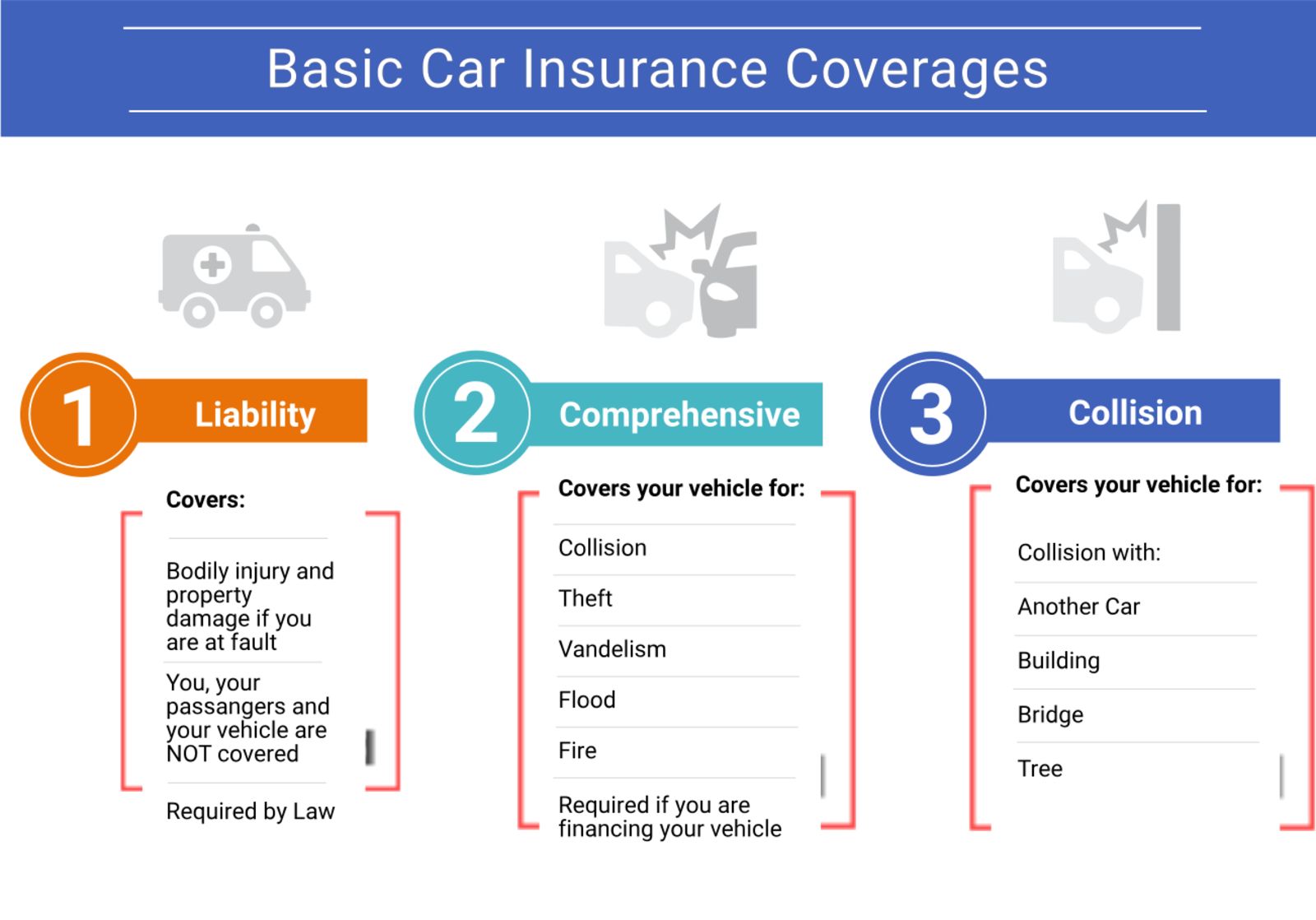
Liability coverage pays for bodily injury and property damage you legally cause to others. It does not cover your own medical bills or vehicle damage.
- Insuring Agreement: Nationwide promises to pay damages for bodily injury or property damage for which an insured becomes legally responsible, plus defense legal costs. Defense costs are typically paid in addition to policy limits.
- Who is Insured? You, family members residing in your household, and any person using your covered auto with express permission ("permissive use").
Part B: Medical Payments (MedPay) or Personal Injury Protection (PIP)
Depending on whether you live in a "no-fault" insurance state or a traditional tort state, your policy will contain either Medical Payments or Personal Injury Protection.
- Medical Payments (MedPay): Pays for reasonable, necessary medical and funeral expenses caused by an auto accident, regardless of fault, for you and passengers in your car.
- Personal Injury Protection (PIP): Broader coverage common in no-fault states. PIP covers medical costs, lost wages, essential services (like childcare), and rehabilitation fees regardless of fault.
Part C: Uninsured and Underinsured Motorist Coverage (UM/UIM)
Uninsured/Underinsured Motorist coverage protects you if you are hit by a driver who carries no insurance, lacks sufficient insurance limits to pay your full damages, or causes a hit-and-run accident.
- Uninsured Motorist (UM): Pays for bodily injury (and in some states, property damage) caused by a driver with zero liability insurance.
- Underinsured Motorist (UIM): Activates when the at-fault driver’s liability limits are exhausted before fully compensating your medical bills or structural loss.
Part D: Coverage for Damage to Your Auto (First-Party Property Damage)
Part D covers physical damage to your insured vehicle. It is subdivided into two primary coverage types:
- Collision Coverage: Covers damage to your vehicle resulting from an impact with another vehicle, an object (such as a tree, guardrail, or fence), or a rollover.
- Comprehensive (Other Than Collision) Coverage: Pays for loss or damage caused by non-collision events, including theft, vandalism, fire, hail, falling objects, windstorms, flood, or striking an animal.
Part D also outlines valuation terms. Nationwide generally pays the Actual Cash Value (ACV) of the vehicle at the time of loss (replacement cost minus depreciation), not the original purchase price or loan balance.
Part E: Duties After an Accident or Loss
This critical administrative section details what you must do after an incident to guarantee your coverage rights. Failing to comply with Part E conditions can result in a claim denial.
- Promptly notify Nationwide of how, when, and where the accident happened.
- Cooperate fully with the insurance investigation and legal defense.
- Promptly send copies of any legal notices or legal papers received.
- Protect your damaged vehicle from further damage (duty to mitigate loss).
- Permit Nationwide to inspect the damaged vehicle before repairs or disposal.
Part F: General Provisions
Part F lays out the ground rules governing the entire legal relationship between you and Nationwide:
- Policy Territory: Specifies where coverage applies (typically the United States, its territories, possessions, and Canada; driving in Mexico usually requires separate insurance).
- Cancellation & Non-Renewal: Explains notice periods and acceptable reasons for policy cancellation by either party.
- Subrogation Rights: Gives Nationwide the legal right to recover monies paid to you from the at-fault third party.
Section 3: Unique Nationwide Features and Optional Endorsements
Nationwide contracts frequently include proprietary terms and add-on endorsements that alter standard contract behavior. Recognizing these endorsements on your Declarations Page helps you understand specialized benefits.
| NATIONWIDE SPECIALTY ENDORSEMENTS | |
|---|---|
| Program / Rider | Primary Benefit |
| Vanishing Deductible® | Deductible drops for safe driving years. |
| SmartRide® / SmartMiles® | Usage-based discount tracking programs. |
| Gap Insurance | Pays difference between ACV and loan. |
| Towing & Roadside Assistance | Covers towing, jump-starts, and lockouts. |
| Rental Car Reimbursement | Pays daily transportation during claim. |
1. Vanishing Deductible®
This optional endorsement reduces your Collision or Comprehensive deductible by a set dollar amount (typically $100 per year) for every year of safe driving without a moving violation or claim, up to a cumulative maximum (e.g., $500). If you have a $500 deductible and earn $500 in vanishing credits, your effective deductible drops to $0.
2. SmartRide® and SmartMiles® Telematics Riders
- SmartRide®: A telematics discount program that monitors driving habits (such as hard braking, nighttime driving, and acceleration) via a mobile app or plug-in device to calculate a discount.
- SmartMiles®: A pay-per-mile auto insurance structure featuring a flexible monthly premium based on total distance driven alongside a flat base rate.
3. Gap Insurance (Loan/Lease Payoff Coverage)
If your vehicle is total-lossed in a collision, standard coverage pays the vehicle's Actual Cash Value (ACV). Because auto depreciation can occur quickly, your vehicle's market value may be lower than your outstanding auto loan balance. Nationwide Gap Insurance pays the difference between the ACV payout and the unpaid principal of your loan or lease contract.
4. Towing and Roadside Assistance
This endorsement adds coverage for towing service, battery jump-starts, flat tire changes, fuel delivery, and locksmith services if your car becomes disabled.
Section 4: Critical Exclusions to Watch Out For
An insurance policy defines what is covered as much by what it excludes as what it includes. Policy exclusions outline scenarios where Nationwide is contractually relieved from paying claims. Look for the "Exclusions" headings within each coverage section.
COMMON CONTRACT EXCLUSIONS
[!] Commercial Use / Delivery (Uber, Lyft, DoorDash without rider)
[!] Intentional Loss / Fraudulent Damage
[!] Racing, Speed Contests, or Track Driving
[!] Unlisted Household Residents / Excluded Drivers
[!] Wear and Tear, Mechanical Breakdown, Electrical Failure
Rideshare and Commercial Use: Standard personal policies exclude accidents occurring while using your vehicle to haul passengers or goods for pay (e.g., driving for Uber, Lyft, DoorDash, or delivering cargo). You require a specialized Commercial Use or Rideshare Endorsement.
Excluded Drivers: If a specific driver in your household is explicitly listed on a Named Driver Exclusion endorsement, no coverage applies when that person operates the vehicle.
Intentional Acts: Damages caused deliberately by you or an insured person are strictly excluded.
Racing and Track Events: Engaging in organized racing, speed contests, or driving on closed tracks voids coverage.
Mechanical Breakdown and Normal Wear: Repairs needed due to routine mechanical failure, oil leaks, rust, or standard component wear are not covered by insurance.
Summary Matrix of Policy Structure
To navigate your document easily, refer to this structural mapping of a typical Nationwide auto policy packet:
| Policy Document Segment | Primary Location | Key Information Contained | Action Required by Policyholder |
|---|---|---|---|
| Declarations Page | Front of Packet | Premiums, vehicle VINs, policy limits, deductibles, listed drivers. | Verify all driver names, VINs, and coverage limits for accuracy. |
| Definitions | Beginning of Base Form | Standardized contract meanings for terms ("Insured," "Your Covered Auto"). | Review to understand who counts as an "insured" driver or vehicle. |
| Part A: Liability | Standard Policy Form | Financial protection for damages/injuries you cause to third parties. | Confirm split limits equal or exceed your personal net worth risk. |
| Part B: MedPay/PIP | Standard Policy Form | Out-of-pocket medical coverage for you and your passengers. | Verify state-required PIP limits or supplementary MedPay caps. |
| Part C: UM/UIM | Standard Policy Form | Coverage when hit by an uninsured or underinsured motorist. | Match UM/UIM limits to your Part A liability limits for equal protection. |
| Part D: Physical Damage | Standard Policy Form | Repair or replacement payout for your own vehicle (Collision/Comp). | Confirm deductibles are affordable out-of-pocket during a sudden claim. |
| Part E: Duties After Loss | Standard Policy Form | Step-by-step requirements post-accident (notification, evidence). | Follow strict timelines to prevent claim denial following an accident. |
| Endorsements | End of Packet | Special amendments, program add-ons (SmartRide, Vanishing Deductible). | Ensure selected add-ons appear correctly with proper terms. |
Step-by-Step Guide to Reading Your Policy
When reviewing your document packet, follow this five-step process:
Step 1: Verify the Declarations Page Details
Start by checking your primary paperwork. Confirm that all vehicles in your household are listed with correct VINs, and confirm that all licensed residents in your home are listed as drivers.
Step 2: Evaluate Your Coverage Limits Against Financial Exposure
Review your Part A liability limits. If your net worth and assets exceed state-minimum liability caps, consider purchasing higher limits or adding a Commercial/Personal Umbrella Liability Policy.
Step 3: Check Deductibles and Emergency Cash Reserves
Look closely at your Part D deductibles for Collision and Comprehensive claims. Ensure you have cash available in savings equal to your deductible in the event of an unexpected collision.
Step 4: Search for State and Personal Endorsements
Turn to the back of your packet to inspect attached endorsements. Confirm that special features like Rental Car Reimbursement, Gap Insurance, or Vanishing Deductible are present if requested.
Step 5: Read the Exclusions Section Carefully
Scan the Exclusions listed under Parts A, B, C, and D. Ensure your driving activities (such as commuting, weekend trips, or borrowing vehicles) do not trigger an exclusion clause.
Frequently Asked Questions
What is the difference between split limits and combined single limits on a policy?
Split limits separate coverage into three distinct caps: individual bodily injury, total bodily injury per accident, and total property damage (e.g., 100/300/100). A Combined Single Limit (CSL) provides one overarching dollar amount (e.g., $300,000) that can be allocated to any combination of bodily injury and property damage expenses per accident.
What happens if an unlisted driver gets into an accident in my car?
If the driver used your car with your explicit permission ("permissive use") and does not live in your household, Nationwide generally extends coverage under Part A and Part D. However, if the unlisted driver lives in your household, resides at your address, or is explicitly listed on an Excluded Driver endorsement, Nationwide may deny the claim.
How does Nationwide determine the payout amount for a total loss?
Nationwide pays the Actual Cash Value (ACV) of the vehicle immediately prior to the loss. ACV is determined by calculating the market cost of a comparable vehicle of similar age, mileage, and condition within your local geographic region, minus your applicable collision or comprehensive deductible. It is not based on original purchase price or loan balances.
Where can I find my active Nationwide insurance policy contract?
You can access your current Declarations Page, full policy booklet, and active endorsements electronically by logging into your Nationwide online account portal, utilizing the Nationwide Mobile App, or contacting your local independent Nationwide insurance agent for a physical policy copy.
What should I do if I spot an error on my Declarations Page?
Contact your Nationwide agent or customer service immediately to request an endorsement correction. Minor errors—such as a misspelled name or incorrect VIN digit—can usually be updated promptly, ensuring continuous, accurate coverage.
Next Steps for Policyholders
Understanding your auto insurance policy protects you from unexpected costs. Take these actions to manage your policy:
- Conduct an Annual Contract Audit: Download your current Declarations Page via the Nationwide online portal or mobile app every 12 months.
- Re-evaluate Deductibles and Discounts: Adjust deductibles based on your current savings and check if programs like Vanishing Deductible® or SmartRide® are applied correctly.
- Notify Nationwide of Life Changes: Immediately report updates like address changes, new household drivers, changes in daily commute mileage, or using a vehicle for gig-economy delivery.
Image Gallery