The People Behind Samsung: Leadership, Innovators, and Global Workforce
Samsung is driven by a complex ecosystem of visionary family leadership, professional chief executive officers, global engineering talent, and a massive international workforce numbering over 260,000 employees. Understanding who steers...
Samsung is driven by a complex ecosystem of visionary family leadership, professional chief executive officers, global engineering talent, and a massive international workforce numbering over 260,000 employees. Understanding who steers this technological titan requires examining its governance structure, foundational legacy, research and development powerhouses, and operational strategies across consumer electronics, semiconductor manufacturing, and digital displays.
Contents
The Foundations of Samsung: Family Leadership and Corporate Governance
The governance of Samsung relies on a distinct blend of founding family influence and modern corporate management. Founded in 1938 by Lee Byung-chul as a small trading company in Daegu, South Korea, the enterprise evolved under family stewardship into a multinational conglomerate, or chaebol.
Following Lee Byung-chul, his son Lee Kun-hee assumed leadership in 1987, spearheading the company's transformation into a global consumer electronics and semiconductor giant. During his tenure, Lee Kun-hee famously issued the Frankfurt Declaration in 1993, urging executives to "change everything except your wife and children," which catalyzed Samsung’s modern quality-control and design-driven corporate culture.
In the modern era, Lee Jae-yong (also known as Jay Y. Lee), the grandson of the founder, serves as Executive Chairman of Samsung Electronics. His leadership steers the conglomerate through intense geopolitical supply chain shifts, rising competition in artificial intelligence processing, and complex regulatory environments across multiple continents.
Executive Structure: The Role of Co-CEOs and Specialized Divisions
While the executive chairmanship provides long-term strategic vision, day-to-day operations at Samsung Electronics are structured around a multi-CEO model designed to manage massive, highly divergent business units independently.
Samsung typically operates under co-chief executive officers who divide responsibilities between distinct technological pillars. This structural separation ensures that high-speed consumer product cycles do not interfere with the long-term capital investments required for semiconductor fabrication and contract manufacturing.
- Device Experience (DX) Division: Encompasses smartphones, home appliances, televisions, and digital displays. Leaders in this division focus on hardware-software integration, user interface design within the One UI ecosystem, and consumer marketing.
- Device Solutions (DS) Division: Controls memory chips (DRAM, NAND flash), system LSI, and Samsung Foundry. This segment requires continuous, capital-intensive research into sub-nanometer fabrication nodes, extreme ultraviolet (EUV) lithography, and high-bandwidth memory (HBM) modules critical for artificial intelligence hardware.
Research and Development: The Global R&D Network
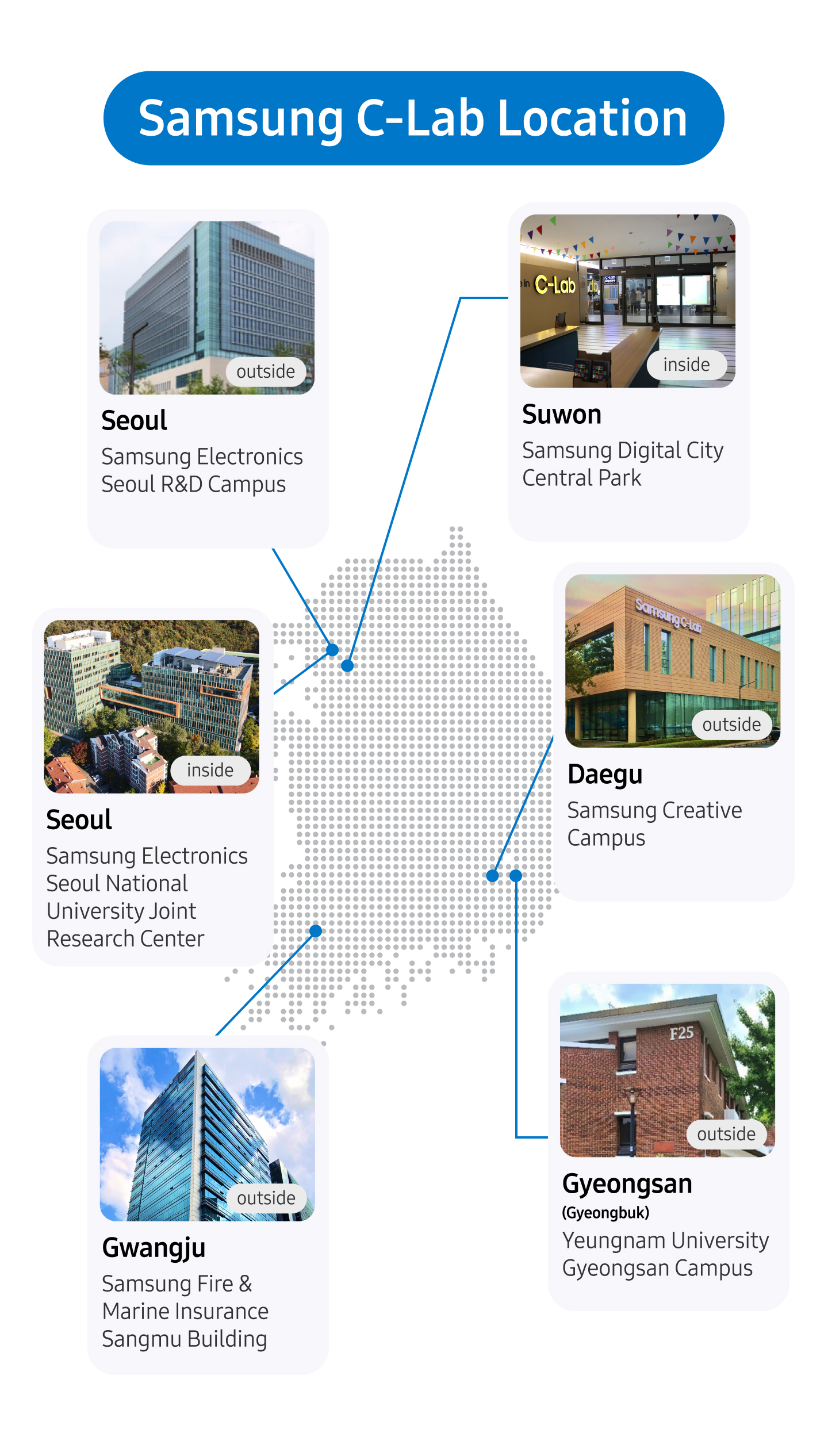
Innovation at Samsung is propelled by a vast network of research and development centers distributed globally. Rather than concentrating all engineering talent in South Korea, Samsung operates dozens of R&D hubs across North America, Europe, India, and Southeast Asia to capture regional expertise and specialized academic talent.
The corporation consistently ranks among the top global entities in annual R&D expenditure and patent acquisitions. Engineers and researchers within these facilities work across specialized domains:
- Semiconductor Physics: Developing smaller, more energy-efficient transistors, gate-all-around (GAA) architecture, and advanced packaging techniques.
- Artificial Intelligence: Implementing on-device AI models, natural language processing for voice assistants, and computational photography algorithms.
- Display Technology: Advancing organic light-emitting diode (OLED) panels, micro-LED architectures, and foldable display durability.
| Division | Primary Focus | Key Engineering Challenges | Major Global Hubs |
|---|---|---|---|
| Device Solutions (DS) | Semiconductors, Memory, Foundry | Sub-nanometer scaling, thermal dissipation, yield optimization | Suwon, Giheung, Austin, San Jose |
| Device Experience (DX) | Mobile, Consumer Electronics, Displays | UI optimization, battery longevity, foldable hinge mechanics | Suwon, Seoul, Beijing, Bangalore |
| Samsung Advanced Institute of Technology (SAIT) | Fundamental Science, Future Tech | Quantum computing, advanced materials, next-gen energy storage | Suwon, Cambridge, Boston |
The Global Workforce and Organizational Culture
Behind the executive suite and R&D laboratories is a diverse workforce operating in over 70 countries. Samsung’s workforce composition reflects its evolution from a regional manufacturer into a borderless technological institution.
In recent years, Samsung has actively reformed its internal corporate culture to move away from rigid, hierarchical structures inspired by traditional South Korean corporate norms toward a more horizontal, startup-like environment. Initiatives such as the "Start-up Samsung" program encourage employees to pitch new business ideas internally, fostering intrapreneurship and faster decision-making.
Recruitment heavily targets top-tier engineering talent from global universities, paired with localized hiring strategies to ensure regional regulatory compliance and market-specific product localization. Manufacturing plants, particularly in Southeast Asia (such as Vietnam) and North America, employ hundreds of thousands of technicians and assembly operators who maintain the physical supply chain required to deliver millions of units globally.
Navigating Challenges: Leadership Accountability and Market Pressures
The people behind Samsung operate under intense public scrutiny and market volatility. Managing a multi-industry conglomerate creates unique operational challenges, ranging from cyclical downturns in the memory chip market to fierce competition in foldable smartphones and consumer appliances.
Furthermore, leadership must constantly address supply chain resilience, environmental sustainability targets, and labor relations across international manufacturing plants. Executive decisions are evaluated not only by financial stakeholders but also by regulatory bodies monitoring fair trade, antitrust compliance, and intellectual property protection.
Frequently Asked Questions
Who is currently in charge of Samsung Electronics?
Lee Jae-yong serves as the Executive Chairman of Samsung Electronics, providing overarching strategic guidance. Day-to-day operations are managed by specialized co-CEOs who oversee distinct divisions like Device Solutions and Device Experience.
How many people work for Samsung globally?
Samsung employs a total global workforce exceeding 260,000 people, spread across research centers, manufacturing plants, sales offices, and design studios in more than 70 countries.
Where is Samsung's main research and development center located?
The primary R&D headquarters is located in Suwon, South Korea, known as Samsung Digital City. However, Samsung operates major R&D campuses globally in the United States, India, the United Kingdom, and other technology hubs.
What is the "chaebol" structure, and how does it apply to Samsung?
A chaebol is a large, family-owned South Korean business conglomerate. Samsung operates under this historical corporate framework, where founding family members hold significant influence and equity stakes while professional managers handle daily operations.
How does Samsung foster innovation across its workforce?
Samsung utilizes dedicated advanced research institutes like the Samsung Advanced Institute of Technology (SAIT), internal incubation programs for employee-led startups, and decentralized global R&D hubs to maintain a competitive technological edge.
Practical Next Actions
For industry analysts, researchers, or prospective employees looking to understand or engage with Samsung's organizational ecosystem:
- Review official corporate governance reports and annual financial disclosures published by Samsung Electronics for precise executive board appointments.
- Monitor announcements from the Samsung Advanced Institute of Technology for insights into upcoming material science and semiconductor breakthroughs.
- Consult global career portals managed by Samsung for specific regional recruitment prerequisites, engineering openings, and internship pathways.
Image Gallery