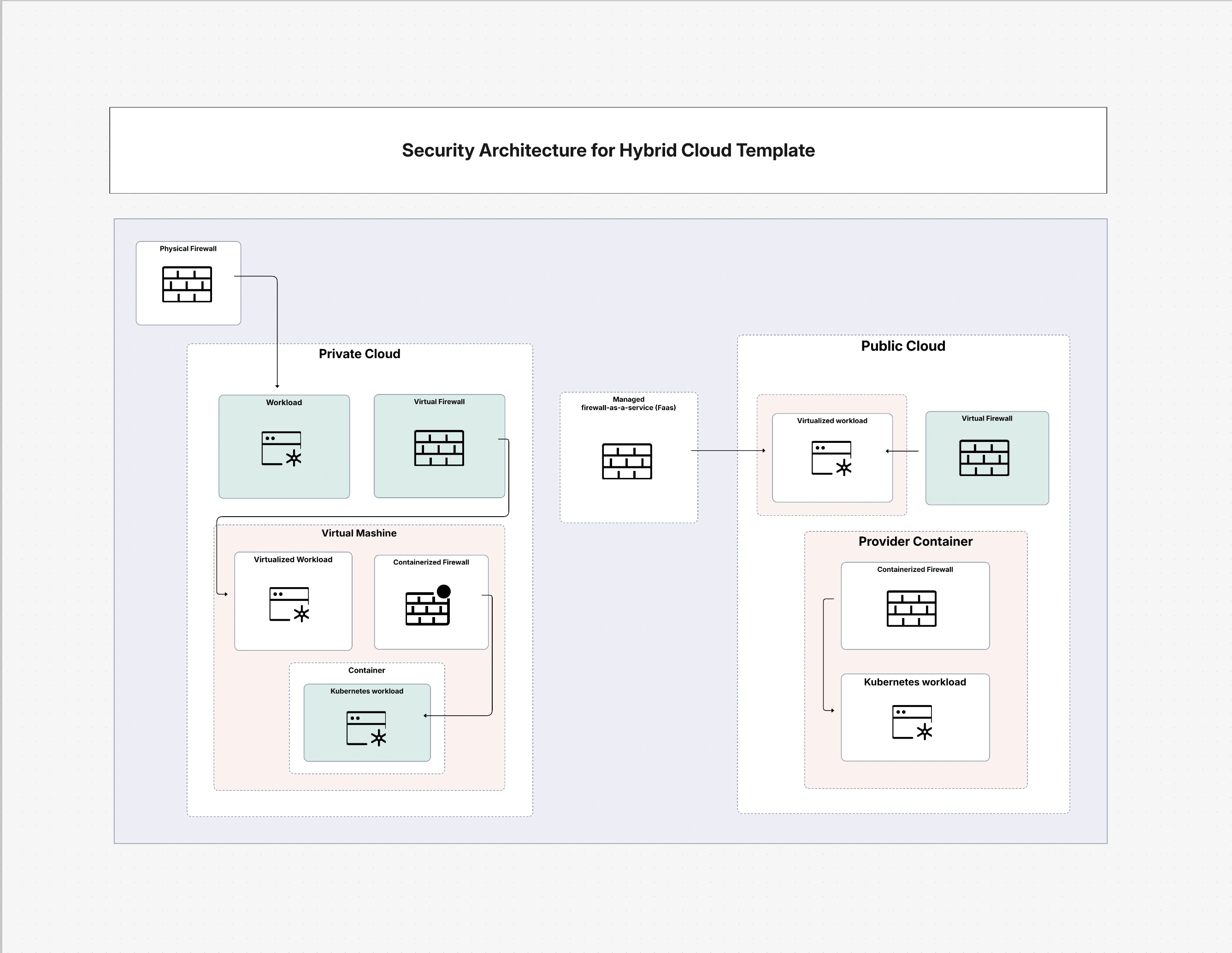
Cloud Computing Security Architecture: A Comprehensive Tutorial and Implementation Guide
Cloud computing security architecture integrates multiple security layers, policies, and technologies to protect data, applications, and infrastructure across distributed cloud environments. By implementing strict access controls, end-...
Cloud computing security architecture integrates multiple security layers, policies, and technologies to protect data, applications, and infrastructure across distributed cloud environments. By implementing strict access controls, end-to-end encryption, and continuous monitoring, organizations can mitigate vulnerabilities and secure multi-tenant cloud ecosystems.
Contents
Understanding Cloud Computing Security Architecture
Cloud computing security architecture serves as the blueprint for safeguarding digital assets hosted within virtualized environments. Unlike traditional on-premises data centers bound by physical perimeters, cloud environments are distributed, highly scalable, and accessible via the public internet. This shift demands a specialized security approach where the boundary shifts from physical hardware to data access controls, cryptographic protocols, and identity management systems.
When studying concepts via resources like a cloud computing security architecture tutorialspoint guide, learners typically encounter a structured breakdown of defensive strategies. These tutorials break down security into distinct layers: the physical infrastructure, the virtualization layer, the guest operating system, the application tier, and the end user. Each layer requires targeted security controls to prevent unauthorized access, data exfiltration, and service disruptions.
Furthermore, cloud security architecture relies heavily on the Shared Responsibility Model. Depending on whether an organization utilizes Infrastructure as a Service (IaaS), Platform as a Service (PaaS), or Software as a Service (SaaS), the division of labor between the cloud service provider (CSP) and the customer changes significantly. Understanding this division is the first step toward building a resilient security posture.
The Shared Responsibility Model in Cloud Security
The foundation of any robust cloud security architecture is the Shared Responsibility Model. This framework defines security obligations for both the cloud provider and the customer, eliminating ambiguity regarding who patches vulnerabilities or configures firewalls.
- Cloud Provider (AWS, Azure, GCP)
- Security OF the Cloud
- Physical Data Centers, Hardware, Networking, Hypervisor
- Customer (Enterprise / Developer)
- Security IN the Cloud
- Data Classification, IAM, Operating Systems, Applications
Security OF the Cloud (Provider Responsibility)
Cloud service providers like Amazon Web Services (AWS), Microsoft Azure, and Google Cloud Platform (GCP) are responsible for protecting the infrastructure that runs all services offered in the cloud. This foundational layer includes:
- Physical Security: Protecting data center buildings, biometric access controls, and environmental safety systems (fire suppression, backup generators).
- Hardware Infrastructure: Maintaining physical servers, storage devices, and networking hardware.
- Virtualization Layer: Securing the hypervisors that abstract physical hardware into virtual machines, ensuring tenant isolation so one customer cannot access another's data streams.
Security IN the Cloud (Customer Responsibility)
The customer assumes responsibility for security configurations once resources are provisioned. This distinction is vital; a provider secures the vault, but the customer must lock the door and manage the keys. Customer responsibilities include:
- Data Protection: Encrypting data at rest and in transit, managing classification levels, and setting data lifecycle policies.
- Identity and Access Management (IAM): Creating user accounts, enforcing multi-factor authentication (MFA), and granting least-privilege access.
- Operating System and Network Configuration: Patching guest operating systems, configuring virtual private clouds (VPCs), and writing secure firewall rules (security groups and network ACLs).
Core Pillars of Cloud Security Architecture
Building an effective defense requires balancing multiple technical disciplines. A failure in any single pillar can compromise the entire architecture.
Identity and Access Management (IAM)
Identity serves as the new security perimeter in modern cloud deployments. Because traditional network boundaries dissolve when employees and applications access resources remotely, verifying identity becomes paramount. IAM architectures enforce strict authentication and authorization protocols. Modern systems implement Zero Trust frameworks, operating under the assumption that no user or device should be trusted by default, even inside the corporate network.
Implementation of IAM requires multi-factor authentication (MFA), role-based access control (RBAC), and attribute-based access control (ABAC). Organizations must continuously audit permissions to remove orphaned accounts and ensure that human users and non-human service accounts operate under the principle of least privilege.
Data Security and Cryptography
Data protection requires strategies tailored to data states: data at rest, data in transit, and data in use.
- Data at Rest: Stored data in databases, object storage buckets, and file systems must be encrypted using robust cryptographic algorithms such as AES-256. Key management services (KMS) allow organizations to generate, rotate, and control access to cryptographic keys independently of the data storage itself.
- Data in Transit: Information moving across networks or between services must be encrypted using modern transport layer security (TLS) protocols, preventing interception or man-in-the-middle attacks.
- Data in Use: Emerging confidential computing technologies utilize hardware-based trusted execution environments (TEEs) to encrypt data while it is actively being processed in memory.
Network Security and Segmentation
Cloud network security moves away from physical perimeter defenses like hardware firewalls toward software-defined networking (SDN). Virtual Private Clouds (VPCs) allow organizations to partition their cloud resources into isolated subnets.
- Security Groups: Act as virtual firewalls at the instance level, controlling inbound and outbound traffic based on IP protocols, ports, and source/destination IPs.
- Network Access Control Lists (NACLs): Operate at the subnet level as an additional stateless layer of defense.
- Web Application Firewalls (WAF): Inspect incoming HTTP/HTTPS traffic to block common web exploits such as SQL injection, cross-site scripting (XSS), and distributed denial-of-service (DDoS) attacks.
Cloud Service Models vs. Security Responsibilities
| Cloud Service Model | Provider Responsibility | Customer Responsibility | Typical Use Case |
|---|---|---|---|
| IaaS (Infrastructure as a Service) | Physical data centers, hardware, hypervisors, physical networking. | OS installation, network configuration, IAM, application deployment, data security. | Highly customized virtual infrastructure, lift-and-shift migrations. |
| PaaS (Platform as a Service) | Infrastructure, operating systems, runtime environments, middleware. | Application code, database management, user access controls, data classification. | Application development, serverless functions, managed databases. |
| SaaS (Software as a Service) | Entire application stack, underlying infrastructure, patching, uptime. | User credential management, data entry, access permissions, endpoint security. | Enterprise email, CRM platforms, collaborative productivity suites. |
Designing for Resilience: Monitoring and Incident Response
A resilient cloud architecture assumes that breaches will occur and prioritizes rapid detection, containment, and recovery.
Centralized Logging and Monitoring
Visibility is essential for security operations. Cloud environments generate vast quantities of logs, including API call logs, virtual machine event logs, network flow logs, and application error logs. Security Information and Event Management (SIEM) tools, combined with Cloud Access Security Brokers (CASBs) and Cloud Security Posture Management (CSPM) software, ingest these logs to detect anomalous behavior.
- Anomaly Detection: Machine learning algorithms analyze baseline user behavior and flag unusual login locations, rapid data downloads, or unauthorized privilege escalations.
- Compliance Monitoring: CSPM tools continuously evaluate cloud configurations against regulatory standards such as HIPAA, GDPR, PCI-DSS, and NIST guidelines, alerting administrators to misconfigured storage buckets or open ports.
Automated Incident Response
Manual intervention is often too slow to stop automated cloud attacks. Modern architectures incorporate Security Orchestration, Automation, and Response (SOAR) playbooks. When an intrusion detection system flags a compromised credential or malicious IP address, automated scripts can instantly isolate the affected virtual instance, revoke compromised tokens, and notify security personnel without human delay.
Common Security Pitfalls and Misconfigurations
Many cloud security incidents stem from configuration errors rather than sophisticated cryptographic attacks. Awareness of these pitfalls helps architects design safer environments:
- Overly Permissive Access Policies: Granting
FullAccesspermissions or public read/write access to object storage buckets (e.g., AWS S3) remains a leading cause of accidental data exposure. - Hardcoded Credentials: Storing API keys, database passwords, or secret tokens directly inside source code repositories leaves them vulnerable if the code is exposed. Secure secret management services should always be utilized.
- Inadequate Patch Management: Failing to apply security updates to guest operating systems and third-party software packages in IaaS deployments leaves known vulnerabilities exploitable.
- Lack of Asset Inventory: Organizations cannot secure what they do not track. Shadow IT—unauthorized cloud resources spun up by departments outside of IT oversight—creates blind spots in the security architecture.
Implementation Checklist for Cloud Architects
- Establish Identity Governance: Implement centralized IAM with mandatory multi-factor authentication and enforce the principle of least privilege across all user and service accounts.
- Classify and Encrypt Data: Catalog organizational data assets, apply automated tagging, and enforce encryption for all data at rest and in transit using managed keys.
- Segment the Network: Design VPCs with clear separation between public-facing tiers, private application tiers, and backend database subnets using security groups and NACLs.
- Automate Compliance and Posture Checks: Deploy CSPM tools to continuously monitor infrastructure configurations against internal policies and external regulatory frameworks.
- Establish Logging and Alerting: Enable centralized log aggregation across all cloud accounts and set up real-time alerts for high-risk activities, such as root account logins or security group modifications.
Frequently Asked Questions
What is the primary difference between traditional security and cloud security architecture?
Traditional security relies heavily on physical perimeters, hardware firewalls, and internal corporate networks to protect data. Cloud security architecture operates in a distributed, virtualized multi-tenant environment where physical boundaries do not exist, shifting the primary security perimeter to identity management, software-defined networks, and cryptographic controls.
How does the Shared Responsibility Model affect application security?
The Shared Responsibility Model determines who is accountable for patching, configuration, and monitoring. While the cloud provider secures the underlying physical and virtualization infrastructure, the customer remains entirely responsible for securing their application code, database configurations, user access privileges, and data privacy settings.
Why is Identity and Access Management (IAM) considered the new security perimeter?
In cloud environments, users and services access resources remotely from various locations and devices, rendering traditional network perimeter defenses ineffective. IAM acts as the gatekeeper, verifying every identity and strictly enforcing authorization policies to ensure users access only the resources necessary for their specific roles.
What tools help prevent cloud security misconfigurations?
Cloud Security Posture Management (CSPM) tools continuously scan cloud environments against security best practices and compliance standards. They automatically detect vulnerabilities such as public storage buckets, unencrypted databases, and overly permissive IAM roles, alerting administrators to remediate them before exploitation.
How do cloud security architects handle data privacy and regulatory compliance?
Architects address compliance by utilizing data classification frameworks, geographic data residency controls, robust encryption keys managed via dedicated KMS, and automated auditing tools that verify adherence to frameworks like GDPR, HIPAA, and PCI-DSS.
What is the role of a Web Application Firewall (WAF) in cloud architecture?
A Web Application Firewall monitors, filters, and blocks HTTP/HTTPS traffic traveling to and from web applications hosted in the cloud. It protects applications from common layer-7 vulnerabilities, including SQL injection, cross-site scripting (XSS), and malicious bot attacks.
Conclusion and Next Actions
Designing a secure cloud environment requires a thorough understanding of shared responsibilities, identity governance, data protection, and network segmentation. Organizations looking to operationalize these concepts should start by auditing their current cloud environments for misconfigurations, establishing strict IAM baselines, and deploying automated posture management tools to maintain continuous compliance.
Image Gallery