2024 401k Limit Including Employer Match Explained
For the 2024 tax year, the IRS set the individual employee 401(k) contribution limit at $23,000. However, the total limit including employer matching and profit-sharing—known as the Section 415(c) limit—was significantly higher at $69,...
For the 2024 tax year, the IRS set the individual employee 401(k) contribution limit at $23,000. However, the total limit including employer matching and profit-sharing—known as the Section 415(c) limit—was significantly higher at $69,000. For those age 50 or older, a $7,500 catch-up allowed for a grand total of $76,500.
Contents
Understanding the nuances of these limits is essential for high earners and those looking to maximize their retirement security. While we are now in 2026, many taxpayers and estate planners still look back at the 2024 limits to rectify over-contributions or analyze the growth of their portfolios during that specific economic period. The 2024 limits represented a notable increase from previous years, reflecting the IRS's response to inflationary pressures that impacted the cost of living and long-term savings requirements.
The Two Distinct Caps: Individual vs. Total
To understand how the 2024 401(k) limits functioned, one must distinguish between two separate caps established by the Internal Revenue Code. These caps are often confused, leading to missed opportunities for additional savings or, conversely, tax penalties for exceeding the maximums.
The Employee Deferral Limit (Section 402(g))
The first cap is the Individual Employee Contribution Limit, technically governed by Section 402(g) of the Internal Revenue Code. In 2024, this was set at $23,000. This is the maximum amount an employee could elect to have withheld from their paycheck and deposited into their 401(k) on either a pre-tax or Roth basis.
It is important to note that this limit applied to the individual, not the plan. If an employee worked for two different companies in 2024, their combined contributions across both plans could not exceed $23,000 (plus any applicable catch-up).
The Total Contribution Limit (Section 415(c))
The second cap is the Annual Additions Limit, governed by Section 415(c). In 2024, this limit was $69,000. This figure represents the "all-in" maximum, which includes:
- Elective employee deferrals (the $23,000 mentioned above).
- Employer matching contributions.
- Employer non-elective contributions (profit-sharing).
- After-tax voluntary contributions (distinct from Roth contributions).
If your employer offered a generous match or a profit-sharing component, this total limit was the ultimate ceiling. For most workers, the $23,000 employee cap was the relevant number. However, for business owners and high-income professionals using "Mega Backdoor Roth" strategies, the jump from $23,000 to $69,000 offered a massive tax-advantaged runway.
Catch-Up Contributions for Those Age 50 and Older
The IRS allows participants who reach age 50 by the end of the calendar year to contribute more than the standard limit. This is designed to help those closer to retirement "catch up" on their savings.
In 2024, the catch-up contribution limit was $7,500. This amount was added to both the employee deferral limit and the total annual additions limit.
- Employee Deferral + Catch-up: $23,000 + $7,500 = $30,500
- Total Limit + Catch-up: $69,000 + $7,500 = $76,500
This catch-up provision was particularly valuable for late-career professionals who found themselves in their peak earning years in 2024. It is worth noting that for 2024, the SECURE 2.0 Act's requirement that catch-up contributions for high earners be made on a Roth basis was delayed by the IRS (Notice 2023-62), allowing all participants to continue making catch-up contributions on a pre-tax basis regardless of income level during that specific year.
The Role of the Employer Match
Employer matching is one of the most effective ways to build wealth, but it operates under a different set of rules than your personal contributions.
How the Match Works with the Limits
The most common point of confusion is whether an employer's match counts toward the $23,000 employee limit. It does not. The $23,000 limit only restricts what you, the employee, contribute from your salary. The employer match only counts toward the broader $69,000 total limit.
For example, if an employee earned $150,000 in 2024 and contributed the full $23,000, and their employer provided a 5% match ($7,500), the total contribution would be $30,500. Since $30,500 is well below the $69,000 total limit, this was perfectly acceptable.
Non-Elective and Profit-Sharing Contributions
Beyond a standard match, some employers provide "non-elective" contributions. These are deposits made by the employer regardless of whether the employee contributes anything. Additionally, many small business owners use profit-sharing plans to reach the $69,000 limit. These employer-side contributions are tax-deductible for the business and tax-deferred for the employee, making them a powerful tool for reducing corporate tax liability while rewarding key staff.
2024 401(k) Limits: Summary Table
The following table breaks down the various limits and thresholds that were active during the 2024 tax year.
| Category | Limit for Under Age 50 | Limit for Age 50 and Over |
|---|---|---|
| Employee Elective Deferral | $23,000 | $30,500 |
| Employer Match/Profit Sharing | Up to the Total Limit | Up to the Total Limit |
| Total Combined Limit (415(c)) | $69,000 | $76,500 |
| Compensation Limit (401(a)(17)) | $345,000 | $345,000 |
| HCE Threshold | $150,000 | $150,000 |
The Compensation Limit (Section 401(a)(17))
A critical but often overlooked factor in 401(k) math is the annual compensation limit. For 2024, this limit was $345,000.
The IRS does not allow retirement plan contributions to be calculated based on earnings above this threshold. If an executive earned $500,000 in 2024, their employer could only calculate matching or profit-sharing percentages based on the first $345,000 of that income.
This creates a "cap" on matching. If a company matches 6% of an employee's salary, the maximum match they could provide in 2024 was $20,700 (6% of $345,000), even if the employee earned much more. This compensation limit ensures that highly compensated individuals do not receive a disproportionately large tax benefit compared to the rest of the workforce.
Highly Compensated Employees (HCE) and Testing
The 2024 limits were not always guaranteed for everyone. The IRS enforces "non-discrimination testing" to ensure that 401(k) plans do not unfairly favor business owners and highly paid staff at the expense of rank-and-file employees.
The HCE Definition
In 2024, you were generally considered a Highly Compensated Employee (HCE) if:
- You owned more than 5% of the interest in the business at any time during 2023 or 2024.
- For the preceding year (2023), you received compensation from the business of more than $150,000.
ADP/ACP Testing Impacts
If a plan fails the Actual Deferral Percentage (ADP) test, the HCEs may be forced to take "corrective distributions." This means that even if the IRS says the limit is $23,000, a specific company's plan rules—governed by the participation rates of lower-paid employees—might have limited HCEs to a lower amount, such as $15,000 or $18,000.
Many modern plans avoid this by using a "Safe Harbor" design, where the employer guarantees a certain level of matching or non-elective contributions in exchange for an automatic pass on non-discrimination testing.
Common Pitfalls and Strategic Considerations
Over-contributions Across Multiple Jobs
A common mistake in 2024 occurred when employees switched jobs mid-year. Because the $23,000 limit is per person, not per plan, an employee might have contributed $15,000 at their first job and another $15,000 at their second job. This results in an "excess deferral" of $7,000.
By the time we reach 2026, most of these errors should have been corrected. If they were not corrected by the tax filing deadline of the year following the error (typically April 15, 2025), the individual faces double taxation: once in the year the contribution was made, and again when the money is eventually withdrawn.
The "Mega Backdoor Roth" Strategy
The 2024 total limit of $69,000 opened the door for the "Mega Backdoor Roth." This strategy involves making after-tax contributions (not Roth, and not pre-tax) up to the $69,000 limit, then immediately converting those funds to a Roth 401(k) or Roth IRA.
For a worker under 50 in 2024:
- Contribute $23,000 (Employee Deferral).
- Receive $10,000 (Employer Match).
- Contribute an additional $36,000 as "after-tax voluntary" contributions.
- Total: $69,000.
This allowed some participants to shield a massive amount of capital from future capital gains and income taxes, provided their specific employer's plan allowed for after-tax contributions and in-service distributions or conversions.
Frequently Asked Questions
Does the employer match count toward the $23,000 limit?
No, the employer match does not count toward the $23,000 employee elective deferral limit. It only counts toward the total annual additions limit of $69,000 (for 2024). You could contribute your full $23,000, and your employer could still add their match on top of that.
What happened if I exceeded the $69,000 limit in 2024?
If the total of your contributions and your employer's contributions exceeded $69,000, the excess is generally considered a "disqualified addition." The plan administrator must distribute the excess amount, plus any earnings on that amount, to you. This must be reported as taxable income.
Can I contribute to both a 401(k) and a 403(b) in 2024?
Generally, the $23,000 limit is shared across 401(k) and 403(b) plans. If you have both types of accounts, your total elective deferrals across all of them cannot exceed the individual limit ($23,000 or $30,500 if 50+). The only common exception is for 457(b) plans, which often have their own separate limit.
Is the 2024 limit different for a Solo 401(k)?
The limits are mathematically the same, but the implementation is different. A business owner with a Solo 401(k) acts as both the employer and the employee. They could contribute $23,000 as the employee and then contribute up to 25% of their net self-employment income as the employer, provided the total did not exceed $69,000.
Did the 2024 limits apply to Roth 401(k) contributions?
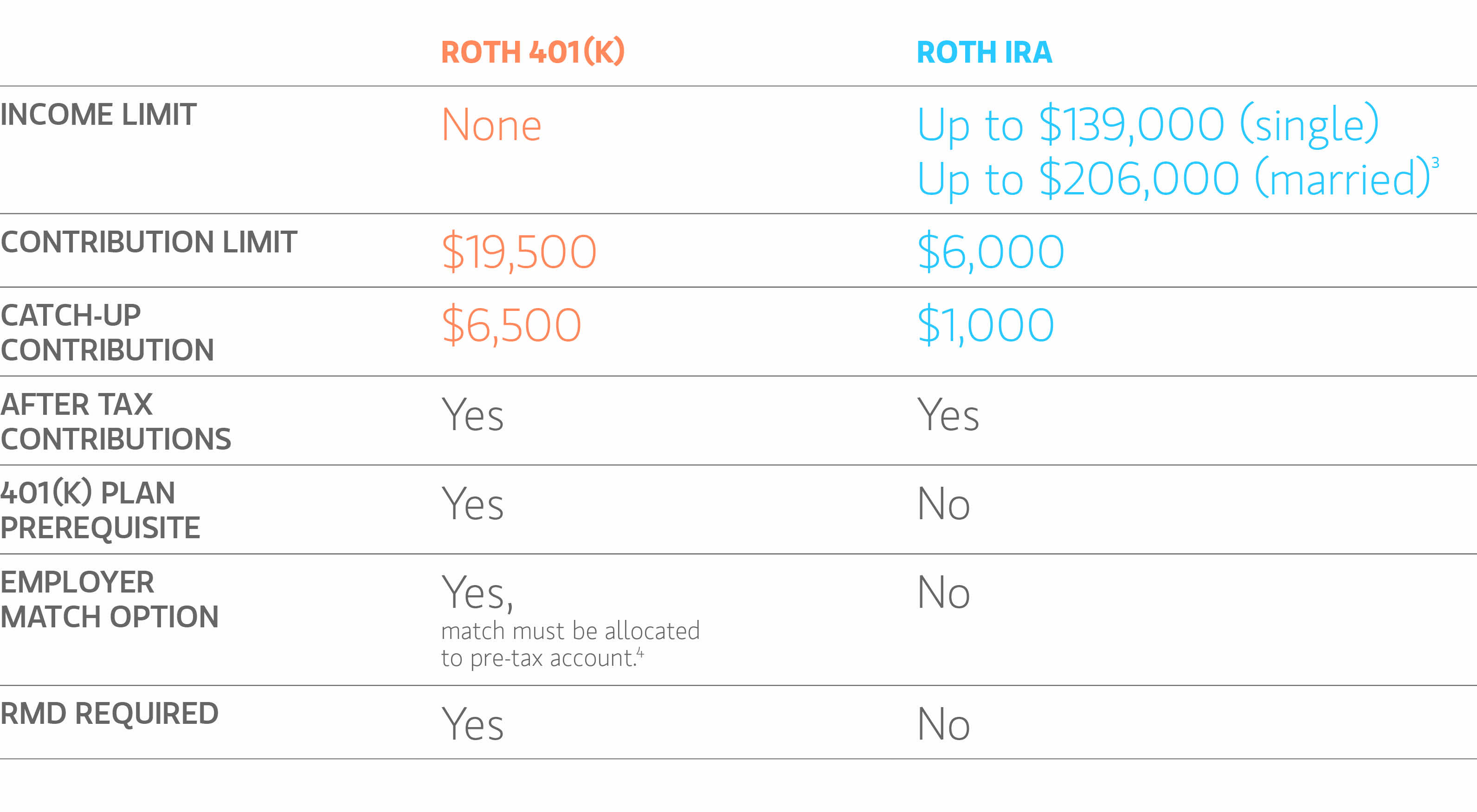
Yes. The $23,000 limit is a combined limit for both pre-tax and Roth elective deferrals. You could contribute $11,500 to pre-tax and $11,500 to Roth, but the total of those two specific types of contributions could not exceed $23,000.
Final Recommendations for Reviewing 2024 Records
As you look back at your 2024 retirement data from the vantage point of 2026, ensure that your Form W-2 for that year accurately reflected your contributions in Box 12. If you discovered an over-contribution that was never corrected, consult with a tax professional immediately to mitigate the impact of double taxation. For those planning future years, use the 2024 total limit of $69,000 as a benchmark for how the IRS adjusts these figures; history shows that these limits generally trend upward in $500 or $1,000 increments based on the Consumer Price Index (CPI).
If you are a business owner, review your 2024 profit-sharing allocations to ensure they did not exceed the $345,000 compensation cap, as this is a frequent trigger for plan audits. Maintaining clean historical records of these limits is fundamental to long-term compliance and retirement success.
Image Gallery