Canada to New York Flight Time and What to Expect on Your Journey
Traveling from Canada to New York typically takes between 1.5 to 3 hours in the air, depending on your specific departure city. When factoring in pre-flight customs preclearance, security screening, and boarding, the total journey requ...
Traveling from Canada to New York typically takes between 1.5 to 3 hours in the air, depending on your specific departure city. When factoring in pre-flight customs preclearance, security screening, and boarding, the total journey requires careful time management, regardless of whether you land at John F. Kennedy International Airport (JFK), LaGuardia Airport (LGA), or Newark Liberty International Airport (EWR).
Contents
Planning a cross-border trip between Canada and the United States involves more than just booking a ticket and packing a bag. Because you are crossing an international border, airport procedures differ significantly from domestic travel. Understanding flight durations, airport logistics, US customs preclearance, and terminal experiences ensures a seamless journey from the moment you leave your Canadian departure city until you step foot into the New York metropolitan area.
Understanding Canada to New York Flight Durations
The flight time from Canada to New York varies considerably based on your exact point of origin. Major Canadian aviation hubs in the eastern and central provinces enjoy short, direct routes to the New York tri-state area, while western provinces require longer journeys or connecting flights.
For travelers departing from Toronto Pearson International Airport (YYZ) or Montréal-Trudeau International Airport (YUL), direct flights are exceptionally common. A direct flight from Toronto to New York takes approximately 1 hour and 30 minutes to 1 hour and 45 minutes in the air. Similarly, a flight from Montreal to New York averages roughly 1 hour and 20 minutes to 1 hour and 35 minutes.
Travelers departing from western hubs such as Vancouver International Airport (YVR) or Calgary International Airport (YYC) face considerably longer air times. Direct flights from Vancouver to New York take approximately 5 hours, while flights from Calgary range between 4.5 and 5 hours. Passengers flying from smaller regional Canadian airports will typically route through Toronto, Montreal, or Chicago, adding total travel time due to layovers.
Direct vs. Connecting Flights
When evaluating itineraries, distinguishing between direct and non-stop flights is essential for accurate scheduling.
- Non-stop Flights: These routes take off from your origin and land directly in New York without any intermediate stops. They offer the shortest overall travel time and minimize the risk of delayed baggage.
- Direct Flights: In airline terminology, a "direct" flight may still make a scheduled stop to pick up or drop off passengers or refuel, without changing plane numbers. However, true non-stop routes dominate the Canada-to-New York corridor.
- Connecting Flights: These itineraries require you to deplane and board a second aircraft at an intermediate hub. If you are flying from Ottawa, Quebec City, or Western Canada without a direct option, expect total travel times to increase by 2 to 4 hours.
Major Canadian Departure Hubs and New York Arrival Airports
Choosing your airports strategically can drastically streamline your travel day. Canada boasts several primary international airports equipped with US Customs and Border Protection preclearance facilities, while New York features three major commercial aviation gateways.
Key Canadian Departure Airports
- Toronto Pearson International Airport (YYZ): The busiest airport in Canada, offering frequent daily non-stop services to JFK, LGA, and EWR operated by carriers like Air Canada, Delta Air Lines, and United Airlines.
- Montréal-Trudeau International Airport (YUL): A major eastern hub providing robust daily connections to New York via Air Canada and American Airlines.
- Vancouver International Airport (YVR): The primary gateway for western Canadian travelers, featuring daily transcontinental services to the New York area.
- Calgary International Airport (YYC): Offers direct and connecting options to major US east coast hubs.
New York Arrival Airports
- John F. Kennedy International Airport (JFK): Located in Queens, JFK handles the highest volume of international traffic and offers extensive public transit links, including the AirTrain connecting to the New York City Subway and Long Island Rail Road.
- LaGuardia Airport (LGA): Situated closer to Manhattan in Queens, LGA undergoes continuous modernization and primarily handles domestic and short-haul international arrivals, making it convenient for travelers heading directly into Midtown Manhattan via express buses or rideshares.
- Newark Liberty International Airport (EWR): Located across the Hudson River in New Jersey, Newark serves as a massive hub for United Airlines and provides rapid rail access to Penn Station via the AirTrain and NJ Transit.
| Canadian Departure City | Primary New York Arrival Airports | Average Non-stop Flight Time | US Preclearance Available |
|---|---|---|---|
| Toronto (YYZ) | JFK, LGA, EWR | 1 hr 30 min – 1 hr 45 min | Yes |
| Montreal (YUL) | JFK, LGA, EWR | 1 hr 20 min – 1 hr 35 min | Yes |
| Vancouver (YVR) | JFK, EWR | Approx. 5 hours | Yes |
| Calgary (YYC) | EWR, JFK | 4 hr 30 min – 5 hours | Yes |
| Ottawa (YOW) | EWR, LGA | Approx. 1 hr 30 min (often connecting) | Yes |
The US Customs and Border Protection Preclearance Advantage
One of the most defining aspects of flying from Canada to the United States is the US Customs and Border Protection (CBP) Preclearance program. Major Canadian airports host full CBP preclearance facilities on-site.
Instead of clearing customs upon landing in a congested New York airport, you complete passport control, customs declarations, and security interviews before you board your flight in Canada. This operational structure transforms your arrival in New York into a domestic experience. Once your flight touches down at JFK, LGA, or EWR, you simply deplane, collect your checked baggage, and exit the terminal directly into the arrivals hall without waiting in lengthy international customs lines.
What to Expect During Preclearance
- Arrive Early: Because you must clear US customs before departure, Canadian airports strongly recommend arriving at least 3 hours before international departures. Security lines and CBP queues can experience heavy bottlenecks during peak morning and afternoon departure banks.
- Documentation Ready: Ensure your Canadian passport is valid for the duration of your stay (or meets specific visa waiver program requirements if traveling on foreign passports). Dual citizens must review official entry guidelines regarding passport usage.
- Biometric Screening: Modern CBP kiosks utilize facial recognition technology to expedite identity verification, followed by a brief agent interview if required.
- Prohibited Agricultural Items: US customs regulations prohibit bringing certain fresh fruits, vegetables, meats, and plant materials across the border. Declare all food items to avoid severe fines.
What to Expect Onboard and In-Flight Services
Given the short duration of most direct flights from eastern Canada to New York, onboard amenities reflect a short-haul operational model.
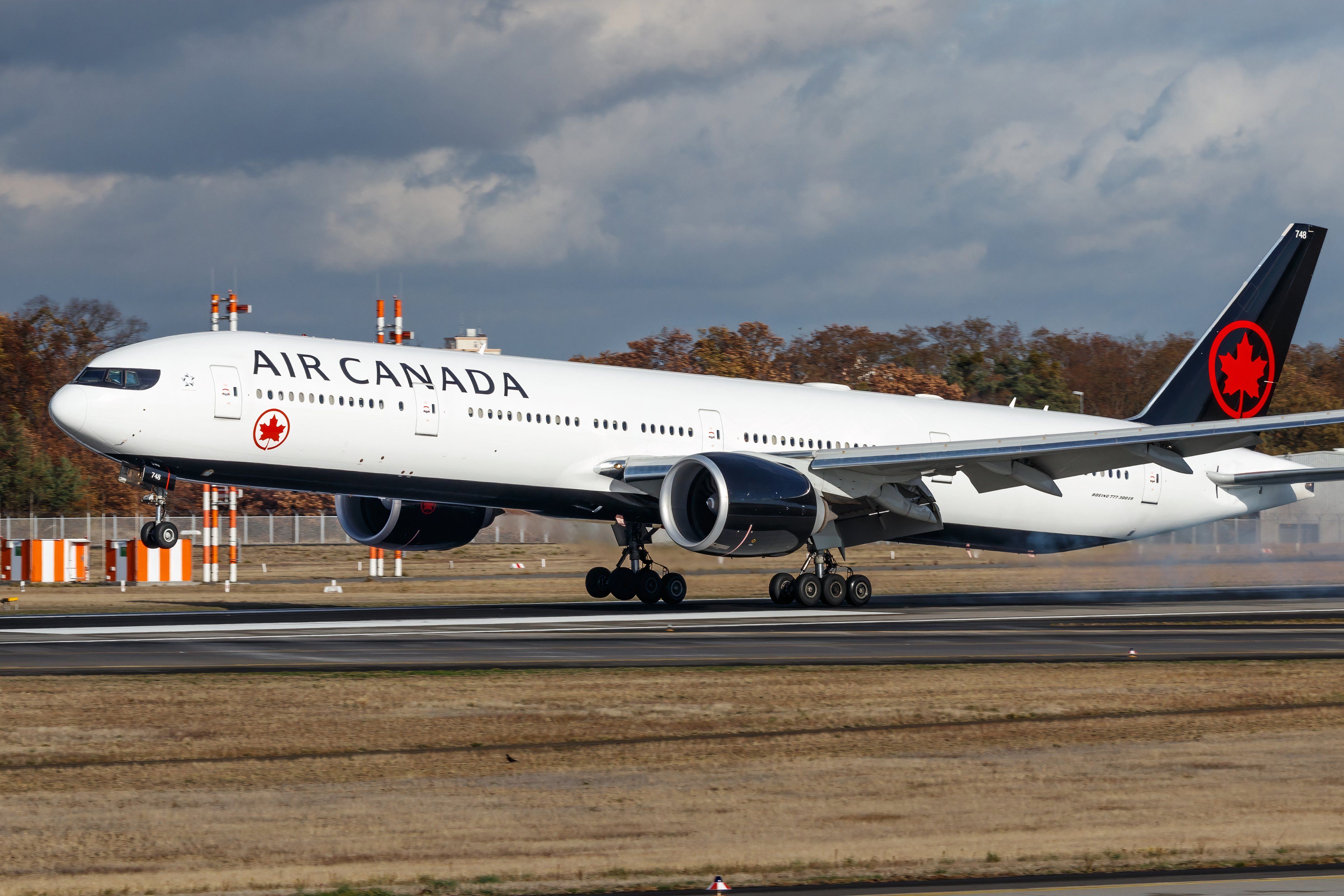
For flights lasting under two hours, full meal service is generally absent, even in business or first class. Instead, airlines typically provide complimentary non-alcoholic beverages and small snacks, such as pretzels or biscoff cookies. On mainline carriers like Air Canada, United, and Delta, seatback entertainment screens or streaming-via-device options are common, though many passengers simply use the brief air time to relax or work. Wi-Fi availability varies by aircraft type; regional jets operating shorter hops may offer limited or no satellite connectivity, while mainline Airbus and Boeing aircraft frequently feature paid or messaging-tier Wi-Fi options.
Seat configurations on regional jets (such as the Embraer 175 or CRJ series commonly deployed on YYZ-LGA routes) typically feature a 2x2 layout, eliminating middle seats in certain rows. Larger mainline aircraft feature standard 3x3 economy configurations. Overhead bin space can fill up rapidly on commuter-heavy business routes, making priority boarding or traveling with properly sized carry-on luggage an important consideration.
Preparing for Your Trip: Step-by-Step Guidance
To ensure a smooth transit between Canada and New York, follow a structured preparation checklist addressing documentation, airport logistics, and ground transportation.
- Verify Travel Documentation: Check that your passport is current. Canadian citizens generally do not require a visa for tourist or business stays under 180 days, but permanent residents of Canada holding foreign passports must verify whether they require a US Visitor Visa (B1/B2) or an approved Electronic System for Travel Authorization (ESTA) via the Visa Waiver Program.
- Book Optimal Flight Times: Business travelers frequently target early morning departures to maximize their workday in New York, while leisure travelers often prefer mid-morning slots to avoid peak commuter traffic surges at security checkpoints.
- Calculate Airport Arrival Time: Factor in the mandatory 3-hour preclearance window. If traveling during holiday periods or severe winter weather events, add an extra buffer to account for deicing procedures and crowded terminal queues.
- Arrange New York Ground Transport: Research your arrival airport's transit options ahead of time. Familiarize yourself with the JFK AirTrain, the LaGuardia Link bus services, or the Newark Airport Express to select the most efficient route to your final destination in Manhattan, Brooklyn, or beyond.
- Monitor Weather and Flight Status: Winter storms in eastern Canada and the Northeast US can cause rolling delays. Download your airline's mobile application to track real-time gate changes, weather advisories, and baggage carousel updates.
Frequently Asked Questions
Do I need a passport to fly from Canada to New York?
Yes. A valid Canadian passport is the primary and most reliable travel document accepted by US Customs and Border Protection for air travel between Canada and the United States. Enhanced Driver's Licenses (EDLs) are generally only valid for land and sea border crossings, not commercial air travel.
Why do I need to arrive at the Canadian airport three hours early?
Because US Customs and Border Protection preclearance takes place on Canadian soil, departing passengers must clear US security, immigration, and customs before boarding. This process eliminates long lines upon arrival in New York but requires significant queue time at your Canadian departure hub.
Can I use Global Entry or NEXUS when flying from Canada to New York?
Yes. NEXUS cardholders and Global Entry members can utilize dedicated expedited lanes and Trusted Traveler kiosks at Canadian preclearance airports, significantly reducing the time required to clear US customs and security screening.
Which New York airport is closest to Manhattan?
LaGuardia Airport (LGA) is geographically the closest airport to Midtown Manhattan, typically offering the shortest rideshare or taxi transit times under normal traffic conditions. However, Newark (EWR) and JFK offer superior rail connectivity directly into central Manhattan via commuter trains.
What happens if my flight from Canada to New York is delayed?
If your flight is delayed due to airline operations, the carrier is responsible for rebooking you onto the next available flight. Because US customs preclearance is completed in Canada, a delayed departure means you will still land as a domestic passenger in New York and can exit the airport immediately upon arrival without dealing with immigration queues.
Conclusion and Next Actions
Traveling from Canada to New York combines a relatively short flight time of 1.5 to 3 hours with the unique procedural requirement of US border preclearance on Canadian soil. By arriving at your Canadian departure airport three hours prior to departure, organizing your travel documentation in advance, and selecting the New York arrival airport that best aligns with your final destination, you can navigate the journey efficiently. Review your airline's baggage policies, monitor weather forecasts ahead of your departure date, and secure your ground transportation in advance to ensure a productive and stress-free trip.
Image Gallery