Capital One 360 Checking: Features, Fee Structure, and Consumer Debates Explained
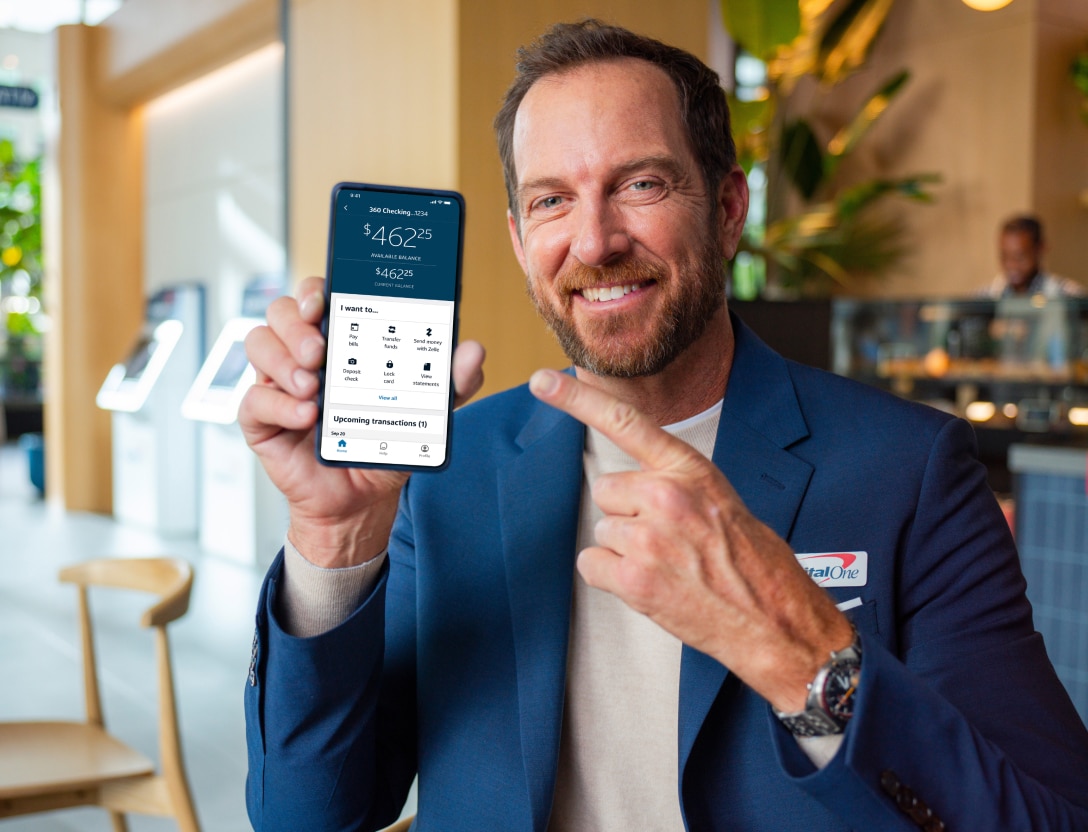
Capital One 360 Checking is a flagship digital bank account offering zero monthly maintenance fees, zero overdraft fees, and access to over 70,000 fee-free ATMs. While praised for cost savings and digital convenience, it remains centra...
Capital One 360 Checking is a flagship digital bank account offering zero monthly maintenance fees, zero overdraft fees, and access to over 70,000 fee-free ATMs. While praised for cost savings and digital convenience, it remains central to ongoing consumer debates regarding branch closures, automated account locks, and evolving overdraft safeguards.
Contents
Disclaimer: This article is for informational purposes only and does not constitute formal financial advice. Account terms, interest rates, and fee schedules may change over time. Readers should review official banking disclosures prior to opening or modifying financial accounts.
Product Architecture and Core Features of Capital One 360 Checking
Capital One 360 Checking originated from the acquisition and rebranding of ING Direct USA in 2012, transforming a pioneering direct bank model into a core component of Capital One’s national consumer banking division. Designed primarily as a hybrid checking solution, it combines online accessibility with selective physical touchpoints.
Digital-First Infrastructure and ATM Access
The foundation of the 360 Checking account relies on digital account management coupled with broad cash accessibility. Account holders can perform everyday transactions through standard mobile and online portals. For cash withdrawals, Capital One provides fee-free access to its own branded network as well as partner networks including Allpoint and MoneyPass, creating an infrastructure of over 70,000 fee-free ATMs nationwide.
To solve the historical challenge of cash deposits for direct banks, Capital One allows customers to deposit physical currency at participating retail locations, such as CVS and Walgreens, via the mobile app’s cash deposit functionality, alongside cash-enabled Capital One ATMs and branch locations.
Interest Accrual and APY Mechanics
Unlike many traditional checking accounts offered by national retail banks, Capital One 360 Checking earns annual percentage yield (APY) interest on all account balances without tier thresholds or balance minimums. While the checking APY is typically lower than dedicated high-yield savings products—such as the companion Capital One 360 Performance Savings account—it provides an interest return on everyday transaction balances. Interest accrues daily and is credited to the account monthly.
Mobile Features and Early Direct Deposit
The account integrates several digital management tools:
- Early Direct Deposit: Eligible direct deposits processed electronically via Automated Clearing House (ACH) can be credited to the account up to two days ahead of the scheduled payment date, depending on when the payer submits the payment file.
- Mobile Check Deposit: Customers can deposit paper checks using image capture in the mobile app, subject to daily and monthly transaction limits based on account history.
- Integrated Peer-to-Peer Payments: Zelle is built directly into the online banking platform, allowing instant money transfers between domestic bank accounts without separate platform registration.
- Security Monitoring and Credit Tracking: Users receive real-time purchase notifications, card locking controls within the app, and integrated access to CreditWise for credit score monitoring.
Fee Schedule and Operational Costs
One of the central marketing value propositions of Capital One 360 Checking is the absence of standard retail banking maintenance charges. However, evaluating the total cost of ownership requires a close examination of specific transaction fee structures.
| Fee Category | Capital One 360 Checking Cost | Standard Retail Bank Average |
|---|---|---|
| Monthly Maintenance Fee | $0 (No balance minimums) | $10 - $15 (Waived with minimums) |
| Overdraft / NSF Fee | $0 (Multiple protection options) | $30 - $35 per occurrence |
| Out-of-Network ATM Fee | $0 from Capital One (Operator fees may apply) | $2.50 - $3.00 plus operator fee |
| Foreign Transaction Fee | 0% of transaction amount | 3% of foreign purchase total |
| Inbound Wire Transfer (Domestic) | $0 | $10 - $15 |
| Outbound Wire Transfer (Domestic) | $0 (Online execution) | $25 - $30 |
| Checkbook Orders | First checkbook free | $20 - $35 per order |
Monthly Service and Maintenance Charges
Capital One 360 Checking charges no monthly service fee. There are no requirements to maintain a minimum daily balance or to schedule recurring direct deposits to avoid monthly costs. This structure makes the account accessible to low-balance holders, students, and consumers seeking low-overhead secondary checking accounts.
Overdraft and Non-Sufficient Funds (NSF) Policies
Capital One completely eliminated overdraft fees and non-sufficient funds (NSF) fees across its consumer checking products. Account holders can choose from three primary handling methods for transactions that exceed their available balance:
- No-Fee Overdraft (Cover It): Capital One may elect, at its discretion, to approve transactions that overdraw the account balance. The consumer must bring the account back to a positive balance within a reasonable timeframe, but no penalties or daily fees are assessed.
- Auto-Decline: Transactions that exceed the available balance are automatically declined at point-of-sale or ATM terminal without incurring any charges.
- Overdraft Transfer: Funds are automatically transferred from a linked Capital One savings or money market account to cover the deficit, free of transfer charges.
International and Cash Transaction Processing
Capital One stands out among major U.S. consumer institutions by charging a 0% foreign transaction fee on debit card purchases and international ATM withdrawals executed abroad. Third-party ATM operator fees may still apply if the overseas machine is outside the partner networks. Domestic outbound wire transfers initiated online are free, whereas traditional institutions routinely charge between $25 and $30 per transfer.
Key Consumer Debates Surrounding Capital One 360 Checking
Despite favorable fee terms and high consumer satisfaction ratings in digital banking indexes, Capital One 360 Checking has been a focal point of several financial services debates.
1. The Transition from Traditional Branches to Capital One Cafés
Capital One’s corporate strategy has shifted away from full-service physical branch networks in favor of a lean physical footprint supplemented by "Capital One Cafés"—hybrid spaces combining coffee shops with digital banking kiosks, free Wi-Fi, and limited financial coaching staff.
- Consumer Criticism: Critics argue that the café model leaves cash-reliant customers, senior citizens, and consumers needing complex in-person services (such as medallion signature guarantees, cashiers checks issued on short notice, or complex notary services) underserved. In regions where legacy branches were shuttered, long-standing customers felt forced into digital-only interactions.
- Institutional Perspective: Capital One contends that physical branch usage for routine deposits and transfers has plummeted nationally. Reinvesting brick-and-mortar savings into digital infrastructure, fee removal, and open public café spaces aligns better with modern consumer preferences.
2. Automated Fraud Detection and Unexpected Account Locks
As banks scale automated security algorithms to combat rising identity theft and wire fraud, online banking platforms rely heavily on risk-scoring models to monitor real-time activity.
- Consumer Complaints: A persistent complaint across online consumer forums and regulatory databases involve sudden automated account locks. Account holders report that routine large deposits, transfer accelerations, or logging in from unfamiliar networks can trigger security freezes. Resolving these holds often requires submitting identity verification documents via secure upload portals, leading to processing delays where funds remain inaccessible for several business days.
- Regulatory and Operational Realities: Financial institutions operating under strict U.S. Anti-Money Laundering (AML) and Bank Secrecy Act (BSA) rules are legally obligated to halt suspicious transaction flows. The conflict arises when risk engine thresholds result in false positives, causing severe financial disruption for consumers relying on 360 Checking as their primary account.
3. Disparities in Savings vs. Checking Interest Rates
While Capital One 360 Checking pays an APY on transaction balances, consumer advocates frequently point out the yield gap between checking balances and top-tier high-yield savings accounts or money market funds.
Consumers who retain significant liquidity inside their checking accounts miss out on compound yield offered by high-yield accounts, including Capital One's own 360 Performance Savings account. Financial advisors recommend keeping only one to two months of routine operating expenses inside the checking account and sweeping excess reserves into dedicated savings vehicles.
4. Evolution of Overdraft Safeguards and Credit Lines
Historically, ING Direct and early Capital One 360 accounts offered an "Overdraft Line of Credit," allowing users to borrow overdrawn funds at a fixed interest rate. Capital One eventually phased out this formal line of credit for new accounts in favor of the current "Cover It" discretionary overage protection.
Some long-time users critiqued the end of the line-of-credit model, noting that a structured revolving credit product offered predictable legal protections, whereas discretionary overdraft approval leaves transaction authorization at the bank's automated discretion.
Detailed Feature Comparison: Capital One 360 vs. Competitors
To evaluate where Capital One 360 Checking fits in the modern U.S. banking market, it helps to analyze it alongside traditional national branch networks (such as Chase or Bank of America) and modern digital neo-banks (such as Chime or Ally Bank).
| Feature / Metric | Capital One 360 Checking | Traditional National Banks | Online Neo-Banks |
|---|---|---|---|
| Monthly Fee Waiver Requirements | None (Always $0) | Direct Deposit or $1,500+ daily balance | None (Always $0) |
| Overdraft Protection Model | Discretionary Cover It or Auto-Decline ($0 fee) | $30+ per item, unless capped/enrolled in transfer | SpotMe / Discretionary buffer ($0 fee) |
| Fee-Free ATM Footprint | 70,000+ (Capital One, Allpoint, MoneyPass) | 15,000 - 18,000 proprietary branch ATMs | 40,000 - 60,000 partner networks |
| Foreign Transaction Fees | 0% | Typically 3% | 0% |
| Retail Cash Deposit Options | Free at CVS/Walgreens/ATMs | Branch tellers and ATMs | Retail partners (fees often charged by retailer) |
| Full-Service Physical Branches | Limited Cafes / Regional branches | Extensive national branch network | None |
| Interest Yield (APY) | Low positive APY | 0.01% standard | Varies (Often 0% on checking) |
| FDIC Insurance Status | Member FDIC (#4297) | Member FDIC | Pass-through partner FDIC |
Regulatory and Security Standing
Capital One, N.A. is a nationally chartered bank regulated by the Office of the Comptroller of the Currency (OCC) and the Federal Reserve Board.
FDIC Deposit Insurance Coverage
Deposits in Capital One 360 Checking accounts are insured by the Federal Deposit Insurance Corporation (FDIC) under Certificate #4297. Standard insurance covers up to $250,000 per depositor, per insured bank, for each account ownership category. Because Capital One 360 is a direct division of Capital One, N.A., balances held in 360 Checking, 360 Performance Savings, and traditional Capital One branch deposit accounts are combined for the purpose of assessing the $250,000 FDIC coverage threshold.
Digital Security and Data Protection Standards
Capital One employs multi-factor authentication (MFA), end-to-end data encryption, and real-time transaction tokenization. Following a high-profile 2019 cybersecurity incident that affected cloud-stored customer data across the institution, Capital One significantly updated its cloud governance architecture, threat detection infrastructure, and compliance monitoring under regulatory oversight from the OCC and the Consumer Financial Protection Bureau (CFPB).
Step-by-Step Guidance: Optimizing Your Account and Mitigating Common Issues
For consumers operating a Capital One 360 Checking account, applying proper account management habits maximizes the account's benefits while avoiding operational frictions.
ACCOUNT OPTIMIZATION FLOWCHART
- OPEN ACCOUNT & ENROLL IN SECURITY PROMPTS
- Enable 2-Factor Authentication (2FA) and real-time push notifications.
- CONFIGURE OVERDRAFT & DIRECT DEPOSIT
- Select "No-Fee Overdraft Cover It" or "Auto-Decline" based on risk tolerance.
- Link primary payroll to enable 2-day early deposit availability.
- SET UP AUTOMATED LIQUIDITY SWEEPS
- Maintain 1–2 months operating expenses in 360 Checking.
- Sweep remaining surplus to 360 Performance Savings for maximum APY yield.
- MITIGATE ACCOUNT LOCK TRIGGERS
- Notify Capital One via mobile app before executing unusually large transfers.
- Ensure full legal name matches across sending/receiving accounts during ACH pushes.
Managing Large Transfers Safely
To minimize the risk of automated security freezes when executing large transfers or wire deposits:
- Verify Name Consistency: Ensure the account registration details (full legal name, Social Security Number, address) on external bank accounts match your Capital One 360 profile exactly.
- Pace Initial Account Activity: For newly opened accounts, avoid initiating immediate maximum-limit transfers from third-party institutions. Incrementally establish transaction history over the first 30 to 60 days.
- Keep Mobile Contact Info Current: Maintain updated mobile phone numbers and email addresses in the application to ensure security codes and verification prompts reach you immediately during flagged transactions.
Maximizing Yield Across Accounts
Because 360 Checking offers a basic APY while 360 Performance Savings delivers a significantly higher interest rate, users should structure their cash using a hub-and-spoke method:
- Direct all income, payroll deposits, and recurring bill pay items into the 360 Checking account.
- Establish an automated recurring rule to transfer surplus cash above monthly expense obligations into a linked 360 Performance Savings account.
- Keep Overdraft Transfer protection active so that if an unexpected bill hits checking, the system automatically pulls available liquidity from savings without incurring fees.
Frequently Asked Questions
Does Capital One 360 Checking charge any monthly maintenance fees?
No. Capital One 360 Checking has zero monthly maintenance fees. There are no balance minimums, transaction minimums, or recurring direct deposit requirements needed to keep the account free of charge.
How do cash deposits work with an online Capital One 360 Checking account?
Cash can be deposited free of charge in three primary ways: at cash-handling Capital One deposit ATMs, at physical Capital One branch or Café locations, and at participating retail partner locations (such as CVS or Walgreens) using the "Add Cash in Store" feature within the Capital One mobile app.
What happens if I overdraw my Capital One 360 Checking account?
Capital One does not charge overdraft or NSF fees. Depending on the setting selected in your account management options, transactions that exceed your available balance will either be covered under the discretionary "Cover It" feature, automatically declined without fee penalties, or paid using automatic transfers from a linked Capital One savings account.
How does Capital One 360 Checking compare to Capital One 360 Performance Savings?
Capital One 360 Checking is designed for daily debit purchases, bill payment, Zelle transfers, and cash access, yielding a standard checking interest rate. Capital One 360 Performance Savings is an interest-focused account designed to build cash reserves with a higher APY, but it does not come with a debit card for direct point-of-sale spending.
Is Capital One 360 Checking insured by the FDIC?
Yes. Capital One 360 Checking is backed by FDIC deposit insurance under Capital One, N.A. (FDIC Certificate #4297). Deposits are insured up to $250,000 per depositor across all single-ownership accounts held at Capital One, N.A.
Final Recommendation: Is Capital One 360 Checking Right for You?
Capital One 360 Checking remains one of the most balanced checking accounts for everyday consumers, digital nomads, and budget-conscious account holders. Eliminating monthly maintenance fees, overdraft penalties, and foreign transaction costs provides immediate savings compared to traditional retail banking models.
Consider opening Capital One 360 Checking if:
- You want a fee-free primary account with no minimum balance requirements.
- You travel internationally or frequently use ATMs across national retail networks.
- You prefer integrated digital banking tools with option-rich cash deposit capabilities.
Consider alternative options if:
- You require access to physical bank tellers for routine cashier's checks, medallion guarantees, or heavy cash transactions.
- You hold large cash balances in checking and want high-yield return without manually transferring funds to a separate savings product.
To get started, evaluate your monthly transaction habits, confirm local ATM or cash deposit access points in your area, and set up your preferred overdraft safeguards upon account opening.
Image Gallery