Understanding the ABC Triangle Formula: A Comprehensive Guide to Geometric Principles
The ABC triangle formula refers to the fundamental application of the Pythagorean theorem and trigonometric ratios to resolve dimensions in right-angled triangles. By assigning variables A and B to the legs and C to the hypotenuse, the...
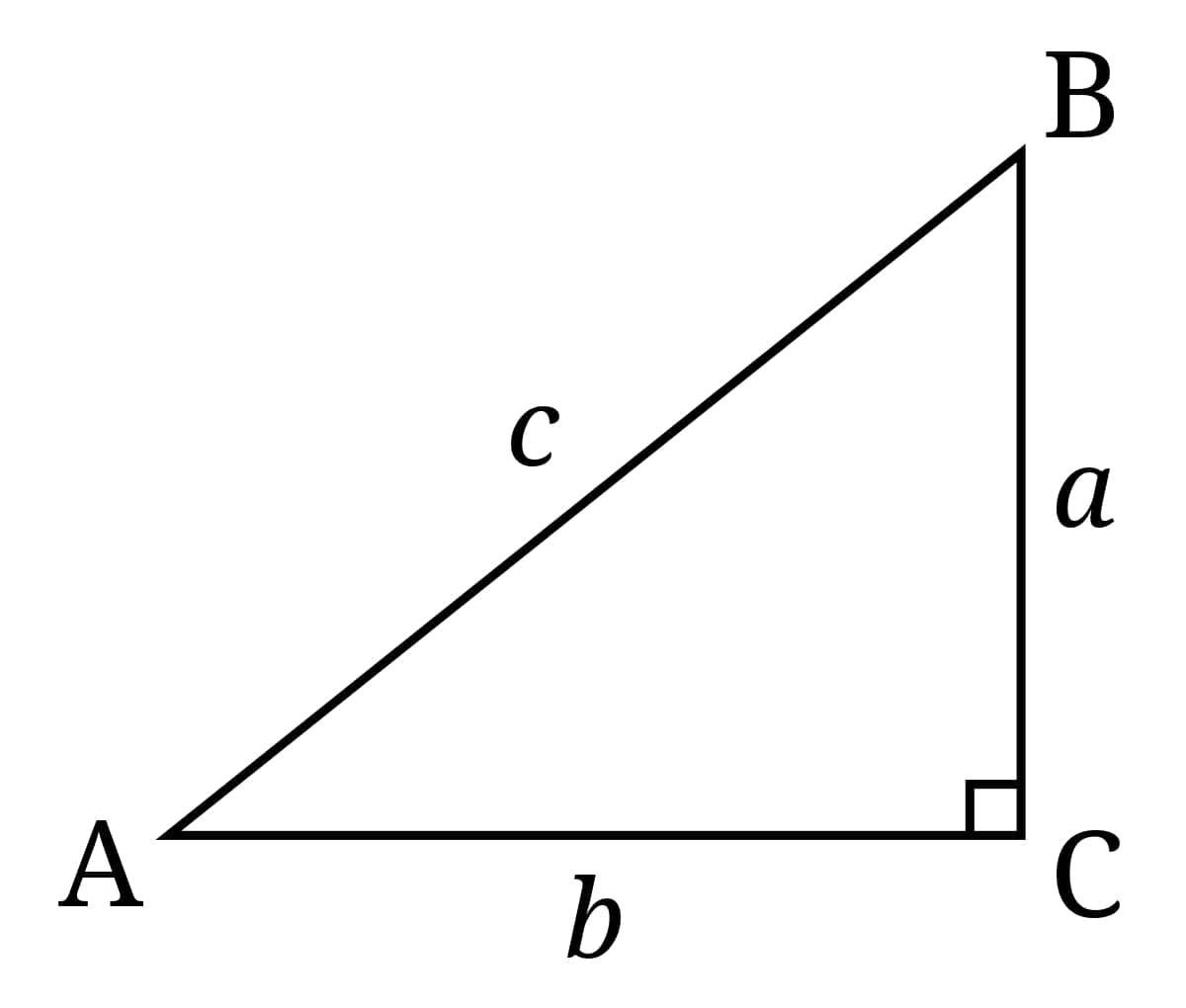
The ABC triangle formula refers to the fundamental application of the Pythagorean theorem and trigonometric ratios to resolve dimensions in right-angled triangles. By assigning variables A and B to the legs and C to the hypotenuse, the formula provides a mathematical framework to calculate unknown sides or angles based on known values within a three-sided structure.
Contents
The Foundation of the ABC Triangle Formula
At the heart of the ABC triangle formula lies the relationship defined by the Pythagorean theorem, which states that in a right-angled triangle, the square of the hypotenuse (the side opposite the right angle) is equal to the sum of the squares of the other two sides. In standard geometric notation, this is expressed as:
A² + B² = C²
In this equation, 'A' and 'B' represent the lengths of the two perpendicular sides (the legs), while 'C' represents the length of the longest side (the hypotenuse). Understanding this relationship is essential for fields ranging from architectural design and carpentry to navigation and physics.
To use the formula effectively, one must first verify that the triangle is indeed a right-angled triangle, meaning one of its internal angles measures exactly 90 degrees. If the triangle does not contain a right angle, the standard Pythagorean ABC formula is insufficient, and practitioners must turn to the Law of Cosines or the Law of Sines to calculate missing dimensions.
Identifying the Variables
To solve for an unknown value, you must accurately identify which parts of the triangle correspond to which variable.
- Side C (The Hypotenuse): Always the longest side, located directly across from the 90-degree angle. It is the constant denominator in many trigonometric ratios.
- Sides A and B (The Legs): These are the two sides that form the right angle. In basic calculations, they are interchangeable; however, in trigonometric functions (Sine, Cosine, Tangent), their identity becomes fixed based on the angle of reference.
Once you have identified at least two of these three variables, the formula can be rearranged to isolate the unknown. For example, if you know sides A and B and need to find C, you use the square root: C = √(A² + B²). If you have the hypotenuse (C) and one leg (A) and need to find the other leg (B), the formula becomes B = √(C² - A²).
Practical Applications in Construction and Design
The ABC triangle formula is a primary tool for ensuring structural squareness. In construction, the "3-4-5 rule" is a direct application of the formula. By ensuring that a triangle formed by sides of 3 units, 4 units, and 5 units exists at a corner, builders can guarantee that the corner is perfectly square (90 degrees).
Comparison of Geometric Calculation Methods
| Method | Best Use Case | Required Inputs |
|---|---|---|
| Pythagorean Theorem (A²+B²=C²) | Finding a missing side length | Two known side lengths |
| Sine Ratio (Sinθ = O/H) | Finding angles or unknown leg | One angle and hypotenuse |
| Cosine Ratio (Cosθ = A/H) | Finding angles or unknown leg | One angle and hypotenuse |
| Tangent Ratio (Tanθ = O/A) | Finding angles or slope | Two leg lengths |
These methods allow for more than just calculating lengths; they allow for the calculation of gradients and slopes. For instance, in site grading or roof pitch calculations, the ratio of the "rise" (leg A) over the "run" (leg B) is the tangent of the pitch angle, which is derived directly from the relationship between the sides of the triangle.
Limitations and Precision Requirements
While the formula is mathematically perfect, practical application requires attention to measurement errors. In professional settings, such as surveying or high-precision manufacturing, even a millimeter of deviation in the measurement of side A or side B will result in a compounded error when calculating side C.
Furthermore, the formula assumes a flat, two-dimensional plane (Euclidean geometry). If you are performing calculations for long-distance navigation on the Earth’s surface, the curve of the planet introduces spherical geometry, where the rules of the ABC triangle formula do not apply in their standard form. Always ensure the context of the problem is planar before relying on the Pythagorean theorem.
Troubleshooting Common Calculation Errors
The most frequent error when using the ABC triangle formula is misidentifying the hypotenuse. If a user mistakenly plugs one of the legs into the 'C' position in the equation, the result will be incorrect. Always visualize the 90-degree angle first; the side that does not touch that corner is your 'C' value.
Another common issue is improper squaring. When working with decimals, ensure that the squaring process is handled with high precision. For complex projects, it is standard practice to maintain four decimal places throughout the intermediate steps of the calculation, rounding only to the required final precision at the very end.
Expert Guidance for Complex Geometric Projects
If you are dealing with complex shapes that are not right-angled, do not attempt to force the ABC triangle formula. Instead, decompose the shape into multiple smaller right-angled triangles. By dropping a perpendicular line from an apex to the base, you can split a non-right triangle into two smaller triangles, both of which can then be solved using the standard ABC variables.
For professionals in fields like civil engineering, software-aided design (CAD) tools typically automate these calculations. However, understanding the underlying algebra remains critical for verifying the outputs of these systems and troubleshooting errors in automated data.
Frequently Asked Questions
Can the ABC triangle formula be used for non-right triangles? No. The standard A²+B²=C² formula only applies to right-angled triangles. For triangles without a 90-degree angle, you must use the Law of Sines or the Law of Cosines to calculate sides and angles.
What is the "3-4-5 rule" in relation to this formula? The 3-4-5 rule is the simplest integer-based application of the Pythagorean theorem. Because 3² (9) + 4² (16) = 5² (25), any triangle with sides in these proportions will always result in a perfect 90-degree angle.
Why is the hypotenuse always labeled as C? In standard mathematical notation, 'C' is the conventional variable assigned to the longest side. While you could technically use any variables, sticking to A, B, and C prevents confusion when sharing data with other professionals.
Is the ABC triangle formula affected by the unit of measurement? The formula works with any consistent unit of measurement. Whether you use inches, centimeters, or meters, the relationship remains the same, provided that all three sides are measured in the same unit.
What should I do if my calculated hypotenuse seems incorrect? Verify your measurement of the two legs. Ensure you are squaring the numbers correctly and that you are taking the square root of the sum (A² + B²) rather than the sum of the square roots.
For those engaging in technical or structural projects, the next action should be to verify your site measurements using a digital laser measure and then cross-reference your findings with the Pythagorean theorem. If the result of the calculation does not match your physical site constraints, re-verify the 90-degree angle of your initial corner, as it is likely that the "right" angle is slightly offset.
Image Gallery