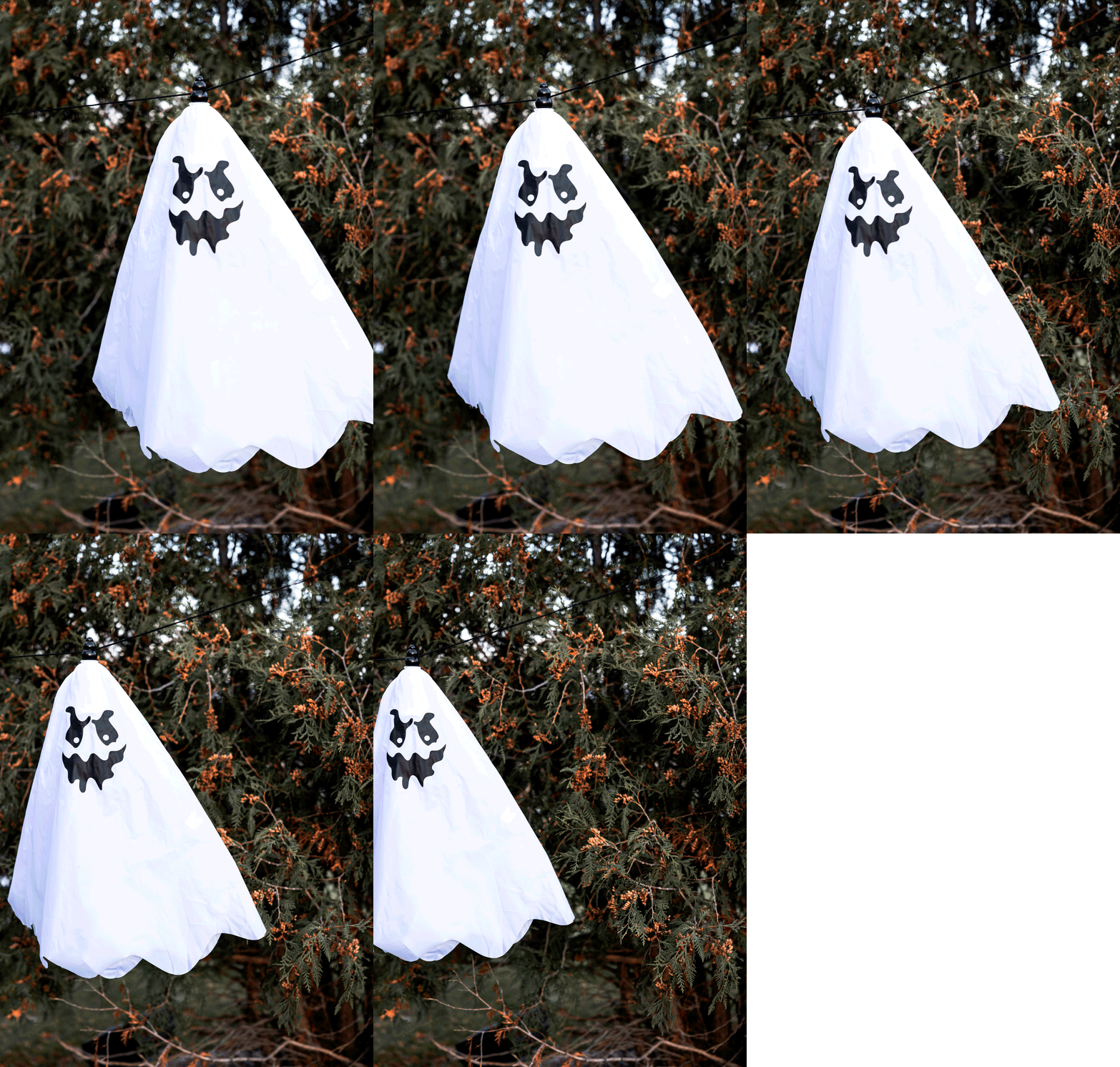
How to Make a Flying Ghost: A Comprehensive Guide to DIY Haunts
Making a flying ghost typically involves constructing a motorized pulley system known as a Flying Crank Ghost (FCG). This setup uses a slow-turning gear motor, a frame, and fishing lines to manipulate a lightweight cheesecloth figure,...
Making a flying ghost typically involves constructing a motorized pulley system known as a Flying Crank Ghost (FCG). This setup uses a slow-turning gear motor, a frame, and fishing lines to manipulate a lightweight cheesecloth figure, creating a realistic, floating movement that reacts to UV lighting for a professional-grade haunting effect.
Contents
Understanding the Flying Crank Ghost (FCG) Mechanism
The "Flying Crank Ghost" remains the gold standard for home haunters and professional scare actors alike. Developed originally by Doug Ferguson in the 1990s, the design has evolved significantly by 2026, incorporating smarter motors and lighter materials. The core principle relies on a simple mechanical conversion: turning the circular motion of a motor into the complex, multi-axis vertical motion of a spectral figure.
A standard FCG setup consists of a motor mounted to a frame, a rotating "crank arm" attached to the motor shaft, and a series of pulleys. As the crank arm spins, it pulls strings attached to the ghost’s head and hands. Because the strings are offset, the ghost doesn't just move up and down; it appears to bob, tilt, and sway in a lifelike—or rather, deathlike—manner.
The magic of this effect is heightened by the ghost's construction. Most builders use a "t-frame" made of lightweight wire or PVC for the ghost’s shoulders and a Styrofoam head. This "skeleton" is then draped in cheesecloth that has been treated with UV-reactive chemicals. When illuminated by a blacklight, the frame disappears, leaving only the glowing, moving fabric visible to the audience.
Essential Materials and Tools for Your 2026 Build
To build a high-quality flying ghost, you need a mix of mechanical components and craft supplies. In 2026, many hobbyists prefer high-torque, low-RPM gear motors that can be integrated into smart-home ecosystems via Matter or Thread protocols for synchronized show control.
Mechanical and Electronic Components
- Gear Motor: A 12V DC or 110V AC gear motor with a speed of 3 to 6 RPM. Modern brushless DC motors are preferred for their silent operation.
- Crank Arm: A sturdy piece of aluminum or wood (approximately 10–12 inches long) that attaches to the motor shaft.
- Pulleys: Small, smooth-rolling swivel pulleys (typically 3 to 4 are needed).
- Fishing Line: High-test (20–40 lb) monofilament or braided line. Braided line is often preferred in 2026 for its lack of "memory" and reduced tangling.
- Frame Material: 1/2-inch PVC piping and assorted connectors (T-joints and elbows).
The Ghost Body
- Cheesecloth: Grade 10 or 20 cheesecloth provides the best "tattered" look.
- Styrofoam Head: A standard wig head or a custom-sculpted foam skull.
- Laundry Brightener: A liquid containing optical brighteners (like RIT Whitener & Brightener) to make the fabric glow under UV light.
- Wire: 12-gauge galvanized wire for the arms and shoulder structure.
Step-by-Step Construction of a Mechanical Flying Ghost
The construction process requires precision in the "rigging" phase to ensure the movement is fluid rather than jerky.
1. Building the Support Frame
Construct a rectangular frame using PVC pipe. This frame will be mounted to your ceiling or a hidden support structure. The frame needs to be wide enough to accommodate the pulleys—generally about 24 inches wide and 36 inches long. Mount the motor in the center of one of the shorter ends of the rectangle. Ensure the motor is securely fastened, as any vibration will travel down the lines and ruin the illusion.
2. Crafting the Crank Arm and Rigging
Attach your crank arm to the motor shaft. At the end of the crank arm, attach three separate fishing lines. These lines will travel from the crank arm, through specific pulleys mounted on the frame, and down to the ghost.
- Line 1 (Head): Runs to a pulley directly above where the ghost will hang.
- Lines 2 and 3 (Hands): Run to pulleys positioned about 18 inches to the left and right of the center pulley.
By varying the distance of the attachment points on the crank arm, you create "asymmetric" movement. If the hand lines are attached further out on the arm than the head line, the hands will move more dramatically than the head.
3. Creating the Spectral Figure
Do not make the ghost too heavy. A heavy ghost puts strain on the motor and causes the lines to snap. Use a Styrofoam head and a simple wire "T" for the shoulders. Bend the wire at the "elbows" to give the arms a natural hang.
Soak your cheesecloth in a mixture of water and laundry brightener, then wring it out and drape it over the frame while wet. Let it dry in place; this creates a stiff, ghostly shape that holds its form but still catches the air. Shred the bottom edges of the cloth with a wire brush or scissors to create a wispy, ethereal effect.
4. Balancing and Calibration
Once the ghost is hung, turn on the motor to test the range of motion. If the ghost hits the ceiling or the floor, adjust the length of the fishing lines. In 2026, many builders use small fishing "swivels" at the attachment points to prevent the lines from twisting as the crank arm rotates.
Advanced Variations: Drone-Powered and Smart-Controlled Ghosts
While the mechanical FCG is a classic, 2026 technology offers more mobile alternatives for those who want their ghosts to travel across a yard rather than hover in one spot.
Drone-Based Ghosts
Using a consumer drone (such as a DJI Mini or Air series) allows for a "roaming" ghost. However, this requires extreme caution. You cannot simply drape a sheet over a drone; doing so will block the downward-facing sensors and the cooling vents, leading to a crash.
- The Rig: Build a lightweight "umbilical" using a thin carbon fiber rod extending 3-4 feet below the drone.
- The Figure: Attach a very small, ultra-lightweight ghost to the bottom of the rod.
- Safety: Always operate in a controlled environment. In 2026, ensure you are compliant with FAA Part 107 or local equivalent regulations regarding night flights and flight over people.
Smart Integration and Automation
Modern DIY haunting utilizes microcontrollers like the ESP32. By connecting your gear motor to a smart relay, you can program the ghost to only "activate" when a PIR (Passive Infrared) motion sensor detects a guest. This preserves the motor's lifespan and provides a "jump scare" element that a continuously running motor lacks.
Lighting and Atmospheric Effects for Maximum Realism
A flying ghost is only as good as the lighting that illuminates it. If the audience can see the PVC frame or the fishing lines, the illusion is shattered.
The UV Strategy
True blacklights (365nm wavelength) are superior to the cheaper "purple" lights often sold in big-box stores. The 365nm light is nearly invisible to the human eye but causes the treated cheesecloth to fluoresce brilliantly. Place your UV floodlights on the ground, angled upward, or hidden behind props. This ensures the light hits the ghost but doesn't "spill" onto the ceiling or the rigging.
Using Fog and Wind
A low-lying fog machine adds a layer of depth to the scene. By keeping the fog near the floor, you create a "ground" for the ghost to float above. Additionally, a small, low-powered fan placed off to the side can catch the loose strands of cheesecloth, adding a secondary layer of unpredictable movement to the mechanical bobbing of the FCG.
Comparison of Flying Ghost Methods
| Method | Cost (Est. 2026) | Complexity | Realism | Best Use Case |
|---|---|---|---|---|
| Mechanical FCG | $150 - $300 | High | Professional | Porches, Windows, Indoor Displays |
| Drone Ghost | $500 - $1,200 | Very High | Cinematic | Large Yards, Filming, Events |
| Zip-Line Ghost | $50 - $100 | Medium | Action-Oriented | Fast "Scare" moments across paths |
| Static Fan Ghost | $30 - $60 | Low | Ambient | Budget-friendly yard filling |
Safety and Troubleshooting
When working with motorized props, safety is paramount. Always ensure that the motor and all electrical connections are housed in a weather-resistant enclosure if used outdoors.
Common Issues and Solutions
- Motor Overheating: This usually happens if the ghost is too heavy or the crank arm is too long. Reduce the weight of the figure or use a higher-torque motor.
- Line Tangling: If the fishing lines wrap around each other, ensure your pulleys are spaced far enough apart. Adding small lead weights (fishing sinkers) inside the ghost's hem can help keep the lines taut.
- Visible Lines: If the fishing line reflects light, rub it with a black permanent marker or use "smoke" colored braided line, which is less reflective under UV light.
FAQ
How do I make the ghost look like it’s disappearing?
By using a "scrim" or thin black mesh in front of the ghost's path, you can control visibility. When the UV light is faded out using a DMX controller, the ghost seemingly vanishes into the darkness. In 2026, many haunters use smart LED UV bars that can be programmed to pulse or fade via an app.
Can I use a regular oscillating fan instead of a motor?
Yes, for a "Fan Ghost," you can use a high-velocity fan pointed upwards into a lightweight silk or nylon bag shaped like a ghost. This creates a jittery, high-energy movement. It is easier to set up than an FCG but lacks the slow, graceful floating motion that makes the crank ghost so eerie.
What is the best fabric for a flying ghost?
Cheesecloth remains the best because its loose weave allows air to pass through, reducing the "sail effect" that can cause a ghost to swing uncontrollably. For a more modern look, some builders use "scrim" fabric or iridescent organza, which catches light in a more magical, less "decayed" way.
Is it safe to leave the ghost running all night?
Most 110V gear motors are rated for continuous use, but it is better to use a timer or motion sensor. Continuous friction can eventually wear down the fishing lines where they pass through the pulleys. Inspect your lines every few nights for fraying.
How do I stop the ghost from spinning in circles?
The three-point harness (one head line, two hand lines) is designed specifically to prevent spinning. If your ghost is still rotating, ensure the hand lines are attached to the wire frame of the ghost's shoulders rather than just the fabric. This provides a rigid structure that resists twisting.
Practical Recommendation
If you are a beginner, start with a Zip-Line Ghost using a simple pulley and gravity to get a feel for how fabric moves in the wind. For those looking to create a permanent, professional-grade Halloween display, investing the time to build a Flying Crank Ghost with a 12V DC motor and UV-reactive cheesecloth is the most rewarding path. Ensure you test your rig at least two weeks before your event to allow time for line adjustments and motor calibration.
Image Gallery