Why Azure Cloud Security Principles Matter for Every Business
Azure cloud security principles provide a standardized framework that protects organizational assets by balancing rigorous technical controls with operational flexibility. By adhering to the Shared Responsibility Model, Zero Trust arch...
Azure cloud security principles provide a standardized framework that protects organizational assets by balancing rigorous technical controls with operational flexibility. By adhering to the Shared Responsibility Model, Zero Trust architecture, and Defense in Depth, businesses ensure data integrity, maintain regulatory compliance, and mitigate the evolving cyber threats inherent in the 2026 digital landscape.
Contents
The transition to cloud computing is no longer a prospective strategy but a foundational reality for modern enterprises. As of 2026, the complexity of hybrid and multi-cloud environments has made ad-hoc security measures obsolete. Microsoft Azure’s security ecosystem is built upon several core principles designed to protect against sophisticated threats while enabling rapid innovation. Understanding these principles is not merely an IT requirement; it is a fundamental business necessity for risk management and long-term viability.
The Foundation of Trust: The Shared Responsibility Model
One of the most critical Azure cloud security principles is the Shared Responsibility Model. This framework defines the security obligations of the cloud provider (Microsoft) versus those of the customer (the business). Misunderstanding this division is a primary cause of cloud security failures.
In a traditional on-premises environment, the business is responsible for everything—from physical building security and server hardware to data encryption and application patching. In Azure, these responsibilities shift based on the service model used: Infrastructure as a Service (IaaS), Platform as a Service (PaaS), or Software as a Service (SaaS).
Understanding the Division of Labor
In every cloud scenario, the business always retains ownership and responsibility for its data and identities. Microsoft, conversely, is always responsible for the physical security of the data centers, the physical network, and the physical hosts. The "gray area" exists in the middle layers, such as the operating system, network controls, and application stacks.
For example, in an IaaS model (like Azure Virtual Machines), the business is responsible for patching the guest operating system and configuring the network security groups. If a business fails to patch an OS vulnerability, Microsoft is not liable for the resulting breach. Conversely, in a SaaS model (like Microsoft 365), the business focuses almost entirely on identity management and data governance, while Microsoft handles the underlying software maintenance and infrastructure.
This principle matters for every business because it clarifies accountability. It prevents the dangerous assumption that "the cloud is inherently secure," forcing leadership to identify exactly which security controls they must implement to protect their specific workloads.
Zero Trust: The Modern Security Mandate
By 2026, the traditional "castle and moat" security strategy—where everything inside the corporate network is trusted—has been completely replaced by the Zero Trust model. Azure integrates Zero Trust at its core, operating on the mantra: "Never trust, always verify."
The Zero Trust principle is built on three main pillars:
- Verify Explicitly: Always authenticate and authorize based on all available data points, including user identity, location, device health, service or workload, and data classification.
- Use Least Privileged Access: Limit user access with Just-In-Time (JIT) and Just-Enough-Access (JEA), risk-based adaptive polices, and data protection to secure both data and productivity.
- Assume Breach: Minimize blast zones and segment access. Verify end-to-end encryption and use analytics to get visibility, drive threat detection, and improve defenses.
Why Zero Trust is Non-Negotiable
For a business, Zero Trust reduces the risk of lateral movement. If a single employee’s credentials are compromised, Zero Trust principles ensure the attacker cannot easily move from an email account to a sensitive financial database. Through tools like Microsoft Entra ID (formerly Azure Active Directory), businesses can enforce Conditional Access policies. These policies might require multi-factor authentication (MFA) only when a user attempts to log in from an unrecognized device or a high-risk location, balancing security with user experience.
| Feature | Traditional Security | Zero Trust (Azure) |
|---|---|---|
| Trust Level | High trust for internal users | Zero trust for all users |
| Verification | One-time at the perimeter | Continuous and explicit |
| Access Control | Broad network access | Least privileged access (JIT/JEA) |
| Response Strategy | Defensive/Reactive | Proactive "Assume Breach" |
| Visibility | Siloed monitoring | Integrated AI-driven analytics |
Defense in Depth: Layering Your Protections
Azure emphasizes a "Defense in Depth" approach, which utilizes a layered set of security controls. If one layer is bypassed, the next is there to stop the threat. This principle matters because no single security solution is foolproof in 2026.
The Seven Layers of Azure Security
- Physical Security: Microsoft’s data centers are protected by high-perimeter fencing, biometric scanners, and 24/7 surveillance. Most businesses could never afford the level of physical security Microsoft provides.
- Identity and Access: This is the primary perimeter in the cloud. Using Entra ID and MFA ensures that only authorized individuals can access resources.
- Perimeter: Azure DDoS Protection and Azure Firewall safeguard against large-scale network attacks and unauthorized traffic.
- Network: Virtual Network (VNet) segmentation and Network Security Groups (NSGs) limit communication between different parts of the cloud environment.
- Compute: Securing virtual machines and containers through regular patching, disk encryption, and vulnerability scanning (via Microsoft Defender for Cloud).
- Application: Protecting the code and the application lifecycle. Azure Web Application Firewall (WAF) protects against common web vulnerabilities like SQL injection.
- Data: This is the innermost layer. Azure provides encryption for data at rest (using BitLocker or Azure Disk Encryption) and data in transit (using TLS/SSL).
By applying security at every layer, businesses create a "friction-heavy" environment for attackers. It significantly increases the cost and effort required for a breach, often deterring attackers who prefer easier targets.
Governance, Compliance, and the Regulatory Landscape
In 2026, data sovereignty and regulatory compliance are major business drivers. Whether it is GDPR in Europe, CCPA/CPRA in California, or specialized regulations like HIPAA or SOC 2, businesses face massive fines for non-compliance.
Azure cloud security principles integrate governance directly into the platform. Azure Policy allows businesses to create "guardrails." For example, a business can set a policy that prevents any data from being stored in a region outside of the United Kingdom. If a developer tries to spin up a server in an unapproved region, the system automatically blocks the action.
Furthermore, Microsoft Defender for Cloud provides a centralized dashboard that tracks compliance against international standards. This "Compliance Score" gives leadership a tangible metric to measure their security posture. For a business, this simplifies the audit process and provides a competitive advantage when bidding for contracts that require high-security standards.
The Economic Impact of Security Principles
Adopting Azure security principles is often seen as a cost center, but in 2026, it is a significant cost-saver. The average cost of a data breach has continued to rise, encompassing not just legal fees and fines but also brand damage and lost customer trust.
Azure's automated security features reduce the manual burden on IT staff. By using Microsoft Sentinel, an AI-powered Security Information and Event Management (SIEM) tool, businesses can automate the response to common threats. Instead of an IT manager waking up at 3:00 AM to block a suspicious IP address, the system identifies the pattern and executes the block automatically based on pre-defined security principles.
Moreover, following the principle of "Least Privilege" reduces the "blast zone" of any potential error. Human error remains a leading cause of outages and security incidents. By limiting what each user and service can do, businesses minimize the potential financial impact of accidental misconfigurations.
Implementing Azure Security: A Practical Roadmap
To effectively leverage these principles, businesses should follow a structured implementation path:
- Secure Identities: Enable MFA for 100% of users. Transition to passwordless authentication where possible to eliminate the most common attack vector.
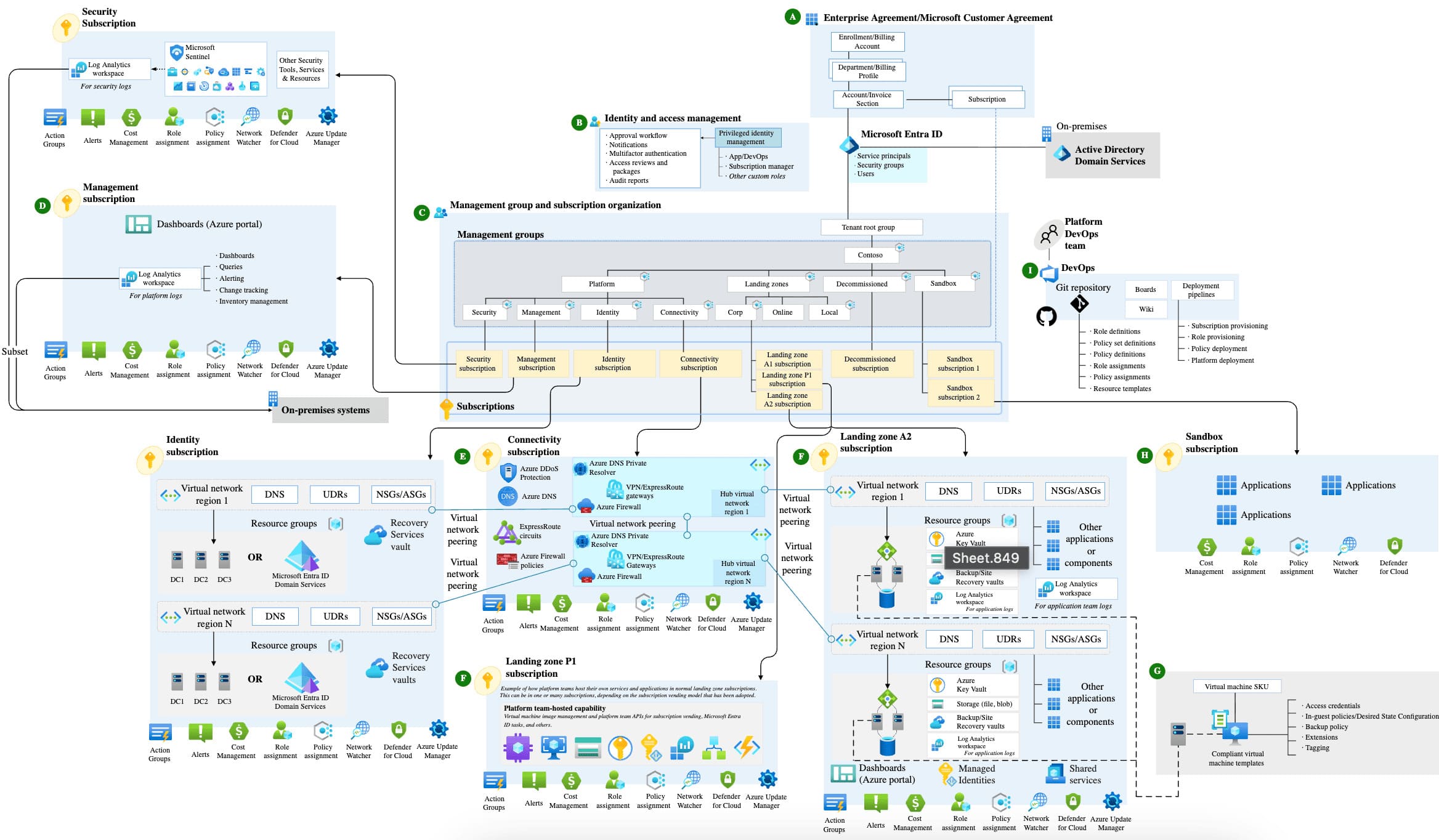
- Establish Governance: Use Azure Landing Zones to ensure that every new resource deployed in the cloud automatically inherits the company’s security and compliance policies.
- Encrypt Everything: Ensure that all storage accounts and databases use at least service-managed encryption. For highly sensitive data, use Azure Key Vault to manage your own encryption keys.
- Monitor and Refine: Security is not a "set it and forget it" task. Regularly review the recommendations in Azure Advisor and Microsoft Defender for Cloud to close security gaps as new threats emerge.
Frequently Asked Questions
What is the most important Azure security principle for a small business?
The Shared Responsibility Model is the most vital for small businesses to understand. Small organizations often assume Microsoft handles all security, leading them to leave databases exposed or accounts without MFA. Recognizing that the business is responsible for its own data and access controls is the first step toward a secure cloud presence.
How does Azure ensure data residency and sovereignty?
Azure offers "Region Pairs" and specific sovereign clouds (like Azure Government). Through Azure Policy, businesses can restrict resource deployment to specific geographic locations to comply with local laws, ensuring that data never leaves a specific jurisdiction without authorization.
Can a business be compliant but not secure?
Yes. Compliance is a "point-in-time" check against a set of rules, whereas security is a continuous operational state. You can meet the minimum requirements for a certificate (compliance) while still having weak internal processes or unpatched systems (lack of security). Azure security principles aim to bridge this gap by making security an automated, continuous process.
Is cloud security really better than on-premises security?
Generally, yes. Microsoft invests billions of dollars annually in security research and infrastructure. For most businesses, matching the physical security, redundant power, global threat intelligence, and hardware-level protections provided by Azure is financially and operationally impossible.
How does AI impact Azure security principles in 2026?
AI is now deeply integrated into the "Assume Breach" and "Verify Explicitly" principles. Azure uses machine learning to analyze trillions of signals daily to identify "impossible travel" logins (e.g., logging in from London and then New York 10 minutes later) and to automatically remediate known malware patterns before they can execute.
Next Actions for Your Business
To begin aligning with these principles, start by conducting a Microsoft Defender for Cloud assessment. This will provide an immediate "Secure Score" and a prioritized list of actions to improve your posture. Focus first on identity security—specifically MFA and Conditional Access—as these provide the highest return on investment in terms of risk reduction. For businesses in regulated industries, review the Azure Blueprints and compliance offerings to ensure your environment meets the necessary legal standards for 2026.
Image Gallery