Truck Bed Sizes Explained: A Clear Guide to Selecting the Right Configuration
Truck bed sizes vary by manufacturer and trim level, typically ranging from short beds (approximately 5.5 to 5.8 feet), standard beds (6.5 feet), and long beds (8 feet). Selecting the right size requires balancing your need for cargo v...
Truck bed sizes vary by manufacturer and trim level, typically ranging from short beds (approximately 5.5 to 5.8 feet), standard beds (6.5 feet), and long beds (8 feet). Selecting the right size requires balancing your need for cargo volume and payload capacity against the vehicle’s overall maneuverability, parking feasibility, and wheelbase length.
Contents
Choosing the right pickup truck involves more than selecting a brand or engine type; the configuration of the cargo box is often the deciding factor in how effectively the vehicle serves your professional or personal needs. While marketing terminology varies—often categorized as short, standard, or long—these labels are relative to the specific model. A "short" bed on a heavy-duty truck may actually offer more interior volume than a standard bed on a mid-sized truck. Understanding how these measurements correlate to your specific tasks is essential for optimizing your investment and operational efficiency.
The Core Measurements: Understanding Bed Classifications
Most consumer and commercial pickup trucks are categorized into three primary bed lengths. While these categories provide a general frame of reference, actual physical dimensions shift based on the truck's chassis, cab style, and manufacturer engineering.
Short Beds (Short Box)
Typically spanning 5.5 to 5.8 feet, the short bed is the most common configuration for crew-cab trucks. It prioritizes passenger cabin space, resulting in a smaller footprint that is easier to park and maneuver in urban environments.
- Best for: Daily commuting, family transport, and occasional light hauling.
- Limitations: Difficult to transport full-sized sheets of plywood or long lumber without lowering the tailgate; limits the size of bulky items like ATVs or large tool chests.
Standard Beds (Regular Box)
The standard bed measures approximately 6.5 feet. This is widely considered the "middle-ground" configuration. It strikes a balance between a spacious cab and a functional cargo area.
- Best for: Contractors, outdoor enthusiasts, and those who need to haul standard construction materials (like 4x8 sheets) with the tailgate closed.
- Limitations: Results in a longer overall vehicle length, which can complicate tight-space navigation and requires more garage depth.
Long Beds (Long Box)
Measuring 8 feet in length, this configuration is the industry standard for dedicated work trucks. It offers the maximum possible flat surface area for cargo.
- Best for: Commercial heavy lifting, towing gooseneck trailers, and transporting high-volume equipment or materials.
- Limitations: Significant impact on the vehicle’s turning radius and daily drivability. Most long-bed trucks are paired with Regular or Extended cabs to keep the total vehicle length manageable, which may reduce passenger capacity.
Why Dimensions Matter: Technical and Operational Impact
The utility of a truck bed is determined by more than just length. Width and depth significantly dictate the total cubic volume and the compatibility of various bed accessories.
Interior Width and Wheel Well Clearance
Even if a bed is long enough, it must be wide enough to accommodate your load. The most critical measurement here is the space between the wheel wells. If you plan to carry construction materials or pallets, ensure the bed width at the wheel wells is at least 48 inches. Most full-sized trucks are designed with this dimension in mind, but mid-sized trucks often fail to accommodate full-width sheets flat on the floor.
Bed Depth
The depth of the sidewalls determines your maximum load volume. Deeper beds provide better security for tall items and increase the total cubic footage for loose cargo, such as gravel, mulch, or firewood. However, deeper sides can make reaching over the rail into the bed difficult for shorter users or those loading items from the side.
The Trade-off: Wheelbase and Maneuverability
The primary physical cost of increasing bed size is an extended wheelbase. A longer truck requires a wider arc to complete turns and possesses a greater "break-over" angle. In 2026, many urban parking structures are designed for compact vehicles; a crew-cab, long-bed truck may physically exceed the depth of standard parking stalls, creating logistical challenges in commercial centers or residential neighborhoods.
Bed Size Comparison Summary
| Bed Type | Approximate Length | Primary Utility | Best Paired With |
|---|---|---|---|
| Short Bed | 5.5–5.8 feet | Passenger/Light Cargo | Crew Cab |
| Standard Bed | 6.5 feet | Mixed Use/Contracting | Double/Crew Cab |
| Long Bed | 8 feet | Commercial/Heavy Haul | Regular/Extended Cab |
Factors to Consider Before Purchasing
Before finalizing your truck purchase, evaluate your specific requirements against the physical constraints of each bed type.
1. Payload and Towing Requirements
Check if the bed size you are considering limits your choice of cab. Some configurations force a trade-off: a heavy-duty truck with a crew cab and an 8-foot bed results in an extremely long vehicle that may hit maximum curb weight limits faster than smaller configurations. Additionally, confirm that the bed length you choose does not interfere with the hitching points required for your trailer type.
2. Accessory Compatibility
Tonneau covers, bed liners, and sliding storage systems are model-specific and bed-length-specific. If you plan to upfit your truck with specialized storage, verify that the market support for that specific bed length is robust. Purchasing a non-standard or unique bed length can significantly increase the cost of aftermarket accessories.
3. Resale and Market Demand
Standard and short-bed trucks typically enjoy higher turnover rates in the private used market because they function well as family vehicles. Long-bed trucks, while highly desirable for commercial buyers, may sit on the market longer if the pool of private buyers is restricted by the vehicle's large footprint.
Frequently Asked Questions
Can I carry a full sheet of plywood in a short bed?
Usually, no. A standard sheet of plywood is 4 feet by 8 feet. In a short bed (roughly 5.5 to 5.8 feet), the sheet will extend well beyond the tailgate. You would need to use a bed extender or leave the tailgate down and secure the load with heavy-duty straps.
Does a longer bed affect my truck's fuel economy?
The bed length itself has a marginal impact on aerodynamics. However, the increased weight associated with a longer chassis and the potential for a larger engine/drivetrain required to move that increased mass will lead to lower fuel efficiency compared to a lighter, short-bed equivalent.
Is the bed length measured from the tailgate?
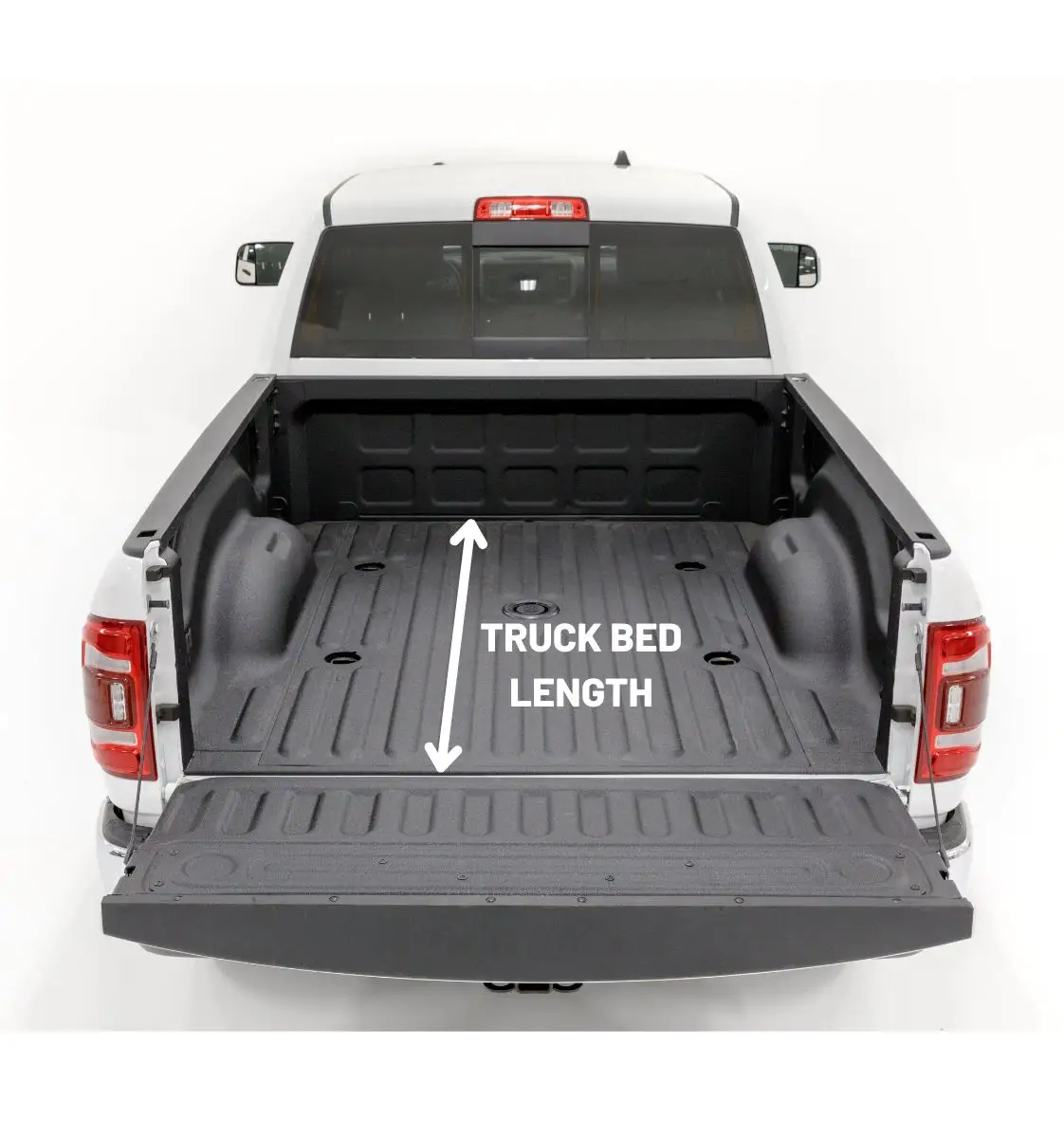
Bed length is measured from the inside of the bulkhead (the wall closest to the cab) to the inside of the tailgate when closed. Always measure the internal floor space rather than relying on exterior bumper-to-bumper dimensions.
How do wheel wells impact loading?
Wheel wells are the protrusions in the floor of the bed over the rear tires. They reduce the usable flat floor area. If you need to slide a wide object into the bed, the distance between the wheel wells is your "limiting factor."
Which bed size is best for a fifth-wheel trailer?
For fifth-wheel and gooseneck towing, a longer bed is generally preferred to provide better clearance during tight turns. A short bed can work, but it often requires a sliding fifth-wheel hitch to prevent the trailer from striking the back of the cab during sharp maneuvers.
Next Actions
Identify your top three hauling tasks. If you move bulky, high-volume items (landscaping, lumber, machinery) weekly, prioritize the 8-foot long bed. If your truck is a daily driver used for light tasks like camping gear or home improvement errands, a 5.5- or 6.5-foot bed provides the best balance of utility and ease of operation. Visit a local dealership with your measuring tape to test the bed floor width against your specific equipment before signing any purchase agreements.
Image Gallery