Creating an As-Is Bill of Sale in California: A 2026 Guide for Private Sellers
An "as-is" bill of sale in California is a legal document used in private party vehicle transactions to formally transfer ownership while explicitly stating that the buyer accepts the vehicle in its current condition. By using this doc...
An "as-is" bill of sale in California is a legal document used in private party vehicle transactions to formally transfer ownership while explicitly stating that the buyer accepts the vehicle in its current condition. By using this document, the seller disclaims responsibility for any future repairs, defects, or mechanical failures occurring after the sale.
Contents
The Legal Framework of Private Party Sales in California
In California, private party vehicle sales operate under the principle of caveat emptor, or "buyer beware." Unlike purchases from licensed dealerships, which are subject to stringent California Lemon Laws and consumer protection statutes, private sales are largely governed by the California Vehicle Code (CVC) and the terms agreed upon between the two parties.
When you sell a vehicle "as-is," you are effectively notifying the buyer that no express or implied warranties are provided. Under California law, a seller must be honest about the vehicle's condition, but they are generally not required to provide a warranty for a used vehicle unless they have knowingly misrepresented its state.
Essential Components of a Valid California Bill of Sale
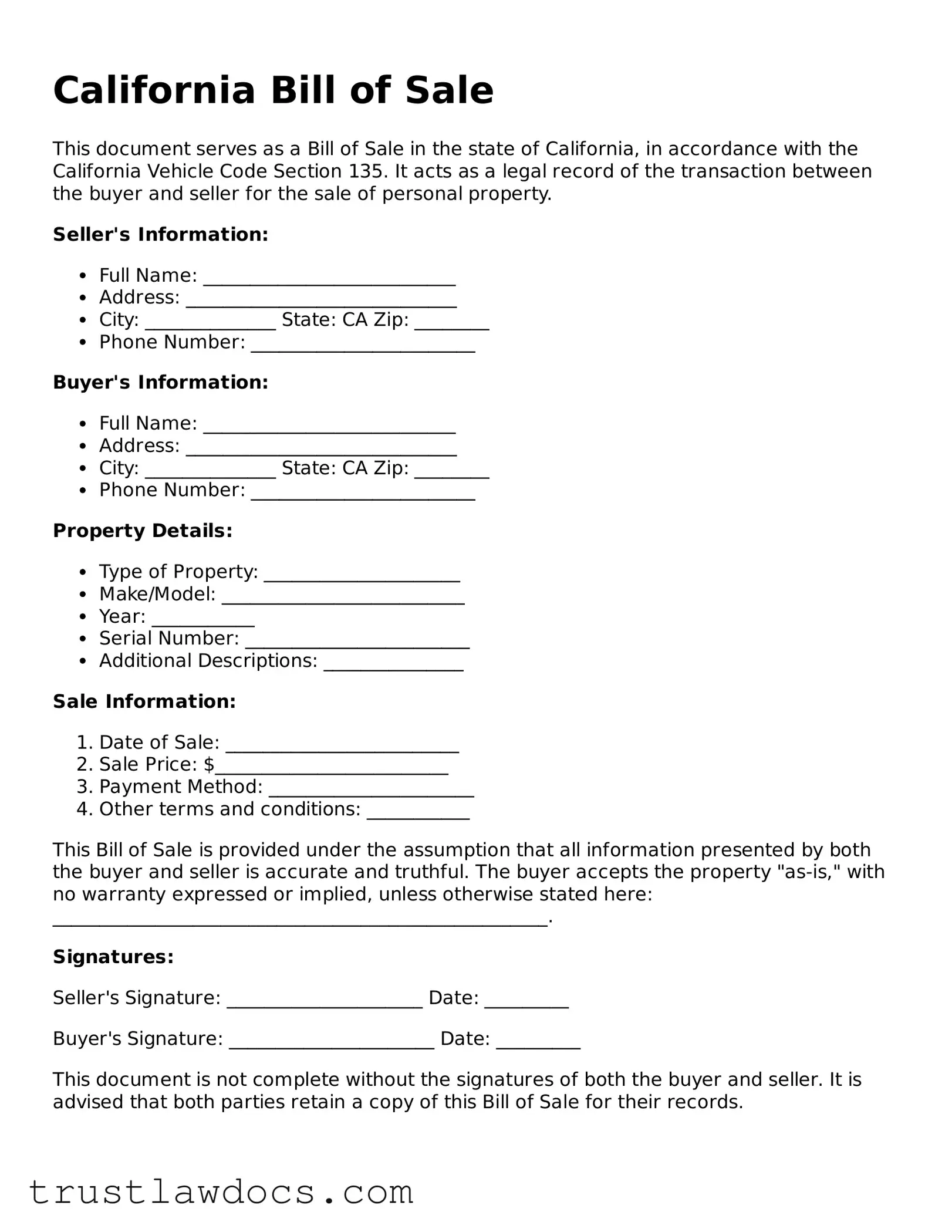
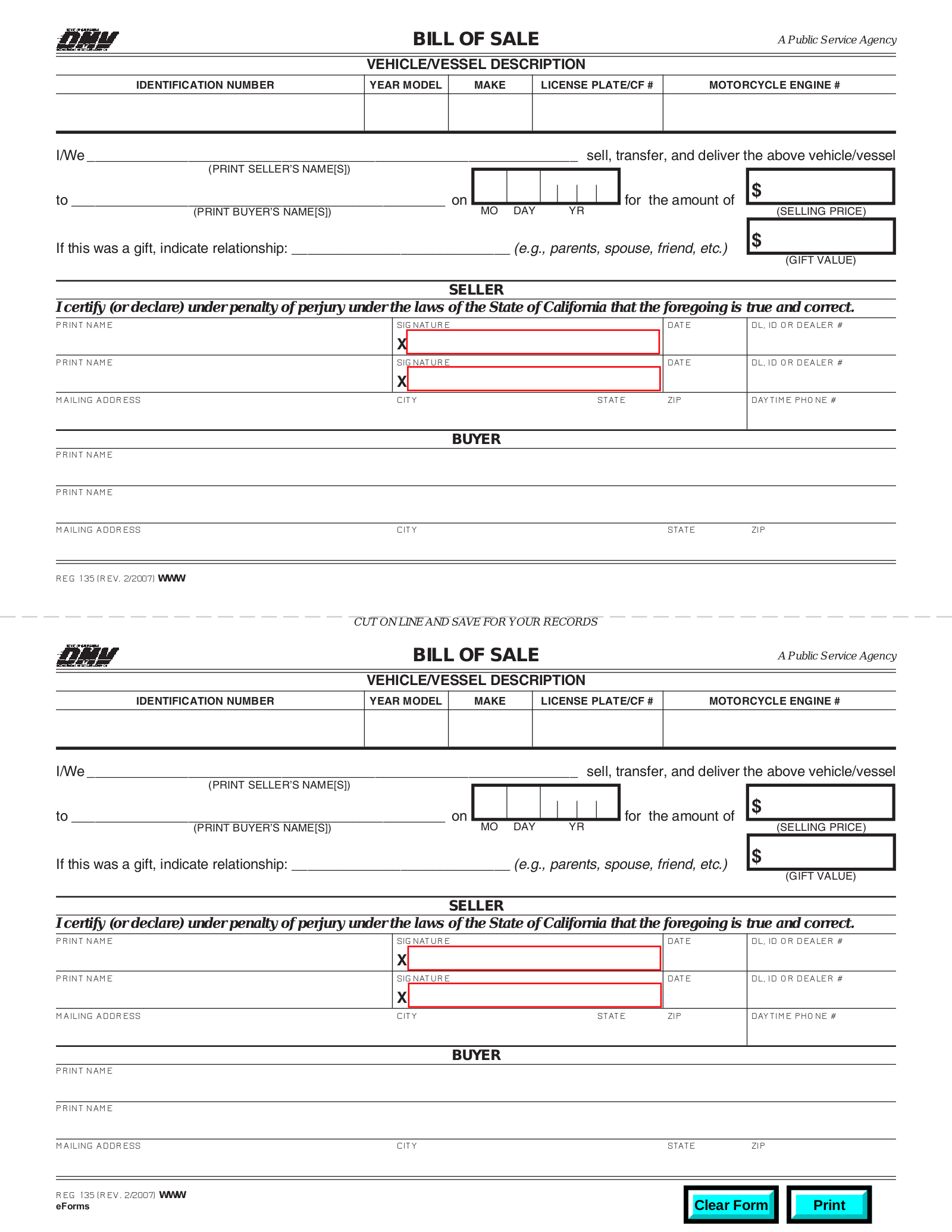
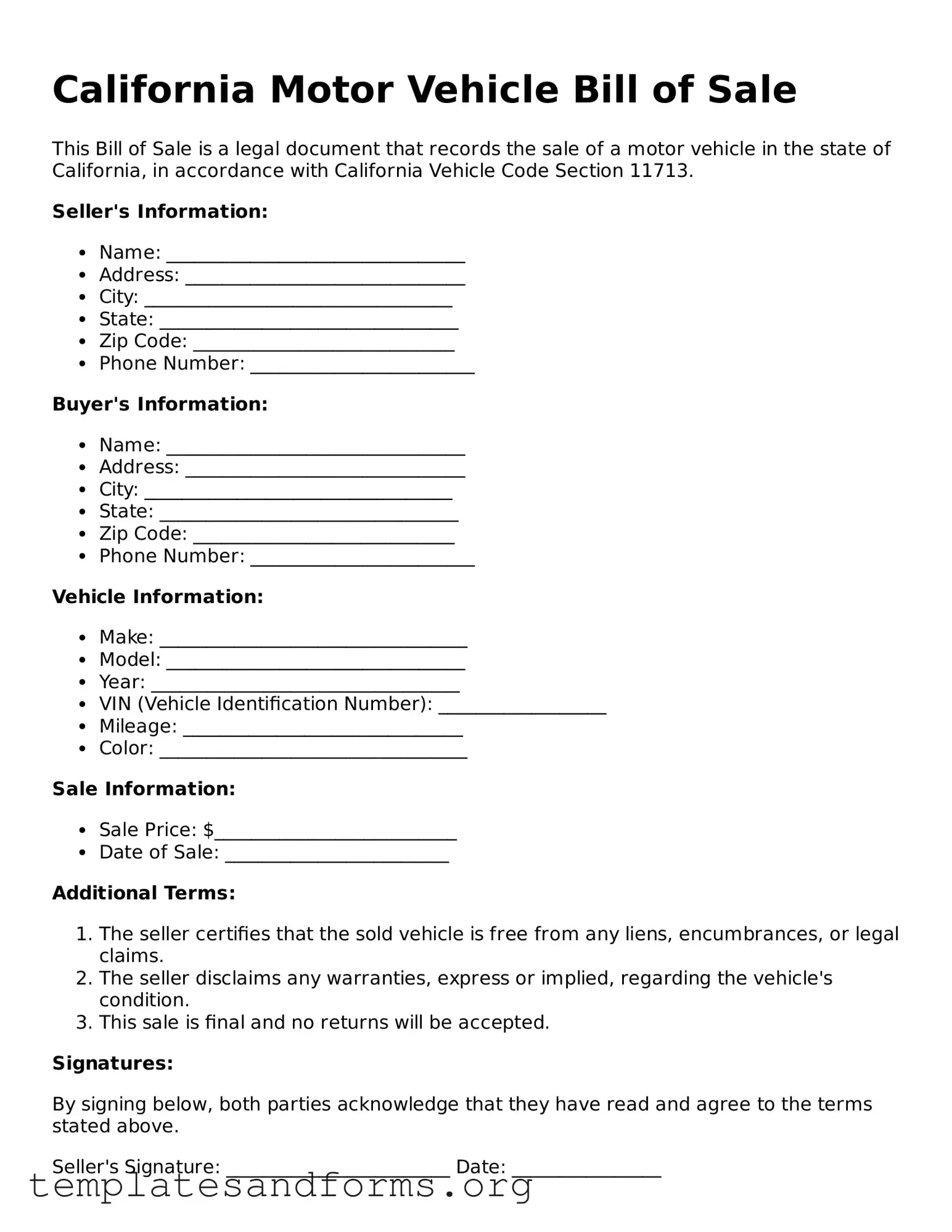
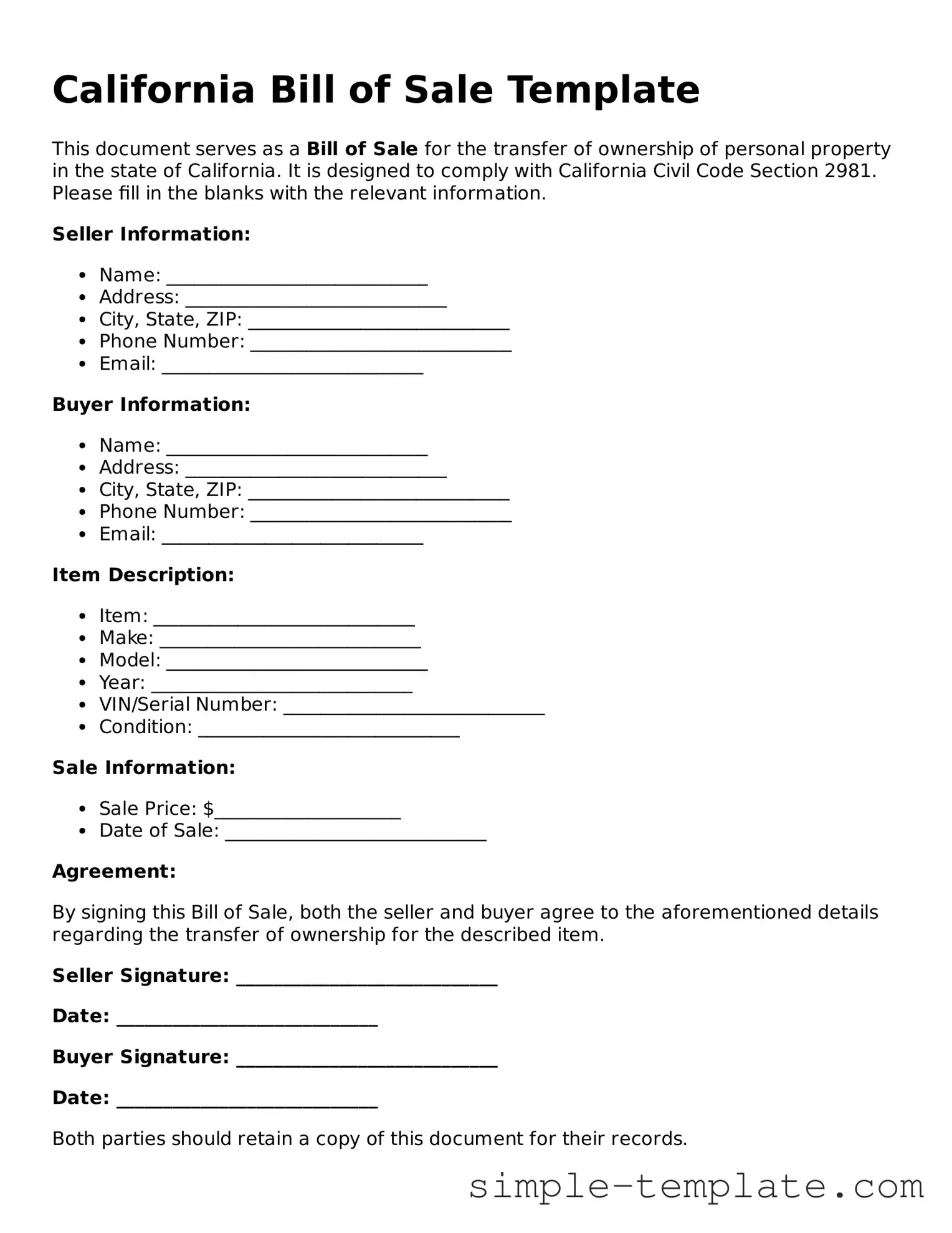
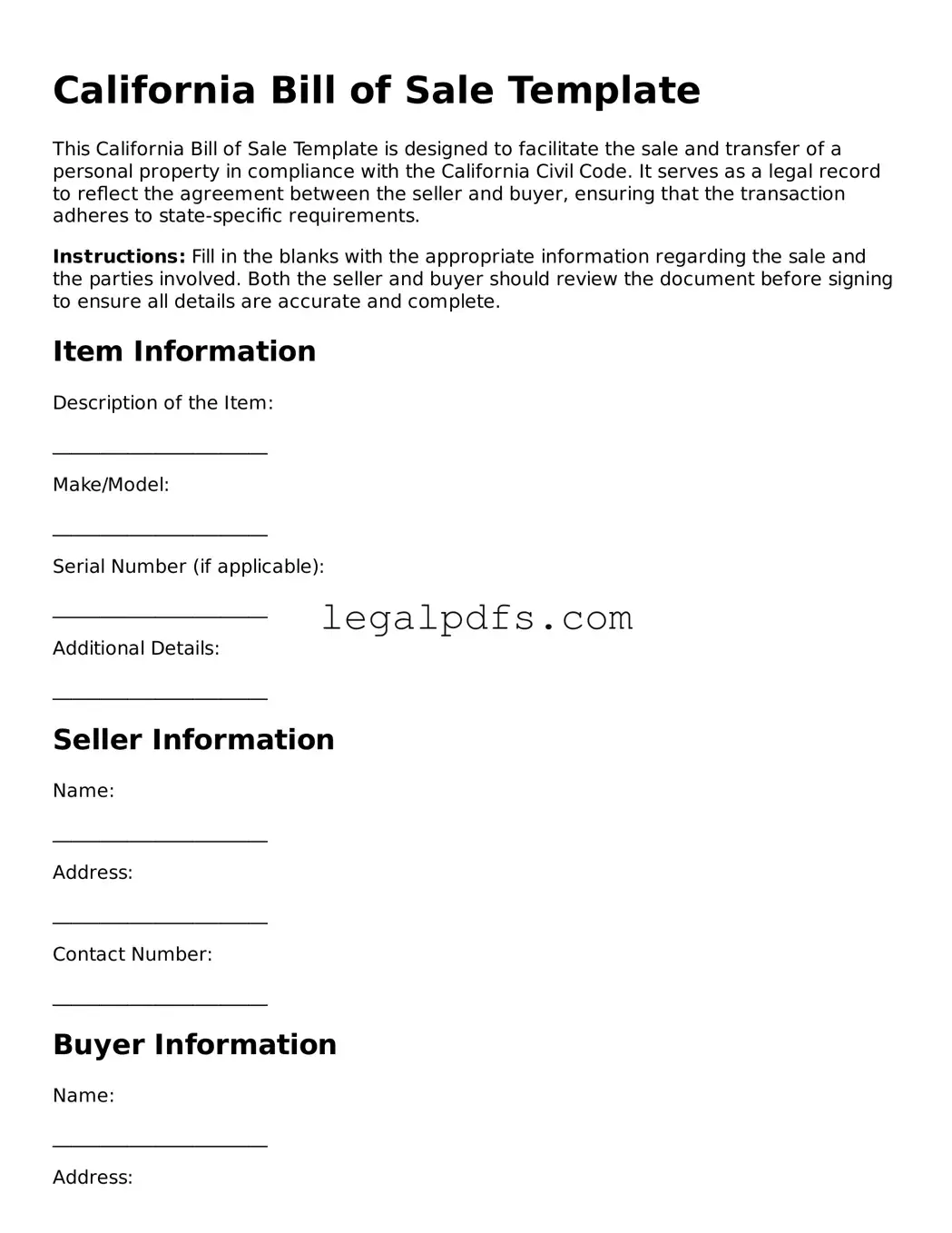
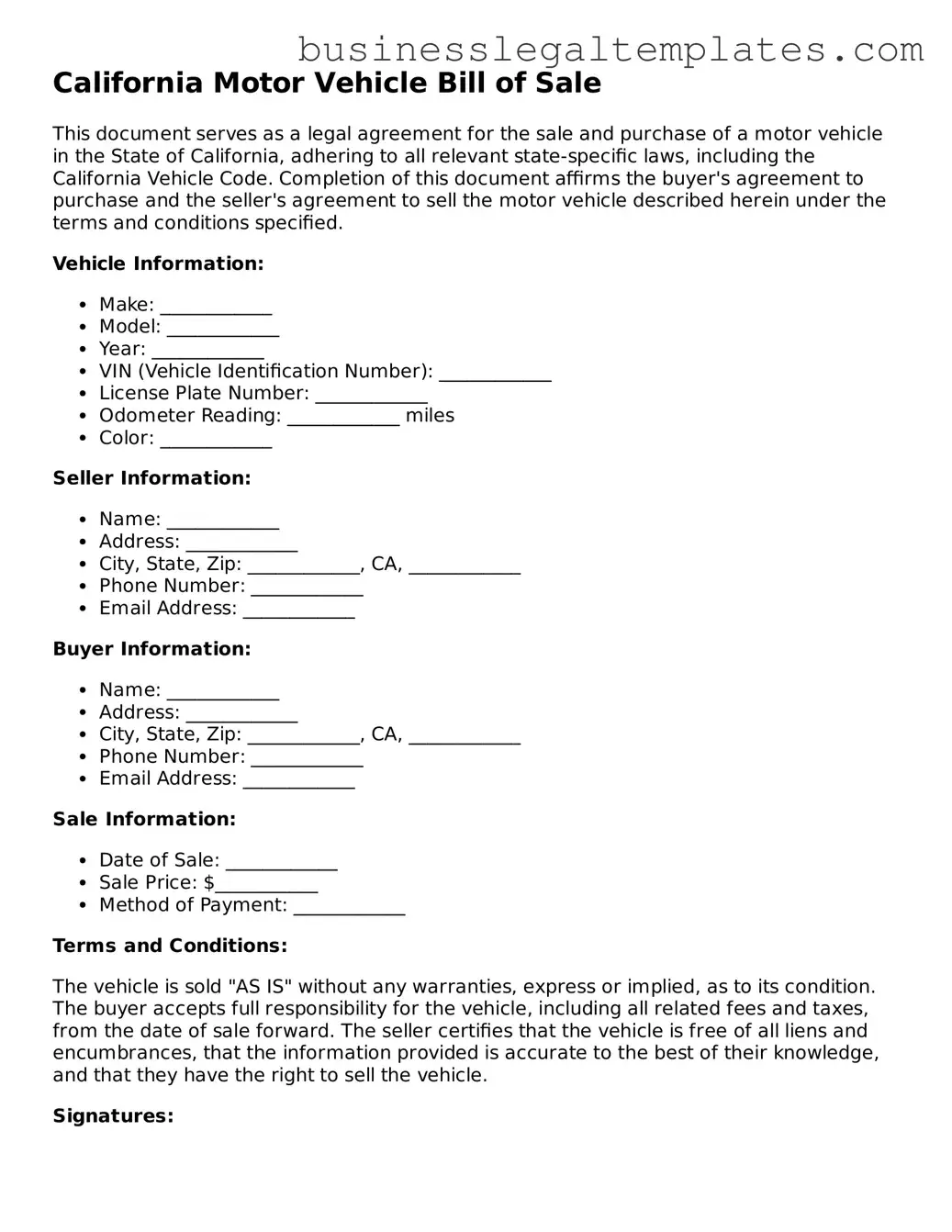
To ensure your document holds weight in a potential dispute or during the California Department of Motor Vehicles (DMV) registration process, it must contain specific data points. While the California DMV provides Form REG 135 for vehicle transfers, creating a comprehensive bill of sale ensures both parties are protected.
- Vehicle Identification Number (VIN): The 17-character unique identifier found on the dashboard or inside the driver’s side door jamb.
- Make, Model, and Year: Specific manufacturer details as listed on the existing title.
- Odometer Disclosure: The exact mileage at the time of sale, required by the National Highway Traffic Safety Administration (NHTSA) and the California DMV.
- Purchase Price: The final amount paid for the vehicle.
- Buyer and Seller Information: Legal names, physical addresses, and signatures of both parties.
- The As-Is Clause: A clear, written statement stating that the vehicle is sold in its present condition, without any warranties, express or implied.
Comparison of Liability: Dealership vs. Private Party Sale
| Feature | Licensed California Dealership | Private Party (As-Is) |
|---|---|---|
| Warranty Requirements | Subject to Lemon Laws / Implied Warranty | None (As-Is) |
| Documentation | Handled by dealer (DMV electronic filing) | Seller must provide Bill of Sale/Title |
| Dispute Resolution | Highly regulated consumer complaints | Civil court / Small claims |
| Safety Inspections | Mandatory pre-sale inspections | Discretionary (Buyer responsibility) |
Procedural Steps for the Seller
Selling a vehicle in 2026 requires strict adherence to California DMV notification protocols to protect yourself from liability associated with parking tickets, traffic violations, or accidents occurring after the vehicle has left your possession.
- Drafting the Document: Use a clear, written bill of sale that includes the "as-is" language. Ensure both the buyer and seller sign and date the document.
- Completing the Title: The seller must sign the existing Certificate of Title and provide it to the buyer. Do not use white-out or strike through any information on the title, as this may void the document.
- Submitting the Notice of Transfer and Release of Liability (NRL): This is the most critical step. Within five days of the sale, the seller must report the transfer to the DMV using the online system. This informs the state that you are no longer the responsible party for the vehicle.
- Odometer Reading: Ensure the odometer reading on the bill of sale matches the odometer reading on the title transfer section.
- Smog Certification: In California, the seller is generally responsible for providing a valid smog certification if the vehicle is more than four model years old, unless the vehicle was smogged within the last 90 days.
Protecting Yourself Against Misrepresentation Claims
While "as-is" language provides robust protection, it does not exempt a seller from legal liability for fraud. If a seller intentionally conceals a known safety defect or tampers with the odometer, the "as-is" clause will not shield them from civil litigation.
Professional Recommendations for Sellers
Honest Disclosure: Provide the buyer with all available maintenance records and explicitly mention known mechanical issues in the bill of sale. Documentation of disclosure is the best defense against claims of fraud.
Verification of Funds: For high-value transactions, insist on a cashier’s check or a secure electronic transfer. Never accept personal checks for vehicle sales.
Removal of Personal Property: Ensure all personal effects and electronic devices (such as GPS units or toll transponders) are removed before the vehicle transfer is finalized.
Frequently Asked Questions (FAQ)
Does an "as-is" bill of sale cover me if the car breaks down a week later? Yes, provided you did not engage in active fraud or misrepresentation. The "as-is" clause explicitly transfers the risk of mechanical failure to the buyer at the moment the sale is completed.
Is a notary required for a bill of sale in California? A notary is not required for a standard vehicle bill of sale in California. The legal transfer of ownership is finalized through the completion of the Certificate of Title and the official notification to the DMV.
What if the buyer claims the vehicle failed a smog test after the sale? Under California law, the responsibility for a smog check usually rests with the seller at the time of sale. If the vehicle fails to meet the smog requirements, the buyer may have a claim against the seller unless the agreement specifically states that the buyer is responsible for the smog certification.
Do I need to include the "as-is" language on the official DMV title? The "as-is" language should be included in your separate Bill of Sale document. The California Certificate of Title is a state-issued document and should only be filled out according to the specific instructions printed on the form itself.
How long should I keep a copy of the bill of sale? You should maintain a digital or physical copy of the signed bill of sale and the confirmation of the Notice of Transfer and Release of Liability (NRL) for at least seven years, as these are your primary records for tax and legal verification.
Navigating the 2026 Regulatory Landscape
As of 2026, California remains one of the most strictly regulated states regarding vehicle emissions and title transfers. Ensure all paperwork is filed through the official California DMV online portal to receive an immediate confirmation number. Using third-party "fast title" services is generally unnecessary and often carries significant additional fees. Always rely on official state documentation provided via dmv.ca.gov to ensure you are following the most current statutes for the 2026 tax year. If you encounter complications with a title that has been lost or damaged, request a duplicate title (Form REG 227) well in advance of your planned sale date to avoid buyer delays.
Image Gallery