Moltres Pokédex Number: A Complete Guide to Every Regional Listing
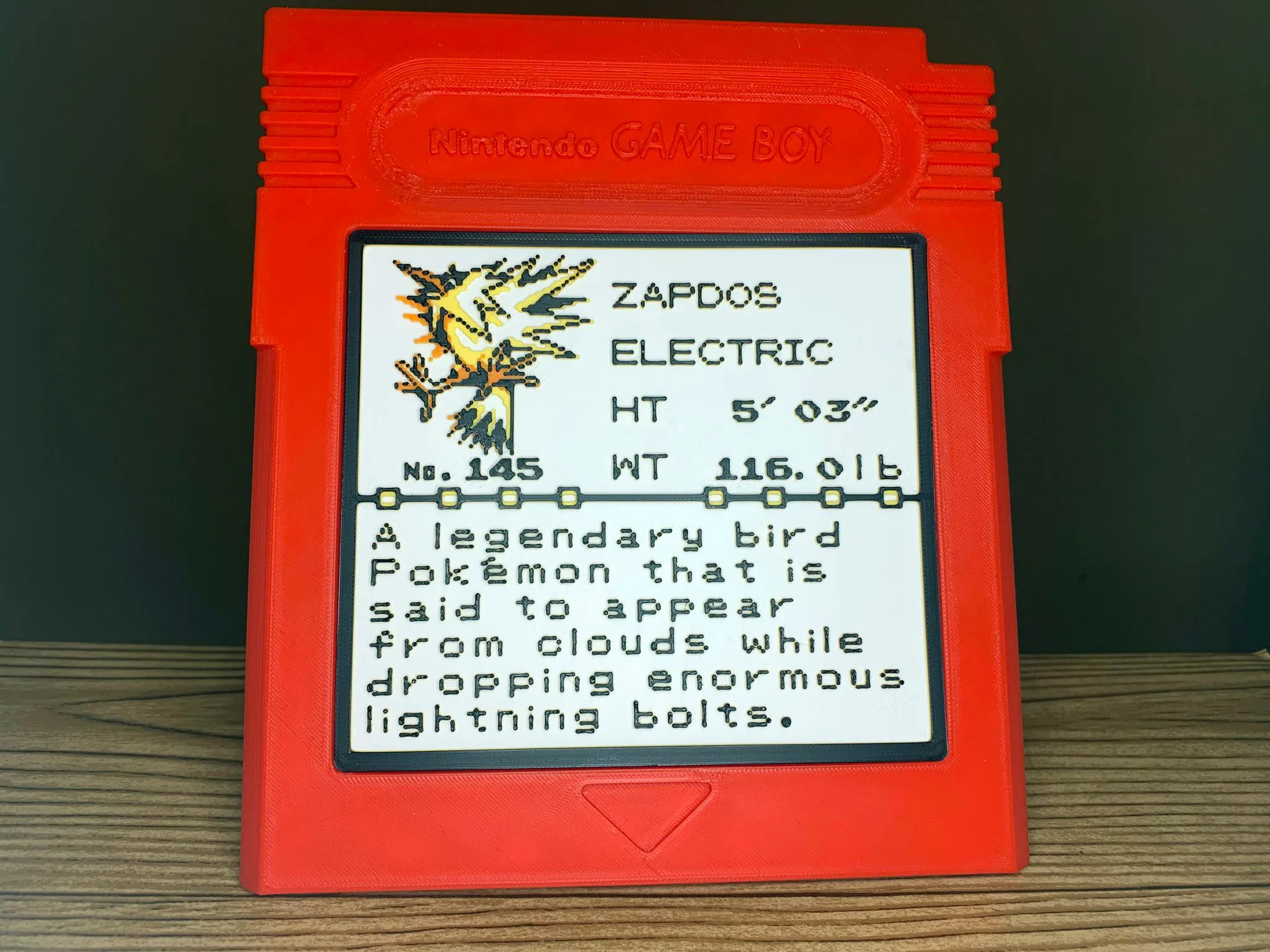
Moltres is officially recognized as #146 in the National Pokédex. As one of the original Legendary Birds of the Kanto region, its numerical designation follows Articuno (#144) and Zapdos (#145). While its National number remains consta...
Moltres is officially recognized as #146 in the National Pokédex. As one of the original Legendary Birds of the Kanto region, its numerical designation follows Articuno (#144) and Zapdos (#145). While its National number remains constant, its regional Pokédex number varies across different games and generations.
Contents
The Fire/Flying-type Legendary Pokémon Moltres has been a cornerstone of the franchise since the release of Pokémon Red and Blue. For players tracking their progress or looking to complete specific regional sets, understanding where Moltres sits in various numerical hierarchies is essential. Its placement is not merely a matter of filing; it reflects the Pokémon's status as a "sub-legendary," positioned traditionally toward the end of the regional listings, just before the pseudo-legendary lines and the elusive Mewtwo.
The National Pokédex: Why Moltres is #146
The National Pokédex serves as the master list for every Pokémon discovered across all known regions. In this system, Moltres holds the permanent position of #146. This placement is historically significant because it establishes the "Legendary Bird Trio" as the first set of legendary subordinates in the series.
In the original 151 Pokémon lineup, the designers at Game Freak utilized the final slots of the Pokédex to build anticipation. The sequence beginning at #144 (Articuno) and ending at #146 (Moltres) represents a clear thematic block. Following Moltres, the Pokédex transitions into the Dratini evolutionary line (#147–#149) and concludes with the powerhouse duo of Mewtwo (#150) and the mythical Mew (#151). As of 2026, even with the National Pokédex expanding to well over 1,000 entries, Moltres’ position at #146 remains one of the most recognizable milestones for veteran players and collectors alike.
Regional Pokédex Variations
While the National Pokédex number is fixed, Game Freak frequently reintroduces older Pokémon into new regional settings. When this happens, Moltres is assigned a regional number that corresponds to its order of appearance or thematic relevance in that specific game's habitat list.
The Kanto Pokédex (#146)
In all iterations of the Kanto-based games—including the original Generation I titles, the FireRed and LeafGreen remakes, and the Let’s Go, Pikachu! & Eevee! entries—Moltres retains its #146 designation. This is because the Kanto Regional Pokédex is identical to the first 151 entries of the National Pokédex. In these games, Moltres is typically found in late-game areas such as Victory Road or Mt. Ember, signifying its role as a final challenge before the Pokémon League.
The Johto Pokédex (#237 and #242)
When the series moved to the Johto region in Generation II (Pokémon Gold, Silver, and Crystal), the developers introduced a new regional numbering system. In the original Johto Pokédex, Moltres was listed as #237. However, when the remakes HeartGold and SoulSilver were released, the Johto Pokédex was expanded to include new evolutions discovered in later generations. This shifted Moltres further down the list to #242.
The Kalos Pokédex (#153)
In Pokémon X and Y, the Kalos region was divided into three distinct Pokédex sub-categories: Central, Coastal, and Mountain. Moltres appears in the Mountain Kalos Pokédex as #153. In these titles, the Legendary Birds are "roaming" Pokémon, meaning they move across the map randomly until they can be cornered in the Sea Spirit’s Den. Its placement at #153 in the Mountain Dex highlights its status as a rare, high-altitude encounter.
The Galar Pokédex (#204)
The Galar region introduced one of the most significant updates to Moltres with the Crown Tundra expansion. Not only was the original "Kantonian" Moltres available, but a new "Galarian" Moltres (Dark/Flying type) was introduced. Both forms share the same Pokédex entry and number. In the Crown Tundra Regional Pokédex, Moltres is listed as #204. This number is specific to the expansion's sub-Dex and does not reflect its position in the base Sword and Shield Galar Dex, which did not include the bird.
Comparison of Moltres Pokédex Numbers Across Versions
The following table provides a clear breakdown of Moltres' numerical identification across the major regions and game versions where it is natively listed.
| Region / Game Version | Pokédex Type | Moltres Number |
|---|---|---|
| National (Master List) | National Pokédex | #146 |
| Kanto (R/B/Y, FR/LG, LGPE) | Regional Pokédex | #146 |
| Johto (Gold, Silver, Crystal) | Regional Pokédex | #237 |
| Johto (HeartGold, SoulSilver) | Regional Pokédex | #242 |
| Kalos (X, Y) | Mountain Kalos Pokédex | #153 |
| Galar (Crown Tundra DLC) | Crown Tundra Dex | #204 |
| Paldea (The Indigo Disk DLC) | Blueberry Dex | N/A (Transfer only) |
The Significance of the Number 146 in Competitive Play
Beyond mere organization, the "Legendary" status associated with #146 brings with it a specific set of base stats and expectations. Historically, Moltres has been defined by its Base Stat Total (BST) of 580. This number is shared by its peers, Articuno and Zapdos, and serves as a benchmark for "Sub-Legendary" Pokémon.
As of 2026, Moltres remains a viable threat in various competitive tiers due to its high Special Attack and access to powerful moves like Fire Blast and Hurricane. The Galarian variant, sharing the same #146 National ID, offers a different tactical approach with its Dark/Flying typing and its signature ability, Berserk. Understanding its Pokédex number is often the first step for players looking to use "Porygon-Z" or other data-driven tools to calculate speed tiers or damage outputs, as the number 146 is the primary key used in many Pokémon databases.
Evolutionary Relationships and Form Differences
A common question among new players is whether Moltres evolves from or into another Pokémon, which would affect its Pokédex numbering. In the Pokémon world, most Legendary Pokémon are part of a single-stage line. Moltres does not evolve.
However, the introduction of Regional Forms has added complexity to its entry. While Kantonian Moltres and Galarian Moltres look and behave differently, they are considered the same species within the Pokédex. If you catch a Galarian Moltres, it will fill the #146 slot in your National Dex just as a Kantonian one would. This "form sharing" ensures that the National Pokédex does not become cluttered with duplicate entries for the same species, maintaining the integrity of the original numbering established in 1996.
How to Complete the Moltres Entry in Modern Games
In the current gaming landscape of 2026, completing the Pokédex entry for #146 often requires specific methods depending on the software you are using.
- Pokémon HOME: As the primary cloud storage service for the series, Pokémon HOME uses the National Pokédex order. To register Moltres here, you simply need to transfer one from any compatible game. This will unlock the entry for both its Kantonian and Galarian forms if you have owned them.
- Pokémon GO: In the mobile title, Moltres is primarily available through Five-Star Raids or as a reward for Research Breakthroughs. Its Galarian form is famously difficult to catch, appearing rarely when using the Daily Adventure Incense. In the GO Pokédex, it remains #146.
- Recent Console Titles: In Pokémon Scarlet and Violet, Moltres is not part of the Paldean regional Pokédex. However, it can be brought into the game via Pokémon HOME or encountered in the Indigo Disk expansion through the "Snacksworth" questline. Even though it lacks a local Paldean number, it still occupies its #146 spot in the internal game data.
Common Mistakes When Searching for Moltres' Number
It is easy to get confused by the various numbering systems, especially with the sheer volume of "rom hacks" and unofficial fan games available online. Some players mistake the "Trio Master" order for the Pokédex order. For example, because Lugia is often associated with the Legendary Birds (especially in Pokémon The Movie 2000), some assume Moltres is numbered near Lugia (#249). This is incorrect.
Another common error involves the "Order of Encounter." In some games, you might find Zapdos before Moltres, leading to the assumption that Zapdos has a lower number. While the encounter order depends on the player's path through the game world, the Pokédex number is a hard-coded attribute that never changes based on gameplay choices.
FAQs About Moltres' Pokédex Number
Is Moltres always #146 in every game?
In the National Pokédex, yes. However, in regional Pokédexes like Johto or Galar (Crown Tundra), it is assigned a different number to fit the local listing. Always check if you are looking at the National or Regional list.
Does Galarian Moltres have a different Pokédex number?
No, Galarian Moltres shares the National Pokédex number #146 with its Kantonian counterpart. It is treated as a "Regional Form" rather than a separate species.
Which Pokémon comes right after Moltres in the Pokédex?
In the National Pokédex, Dratini (#147) follows Moltres. In the original Kanto games, this transition marked the shift from the Legendary Birds to the only pseudo-legendary line of that generation.
Why does Moltres have a higher number than Articuno?
The numbers #144, #145, and #146 are based on the internal development and design order of the Kanto region. The names of the birds in English also contain Spanish numbers (Articuno, Zapdos, Moltres), which correspond to their 1-2-3 sequence in the Dex.
Is Moltres in the Paldea Pokédex?
No, Moltres is not part of the main Paldean Regional Pokédex in Pokémon Scarlet and Violet. While it is obtainable in the game through DLC and transfers, it does not have a Paldea-specific number.
Final Recommendation for Trainers
If you are a collector aiming for a "Living Dex" or a completionist trying to fill every entry, always prioritize the National Pokédex number #146. This is the universal identifier used by the Pokémon Company across all media, merchandise, and trading card games. When playing through a specific region like Galar or Johto, refer to the local Pokédex only for the purpose of obtaining the Regional Diploma, but remember that in the broader scope of the franchise, Moltres will always be the 146th Pokémon discovered.
Image Gallery