Best Men's Shoes for Plantar Fasciitis: Expert Guide for 2026
The best men's shoes for plantar fasciitis prioritize firm arch support, deep heel cups, and responsive midsole cushioning to reduce strain on the plantar fascia ligament. Effective footwear for this condition stabilizes the heel to pr...
The best men's shoes for plantar fasciitis prioritize firm arch support, deep heel cups, and responsive midsole cushioning to reduce strain on the plantar fascia ligament. Effective footwear for this condition stabilizes the heel to prevent overpronation and provides a rigid midfoot that resists excessive twisting, effectively redistributing pressure away from the inflamed heel area.
Contents
Plantar fasciitis remains one of the most common causes of heel pain in men, particularly those who spend long hours on their feet or engage in high-impact activities. By 2026, footwear technology has evolved to integrate medical-grade orthotic support directly into stylish, everyday silhouettes. However, selecting the right shoe requires an understanding of your specific foot biomechanics and the functional requirements of your lifestyle.
Medical Disclaimer: This guide is for informational purposes only and does not substitute for professional medical advice, diagnosis, or treatment. Always seek the advice of a podiatrist or other qualified health provider with any questions regarding a medical condition.
Understanding the Mechanics of Plantar Fasciitis
To choose the correct footwear, one must first understand the pathology of the condition. The plantar fascia is a thick band of tissue that connects the heel bone to the toes, acting as a shock-absorbing bowstring that supports the arch of the foot. When this tissue is overstretched or subjected to repetitive stress, small tears occur, leading to inflammation and sharp, stabbing pain—most notably during the first steps of the morning.
For men, factors such as weight, gait cycle, and occupational hazards (like standing on concrete) exacerbate this condition. Shoes that lack structure allow the arch to collapse, which pulls on the insertion point at the calcaneus (heel bone). Conversely, shoes with the "Big Three" features—arch support, heel stability, and controlled flexibility—provide a mechanical intervention that allows the fascia to heal while the wearer remains mobile.
Essential Features of Good Men's Shoes for Plantar Fasciitis
Not all cushioned shoes are beneficial for plantar fasciitis. In fact, shoes that are too soft can often worsen the condition by providing an unstable platform. When evaluating footwear in 2026, prioritize these four technical specifications:
1. Robust Arch Support
The most critical element is a contoured footbed that mirrors the natural shape of the medial longitudinal arch. This support prevents the arch from "bottoming out" during the weight-bearing phase of your stride. Whether you have high arches or flat feet (pes planus), the shoe must fill the gap between the foot and the ground to distribute weight across the entire plantar surface rather than concentrating it on the heel.
2. Deep Heel Cups and Stability
A deep, functional heel cup serves to "nestle" the calcaneus. This serves two purposes: it centers the heel's natural fat pad underneath the bone for maximum natural cushioning and it limits lateral movement. Many leading 2026 models incorporate a "heel counter"—a rigid plastic or composite reinforcement in the back of the shoe—to prevent the heel from shifting, which is a primary trigger for fascial strain.
3. Balanced Midsole Cushioning
While cushioning is necessary for shock absorption, it must be "tuned." In 2026, manufacturers utilize dual-density foams. A softer foam (like nitrogen-infused EVA) is often placed in the heel for impact protection, while a firmer, higher-density foam is used in the midfoot to maintain structural integrity. This prevents the shoe from folding in the middle, which is a common failure point in low-quality footwear.
4. Controlled Forefoot Flexibility
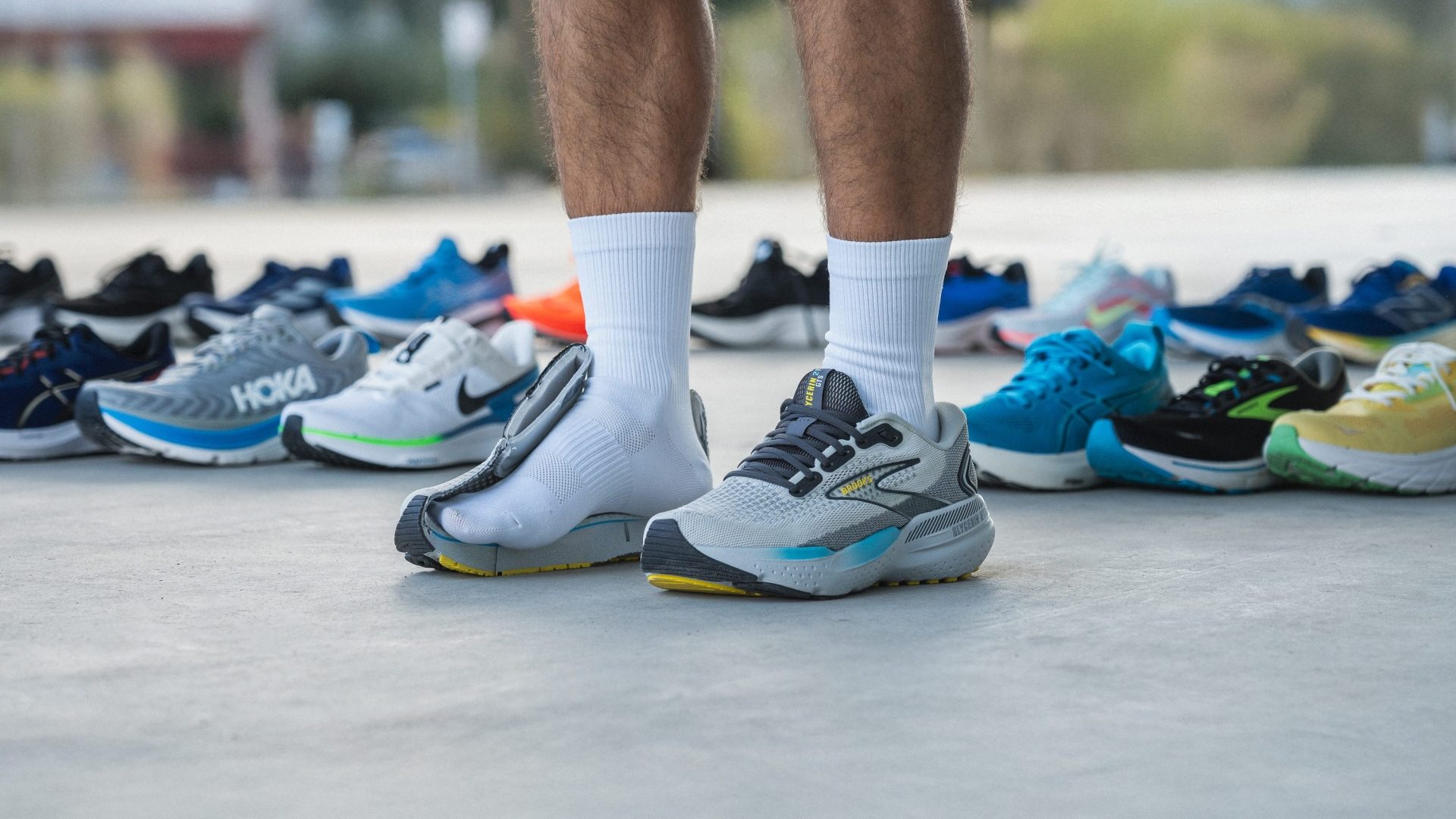
A shoe for plantar fasciitis should only bend at the toes (the metatarsophalangeal joints). If a shoe can be easily folded in half or twisted like a towel, it lacks the torsional rigidity needed to protect the plantar fascia. A rigid midfoot transition zone ensures that the foot moves through a healthy gait cycle without placing undue tension on the midfoot tissues.
Top Recommendations by Category for 2026
The following selections represent the current gold standard in men's orthotic-friendly footwear, categorized by use case to help you find the right fit for your daily routine.
Performance Running and Walking Shoes
Athletic shoes often lead the market in material innovation. For men with plantar fasciitis, "stability" or "motion control" categories are generally more effective than "neutral" or "minimalist" categories.
- Brooks Adrenaline GTS Series: Known for its "GuideRails" holistic support system, this shoe limits excess movement, protecting the knees and the arches simultaneously.
- New Balance Fresh Foam 860: This model utilizes a medial post—a firmer piece of foam on the inside of the shoe—to prevent overpronation, which is a major contributor to heel pain.
- Hoka Bondi & Arahi: Hoka’s signature maximalist cushioning provides an exceptional "rocker" sole. This geometry rolls the foot forward from heel-strike to toe-off, reducing the need for the foot to flex excessively at the arch.
Casual and Everyday Wear
For the weekend or a relaxed office environment, you need shoes that don't look like medical devices but still offer professional-grade support.
- Vionic Men’s Walkers: Vionic is one of the few brands that builds a podiatrist-designed orthotic directly into the shoe's foundation. Their "Vio-Motion" technology is specifically engineered to treat heel pain.
- Oofos OOmg Fiber Low: While primarily known for recovery slides, Oofos' closed-toe shoes use "OOfoam" technology which absorbs 37% more impact than traditional footwear foams, making them ideal for recovery phases.
Professional and Dress Shoes
Traditional dress shoes are notoriously thin and flat, making them the worst offenders for plantar fasciitis. Modern "hybrid" dress shoes have solved this problem.
- Amberjack The Original: This brand has revolutionized the dress shoe by using a proprietary TPU outsole that is flexible in the front but stiff in the back, paired with a heat-activated arch support insert.
- ECCO Citytray Series: ECCO utilizes "FLUIDFORM" technology to create an anatomical last that follows the curves of the foot, providing more support than standard leather-soled oxfords.
House Shoes and Sandals
Walking barefoot on hard surfaces like hardwood or tile can undo a day's worth of progress. Support at home is mandatory.
- Birkenstock Arizona (Soft Footbed): The contoured cork footbed of a Birkenstock eventually molds to the wearer's foot, providing a customized orthotic experience.
- Orthofeet Charlotte/Hudson: These are specifically designed for sensitive feet, featuring a multi-layered orthotic insole with anatomical arch support and a padded heel seat.
Technical Comparison of Leading 2026 Shoe Models
| Brand & Model | Category | Primary Support Tech | Best For |
|---|---|---|---|
| Brooks Adrenaline GTS | Running | GuideRails Support | Overpronation & High Activity |
| Vionic Walker | Casual/Walk | Orthaheel Technology | All-Day Standing & Walking |
| Hoka Bondi 8 | Athletic | Early-stage Meta-Rocker | Maximum Shock Absorption |
| Amberjack Tux/Original | Dress | Dual-density TPU Sole | Formal Events & Office Wear |
| Birkenstock Arizona | Sandal | Cork-Latex Footbed | Home Use & High Arches |
| New Balance 928 | Walking | ROLLBAR Stability | Severe Motion Control Needs |
How to Test a Shoe for Plantar Fasciitis Support
When shopping in-store or evaluating a delivery at home, you can perform three quick "stress tests" to ensure the shoe provides adequate support:
- The Twist Test: Hold the shoe at the heel and the toe. Try to twist it in opposite directions. A good shoe for plantar fasciitis should feel very resistant to twisting in the midfoot.
- The Heel Counter Squeeze: Press on the back of the shoe (the part that wraps around your heel). It should be firm and not collapse under the pressure of your thumb. A soft heel counter offers zero stability.
- The Fold Test: Push the toe of the shoe upward toward the laces. The shoe should only bend at the "ball" of the foot. If it bends in the center of the arch, it will not provide the necessary tension relief for your fascia.
The Role of Aftermarket Insoles
Sometimes, a shoe is nearly perfect but lacks the aggressive arch height some men require. In 2026, the integration of 3D-printed custom orthotics has become more accessible. However, high-quality over-the-counter (OTC) insoles from brands like Superfeet (Green or Blue) or Powerstep Pinnacle can transform a standard shoe into a plantar fasciitis solution.
When using an insole, always remove the factory liner first. Placing an orthotic on top of a standard liner often creates too much bulk, lifting the heel out of the shoe’s protective cup and leading to instability or blisters.
Common Mistakes When Buying Footwear
- Buying for "Softness" Alone: Many men mistake "squishy" for "supportive." A shoe that is too soft allows the foot to sink and the arch to collapse, which actually increases the strain on the plantar fascia over time.
- Ignoring the Wear and Tear: Even the best shoes lose their structural integrity. For most active men, the medial support of a shoe breaks down after 300 to 500 miles (or roughly 6 months of daily wear). Once the "foam memory" is gone, the shoe no longer protects the fascia.
- Sizing Too Small: Foot inflammation can cause slight swelling. Additionally, your feet naturally spread (splay) under weight. Ensure there is a thumb’s width of space between your longest toe and the end of the shoe to prevent cramped mechanics.
Frequently Asked Questions
Can I wear flat shoes like Vans or Converse if I have plantar fasciitis?
Standard flat-soled sneakers are generally discouraged because they offer no arch support or heel elevation. If you must wear them, it is essential to replace the flat foam liner with a rigid orthotic insole that provides a contoured arch and a raised heel.
Should I look for a high heel-to-toe drop?
Yes, a higher "drop" (the difference in height between the heel and the forefoot) is often beneficial. A drop of 10mm to 12mm reduces the load on the Achilles tendon and the plantar fascia by slightly shifting the body's center of gravity forward. Zero-drop shoes should be avoided during acute flare-ups.
Are "rocker bottom" shoes actually effective?
Rocker soles are highly effective because they mechanically replace the "push-off" phase of walking. By rolling the foot forward, the shoe does the work that the fascia and toes would normally do, significantly reducing the tension placed on the heel during the gait cycle.
Is it okay to wear sandals with plantar fasciitis?
Only if they are orthotic sandals. Traditional "flip-flops" are among the leading causes of foot pain because they require the toes to "clinch" the shoe to keep it on, which tightens the plantar fascia. Brands like Oofos or Vionic offer sandals with built-in arch support that are safe for PF sufferers.
How long does it take for new shoes to help the pain?
While the right shoes provide immediate relief by reducing strain, the inflammation of the plantar fascia can take weeks or months to fully subside. Shoes are a management tool that allows the ligament to rest so that healing can occur through other treatments like stretching or physical therapy.
Practical Recommendation for Next Actions
If you are experiencing acute heel pain, your first step should be to transition into a stability-oriented shoe like the Brooks Adrenaline or New Balance 860 for daily activities. Simultaneously, implement a "no barefoot" rule at home by using Birkenstock or Oofos footwear. If pain persists after four weeks of wearing supportive footwear, consult a podiatrist to discuss custom orthotics or advanced therapies like shockwave treatment.
Image Gallery