Commercial Video Surveillance Systems with Night Vision: A Technical and Operational Guide
Commercial video surveillance systems with night vision provide businesses with 24/7 visual security by utilizing infrared (IR) illumination, high-sensitivity image sensors, or thermal imaging to capture clear footage in low-light or t...
Commercial video surveillance systems with night vision provide businesses with 24/7 visual security by utilizing infrared (IR) illumination, high-sensitivity image sensors, or thermal imaging to capture clear footage in low-light or total darkness. In 2026, these systems are essential for asset protection, liability reduction, and real-time threat detection across industrial, retail, and corporate environments.
Contents
The effectiveness of a commercial security network often hinges on its performance during the hours of darkness, when the majority of security breaches occur. Modern night vision technology has moved far beyond the grainy, green-tinted images of the past. Today’s commercial-grade cameras leverage advanced complementary metal-oxide-semiconductor (CMOS) sensors and Artificial Intelligence (AI) to provide high-definition, and often full-color, evidentiary video even in the absence of ambient light.
Core Technologies in Modern Night Vision Surveillance
Understanding the specific technology behind night vision is critical for selecting a system that aligns with your facility's environmental constraints. Commercial systems generally fall into three technical categories: Infrared (IR), Low-Light (Color Night Vision), and Thermal Imaging.
Infrared (IR) Illumination
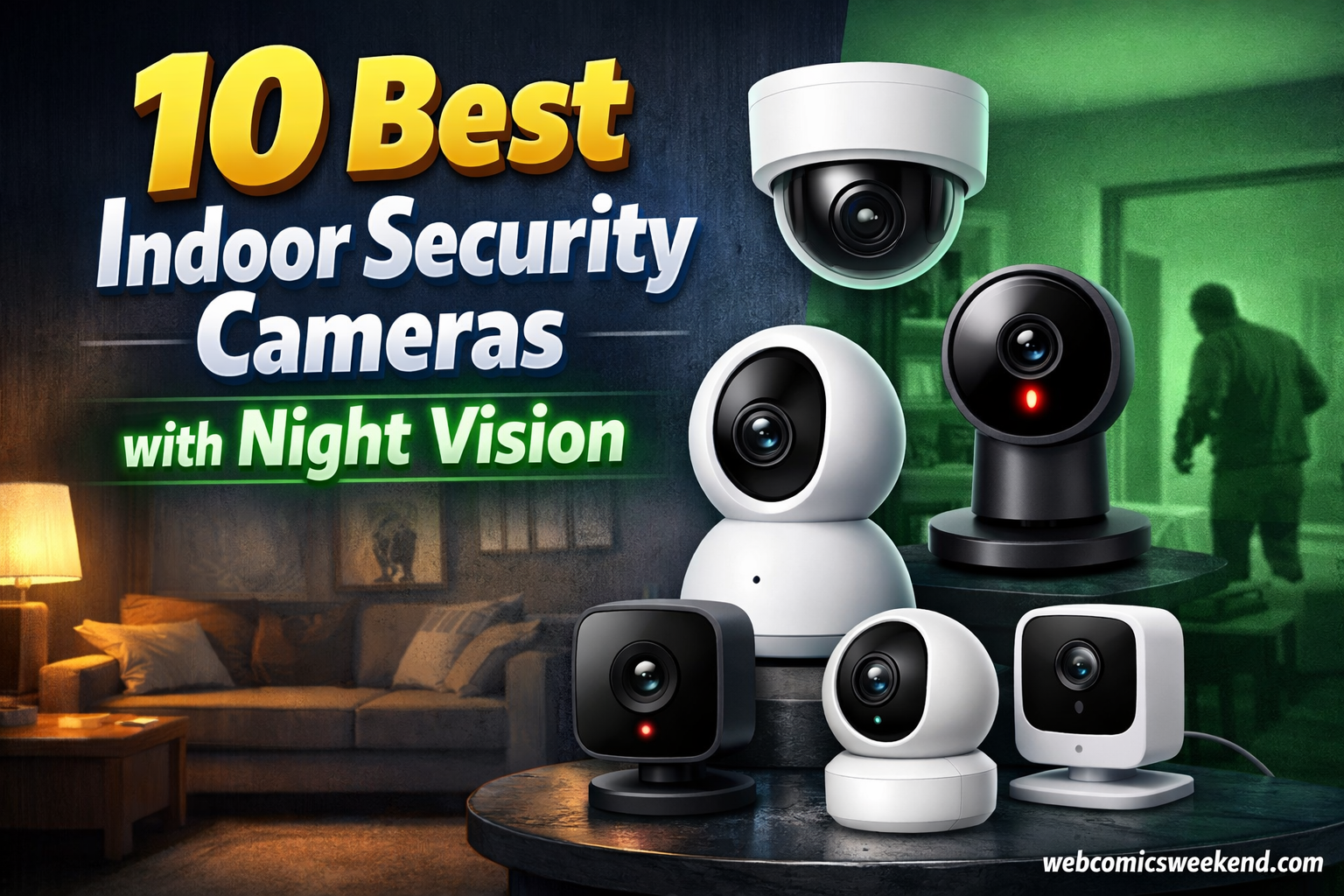
Infrared surveillance is the most common solution for commercial properties. These cameras are equipped with built-in IR LEDs that emit light at a wavelength (typically 850nm or 940nm) that is invisible to the human eye but visible to the camera’s sensor. When light levels drop, a mechanical "IR-cut filter" disengages, allowing the sensor to "see" the reflected IR light.
In 2026, Smart IR technology has become a standard requirement. Older IR cameras often suffered from "overexposure" or "washout," where an intruder’s face would appear as a featureless white blob if they got too close to the lens. Smart IR automatically adjusts the intensity of the infrared LEDs based on the proximity of objects, ensuring that details remain sharp and usable for forensic identification.
High-Sensitivity Low-Light Sensors
Often marketed under names like "DarkFighter," "Starlight," or "ColorVu," these systems utilize oversized sensors and wider apertures (f/1.0 to f/1.2) to capture as much ambient light as possible. By 2026, back-illuminated (BSI) sensor architecture has significantly improved the signal-to-noise ratio in these devices.
The primary advantage here is color retention. In a forensic investigation, knowing the color of a suspect’s jacket or a getaway vehicle is significantly more valuable than a grayscale IR image. These cameras can often maintain full-color video in lighting conditions as low as 0.0005 lux, which is roughly equivalent to a moonless, overcast night with minimal street lighting.
Thermal Imaging
Thermal cameras do not "see" light at all; instead, they detect heat signatures (long-wave infrared radiation). While they do not provide identifiable facial features, they are peerless for long-range perimeter protection and "early warning" systems. In large industrial yards or critical infrastructure sites, thermal imaging can detect a human or vehicle signature miles away, through smoke, heavy fog, or dense foliage, where traditional optical night vision would fail entirely.
Technical Specifications and Their Impact on Performance
When evaluating commercial video surveillance systems with night vision, four specific technical metrics determine the quality of the output and the system's overall reliability.
1. Lux Rating
The lux rating indicates the minimum amount of light required for the camera to produce a usable image. For context, direct sunlight is roughly 10,000 to 100,000 lux, while a full moon is about 0.1 lux. A high-tier commercial night vision camera in 2026 should have a lux rating of 0.001 or lower for color recording. Cameras that rely purely on IR will often be rated at "0 Lux with IR On," but it is the "0 Lux Off" rating that determines the quality of the sensor itself.
2. Wide Dynamic Range (WDR)
Nighttime environments are often plagued by high-contrast lighting—for example, a dark parking lot with bright LED streetlights or the glare of approaching headlights. A camera with true 120dB to 140dB WDR can balance these extreme light and dark areas simultaneously, preventing the highlights from blowing out and the shadows from becoming crushed black voids.
3. Resolution and Pixel Density
While 4K (8MP) is the current baseline for commercial installations, the relationship between resolution and night vision is complex. Smaller pixels on a high-resolution sensor can sometimes perform worse in the dark because each pixel has less surface area to collect light. Modern 2026 sensors solve this through "pixel binning" or larger physical sensor sizes (such as 1/1.2" sensors), allowing for high-detail 4K images without sacrificing low-light sensitivity.
4. Aperture (f-stop)
The aperture of the lens determines how much light reaches the sensor. In the commercial sector, a lower f-stop number indicates a wider opening. High-performance night vision cameras typically utilize an f/1.0 or f/1.2 lens. A camera with an f/2.0 lens requires significantly more ambient light or IR power to achieve the same image brightness as an f/1.0 lens.
Comparison of Night Vision Surveillance Technologies
| Feature | Infrared (IR) | Low-Light/Color | Thermal Imaging |
|---|---|---|---|
| Output Type | Grayscale (Black & White) | Full Color | Heat Signature (Color/B&W) |
| Light Requirement | 0 Lux (Total Darkness) | 0.0005 - 0.1 Lux | 0 Lux (No light needed) |
| Effective Range | 30m - 100m (Standard) | 20m - 60m (Ambient dependent) | 300m - 2km+ |
| Identification | High (Close range) | Highest (Forensic color) | Low (Detection only) |
| Atmospheric Penetration | Moderate | Poor | Excellent (Fog/Smoke) |
| Primary Use Case | General indoor/outdoor | High-traffic retail/Parking | Perimeter/Critical Infra |
Operational Requirements and Infrastructure for 2026
Implementing a 24/7 surveillance system requires more than just mounting cameras. The infrastructure must support the increased data and power demands associated with high-resolution night recording.
Storage and Compression Standards
Nighttime footage often contains "noise" (graininess), which video compression algorithms like H.264 struggle to process efficiently, leading to massive file sizes. To manage this, commercial systems in 2026 utilize H.265+ or AV1 encoding. These standards use predictive modeling to distinguish between actual movement and sensor noise, reducing storage requirements by up to 50% compared to older codecs. Businesses should also consider "Edge Storage," where high-end SD cards in the cameras act as a failover if the central Network Video Recorder (NVR) or cloud connection drops.
Power over Ethernet (PoE) Requirements
High-intensity IR illuminators and motorized zoom lenses used in night vision cameras consume significant power. While standard PoE (802.3af) provides up to 15.4W, many advanced night vision PTZ (Pan-Tilt-Zoom) cameras require PoE+ (802.3at) or even PoE++ (802.3bt), which can deliver up to 60W-100W. Ensuring your network switches support these higher wattages is a prerequisite for a stable installation.
AI-Driven Analytics at Night
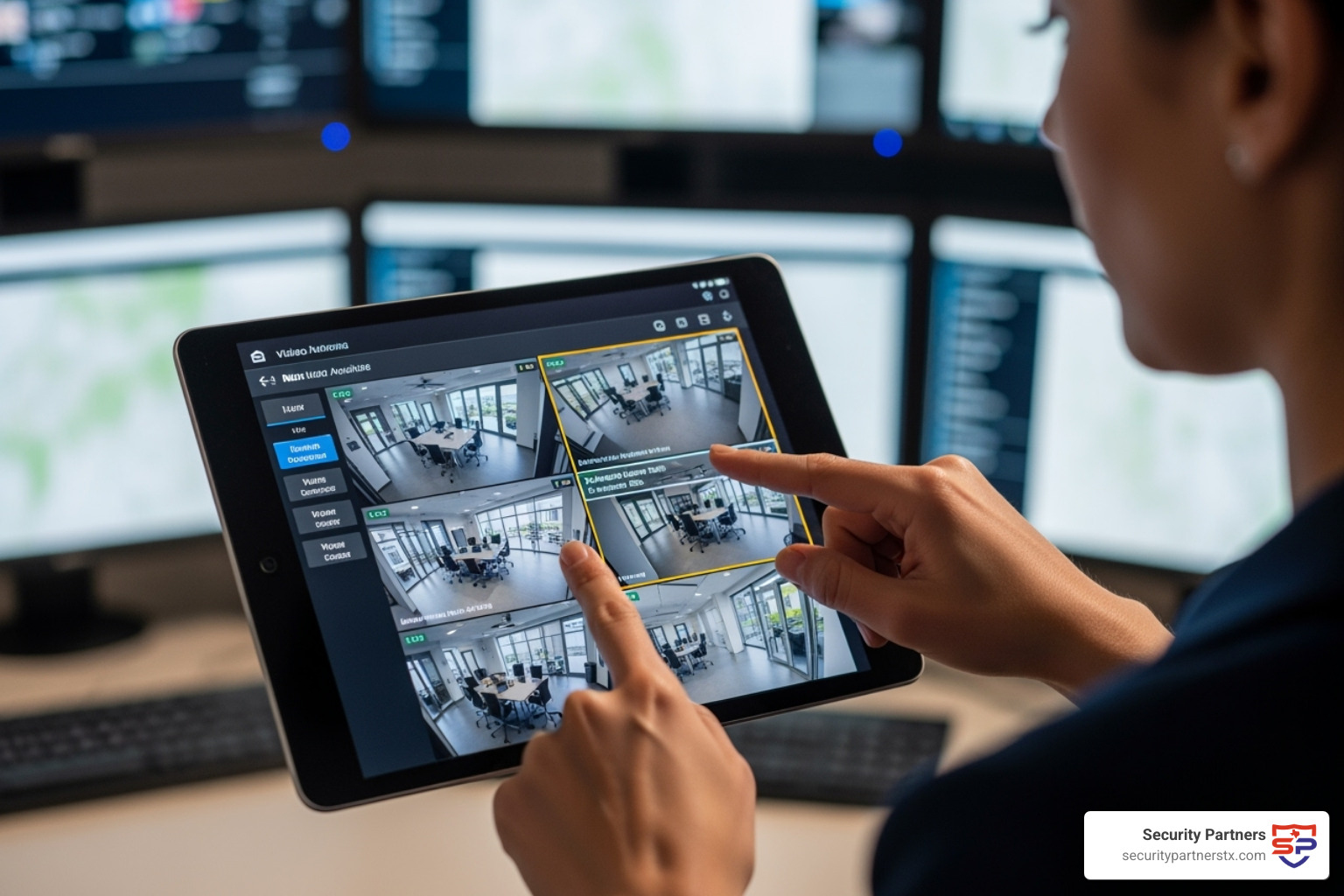
The integration of AI has revolutionized how night vision is used. In 2026, systems are typically configured with "Perimeter Protection" or "Acusense" technologies. Rather than relying on simple motion detection—which can be triggered by a moth flying near an IR light or wind-blown debris—AI algorithms analyze the "shape" of the moving object. This allows the system to ignore environmental noise and only alert security personnel when a human or vehicle is detected, significantly reducing false alarms during graveyard shifts.
Legal and Privacy Considerations
When deploying night vision systems, businesses must adhere to evolving privacy regulations. In many jurisdictions, including parts of the EU under GDPR and various U.S. states, the use of powerful IR illuminators that can see into private residential windows adjacent to a business property is a point of legal contention.
- Privacy Masking: Systems should be configured to digitally black out private areas that the camera might "see" into during its nighttime sweep.
- Notification: Clearly visible signage stating that 24-hour video surveillance is in operation is a legal requirement in most commercial zones.
- Data Retention: Laws vary by industry (e.g., cannabis retail vs. standard logistics), but most commercial entities are required to store high-resolution nighttime footage for at least 30 to 90 days.
Troubleshooting Common Night Vision Issues
Even the most advanced systems can face performance degradation if not maintained correctly.
- IR Reflection (Ring Effect): If a dome camera is mounted near a wall or under a soffit, the IR light can reflect off the surface and back into the lens, causing a white haze. Repositioning or using "turret-style" cameras can solve this.
- Spider Webs and Insects: Insects are attracted to the heat and light of IR LEDs. Regular cleaning and the application of non-conductive insect repellent around the camera housing are necessary to prevent false motion triggers.
- Focus Shifting: Light at infrared wavelengths focuses at a slightly different point than visible light. High-end commercial cameras use IR-Corrective lenses to prevent the image from becoming slightly blurry when the camera switches to night mode.
Frequently Asked Questions
Can night vision cameras see through glass?
Standard IR night vision cameras cannot see through glass at night. The infrared light will reflect off the glass surface, blinding the camera and creating a white glare. To monitor an area through a window, you must disable the internal IR and use external IR illuminators or rely on a high-sensitivity low-light sensor without IR.
What is the difference between 850nm and 940nm IR?
The 850nm wavelength is standard; it provides better range and sensitivity but emits a faint red glow from the LEDs. The 940nm wavelength is "invisible" IR, meaning there is no visible red glow, making it ideal for covert surveillance or environments where a red light would be a distraction. However, 940nm generally has about 30-40% less range than 850nm.
How much range can I expect from a commercial night vision camera?
For a standard fixed-lens commercial camera, effective IR range is typically between 30 and 50 meters (100–165 feet). High-power PTZ cameras can extend this to 150 meters or more. Always look for the "detection" vs. "identification" range; identification usually requires the subject to be within the first 50% of the maximum IR range.
Does "Color Night Vision" require any light?
Yes. Unlike IR, which can work in 0.00 lux, color night vision requires at least a small amount of ambient light (moonlight, distant streetlights, or a small security LED). If the area is completely sealed, such as a windowless warehouse with all lights off, the camera will require either its own built-in white-light LED or it will revert to black-and-white IR mode.
Is thermal imaging better than IR for security?
It depends on the objective. Thermal imaging is superior for detecting the presence of an intruder at long distances or in harsh weather. However, IR or low-light cameras are necessary if you need to identify the person for police evidence. Many 2026 commercial installations use "Bi-Spectrum" cameras that include both a thermal and an optical sensor in one unit.
Final Recommendation for 2026
For most commercial applications, the most effective strategy is a hybrid deployment. Utilize high-sensitivity Color Night Vision cameras for building entrances, loading docks, and high-traffic areas where forensic detail (clothing and vehicle color) is paramount. Complement these with Smart IR cameras for general interior coverage and Thermal Imaging for expansive perimeters or dark yards. By prioritizing a "Lux rating" of 0.001 or lower and ensuring your network infrastructure supports PoE+ and H.265+ compression, you ensure a surveillance system that is both legally compliant and operationally superior in the face of nighttime security threats.
Image Gallery