Understanding the Boone County Busted Newspaper and Local Public Records
The term "Boone County busted newspaper" typically refers to local print or digital publications that aggregate booking photos, arrest records, and jail logs for Boone County. Navigating these public records requires understanding Free...
The term "Boone County busted newspaper" typically refers to local print or digital publications that aggregate booking photos, arrest records, and jail logs for Boone County. Navigating these public records requires understanding Freedom of Information Act laws, the presumption of innocence, and the operational differences between traditional weekly print police blotters and modern online mugshot aggregation sites.
Contents
The Evolution of Arrest Records and County Blotters
Local law enforcement agencies have long maintained public logs detailing individuals taken into custody. Traditionally, these records appeared in local weekly newspapers under headings like "police blotter" or "sheriff's report." These columns provided brief summaries of arrests, charges, and booking dates within Boone County.
Over time, this niche evolved into specialized print publications and digital platforms dedicated entirely to publishing booking photographs and arrest charges. While these media outlets serve a legitimate function by keeping the public informed about local government and law enforcement activities, they also introduce complex privacy and reputational challenges for individuals whose cases do not ultimately result in convictions.
Public Records Legislation and Legal Frameworks
In the United States, arrest records are generally categorized as public documents under state-level open records laws, such as the Freedom of Information Act (FOIA) at the federal level and equivalent state statutes like Missouri's Sunshine Law or Illinois's Freedom of Information Act, depending on which Boone County (Missouri, Illinois, Indiana, Kentucky, or West Virginia) is in question.
Law enforcement agencies are legally mandated to make arrest logs available for public inspection. However, the commercial redistribution of these records by third-party publishers has sparked significant legislative pushback. Many states have enacted laws restricting commercial websites from charging fees to remove booking photos or requiring these platforms to update records if charges are dropped, expunged, or result in an acquittal.
Comparing Traditional Print Blotters and Digital Mugshot Publishers
Understanding how traditional local newspapers handle crime reporting versus how third-party digital aggregators operate clarifies the broader media landscape surrounding arrest records.
| Feature / Attribute | Traditional Local Newspapers | Dedicated Mugshot Aggregators |
|---|---|---|
| Primary Focus | General local news, community events, obituaries, and select crime reporting. | Exclusively booking photos, arrest logs, and criminal charges. |
| Editorial Oversight | Managed by professional journalists with ethical reporting standards. | Automated or minimal editorial curation; mass scraping of jail data. |
| Retention Policy | Archived in historical library databases or publisher archives. | Permanent digital presence unless explicit removal or legal steps are taken. |
| Monetization Model | Subscriptions, local display advertising, and classifieds. | Pay-for-removal extortion models, high-volume programmatic ad traffic. |
Accessing Official Boone County Jail and Court Records
Relying on unofficial third-party newspapers or aggregators often yields outdated, incomplete, or inaccurate information. To verify the true, current status of any criminal charge or booking in Boone County, citizens and researchers should utilize official government channels.
Step-by-Step Guide to Official Record Verification
- Identify the Correct Jurisdiction: Confirm which specific Boone County your inquiry targets (e.g., Boone County, Missouri; Boone County, Indiana; Boone County, Kentucky; Boone County, Illinois; or Boone County, West Virginia), as sheriff's offices and court systems operate independently by state and county.
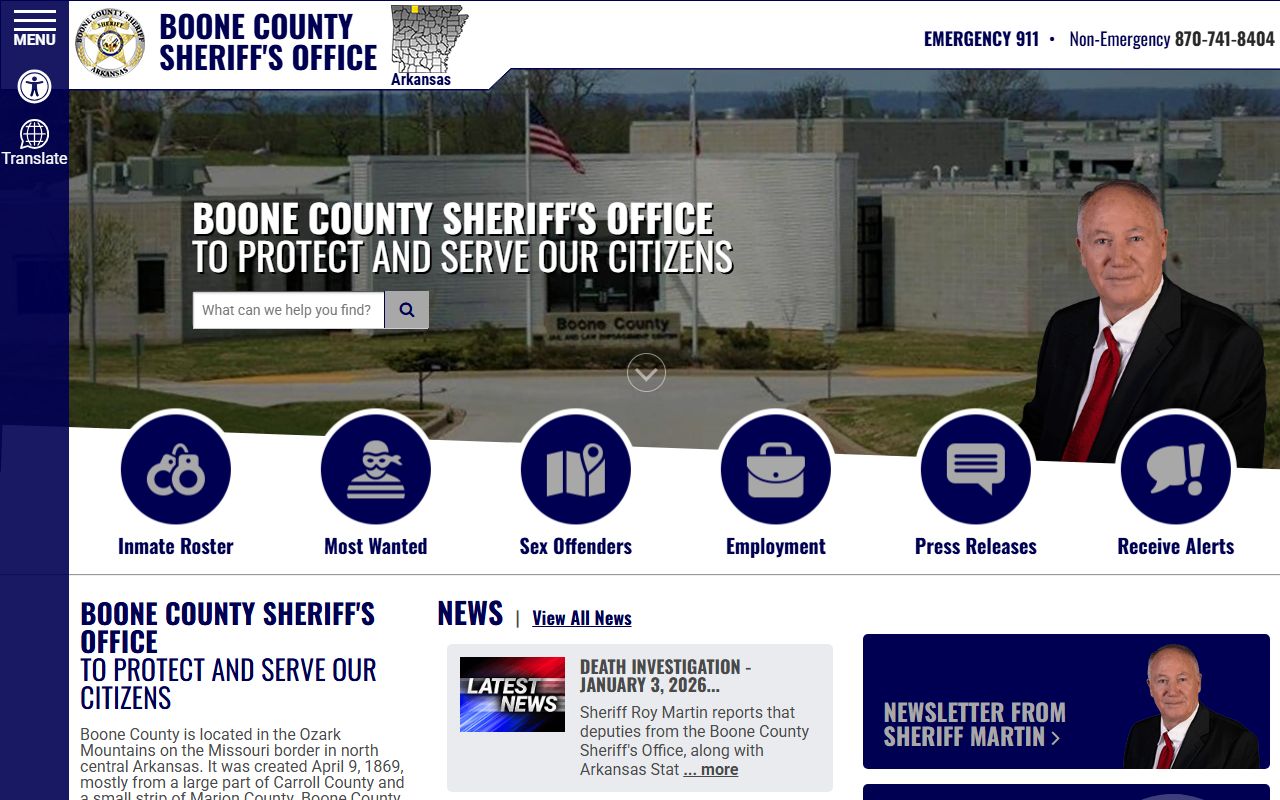
- Access the Sheriff's Office Website: Navigate to the official Boone County Sheriff's Department web portal to check active inmate rosters, daily booking logs, or detention center query tools.
- Consult the State Court Automation System: Utilize the official state judiciary case net or court record portal (such as Missouri Case.net or Indiana Courts Portal) to track criminal dockets, court dates, and final case dispositions.
- Review Case Dispositions: Look past the initial arrest charge to verify whether the District Attorney or Prosecutor formally filed charges, and whether the case resulted in a dismissal, plea agreement, or trial verdict.
- Request Formal Expungement or Sealing: If eligible under state law, consult with a qualified local attorney to file a petition for expungement or record sealing to remove old arrest records from public accessibility networks.
Managing Reputational Risks and Removing Digital Arrest Data
Finding one's name or likeness on a third-party mugshot publication or controversial newspaper site can impact employment background checks, housing applications, and professional standing. Because arrest does not equal guilt, individuals have several pathways to address unwanted online exposure.
Reputational Management Best Practices
Direct Removal Requests: Many publishing platforms maintain compliance pages outlining specific legal criteria—such as dropped charges, acquittals, or successful expungements—under which they will remove booking photos, often requiring official court documentation.
Legal Expungement: Securing an official court order for expungement or sealing legally obligates law enforcement agencies and court clerks to remove records from public view, providing leverage against secondary publishers.
Digital Suppression: When direct removal fails, professional reputation management techniques can optimize positive or neutral digital assets to push outdated or unverified mugshot links down search engine result pages.
Frequently Asked Questions
What is a Boone County busted newspaper?
A Boone County busted newspaper is a print or digital publication that compiles and distributes local arrest records, booking photos, and criminal charges from the county jail system. These publications often operate independently of traditional local news outlets, focusing strictly on law enforcement bookings.
Are arrest records and mugshots considered public information?
Yes, initial arrest records and booking photographs generated by local law enforcement agencies are generally classified as public records under state and federal open records laws. However, how third-party commercial websites utilize and charge for the removal of this data is heavily regulated by state legislation.
Do mugshot websites have to remove photos if charges are dropped?
Many states have enacted specific legislation prohibiting commercial mugshot websites from charging fees to remove booking photos, and requiring them to take down or update records if the subject provides proof that charges were dropped or expunged.
How can I check if an arrest record in Boone County is accurate?
The most reliable method to verify arrest records is to consult the official Boone County Sheriff's Office inmate roster and the state judiciary's online court docket system rather than relying on third-party aggregators or sensationalized print blotters.
Can I get my arrest record expunged in Boone County?
Eligibility for expungement depends entirely on the specific state laws governing your Boone County jurisdiction, the nature of the charges, and the final disposition of the case. Consulting a local defense attorney is the most effective way to determine eligibility for record sealing or expungement.
Securing Accurate Public Information
When researching legal proceedings, criminal charges, or detention records in Boone County, prioritizing official judicial portals and sheriff department databases ensures complete accuracy. Avoid relying solely on sensationalized third-party print or digital publications to make personal or professional assessments regarding local criminal matters.
Image Gallery